Young goalie Sergei Murashov came to North America with only six games of professional experience in the Kontinental Hockey League (KHL), which is unusual. For comparison, New York Rangers’ Igor Shesterkin had 133 career games with Spartak Moscow and SKA St. Petersburg before crossing the Atlantic.
However, things have worked out well for Murashov, who made his debut with the Pittsburgh Penguins this season after spending the 2024-25 campaign with the team’s American Hockey League affiliate, Wilkes-Barre/Scranton Penguins, and the Wheeling Nailers of the ECHL, given the Penguins’ problems between the pipes.
In this translated interview, originally appearing on the Russian website SovSport, Murashov talked about his NHL debut, mental preparation, adapting to life in Pittsburgh, and Marc‑Andre Fleury’s legacy.
**You can read the original interview in Murashov’s native Russian by Daria Tuboltseva on SovSport here**
Murashov’s Journey
The Penguins faced the Nashville Predators at Avicii Arena in Stockholm, Sweden, on Nov. 14 and 16. “It’s great that there is this chance to see the world, to travel a bit,” Murashov said of this year’s Global Series. “Of course, we are here to win and do our job, but it’s nice when you can keep doing it in a slightly unusual environment.”
That “unusual environment” turned into a small adventure with his teammates. On the team’s day off, they traded cold rinks for hot steam, following a plan that was, in typical NHL fashion, organized by a couple of veterans. “We went to a Japanese spa,” he says. “It was really cool, very diverse. Rickard Rakell set everything up, and Erik Karlsson arranged a team dinner before that. We owe a lot to our Swedes for that—it was a great time.”
For Murashov, the city became more than just a neutral site for NHL games. One of his most vivid memories has nothing to do with hockey. “Near our hotel, there was an art gallery, just a couple of minutes away,” he recalls. “They had a section with icons, and all of them were from Russia. One of them was from Yaroslavl. That was really interesting for me.”
On the ice, the setting was anything but casual, but he has grown familiar with the team. “In the team, I feel very calm,” Murashov explained. “From last year’s training camp, I already knew most of the guys, so this season it was easier. Everyone is very friendly and open; you can talk to anyone, everyone helps. That lets you focus on your job.”
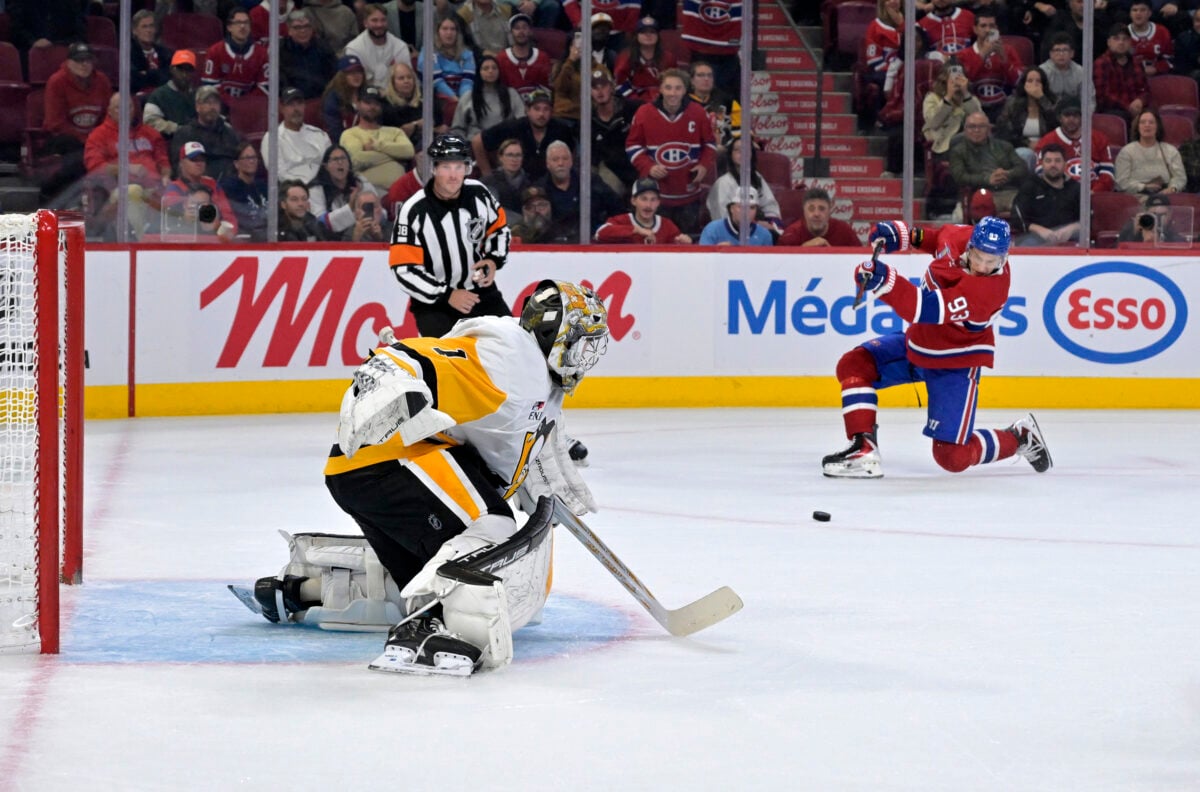
He needed time, though. The jump from the AHL to the NHL takes a lot of mental focus when the puck drops and thousands of people are watching. “From my debut against Los Angeles, enough time has passed to look back at it,” Murashov said. “At first, everything seemed very fast, but that’s more about perception. Once you calm down and get into the rhythm, the brain switches on, and it becomes just hockey again.”
A major reason for Murashov’s success has been his training away from the rink. He began working closely with a sports psychologist at the end of last season, turning regular conversations into a core part of his development. “Since the end of last year, we’ve been talking once a week,” he said. “Thanks to him, I’ve been able to improve a lot in the mental side of my game. We’ve found what really works for me.”
For Murashov, his confidence does not depend on his latest stat line; it is deeper and more stable. “Confidence doesn’t come from results or statistics,” he explained. “Confidence comes from what you believe in. What you believe in is what gives you that stability. Results come on their own if you keep focusing on the process.”
The story of his call‑up to the Penguins was similar; nothing special—just another day of steady work in Wilkes‑Barre that suddenly turned. “I was in Wilkes,” he recalled. “After practice, I went back to my room. That day, I was supposed to move out of the hotel into a house with some of the guys. I lay down to rest and started a game of chess on my phone. Then Jason Spezza called and said that I was going to Pittsburgh that day.”
Even in that moment, he refused to frame it as fate suddenly smiling on him. “I didn’t really think about a call‑up before that,” he noted. “If you focus too much on that, you lose sight of what you actually need to do. The call‑up happened because Tristan Jarry got injured. Different things happen in life. I wouldn’t call it a shock, but I also wasn’t sitting there waiting for the phone. I was just working and doing my job.”
His relationship with the Penguins’ coaching staff reinforces the idea of steady growth. With goaltending coach Andy Chiodo, who also played in the KHL after his North American career, the dialogue is constant and honest. “We have a very good relationship,” Murashov said. “We got to know each other through the process. This summer we worked a lot together, and now the results of that work are visible. We speak frankly. I tell him what works best for me, and he shares his view. It’s all about honesty—honesty in work, in evaluation, in adjustments.”
The same collaborative approach guided his first full summer within the Penguins’ system. With the organization fully behind him, Murashov decided not only to train at home in Russia but also to spend time in Pittsburgh. “From mid‑May to the end of June, I was at home,” he said. “From the end of May, I started training in the gym, working with strength coach Mark Gajdos. At first, we worked remotely—he sent me programs, adjusted them. Then, in July, I flew to Pittsburgh and prepared there. The organization really helped and was completely involved. They really are interested in giving me everything I need.”
Yet, even in the NHL, some of his biggest memories are not about systems or saves, but about people, especially spending time around Marc‑Andre Fleury during training camp. “Meeting Fleury really impressed me,” Murashov admitted. “We met on the ice, and usually at an NHL practice, you have two goalies, and each takes one net. That day, there were three of us, so we had to rotate. We skated to the same net, and I asked him if he wanted to start the drill. He just said, ‘No, I’ll watch for now, you go ahead.’ Right away, I felt how easy it was to communicate with him.”

The strength coaches later told him a story that pushed that impression into something almost mythical, although Murashov tells it with admiration rather than awe. “The trainers told me a funny story,” he said. “About five minutes before the third period, he walked into the gym fully dressed, skates and all, and asked, ‘What should I do to warm up?’ They were in shock—like, it’s five minutes before the period. He just said, ‘Don’t worry about it.’ He did a few push‑ups, pull‑ups, squats—still in full gear—and then went out and played the period to a shutout.”
What seems to impress Murashov most is not Fleury’s resume but his humanity. “He has three Stanley Cups, a Vezina, so many achievements,” Murashov said. “But he is so open and simple in everyday life. You can talk with him, joke with him. That’s probably the most valuable thing. The same is true for many guys here.”
If Murashov seems far away as part of an NHL club, when the subject turns to Lokomotiv’s Gagarin Cup win, he is quickly reminded of home. “I was at home when the final series was going on,” he said. “I was very happy for them. The city really lives hockey now. I was pleasantly surprised by how much attention there was to the team. After that tough final the year before, they came back stronger and won. The coaches, players, staff did huge work so that the city finally got what it deserved.”
TAKE A BOW, MURASHOV ????
— NHL (@NHL) November 16, 2025
Sergei Murashov collects his first career @pepsi shutout in his first career win, and he did it at the #NHLGlobalSeries! pic.twitter.com/2eWQnkY81j
For his own craft, Murashov watches other goaltenders not as idols to copy, but for specific lessons. The names he listed are among the best in the world, yet he speaks of them in the same analytical tone he uses about his own game. “It’s always a pleasure to watch Sergei Bobrovsky,” he said. “He plays as if it’s effortless, but behind that, there is huge work. Of course, Igor Shesterkin—his competitiveness, his desire to fight for every puck is inspiring. And even yesterday, Juuse Saros for Nashville, with his size, he’s very quick, reads the game well, does everything easily and confidently. You can take something from each of them.”
Murashov’s story is not about a sudden rise or a shutout win in Stockholm, but about a young goalie’s career. “We don’t try to become perfect in one day,” he said of his work with the Penguins. “We just work day by day, calmly going through the details and trusting the process.” Considering how it is going, he seems to be on the right path.
