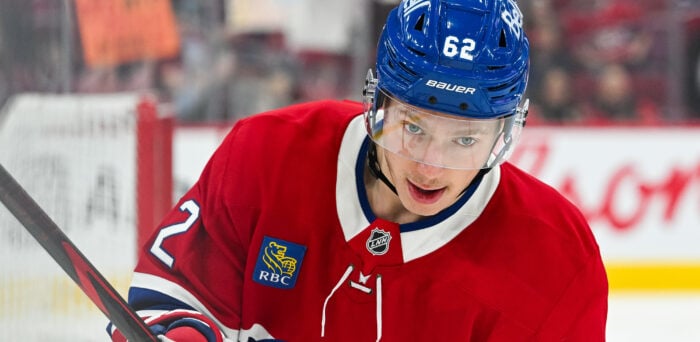
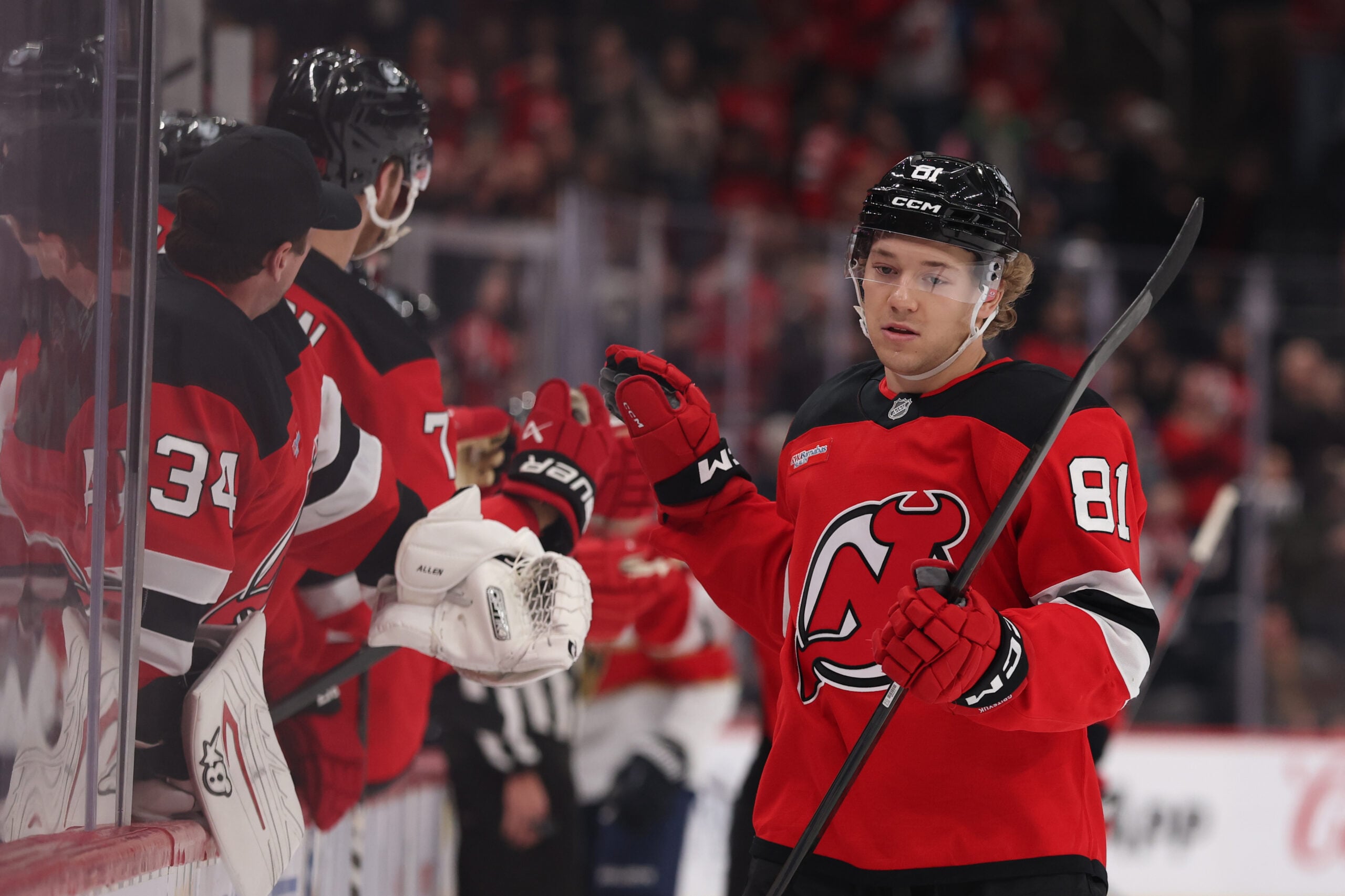
Today’s NHL is governed by an unyielding economic reality: the most critical stretch of a franchise’s championship window relies on maximizing the value of its elite talent following their entry-level contracts (ELC), and for Montreal Canadiens General Manager (GM) Kent Hughes, the clock is now ticking. After a strong 2025-26 campaign that saw rookie sensation Ivan Demidov rack up 62 points in 82 games and finish second in Calder Memorial Trophy voting, the conversation has shifted from “How good can he be?” to “How much will he cost?”
Demidov’s ELC runs through the 2026-27 season. Because he made his NHL debut at the tail end of the 2024-25 campaign, after breaking Kirill Kaprizov’s KHL scoring record for a U20 player, his first contract negotiation will arrive in the summer of 2027.
By that time, the NHL salary cap is projected to breach the historic $104 million threshold. Predicting Demidov’s eventual extension requires looking beyond dollar figures and analyzing the percentage of the salary cap committed to the league’s top restricted free agents (RFAs). Evaluating five recent landmark RFA signings reveals the market forces, team constraints, and player philosophies that will shape Demidov’s high-stakes extension with the Canadiens.
Canadiens Approach to the Cap
Hughes’ salary cap management has been one of the strengths of the team’s rebuild. As a former high-profile player agent, Hughes knows firsthand how agents extract maximum dollars. After shifting to the management side in Montreal, he weaponized this insider perspective.
He recognizes that an NHL player’s primary desire during RFA negotiations is long-term financial security and a clear role on a winning roster, more than just money. By offering the maximum eight-year term, which is still an option this offseason, Hughes can mitigate future risk while offering life-altering guaranteed money to a young star who has yet to reach their ceiling.
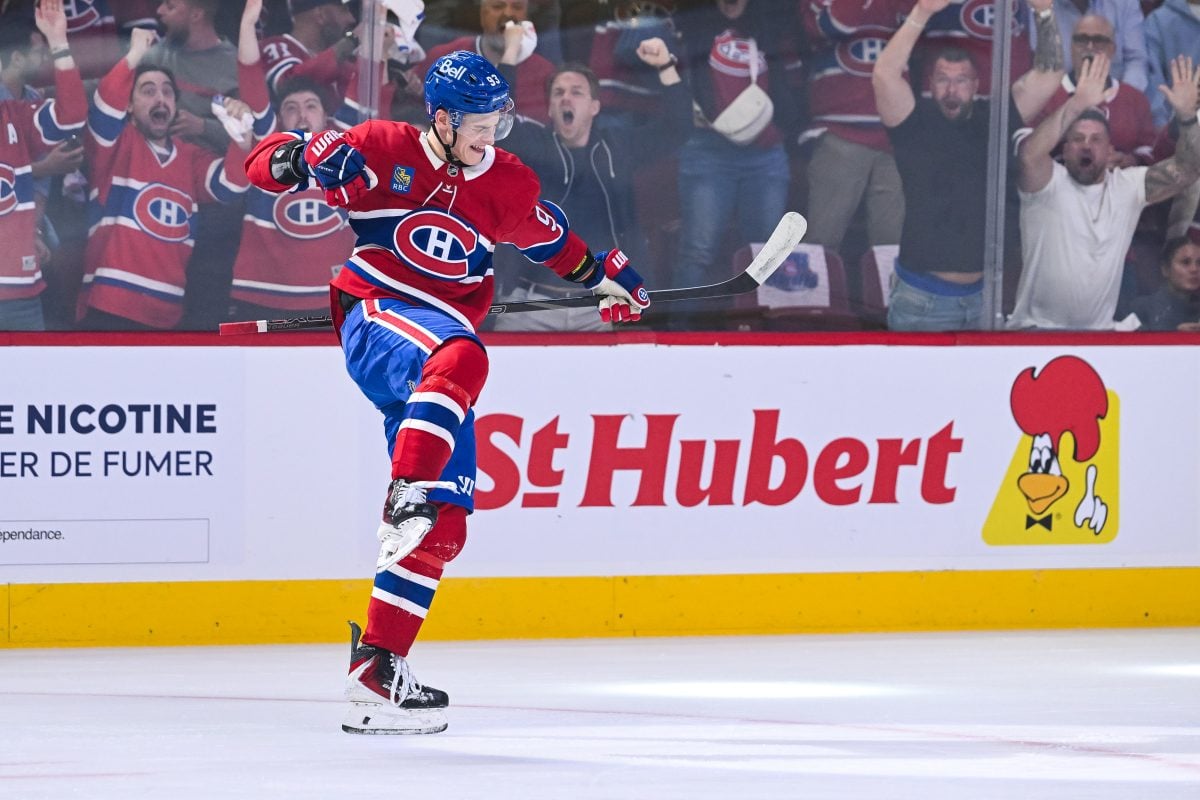
The cornerstone of Hughes’ strategy is the strict internal salary ceiling established by captain Nick Suzuki’s $7.875 million average annual value (AAV). Rather than seeing this as a restrictive contract inherited from the previous regime, Hughes transformed it into an organizational boundary. When negotiating with subsequent stars like Cole Caufield ($7.85 million AAV) and Juraj Slafkovsky ($7.6 million AAV), Hughes successfully framed the captain’s salary as a structural cap for the forward group.
Beyond rigid math, Hughes works in tandem with head coach Martin St-Louis to sell a competitive culture. Players are not just signing a contract; they are buying into a shared vision of building a sustainable Stanley Cup contender in hockey’s most passionate market.
Hughes makes a logical, agent-style pitch to his young core. By leaving a fraction of their individual market value on the table, they grant the front office the necessary financial flexibility to weaponize the remaining cap space. This pitch was vividly illustrated by Montreal’s ability to seamlessly absorb Patrik Laine’s heavy contract and trade for top-tier assets, proving to his players that their personal financial sacrifice would yield immediate, tangible upgrades to the lineup.
Ultimately, the true brilliance of Hughes’ approach lies in signing for maximum term before market inflation takes hold. By signing cornerstone players to max-term deals while the salary cap was lower, those contracts will become massive bargains as the cap rises to $104 million. What appeared to be fair market value at the time quickly shrinks to a remarkably small percentage of the team’s total budget.
This compounding financial advantage ensures that as players like Slafkovsky and Caufield hit their peaks, they will be playing on reasonable cap hits, leaving the Canadiens with a historic championship window fueled by premium surplus value.
NHL RFA Comparables
Recently, teams have tried to bypass a short-term bridge deal to lock up a player’s prime years for the maximum eight-year term. However, players increasingly weigh the security of a long-term contract against the massive financial upside of hitting the open market earlier under a soaring salary cap. By using the percentage of the salary cap and the time it took effect, we can establish a standardized metric to project Demidov’s future deal.
Lucas Raymond (Detroit Red Wings) 9.2% Cap Hit
When Lucas Raymond secured his eight-year, $64.6 million extension with the Detroit Red Wings, he solidified the market price for an elite, top-line playmaking winger who was driving his team’s offensive turnaround. Raymond signed a max-term contract immediately following a spectacular 72-point breakout campaign, setting a modern benchmark for high-end restricted free agents who successfully translate elite junior pedigree into top-tier NHL production.
As an incredibly similar market comparable to Ivan Demidov, Raymond’s 9.2% cap share will serve as the absolute floor for Demidov’s camp if he continues at a point-per-game trajectory. Adjusted for inflation against a projected $104 million salary cap when Demidov’s contract takes effect, replicating Raymond’s percentage slice pushes his baseline valuation to a $9.78 million AAV.
Cole Caufield (Montréal Canadiens) 9.40% Cap Hit
Cole Caufield’s eight-year, $62.8 million contract represents the masonry of Hughes’ highly disciplined internal salary cap ecosystem. Signed coming off a 26-goal campaign that was cut short by shoulder surgery, Caufield deliberately slotted his cap hit just below Suzuki’s $7.875 million, establishing a team-first precedent that prioritizes long-term roster depth over individual financial maximization.
This contract is a useful structural anchor for Montreal’s upcoming negotiations with Demidov, as the front office will fight fiercely to keep the young Russian winger aligned with this existing core ceiling. By holding a hard line at Caufield’s 9.40% cap share, Hughes can cap Demidov’s future salary at a maximum $9.78 million AAV on a $104 million upper limit, preserving vital financial flexibility for the rest of the roster.
Seth Jarvis (Carolina Hurricanes) 8.43% Cap Hit
Seth Jarvis’ eight-year extension with the Carolina Hurricanes is a masterclass in front-office creativity, leveraging deferred money to turn a contract averaging $7.9 million in cash into a highly manageable $7.42 million cap hit. Jarvis earned this premium commitment by transforming into a relentless, all-situations, 33-goal scorer capable of playing a strong 200-foot defensive game alongside his high-octane offensive production.
If Demidov continues to mature into a complete, multi-dimensional playmaking force rather than an isolated, pure scoring threat, Jarvis’s 8.43% cap allocation becomes a realistic middle-ground compromise for both sides. Under a $104 million salary cap, this balanced valuation allows Demidov to secure a lucrative long-term future while landing cleanly on Montreal’s books with an $8.43 million AAV.
Lane Hutson (Montréal Canadiens) 8.51% Cap Hit
The eight-year, $70.8 million maximum-term extension signed by Lane Hutson in October 2025 stands as the ultimate internal leverage tool for Hughes. Hutson commanded this 8.51% cap share ($8.85 million AAV) after putting together one of the most historic rookie campaigns by a defenseman in modern NHL history. By racking up an astonishing 66 points and capturing the Calder Memorial Trophy as the league’s top rookie, Hutson established an incredibly high benchmark in Montreal’s dressing room.
For Hughes, this contract provides an unyielding mathematical shield when negotiating Demidov’s next deal. Because Hutson’s 66 points and rookie-of-the-year hardware only yielded an 8.51% cap share, Hughes can logically dictate that Demidov’s 62-point freshman season, which led to a second-place finish in Calder voting, could be used to help keep him from out-earning the team’s top young defenseman.
When applied to a projected $104 million salary cap in 2027, capping Demidov cleanly beneath Hutson’s 8.51% precedent establishes a firm ceiling of $8.85 million AAV, perfectly maintaining the highly structured, team-friendly salary ecosystem that Hughes has built.
Projecting Demidov’s Ultimate Valuation
When Demidov sits down with Canadiens management this offseason, the negotiation will boil down to a precise mathematical tug-of-war framed almost entirely by his own locker room. While external deals like Raymond’s might set a league-wide baseline, Hughes has built an internal pay structure leveraging team culture that will dictate this negotiation. The final valuation will be pinned between the team-first ceiling of Caufield and the performance-backed rookie benchmark established by Hutson.
With Hutson, the front office has a clear internal limit to show Demidov’s camp, logically dictating that Hughes will argue that a 62-point freshman season without a Calder Trophy cannot out-earn the team’s top young defenseman. Caufield’s 9.4% can be that upper limit to remain “team friendly”, leaving a large gap to work with. Consequently, expect Hughes to successfully leverage these internal metrics to secure an eight-year, maximum-term contract. Demidov’s desire to be part of this young core will also be a key part of the negotiation.
On an anticipated $104 million salary cap in 2026-27, anchoring Demidov directly to the corridor between Hutson’s 8.51% and Caufield’s legacy 9.40% establishes a highly realistic projection of an eight-year contract carrying an AAV between $8.5 million and $9.8 million. This range would officially crown Demidov as the highest-paid forward on the roster and cement his position as a premium core piece while preserving the team-first salary ecosystem required to build a perennial contender.
Free Newsletter
Get Montreal Canadiens coverage delivered to your inbox
In-depth analysis, breaking news, and insider takes - free.
Subscribe Free →