- 32. Vancouver Canucks
- 31. Calgary Flames
- 30. San Jose Sharks
- 29. Chicago Blackhawks
- 28. Nashville Predators
- 27. Anaheim Ducks
- 26. Seattle Kraken
- 25. Detroit Red Wings
- 24. New Jersey Devils
- 23. St. Louis Blues
- 22. New York Islanders
- 21. Toronto Maple Leafs
- 20. Los Angeles Kings
- 19. Boston Bruins
- 18. Washington Capitals
- 17. Pittsburgh Penguins
- 16. Florida Panthers
- 15. Winnipeg Jets
- 14. Tampa Bay Lightning
- 13. Philadelphia Flyers
- 12. Utah Mammoth
- 11. Edmonton Oilers
- 10. Vegas Golden Knights
- 9. New York Rangers
- 8. Carolina Hurricanes
- 7. Montreal Canadiens
- 6. Minnesota Wild
- 5. Buffalo Sabres
- 4. Dallas Stars
- 3. Ottawa Senators
- 2. Columbus Blue Jackets
- 1. Colorado Avalanche
In this piece, I’ll be ranking all 32 teams by their defensemen in terms of overall impact. So, this won’t be based on pure defense or pure offense. Projection will also be a factor, i.e., a player is aging and showing signs of decline.

To create an even playing field, all defensive pairings will be courtesy of Daily Faceoff.
32. Vancouver Canucks
First Pair: Zeev Buium, Filip Hronek
Second Pair: Jamie Oleksiak, Tom Willander
Third Pair: Elias Pettersson, Luke Schenn
Even with the additions of Jamie Oleksiak and Luke Schenn in free agency, the Vancouver Canucks have the worst on-paper defense in the NHL. Zeev Buium should have a bright future, but he hasn’t proven he can handle top-four minutes. Filip Hronek is legitimately good, but not No. 1 defenseman good.
While the ceiling here isn’t particularly high, the young guys can get Vancouver out of 32nd place.
31. Calgary Flames
First Pair: Kevin Bahl, Zach Whitecloud
Second Pair: Jacob Middleton, Šimon Nemec
Third Pair: Yan Kuznetsov, Zayne Parekh
The Calgary Flames are arguably deeper than the Canucks are, but there isn’t a Hronek-type player to eat minutes. This group is a mix of decent to above-average bottom-pairing defenders and some young guys who could have a top-four-caliber impact.
Keep an eye on Šimon Nemec and Zayne Parekh, who are both breakout candidates. The former struggled to find his game with the New Jersey Devils, and the latter missed time in a rookie campaign that many felt had the potential to culminate with some Calder Trophy votes.
30. San Jose Sharks
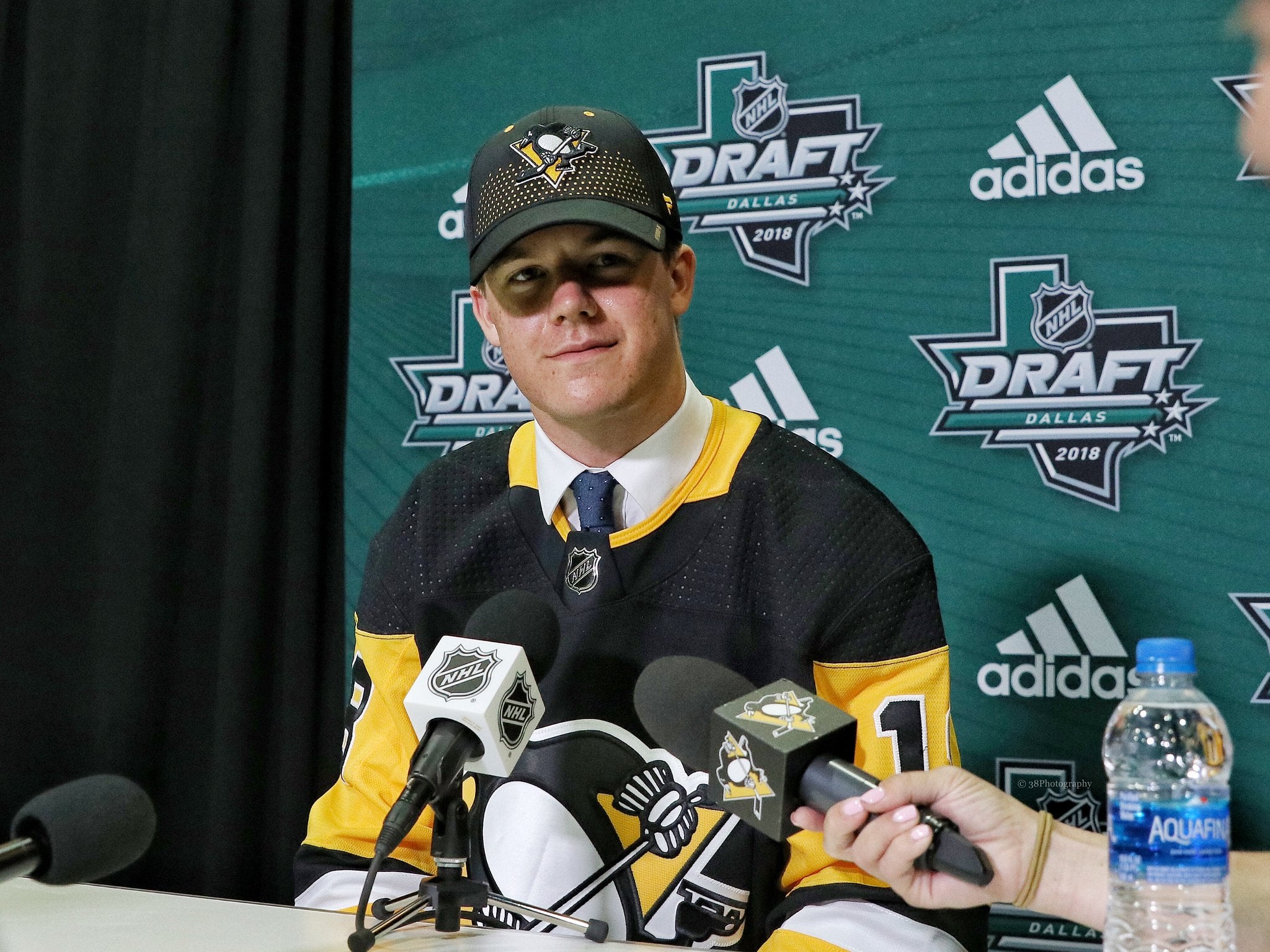
First Pair: Sam Dickinson, Jacob Trouba
Second Pair: Darnell Nurse, Dmitry Orlov
Third Pair: Luca Cagnoni, Michael Kesselring
The San Jose Sharks were down there with the Canucks last season, and they have been one of the worst defenses for a while, but the additions of Michael Kesselring, Darnell Nurse, and Jacob Trouba, to a lesser extent, should be net positives.
A lot will be weighing on the shoulders of Sam Dickinson, who showed promise as a prospect and could take on a greater role in his sophomore campaign. Luca Cagnoni, another young defender, is a breakout contender.
29. Chicago Blackhawks
First Pair: Alex Vlasic, Bowen Byram
Second Pair: Wyatt Kaiser, Artyom Levshunov
Third Pair: Ian Cole, Sam Rinzel
The Chicago Blackhawks surrendered far too many scoring chances last season, but there’s reason to believe that this new defensive unit can be better. For starters, having Bowen Byram as a No. 1 should help. A pairing of him and Alex Vlasic isn’t too shabby on paper.
Further down the lineup, Artyom Levshunov and Sam Rinzel can realistically only improve upon their previous campaigns. You can do much worse than Wyatt Kaiser on the second pairing, and Ian Cole is a veteran depth presence.
28. Nashville Predators
First Pair: Roman Josi, Brady Skjei
Second Pair: Nicolas Hague, Nick Perbix
Third Pair: Adam Wilsby, Ilya Lyubushkin
For the most part, the Nashville Predators have an older, uninspiring group of defensemen. Roman Josi’s offensive game hasn’t vanished, but the defense did last season, and Brady Skjei has been a regrettable signing for the Predators to this point. So has Nick Perbix. Nicolas Hague was a decent addition last summer, though.
27. Anaheim Ducks
First Pair: Jackson LaCombe, Tristan Luneau
Second Pair: Pavel Mintyukov, Ian Moore
Third Pair: Tyson Hinds, Nick Jensen
Jackson LaCombe is unmistakably fantastic, and a talented Pavel Mintyukov has continued to improve his game. Beyond those two, there are plenty of question marks.
Tyson Hinds, Tristan Luneau, and Ian Moore are a young, unproven trio. Nick Jensen, who was signed in free agency, is not the player he used to be. LaCombe can only do so much heavy lifting, so the Anaheim Ducks find themselves 27th on the list.
26. Seattle Kraken
First Pair: Vince Dunn, Adam Larsson
Second Pair: Ryker Evans, Brandon Montour
Third Pair: Ryan Lindgren, Cale Fleury
There’s help coming, with 2026 seventh-overall pick Chase Reid in the pipeline, but the Seattle Kraken have a subpar defensive corps for now. Vince Dunn is a respectable No. 1, and Brandon Montour is in the same tier. After those two, this unit starts to get dicey.
Adam Larsson is fine, and Ryker Evans is a little better, but Ryan Lindgren and Cale Fleury are arguably sub-NHL caliber.
25. Detroit Red Wings
First Pair: Simon Edvinsson, Moritz Seider
Second Pair: Ben Chiarot, Justin Faulk
Third Pair: Albert Johansson, Axel Sandin-Pellikka
Moritz Seider was a deserving contender for the Norris Trophy last season. After him, this defense starts to get shaky. Simon Edvinsson certainly has the potential to be a good top-four defender, but he wasn’t that in 2025-26. Ben Chiarot and Justin Faulk might be the worst second pairing in the league, unfortunately, and Albert Johansson and Axel Sandin-Pellikka are unproven to this point.
24. New Jersey Devils
First Pair: Jonas Siegenthaler, Dougie Hamilton
Second Pair: Luke Hughes, Brett Pesce
Third Pair: Brenden Dillon, Johnathan Kovacevic
For now, the New Jersey Devils are running back the same defensive group as last season, only healthier. Dougie Hamilton is a true top-pairing defender, and Luke Hughes should make progress toward being a reliable No. 3. As for the rest of the defense—consisting of all veterans—it might need some work. Brenden Dillon, Johnathan Kovacevic, Brett Pesce, and Jonas Siegenthaler have all shown top-four ability before, but those days might be gone.
23. St. Louis Blues
First Pair: Philip Broberg, Logan Mailloux
Second Pair: Theo Lindstein, Colton Parayko
Third Pair: Cam Fowler, Brandon Carlo
The depth here is obviously somewhat concerning, with Logan Mailloux performing poorly in his NHL action, Theo Lindstein not having much experience, and Brandon Carlo coming off arguably his worst season, but there is room for optimism. Philip Broberg and Colton Parayko are capable of carrying the load, and Cam Fowler isn’t a bad No. 3 option.
22. New York Islanders
First Pair: Matthew Schaefer, Ryan Pulock
Second Pair: Adam Pelech, Scott Mayfield
Third Pair: Alexander Romanov, Tony DeAngelo
The New York Islanders are an interesting one. At 18 years of age, Matthew Schaefer is already an elite No. 1 defender. Adam Pelech will be 32 years old when the new season starts, but his 2025-26 performance was arguably the best of his career. But after those two, you start to get into serious liability territory in the depth chart.
New York allowed the eighth-fewest goals in the league last season, but that’s more of a testament to how good Ilya Sorokin was between the pipes—the team, overall, was below-average in chance-prevention.
21. Toronto Maple Leafs
First Pair: Jake McCabe, Darren Raddysh
Second Pair: Morgan Rielly, Chris Tanev
Third Pair: Oliver Ekman-Larsson, Emil Andrae
The Toronto Maple Leafs should be noticeably better on the blue line this season. Darren Raddysh was a flashy addition, and Emil Andrae has done relatively well in a depth role. A healthy Chris Tanev would do wonders, and the offensive ability of Morgan Rielly makes him key for this team, despite trade rumors during the summer.
Toronto’s defense is fairly well-rounded, so getting back to the playoffs after a disastrous 2025-26 campaign is in the cards.
20. Los Angeles Kings
First Pair: Mikey Anderson, Drew Doughty
Second Pair: Joel Edmundson, Brandt Clarke
Third Pair: Brian Dumoulin, Cody Ceci
The Los Angeles Kings prevent chances, but their defense is probably about average. Brandt Clarke took some serious steps last season, though, showing No. 1 upside. Drew Doughty is effective even at his age, so that’s a plus. Mikey Anderson, Cody Ceci, Brian Dumoulin, and Joel Edmundson aren’t exactly the best way to use $16.5 million in cap space, but they’re passable.
19. Boston Bruins
First Pair: Mason Lohrei, Charlie McAvoy
Second Pair: Hampus Lindholm, Will Borgen
Third Pair: Nikita Zadorov, Henri Jokiharju
The Boston Bruins have some juice on their back end, led by Hampus Lindholm and Charlie McAvoy. They’re not dominating to the extent that they were at their peaks, but don’t get it twisted: they are more than capable top-pairing guys. Plus, Nikita Zadorov is a solid enough No. 3.
Mason Lohrei is running out of chances to prove he is a quality defenseman, entering his age-26 campaign. Will Borgen wasn’t the best acquisition over the summer, but Henri Jokiharju was a strong one at the 2025 trade deadline.
18. Washington Capitals
First Pair: Jakob Chychrun, Matt Roy
Second Pair: Martin Fehérváry, Vincent Desharnais
Third Pair: Cole Hutson, Timothy Liljegren
The Washington Capitals were tricky to rank. They’d be higher if not for Rasmus Sandin’s injury, but that’s not the only thing worth keeping an eye on. While Jakob Chychrun has been a well-known name for some time, he was on another level last season—the sustainability there is questionable. Also, rookie Cole Hutson will need to be one of the better defenders on this team.
With Sandin out, the depth isn’t spectacular, but there’s enough here to hold down the fort. Free-agent signing Vincent Desharnais had strong defensive results at 5-on-5 last season, and Matt Roy has always been known for that aspect of his game.
17. Pittsburgh Penguins
First Pair: Trevor van Riemsdyk, Erik Karlsson
Second Pair: Samuel Girard, Kris Letang
Third Pair: Ryan Graves, Kaeden Korczak
The Pittsburgh Penguins look worse on paper than they should be in practice. Even at 36 years old, Erik Karlsson can carry a defense, helping drive some offense from the back end. Getting Kaeden Korczak and Trevor van Riemsdyk this offseason should improve depth, and a second pairing of Samuel Girard and Kris Letang is better than the eye test says at times. Ryan Graves is a legitimate weak point, though.
16. Florida Panthers
First Pair: Gustav Forsling, Aaron Ekblad
Second Pair: Niko Mikkola, Seth Jones
Third Pair: Dmitry Kulikov, Radko Gudas
The Florida Panthers probably have the best forward group in the league, but their defense is average. Gustav Forsling and Seth Jones played well last season when healthy, and Niko Mikkola’s shutdown ability is huge for this lineup.
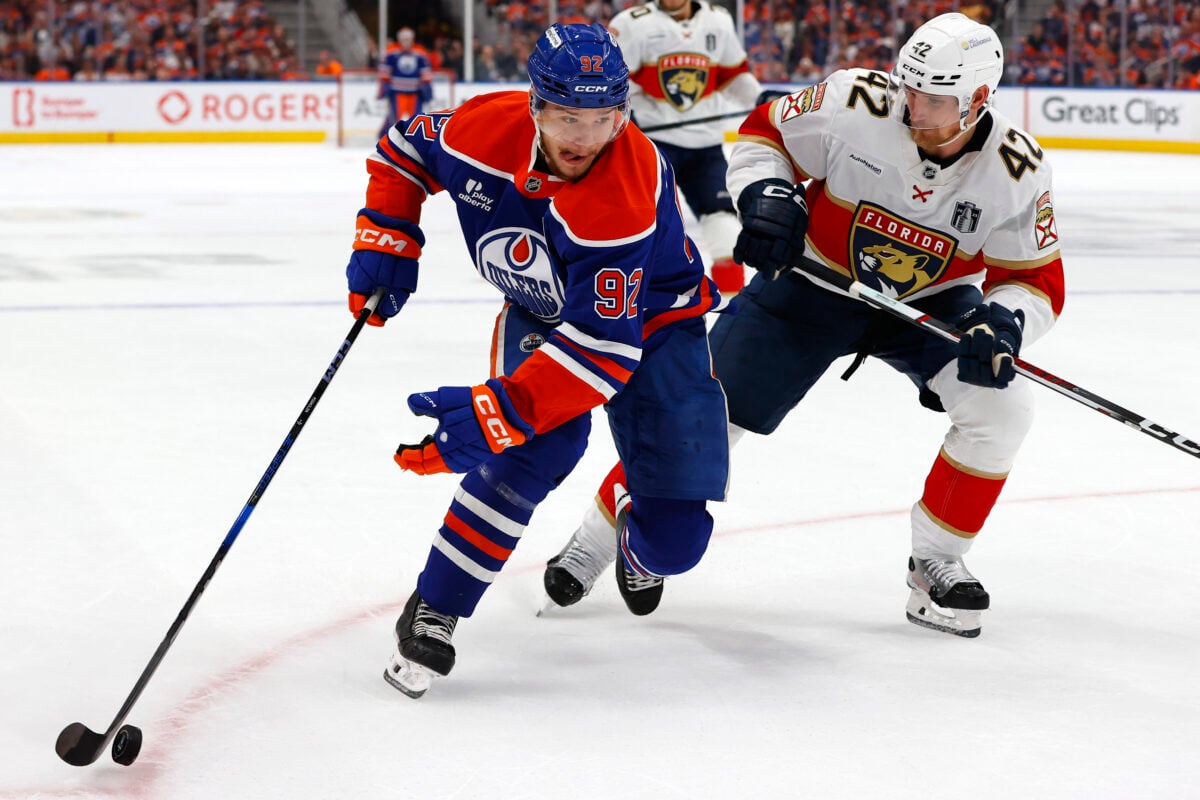
But age may be starting to show for Aaron Ekblad, and a bottom pair of Dmitry Kulikov and Radko Gudas is old and bad.
15. Winnipeg Jets
First Pair: Josh Morrissey, Dylan DeMelo
Second Pair: Dylan Samberg, Neal Pionk
Third Pair: Mario Ferraro, Elias Salomonsson
The Winnipeg Jets had their issues last season, but their defense shouldn’t be one of them in 2026-27. A left side of Josh Morrissey, Dylan Samberg, and Mario Ferraro is strong, and Neal Pionk is a bounce-back candidate on the right. The only concern is Elias Salomonsson’s health, as he might be out at the start of the season.
14. Tampa Bay Lightning
First Pair: J.J. Moser, John Carlson
Second Pair: Victor Hedman, Charle-Édouard D’Astous
Third Pair: Ryan McDonagh, Erik Černák
The Tampa Bay Lightning’s forwards do a sensational job in their own end, so as an overall team, the Lightning should be higher. Their defense alone is a tier below, but it’s not a bad unit. There should be some age concerns here, between John Carlson, Erik Černák, Victor Hedman, and Ryan McDonagh, but that’s a decent group.
J.J. Moser is the headliner at this point, and he broke out last season. As for Charle-Édouard D’Astous, Tampa Bay has a habit of finding unknown minor-leaguers and having them become capable NHL regulars—he’s another one of those types.
13. Philadelphia Flyers
First Pair: Travis Sanheim, Rasmus Ristolainen
Second Pair: Cam York, Jamie Drysdale
Third Pair: Nick Seeler, David Jiříček
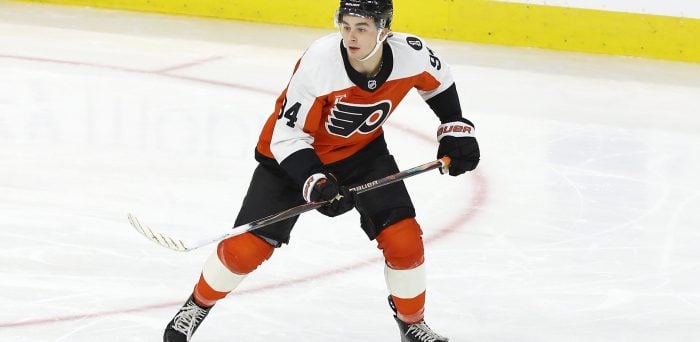
Like a few teams on this list, the Philadelphia Flyers are well-rounded—there’s no weakness in the top four. Travis Sanheim has evolved into a true No. 1 defender, and Rasmus Ristolainen is great when healthy. Cam York and Jamie Drysdale are in their primes and are probably more likely to improve than regress, so even if Ristolainen misses time, the Flyers should be fine.
Nick Seeler is an underrated bottom-pairing guy, but the area of slight concern comes after him. David Jiříček needs to be better to secure a full-time NHL role, and Simon Benoit, who is likely to suit up for games, was a liability in Toronto. Oliver Bonk may end up winning a spot, but it remains to be seen what he can provide.
12. Utah Mammoth
First Pair: Mikhail Sergachev, MacKenzie Weegar
Second Pair: Nate Schmidt, John Marino
Third Pair: Dmitri Simashev, Andrew Peeke
The No. 12 spot might be a conservative estimate for what these players can do. Unfortunately, analytical darling MacKenzie Weegar had his first bad season in a while, and at 32 years old, that may not have been a fluke. But John Marino, Nate Schmidt, and Mikhail Sergachev round out the top four nicely, and Dmitri Simashev has breakout upside. Andrew Peeke, added in the summer, is better than most bottom-pairing defensemen.
11. Edmonton Oilers
First Pair: Mattias Ekholm, Evan Bouchard
Second Pair: Jake Walman, Connor Murphy
Third Pair: Ryan Shea, Shakir Mukhamadullin
The Edmonton Oilers did a good job this summer to replace Darnell Nurse’s bloated $9.25 million cap hit with Ryan Shea and Shakir Mukhamadullin, who are set to make half of that amount.
Edmonton could be higher in practice than this list has them if Jake Walman can bounce back and Mattias Ekholm maintains his form—he’s 36 years old, so regression has to come eventually. Evan Bouchard is the driver, and he was great in 2025-26, while trade deadline acquisition Connor Murphy should provide a boost to the second pairing.
10. Vegas Golden Knights
First Pair: Brayden McNabb, Shea Theodore
Second Pair: Noah Hanifin, Rasmus Andersson
Third Pair: Parker Wotherspoon, Jérémy Lauzon
The Vegas Golden Knights play a strong shutdown game, and that should continue in 2026-27. Shea Theodore missed time last season, but it was good to see him reach the 70-game mark for the first time since 2021-22—he’s very important to this team. A healthier campaign for Brayden McNabb would also help, as he grades out nicely at 5-on-5.
Noah Hanifin can function as a No. 1 if necessary, and while Rasmus Andersson’s impact really hasn’t been all that great recently, he moves the puck well. Parker Wotherspoon and Jérémy Lauzon can be a defensively sound bottom pair.
9. New York Rangers
First Pair: Vladislav Gavrikov, Adam Fox
Second Pair: Marcus Pettersson, Sean Durzi
Third Pair: Matthew Robertson, Braden Schneider
The New York Rangers added Marcus Pettersson and Sean Durzi to their blue line this summer, which should be a huge upgrade. Getting Adam Fox for a full 84 games would be great, as the team went 8-16-3 when he was out of the lineup. When he played, it was 26-23-6.
There’s a big drop-off from there, though. Vladislav Gavrikov really struggled in his debut season with the Rangers, and Matthew Robertson and Braden Schneider were out-chanced and outscored when they were on the ice (but they were fine together, interestingly enough).
8. Carolina Hurricanes
First Pair: Jaccob Slavin, Jalen Chatfield
Second Pair: K’Andre Miller, Sean Walker
Third Pair: Shayne Gostisbehere, Alexander Nikishin
Like Tampa Bay, the Carolina Hurricanes are an elite chance-prevention team, but their forwards deserve credit for that, too. Isolating the defense, they still have a high-end group.
K’Andre Miller and Sean Walker formed the best pairing in last year’s playoffs, combining for a 65.4% goal share and a 58.0% expected goal share. Jaccob Slavin continues to grade out well on the defensive side, and Shayne Gostisbehere functions well as a No. 4-5 defender. Finally, Alexander Nikishin has more to give, and Jalen Chatfield is due for positive regression.
7. Montreal Canadiens
First Pair: Mike Matheson, Noah Dobson
Second Pair: Jayden Struble, Lane Hutson
Third Pair: Kaiden Guhle, Alexandre Carrier
The Montreal Canadiens have a talented defensive unit that helped drive their success in 2025-26. At 22 years old, Lane Hutson is already one of the best blueliners in the NHL, and Noah Dobson plays a top-pairing role admirably. Kaiden Guhle and Alexandre Carrier have formed some nice chemistry, becoming a reliable duo at 5-on-5.
But Mike Matheson, despite consistently averaging over 24 minutes a night under head coach Martin St. Louis, is not worthy of them. An ice-time reduction last season was a good sign, but he can’t be the most-used defenseman on the team again. Jayden Struble is serviceable, but he probably shouldn’t be Hutson’s full-time defensive partner.
6. Minnesota Wild
First Pair: Quinn Hughes, Brock Faber
Second Pair: Jonas Brodin, Jared Spurgeon
Third Pair: Olli Määttä, Zach Bogosian
The Minnesota Wild’s acquisition of Quinn Hughes was essential. They have one of the most electric top pairings in the league between him and Brock Faber, as both players are dangerous offensive threats.
Captain Jared Spurgeon is past the days of his elite 5-on-5 impact, but he’s still a net positive on the second pairing. There are similar concerns with Jonas Brodin as he enters his age-33 campaign, especially regarding his health—he has missed 20 games in each of his last four seasons. Fortunately, Olli Määttä can play higher in the lineup, if needed.
5. Buffalo Sabres
First Pair: Mattias Samuelsson, Rasmus Dahlin
Second Pair: Owen Power, Louis Crevier
Third Pair: Olen Zellweger, Conor Timmins
Although it made their 2026-27 defensive group worse, trading Byram was a necessary sacrifice for the Buffalo Sabres. Acquiring the No. 4 pick in the 2026 NHL Draft, used on Daxon Rudolph, and Louis Crevier, this unit is projected to be in a better spot long-term. As for today, it’s still excellent.
Olen Zellweger was added in the summer as well, a highly talented 22-year-old with tons of upside. The same can be said for this entire lineup—it’s young and has room to build on last season.
4. Dallas Stars
First Pair: Esa Lindell, Miro Heiskanen
Second Pair: Thomas Harley, Nils Lundkvist
Third Pair: Lian Bichsel, Tyler Myers
If it weren’t for Tyler Myers, the Dallas Stars would be even higher. They have one of the best pairings in the league with Esa Lindell and Miro Heiskanen, boasting terrific chance-prevention metrics. Thomas Harley and Nils Lundkvist are about as good as it gets for a second pairing, and Lian Bichsel had impressive impacts for a 21-year-old.
3. Ottawa Senators
First Pair: Jake Sanderson, Artem Zub
Second Pair: Thomas Chabot, Jordan Spence
Third Pair: Tyler Kleven, Carter Yakemchuk
When healthy, this is one of the most dominant units in the league. Jake Sanderson has established himself as a reliable No. 1 defender, coupling high-end skating with elite play at both ends of the ice. Artem Zub is great in his own zone, making him a good complementary player. Thomas Chabot and Jordan Spence both had a top-pairing-caliber impact last season, giving Ottawa what is arguably the best one-two-three punch in the NHL.
Carter Yakemchuk is a question mark on the bottom pairing, seeing as he’ll be just 21 years old when the new campaign starts, but he’s been promising in the pros already. This could be a breakout season for him.
2. Columbus Blue Jackets
First Pair: Zach Werenski, Damon Severson
Second Pair: Ivan Provorov, Denton Mateychuk
Third Pair: Jake Christiansen, Dante Fabbro
The Columbus Blue Jackets deserve a lot more credit for how well-rounded their blue line is. Zach Werenski is the obvious headliner, coming off a Norris Trophy win, but Damon Severson was exceptional in his own right. On the second pairing, Denton Mateychuk really blossomed last season, while Ivan Provorov improved. Dante Fabbro rounds out this group nicely.
1. Colorado Avalanche
First Pair: Devon Toews, Cale Makar
Second Pair: Brett Kulak, Sam Malinski
Third Pair: Josh Manson, Brent Burns
Cale Makar does a ton of heavy lifting for a potent Colorado Avalanche team, from retrievals to setting up chances in the offensive zone. His partner in crime, Devon Toews, has maintained solid impacts even in his 30s. Sam Malinski was otherworldly in 2025-26, and Josh Manson and Brent Burns are also strong players. The only real weak point is Brett Kulak, whose age might be starting to show—he is in dire need of a bounce-back.

Do you agree with these rankings? Feel free to leave your thoughts in the comment section!
Stats courtesy of Evolving-Hockey, Hockey Stats, and HockeyViz
Free Newsletter
Get Power Rankings coverage delivered to your inbox
In-depth analysis, breaking news, and insider takes - free.
Subscribe Free →