After a tumultuous offseason, the Detroit Red Wings are ready to kick off the 2026-27 campaign and prove their doubters wrong.
There hasn’t been much optimism about the impending season due to the chaotic summer in Detroit. That said, there’s reason to believe. The Red Wings are arguably a deeper team than a year ago and have a chip on their shoulder – at least once they have Dylan Larkin and Simon Edvinsson in the lineup.
With that in mind, let’s take a look at Detroit’s depth chart, special teams, and other factors to gain a better understanding of what to expect from this team in 2026-27.
Red Wings 2026-27 Depth Chart
Note that this lineup includes both Larkin and Edvinsson, as they’ll eventually return from injury and sign a new contract, respectively. The focus of this depth chart is to look at the lineup across the season, not just opening night.
| LW | C | RW |
| Alex DeBrincat | Dylan Larkin | Lucas Raymond |
| Emmitt Finnie | Andrew Copp | Viktor Arvidsson |
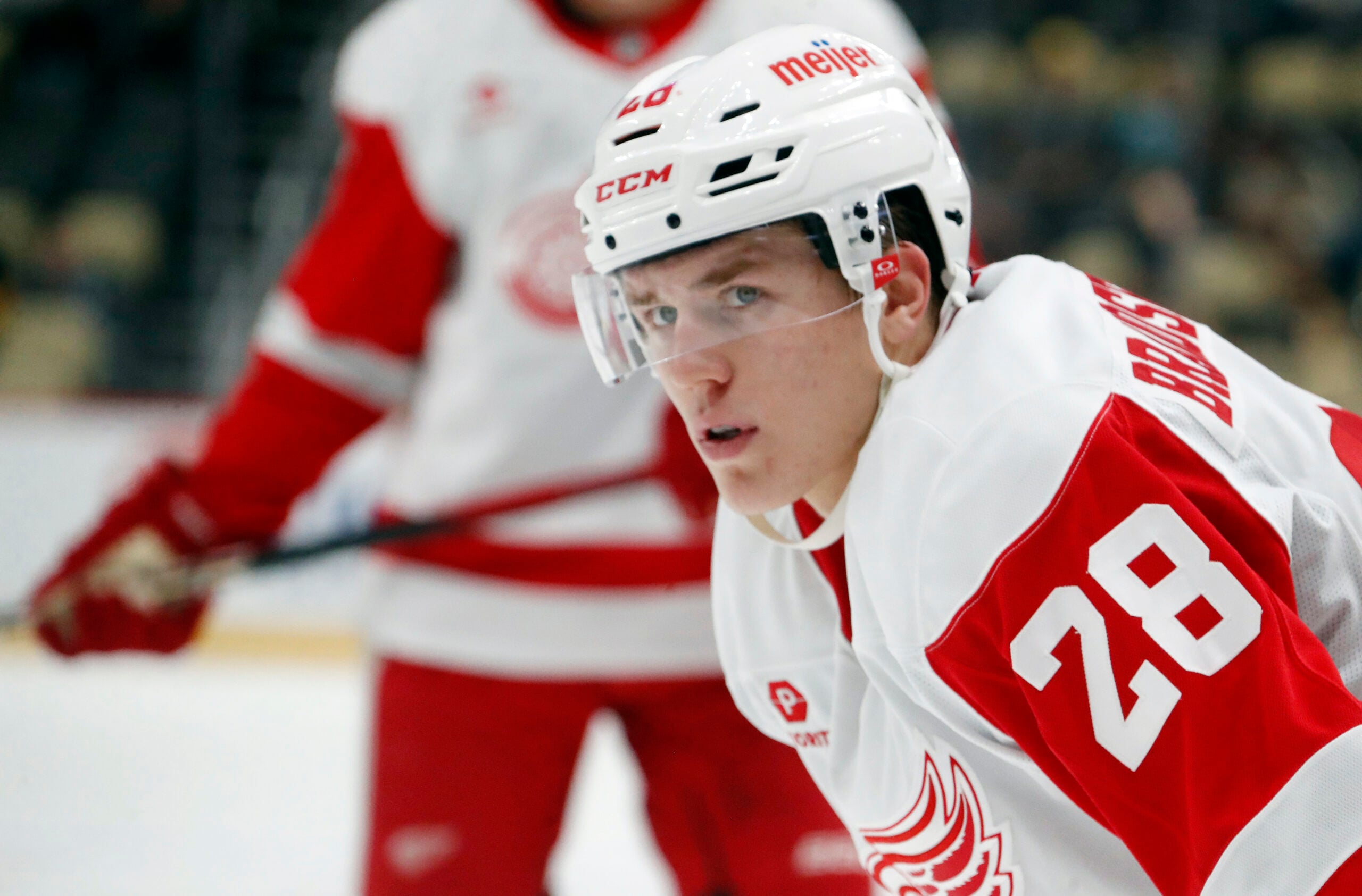
| Marco Kasper | Nate Danielson | Michael Brandsegg-Nygard |
| Keegan Kolesar | J.T. Compher | Mason Appleton |
| Carter Mazur | Michael Rasmussen |
| LD | RD | G |
| Simon Edvinsson | Moritz Seider | John Gibson |
| Albert Johansson | Justin Faulk | Daniil Tarasov |
| Ben Chiarot | Axel Sandin-Pellikka | |
| Jacob Bernard-Docker |
| Position | PP1 | PP2 |
| Quarterback | Moritz Seider | Justin Faulk |
| Left Flank | Alex DeBrincat | Axel Sandin-Pellikka |
| Right Flank | Lucas Raymond | Emmitt Finnie |
| Bumper | Dylan Larkin | Andrew Copp |
| Net Front/Side of Net | Viktor Arvidsson | Michael Brandsegg-Nygard |
| Position | PK1 | PK2 | PK3 |
| Forward 1 | Andrew Copp | Dylan Larkin | Marco Kasper |
| Forward 2 | J.T. Compher | Emmitt Finnie | Nate Danielson |
| Defense 1 | Simon Edvinsson | Ben Chiarot | |
| Defense 2 | Moritz Seider | Albert Johansson |
*While Anton Johansson and William Wallinder will start the year with the Red Wings, I expect them and Andreas Englund to end up in Grand Rapids once Edvinsson re-signs and Jacob Bernard-Docker is cleared for action.
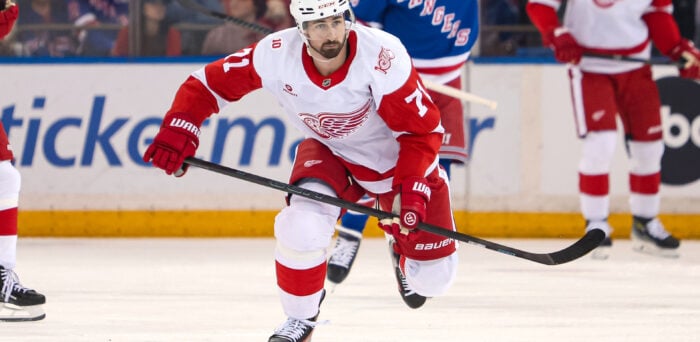
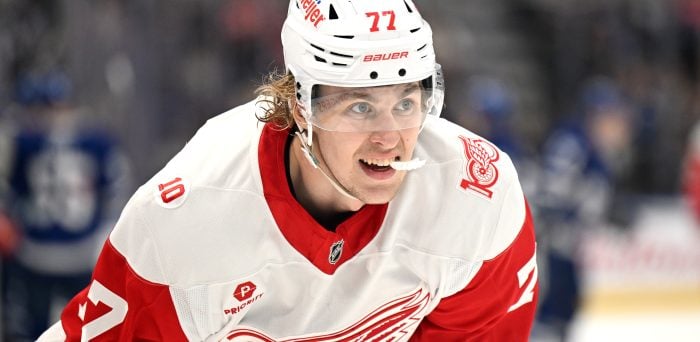
Starting with the forward group, the Red Wings have a solid blend of established NHL talent and several young players who could significantly influence the season. Top players Alex DeBrincat, Dylan Larkin, and Lucas Raymond provide Detroit with proven offensive production, while depth forwards offer a mix of skill, size, and potential.
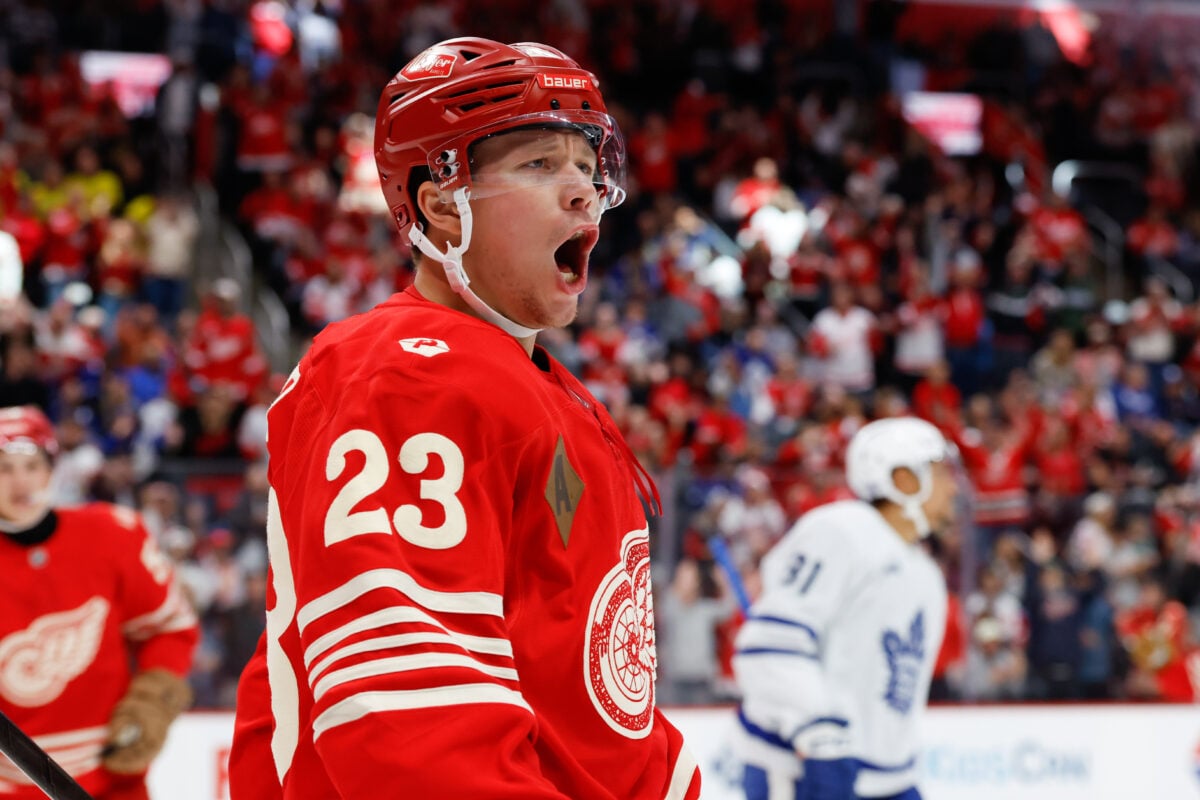
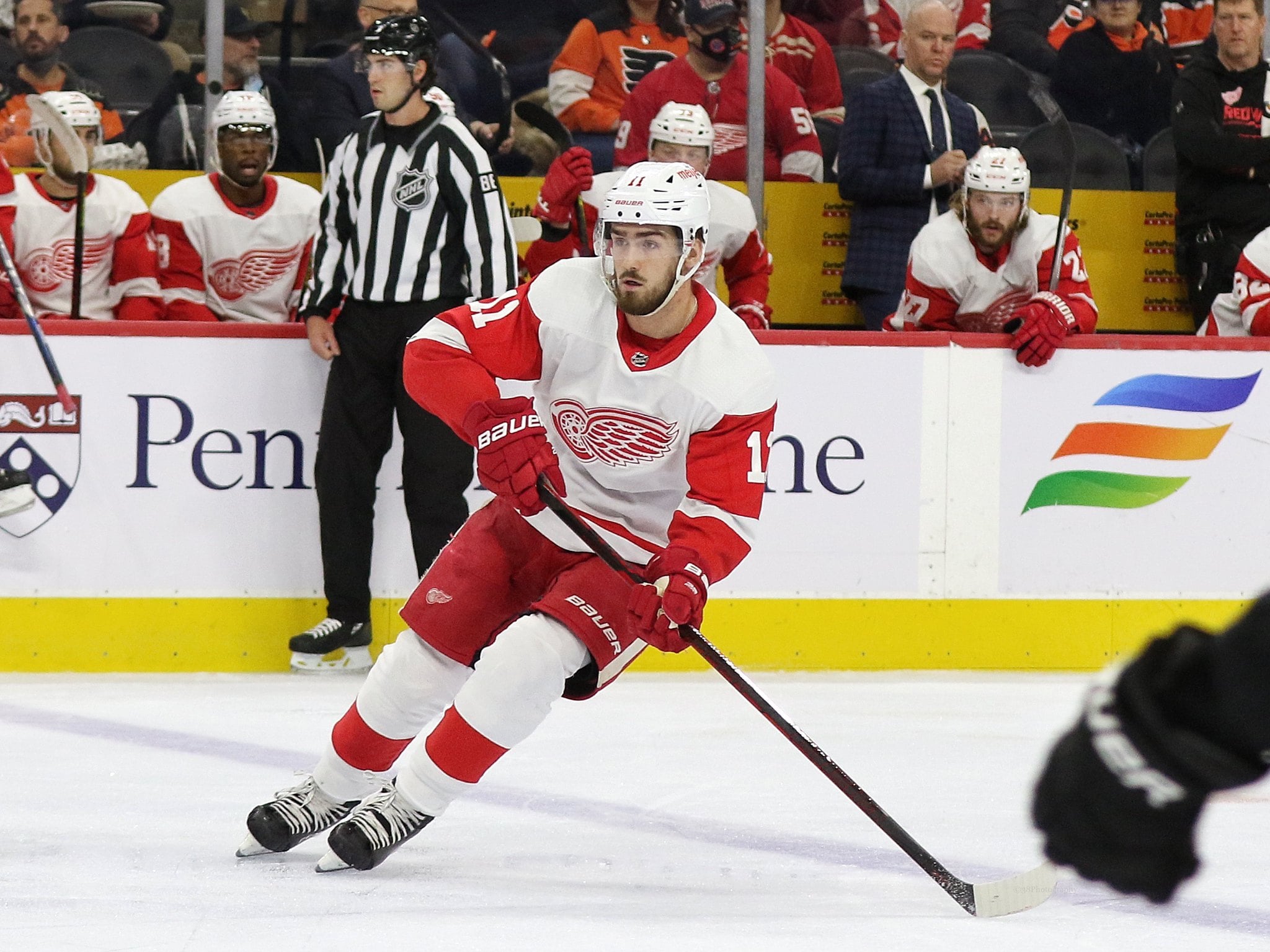
The biggest question among the forwards is whether Emmitt Finnie, Marco Kasper, Nate Danielson, and Michael Brandsegg-Nygard can provide enough secondary scoring. Brandsegg-Nygard and Danielson, in particular, enter the season with opportunities to take significant steps after strong AHL stretches.
On defense, Edvinsson (once he’s signed) and Moritz Seider give Detroit a young top pairing capable of handling major minutes, while Justin Faulk adds experience and strong puck-moving ability. Axel Sandin-Pellikka could be the wild card on the third pair, as his offensive instincts give the blue line and power play another dimension. Overall, the Red Wings’ back end looks to be deeper and more talented than a year ago – at least on paper.
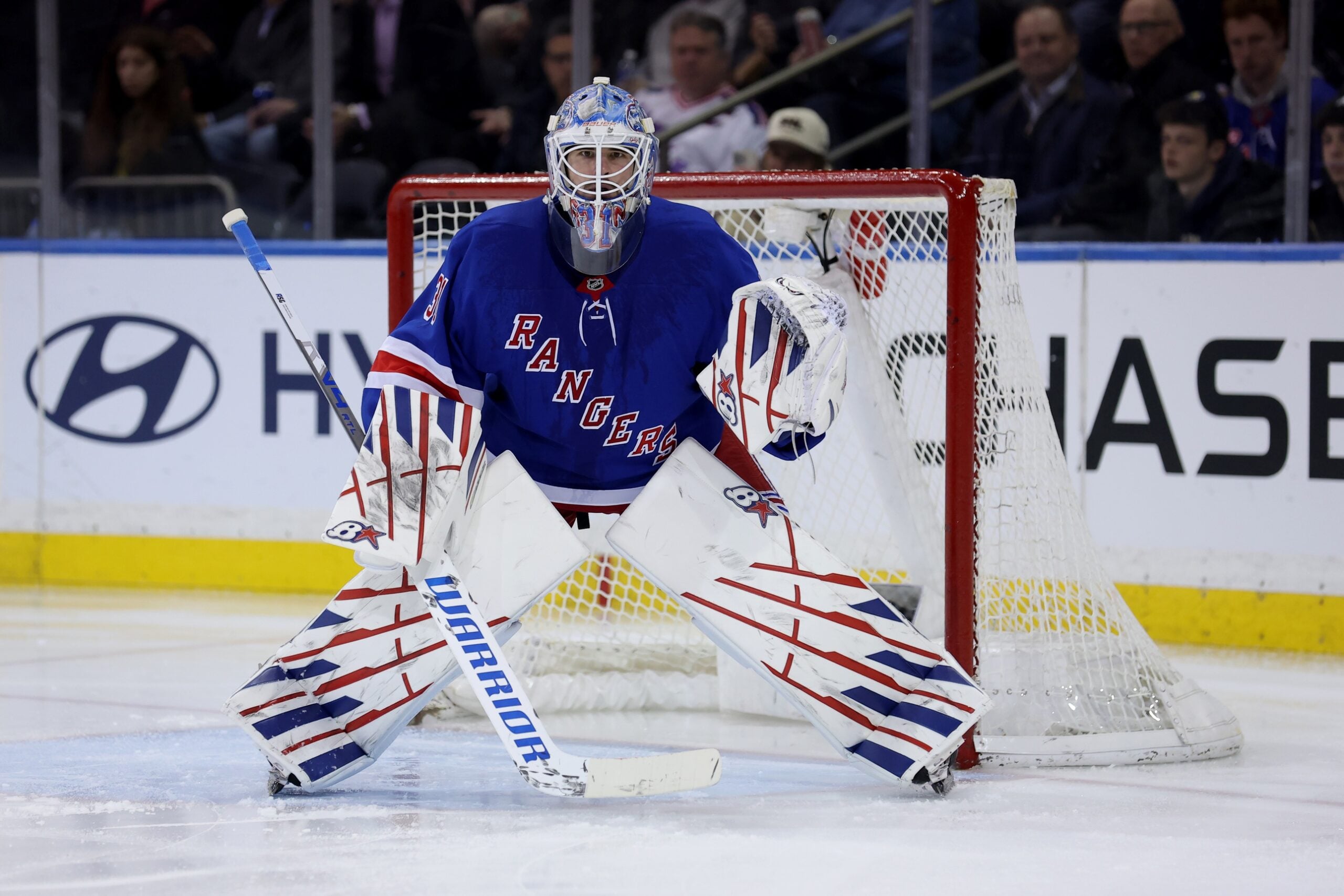
In net, John Gibson returns after playing 57 games last season, with Daniil Tarasov providing the backup option. It should also be noted that Gibson is entering a contract year and has incentive to overachieve.
Ultimately, this roster has more internal growth potential than several recent Red Wings teams. All of Detroit’s young players—from Seider on down—should continue to improve given the average trajectory of the NHL age curve. On top of that, Larkin and DeBrincat are still in their prime – there’s certainly opportunity to exceed expectations.
Red Wings’ 2026-27 X-Factors
These four factors will determine the fate of Detroit’s season. They could be the difference between a playoff berth and another year on the outside.
Kids Ascending
Brandsegg-Nygard, Danielson, Kasper, Finnie, Sandin-Pellikka, and Anton Johansson all have opportunities to take significant steps forward, becoming something more than NHL regulars. If several of them emerge as reliable top-nine forwards/top-four defensemen, Detroit will gain much-needed internal improvement. If their development stalls, the roster could lack the necessary talent to take the next step.
Depth Scoring
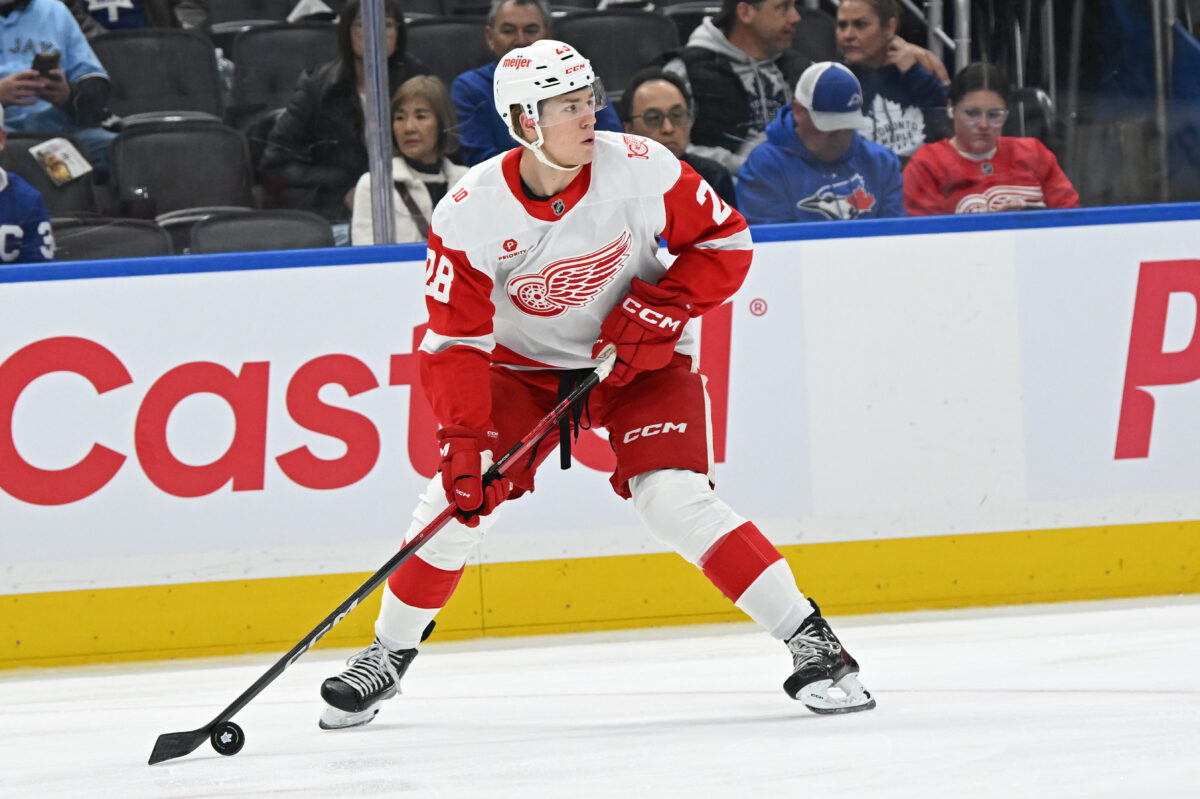
Detroit’s top players cannot carry the offense all season, making bottom-six scoring a major swing factor. The Red Wings need players such as Kasper, Brandsegg-Nygard, J.T. Compher, Michael Rasmussen, Carter Mazur, and Keegan Kolesar to consistently contribute offensively. If the bottom six becomes a dependable source of goals, Detroit’s lineup becomes far more difficult to defend. If it remains largely stagnant, the team’s five-on-five offense could once again become a significant weakness.
Goal Prevention
The Red Wings don’t necessarily need to become an offensive juggernaut if they can consistently keep the puck out of their own net. A deeper defense should give Detroit more stability in its own end, while Gibson will be counted on to provide strong goaltending. If those pieces come together, improved goal prevention could compensate for an offense that remains below average. If not, Detroit could struggle to overcome its scoring limitations.
Larkin Factor
Dylan Larkin’s trade request adds another layer of uncertainty to Detroit’s season. He remains the team’s most talented center and his play and commitment will have a significant impact on the locker room and lineup. If Larkin embraces the season and plays like a motivated franchise center, he can help stabilize the team while the younger players develop. If the situation remains unresolved, it could become a distraction that affects Detroit’s season.
Outlook for the 2026-27 Red Wings
While the team might be slightly better than what we saw in 2025-26, it should also be noted that the Atlantic Division will once again be an absolute juggernaut. Expect Tampa Bay, Montreal, and Buffalo to remain at the top with Toronto and Florida rebounding from down years. Boston and Ottawa will be highly competitive as well.
Given this, the Red Wings need to bank points early and often. With a tightly contested Atlantic Division and Eastern Conference, Detroit cannot afford to take nights off. Full effort and everyone being on the same page will give the Red Wings the opportunity to do some damage. And if they can show up on a consistent basis and fight through the parity, they could very well be a team that overachieves in 2026-27.
Free Newsletter
Get Detroit Red Wings coverage delivered to your inbox
In-depth analysis, breaking news, and insider takes - free.
Subscribe Free →