The Buffalo Sabres are mired in a five-game winless streak (0-4-1), highlighted by an overtime loss to the Winnipeg Jets on Thursday night (Dec. 5) and a stunning collapse against the Colorado Avalanche on Tuesday night (Dec. 3). In Tuesday’s game, the Sabres surged to a 4-0 lead just 12 minutes into the contest, prompting the Avalanche to pull starting goaltender Alexander Georgiev in favor of Scott Wedgewood.
Wedgewood, making his first appearance for the Avalanche since being traded to the team on Dec. 2, helped Colorado as they mounted an incredible comeback. The Sabres squandered their early dominance, ultimately losing 5-4 in regulation, extending their losing streak to four games at the time. With the team struggling, owner Terry Pegula and general manager Kevyn Adams face mounting pressure to make immediate changes.
Sabres’ Lackluster Offense
The Sabres’ offense has been frustratingly stagnant at times, relying heavily on contributions from Tage Thompson, Rasmus Dahlin, and Alex Tuch. Beyond these key players, offensive production has been inconsistent, particularly from the top six—a lingering issue dating back to last season. While JJ Peterka has rediscovered his scoring touch since mid-last season and Zach Benson is showing promising development, the team is getting minimal offense from Dylan Cozens and nothing at all from Jack Quinn. This lack of depth scoring is a significant concern.
During their five-game winless streak, the Sabres have managed just nine goals and have been shut out twice. With the level of talent on this roster, averaging 1.80 goals per game simply isn’t good enough.
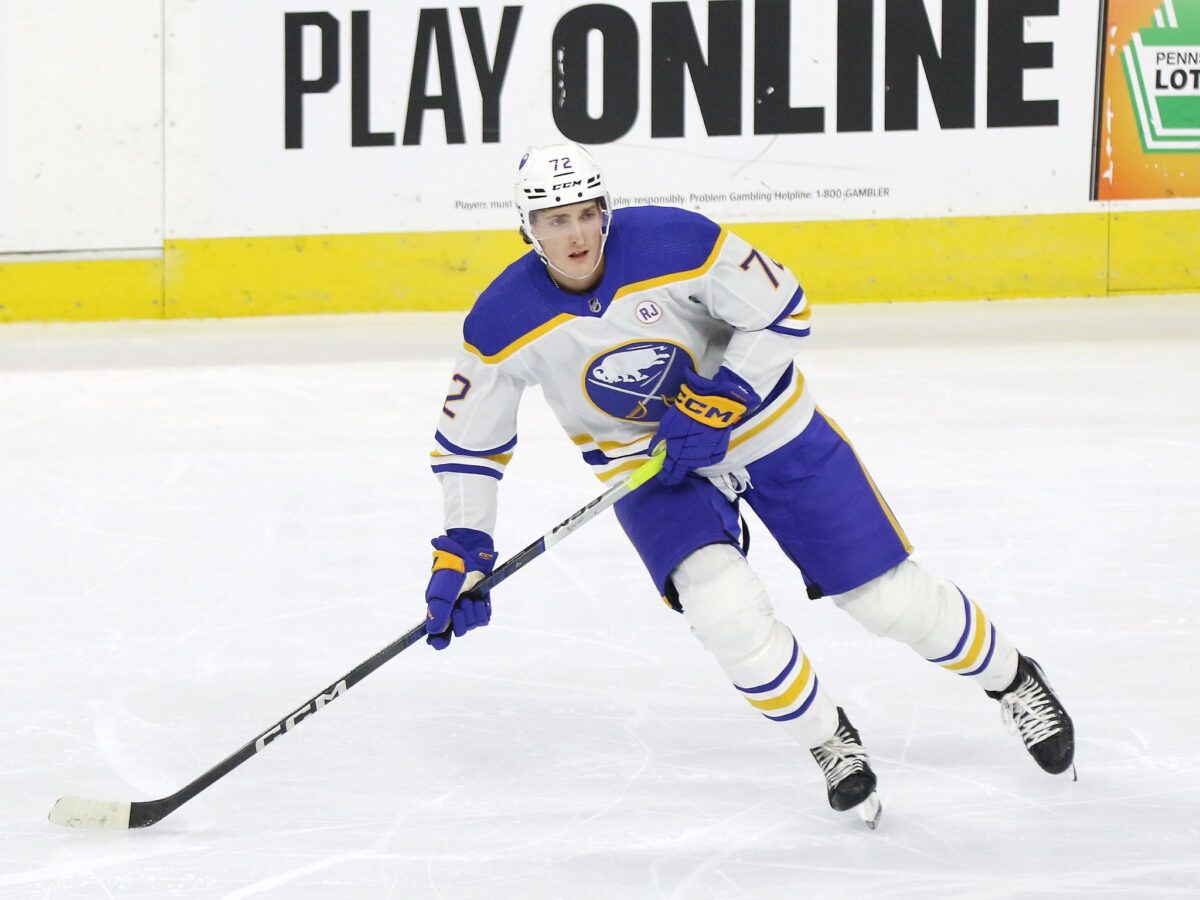
General manager Kevyn Adams failed to address the glaring need for a top-six forward during the offseason. The Sabres were linked to players like Martin Nečas and Nikolaj Ehlers, but neither deal materialized. Ehlers remained with the Winnipeg Jets, while the Carolina Hurricanes re-signed Nečas to a two-year, $13 million contract. According to Frank Seravalli of The Daily Faceoff, there was reportedly a deal in place to bring Nečas to Buffalo, but it fell through when he refused to sign with the team.
To Adams’ credit, his acquisition of Ryan McLeod via trade and the signing of Jason Zucker to a one-year, five-million-dollar deal were excellent moves. Both players have been bright spots: McLeod has six goals and six assists (12 points) in 26 games, while Zucker has five goals and 11 assists (16 points) in the same span.
Still, Adams must take additional action to address the ongoing inconsistencies in the top six. Securing another key forward could be the move that salvages the Sabres’ season.
Sabres’ Blue Line Is Underperforming
On paper, the Sabres boast a highly talented blue line, anchored by stars like Rasmus Dahlin, Bowen Byram, and Owen Power. Yet, the group hasn’t lived up to expectations. While some of the struggles can be attributed to inconsistent performances from players like Jacob Bryson and Connor Clifton, the overall defensive unit has underperformed. They’re leaving goaltenders exposed, struggling with basic puck movement, and making avoidable mistakes—a concerning pattern that has persisted.
The Sabres currently have a 3.12 goals-against average, ranking 19th in the NHL. While that figure doesn’t seem outright disastrous, it’s less a reflection of goaltending and more indicative of broader defensive issues. For a unit with this much talent, the lack of cohesion and execution remains a glaring problem.
Related: Sabres Captain Rasmus Dahlin Likely to Miss Time Due to Injury
There are moments when the Sabres’ blue line looks as solid as it should on a consistent basis—but those games feel like the exception rather than the rule. Power has been struggling lately, which hasn’t helped his defensive partner Henri Jokiharju, who has been the team’s weakest defenseman. On the other hand, the pairing of Dahlin and Byram, who have spent most of the season together, has been a bright spot. Despite a few miscues, Dahlin continues to play at a high level even while battling injuries, and Byram is off to the best start of his young NHL career.
Sabres’ Goaltending Only Bright Spot
If there’s one position group performing well for the Sabres, it’s the goaltenders. Starting netminder Ukko-Pekka Luukkonen (UPL) has carried over his strong play from last season. In 17 games this season, he’s posted a 2.69 goals-against average (GAA) and a .906 save percentage (SV%). Meanwhile, James Reimer, in his two appearances for the Sabres, has been stellar with a 2.06 GAA and a .923 SV%.
Starting with UPL, his performance has been better than the raw stats suggest. His numbers are slightly skewed by five games this season where he allowed four or more goals, including his first two starts. However, in 10 of his 17 outings, he has given up two or fewer goals. He currently ranks 20th in the NHL in goals saved above expected (GSAx) at plus-3.8, according to MoneyPuck. UPL has repeatedly bailed out the Sabres, including a highlight-reel save on former Sabre Casey Mittelstadt in the first period of Tuesday’s game.
As for James Reimer, he has been a pleasant surprise since returning to the Sabres. After being waived by Buffalo before the season and briefly claimed by the Anaheim Ducks—who then waived him a week later—Reimer found his way back to Buffalo. His strong performances prompted the team to send Devon Levi to the American Hockey League (AHL) for further development. At 36 years old and in the twilight of his career, Reimer has exceeded expectations, especially considering the struggles the team faced with Levi, who was initially projected to be UPL’s backup this season. Reimer’s contributions have been a welcome boost for the Sabres’ goaltending depth.
Sabres Need to Make Changes Now
Tuesday night’s collapse should have been a wake-up call for Sabres owner Terry Pegula to initiate changes within the organization and the team. Yet, no adjustments have been made. Whether it’s keeping general manager Kevyn Adams through the season or making a bold trade, something needed to happen. After an inspiring 3-0 West Coast road trip, the team has once again dug itself into a hole—the fourth such setback this season. This pattern of inconsistency is exactly why the Sabres appear unlikely to break their playoff drought.
Related: Buffalo Sabres’ Players and General Manager Need To Be More Accountable
Even with Lindy Ruff returning as head coach, there seems to be a lack of accountability in the locker room. A statement needs to be made, whether it’s through a trade, waiving a player, or sending someone to the AHL. Tuesday’s collapse marked only the second time in franchise history the team blew a 4-0 lead to lose—and the first time it happened on home ice. Moments like that demand action.
The solution seems straightforward: make a couple of trades. Acquiring a top-six forward could stabilize the offense, and a reliable defenseman would help shore up the blue line. With Dahlin potentially sidelined, the call-up of Ryan Johnson from the AHL was a necessary move, but it underscores the urgency for Adams to upgrade the defensive corps. While the Sabres don’t need to land a player of Dahlin’s caliber, adding a top-four defenseman to pair with Power until Dahlin returns—and complement him afterward—would make a huge difference.
Fans are starting to lose faith in the team again, and the only way to regain their trust is by consistently winning and demonstrating a commitment to improvement. If Adams were to make impactful trades to strengthen the roster, even if the moves come with risks, fans would likely support the effort as long as it produces results.
Should the Sabres clean house? It’s a fair question. While a complete overhaul might feel extreme, it’s clear that changes are needed—both on the ice and within the organization—to restore the team’s competitive edge and earn back the loyalty of their fanbase.
