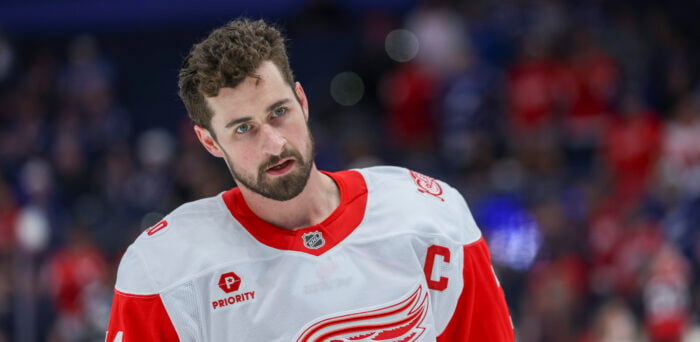
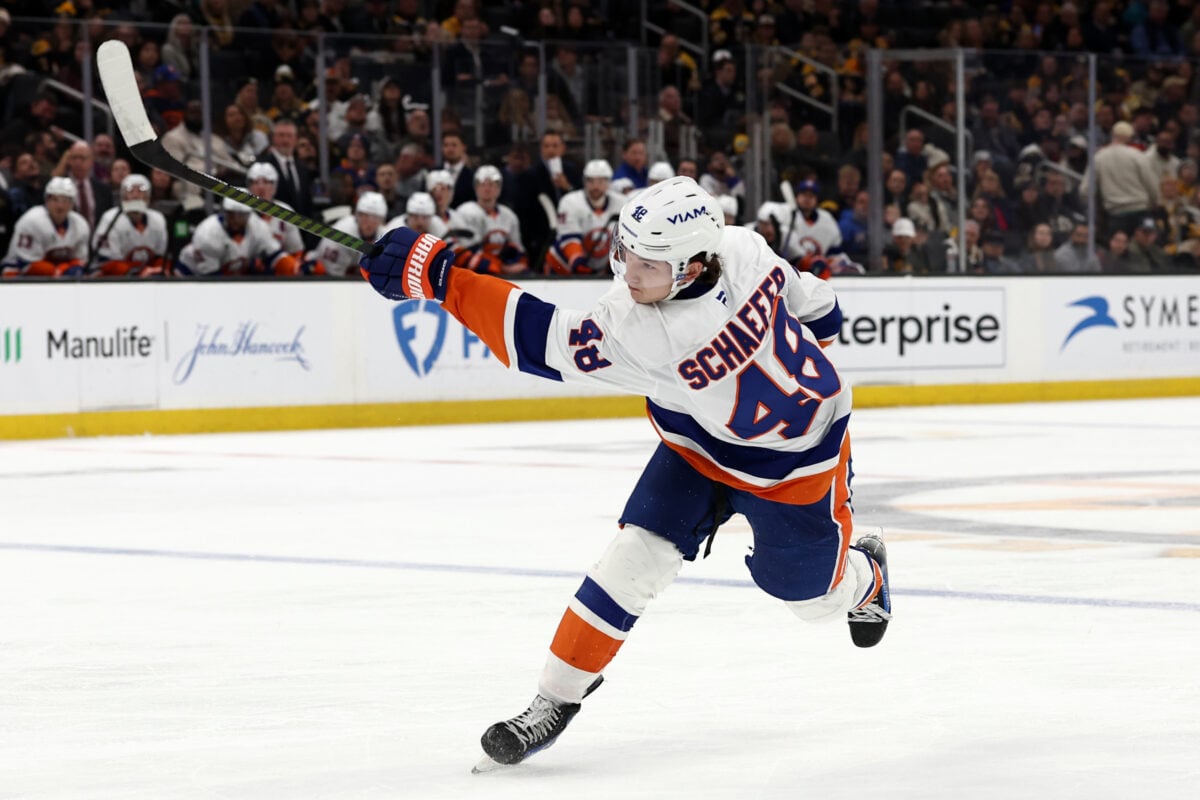
To almost no one’s surprise, Matthew Schaefer was awarded the 2026 Calder Trophy as the NHL’s rookie of the year, becoming the first unanimous choice for the award since Teemu Selanne in 1992-93. Despite great seasons from runners-up Ivan Demidov and Beckett Sennecke, Schaefer had a season for the ages. His 23 goals not only tied for the rookie goal-scoring lead but also tied Brian Leetch for the most goals by a rookie defenceman in history. He also became the youngest defender to hit 50 points, joining Phil Housley as the only 18-year-olds to do so.
Although Schaefer is the fourth defenceman to win the Calder since 2020, he’s only just the 15th defenceman to win it since the award was introduced in 1937. Meanwhile, 16 goalies have taken home the trophy, despite there being three times more defenders participating in any given season. Defencemen seem to be at a huge disadvantage in the NHL’s rookie of the year race, but when looking through past winners and near misses, there are a few trends that can predict a Calder-calibre defenceman.
50 is the Magic Number
The 2020 Calder race between Cale Makar and Quinn Hughes was one of the most exciting in recent memory. Both were highly dynamic defencemen equally deserving of the award, and by the end of the season, they finished one-two in rookie scoring, with Hughes sitting three points ahead of Makar at 53. While it wasn’t the highest-scoring rookie race, it was the first time a rookie defenceman had put up 50 points since 1993, and the first time since 1989 that a defenceman had led all rookies in points.
That year set a new 50-point precedent for rookie defencemen. Since then, every defenceman to hit it has won the award. In 2022, Moritz Seider took home the Calder with a 50-point season, and in 2025, Lane Hutson won it with an incredible 66 points, tying Housley for the fourth-highest total from a rookie defenceman in NHL history. Now Schaefer has joined that exclusive group, finishing with an impressive 59 points while playing all 82 games.
Although 50 points have always been impressive for a defenceman, it’s become much more common recently. In 2025-26, 22 defencemen put up at least 50 points, the most in a single season since 1992-93, while only 24 forwards hit 80 points this season, giving those two totals a similar difficulty in today’s NHL. However, in 1992-93, 52 players had at least 80 points, completely overshadowing the accomplishments of skilled offensive defencemen. The number of 50-point defencemen was more comparable to the number of 100-point players, but the two totals were never treated the same.
50 points have become so important that missing that magic number can put a rookie defenceman at a serious disadvantage. Luke Hughes and Brock Faber tied with 47 points in 2023-24, but the award went to Connor Bedard, who finished with just 61 points, a good-but-not-great final tally. Zach Werenski led all defencemen with 47 points in 2016-17, but saw the Calder go to Auston Matthews 69-point effort. Then, in 2018-19, Rasmus Dahlin had a very strong 18-year-old season, putting up 44 points, but the Calder went to Elias Pettersson, who had just 66.
Uncovering a Calder Heirarchy
The power of the magic number is largely dependent on a lower-scoring era. Demidov’s 62 points are the second-highest single-season rookie total from a forward since 2019-20, finishing just one point shy of Macklin Celebrini, Matvei Michkov, and Michael Bunting. Those totals pale in comparison to previous eras, though; between 1978 and 1994, not a single leading rookie scorer put up fewer than 65 points, including the defenceman.
In 1979-80, Ray Bourque was named the top rookie after putting up 65 points, which was the highest total for a Calder-winning defenceman until 1985-86, when Gary Suter put up 68 points and took home the trophy. Then, in 1988-89, Brian Leetch led all rookies with 71 points, becoming just the second defenceman to lead the rookie scoring race after Bobby Orr did it with 41 points in 1966-67.
However, these are not the highest-scoring defencemen in NHL history. Larry Murphy owns the record for the most points by a rookie defenceman with 76 in 1980-81. In 1982-83, Housley set a record for points from an 18-year-old defender, finishing with 66 points. Two seasons later, Chris Chelios put up 64 points, joining Barry Beck, Reed Larson, and Nicklas Lidstrom as one of the 10 rookie defenders to surpass 60 points. None of them won the Calder Trophy.
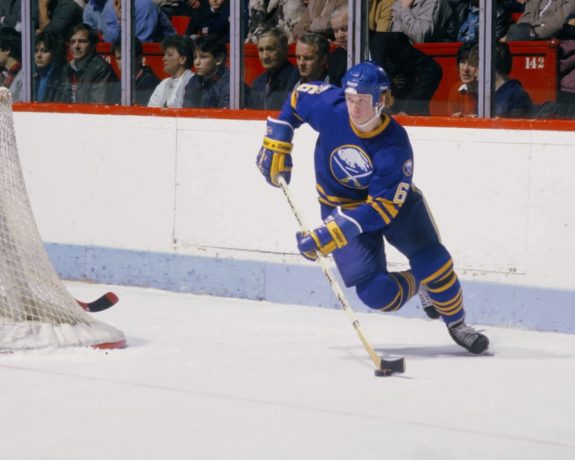
The problem is the competition, namely from the forwards. Because a defenceman generally plays behind the play, or at least was expected to, then high-flying forwards got more attention. The only way to steal it away was to finish within striking distance of their point total. Bourque and Suter were within 10 points of the leading scorer in their rookie year, as was fellow Calder defenceman Denis Potvin in 1973-74. Murphy’s production was incredible, but when compared to Peter Stastny’s 109 points, it just didn’t hold up.
There seems to be an accepted gap which a forward needs to surpass to remain the Calder favourite, especially if a defenceman finds the magic number. Thankfully, Dale Tallon helped find it in 1970-71 when he became the first rookie defenceman to hit at least 50 points. However, the Calder went to Gilbert Perreault, who finished with 38 goals and 72 points. The gap was later confirmed by Steve Vickers, Eric Vail, and Willi Plett, who all finished with sub-70-point seasons but still managed to score at least 30 goals.
Thus, the Calder hierarchy appears to be: if a forward scores less than 70 points, then a defenceman with 50 points is considered the next best option; however, if no defenceman passes the magic number, and a forward manages to score 30 goals, or at least establish a significant gap between them, the Calder Trophy belongs to the forward. That explains why Werenski and Dahlin weren’t considered legitimate Calder threats in their rookie years. In 2016-17, Matthews finished with 40 goals, the most from a rookie behind Alex Ovechkin in the past 20 years, and although Dahlin had youth on his side, his point total wasn’t close enough to Pettersson to warrant more than a single first-place vote.
Every Good Rule Has Exceptions
While nine defencemen have won the Calder while hitting the magic number or leading the rookie scoring race, that still leaves six defencemen unaccounted for, as well as a few who should have won based on our rubric.
Three defencemen won without coming close to the 50 points, thanks to competing in a weaker rookie class. The first was Kent Douglas, who won the Calder in 1962-63. He was 26 years old and had just 22 points over 70 games that season, but he was a great shutdown defender and tough as nails, having learned from his mentor, Eddie Shore. Shore owned the American Hockey League’s (AHL) Springfield Indians during the four seasons Douglas played there, which not only helped the young defender win the AHL’s Best Defenceman (Eddie Shore) Award and three Calder Cups, but he also helped the Toronto Maple Leafs win their 11th Stanley Cup in 1963. He was consistent and reliable, and that stuck with voters.
The next was Jacques Laperriere, who won the Calder the following season. He too wasn’t a big scorer, finishing with 30 points, although he was second among all rookies behind John Ferguson, who had just 45 points. However, what stuck out was his plus-25, the highest among all rookies. He took home the Calder in 1964, then added a Norris Trophy as the NHL’s best defenceman to his collection in 1965.
It took nearly 40 years before another defensive-minded defender was crowned the top rookie, but in 2002-03, Barrett Jackman took home the Calder ahead of Henrik Zetterberg and Rick Nash. While it might not seem like a weak rookie class, Zetterberg finished with just 44 points that season, while Nash had 39. Meanwhile, Jackman played all 82 games as a 20-year-old while supporting Chris Pronger on the St. Louis Blues’ top pair and averaged over 20 minutes a night, yet still put up a team-leading plus-23, which came second among all rookies. Add in his 190 penalty minutes, and voters were swept up in the hard-nosed defender’s wake, leading to the unconventional Calder victory.
That should have also worked for Nicklas Lidstrom in 1991-92. The Detroit Red Wings rookie finished fourth in rookie scoring, putting up 60 points, while also leading all rookies with a plus-35. However, he lost out to Pavel Bure for the rookie of the year, despite the Russian Rocket putting up the same number of points. The votes were close – Bure received just three more first-place votes – but Bure finished his rookie season with 34 goals in just 64 games, giving rise to his iconic nickname.
It also helped that Bure was a year younger than Lidstrom, which three other defencemen used to their advantage. Both Tyler Myers and Bryan Berard were 19 when they won it following 48-point seasons, which were deemed far more impressive than the 50-point forwards they were up against. Aaron Ekblad had tougher competition in 2014-15, with Johnny Gaudreau and Mark Stone finishing tied with 64 points, but at just 18 years old and fresh off the NHL Draft, his 39 points were good enough, especially considering he missed a single game all season.
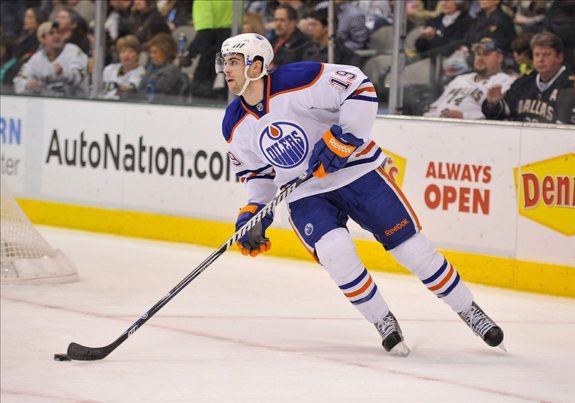
Lockouts also complicate Calder races. In 2012-13, the Edmonton Oilers had both the leading rookie scorer in Nail Yakupov, who had 31 points in 48 games, as well as the leading rookie defender, Justin Schultz, who finished with 27 points. However, both were left off the final Calder ballot, with the race coming down to Jonathan Huberdeau and Brendan Gallagher. Schultz was unlikely to hit the magic number, but Yakupov was on pace for just 53 points, which should have given the defenceman the edge. In this case, defensive impacts hurt the young Oilers’ chances, as both were among the worst in Edmonton that year.
It was a similar story in 1994-95 during the NHL’s first lockout, but Peter Forsberg was far and away the best rookie that season, finishing with 50 points in 47 games, with Jim Carey finishing second, who was also nominated for the Vezina Trophy as the NHL’s best goalie.
Goalies are the true Calder wildcard; they can capture the hockey world’s attention and steal an award away from some very tough competition. Ed Belfour grabbed the Calder from 31-goal scorer Sergei Fedorov in 1990-91, and 18-year-old Tom Barrasso usurped Steve Yzerman’s 87-point rookie season for the Calder in 1983-84. Both goalies also took home the Vezina that season. Martin Brodeur wasn’t quite as dominant, but his deep playoff run in 1993-94 beat out three 30-goal scorers in Mikael Renberg, Alexei Yashin, and Jason Arnott for the Calder. Under normal circumstances, a forward would have taken the award.
Goalies can also benefit from a weaker rookie class. Like Myers and Berard, Evgeni Nabokov, Andrew Raycroft, and Steve Mason didn’t have a lot to compete against when they won their Calder Trophies. Not only were there no 40-point defencemen in those seasons, but there also weren’t any 70-point players and only one 30-goal scorer. All goalies did well, with Nabokov and Mason finishing with over 30 wins and Raycroft nearly getting there with 29, but they had much weaker competition in one of the lowest-scoring eras in modern history.
Schaefer Has History On His Side
In today’s NHL, a rookie defenceman needs to have 50 points to be considered a serious Calder candidate. If they don’t quite get there, they need to hope that the forwards in front of them either don’t score 30 goals or put up less than 70 points, or that a goalie doesn’t get hot and finish with 30 wins. Even then, without that magic number, it’s unlikely that a defenceman will win the Calder.
This season, Demidov fell short of the 70-point threshold, and Sennecke’s 23 goals weren’t as impressive as 23 goals from a defenceman. Schaefer easily surpassed the magic number and was also the youngest player in the NHL in 2025-26. It’s honestly a surprise that there was a vote at all. Schaefer was the obvious choice in every metric most voters use to determine the best rookie of the year.
Free Newsletter
Get Hockey History coverage delivered to your inbox
In-depth analysis, breaking news, and insider takes - free.
Subscribe Free →