The NHL has hit the point in the season in which the league would take a break from regularly scheduled programming to put on the spectacle known as All-Star Weekend. This season – one year away from the 2026 Winter Olympics in Milan and Cortina – the NHL has replaced it with the 4 Nations Face-Off, an international tournament which takes place between Feb. 12-20.
This event will see Canada, the United States, Finland, and Sweden face off in a round-robin style preliminary round followed by a final contested by the top two teams after the three-game group stage. The truncated showcase is viewed as a trial run for future World Cups and other NHL-sponsored events, and is the first time NHL players will participate in a best-on-best tournament since the 2016 World Cup of Hockey after the league pulled out of the 2018 and 2022 Winter Olympics.
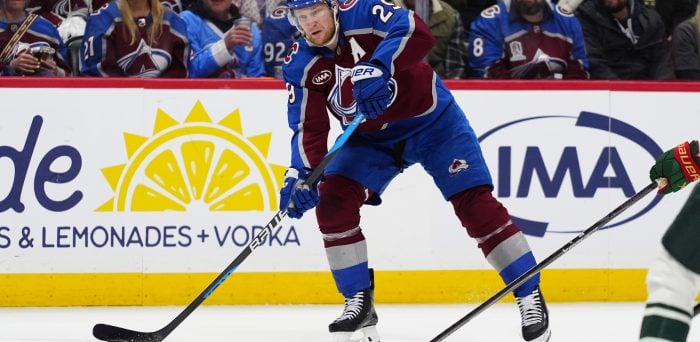
While the Colorado Avalanche will see four of their best players take on starring roles at the 4 Nations Face-Off and are stunting the momentum of winning five of their last seven games, the two-week break comes at a perfect time for the rest of the team’s supporting cast. Abysmal goaltending and injuries have been an issue all season, but the team has managed to build an eight-point lead on the Calgary Flames who sit just outside the Western Conference playoff picture.
With that, let’s dive into what the break means for the Avalanche and what the team can expect when they return to regular-season play on Feb. 22 against the Nashville Predators.
Avalanche’s 2022 Stanley Cup is a Distant Memory
The Avalanche’s dominant 2022 Stanley Cup win has been punted to the rearview in an industry defined by the expression of “what have you done for me lately”, fairly or not. After following up their championship effort with two underwhelming campaigns, the 2025 Playoffs have taken on greater weight for the organization’s top decision-makers.
For a team with championship aspirations, losing in the first round to an underdog (Seattle Kraken in 2023) and falling flat against a division rival in the second round (Dallas Stars in 2024) is unacceptable. The Avalanche have dealt with poor goaltending, Gabriel Landeskog‘s uncertain recovery timeline, Valeri Nichushkin’s off-ice issues, and a hole at second-line center that has not been adequately addressed since Nazem Kadri left for the Calgary Flames as a free agent during the 2022 offseason. J.T. Compher, Ryan Johansen, and Casey Mittelstadt (among others) have tried their hand, but none have made the role their own.

It’s not as though the Avalanche have struggled to find regular-season success in that time. The team finished sixth in the league by points percentage (PTS%) in 2022-23 and eighth in 2023-24, but have gone 9-9 over their last two playoff runs. The Avalanche have advanced to at least the second round in five of the six postseasons since the start of the Cale Makar era (2019 Playoffs) and have won the second-most playoff games in that time (47), but their recent outings have been disappointing for a fanbase with high expectations.
Contention windows can open and close abruptly in the salary cap era, and every season that goes by without playoff success can feel like a punch to the gut.
Avalanche’s Injury Crisis Threatening Season
According to NHL Injury Viz, only the San Jose Sharks have accumulated a higher sum of CHIP (Cap Hit of Injured Players) than the Avalanche this season. Most of that is owed to Landeskog’s continued aDoubsence ($7 million cap hit), but each of Nichushkin (36 games), Miles Wood (34), Jonathan Drouin (33), Ross Colton (17), Josh Manson (14), and Artturi Lehkonen (12) have missed at least 12 games this season.
You May Also Like:
- 3 Takeaways From the Avalanche’s 6-3 Win Over the Lightning
- Avalanche Hurt Most by Defensive Lapses
- NHL Concern-O-Meter: How Worried Should These 7 Teams Be?
- Can Avalanche’s New Power Play Leadership Unlock a New Level of Success?
- Each Western Conference Team’s Biggest Concern Early in 2026-27
That may not seem like much on the surface, but each of those man-games lost totals account for 20% or more of the schedule to date. Getting the stars back healthy from the 4 Nations Face-Off is imperative, and giving Nichushkin and Manson extra time to recover is a welcome development.
Lehkonen, Nichushkin, and Drouin are fifth, sixth, and seventh among Avalanche skaters in scoring over the past three seasons, meaning that Colorado has often been a one-line team up front due to those notable absences. MacKinnon and Mikko Rantanen (now traded for Martin Necas) rank first and fourth among all NHL forwards in average ice time on the season, with Necas ranking fourth among all forwards since the trade.
The erosion of the supporting cast through injury has heaped more pressure on the likes of Mittelstadt, who has not responded well to the increased responsibility while being saddled with wingers who would be more comfortable down the lineup when everyone is healthy.
Mittelstadt’s most common linemates at five-on-five have been Rantanen, Colton, and Logan O’Connor. While the latter two are fine players, they are better suited to a third-line role on a Stanley Cup contender, a spot they would be in if the lineup was at full strength or acquired reinforcements at the trade deadline.
The 26-year-old Mittelstadt has tallied nine goals and 32 points in 57 games, which is underwhelming production for a player making $5.75 million per season. He’s also struggling to drive play at five-on-five, with the Avalanche accounting for a miserable 44% of the expected goals share and 42% of the high-danger chances when he is on the ice. He’s underwater in terms of possession, and is the Avalanche player most in need of a break and a reset ahead of the stretch run.
Avalanche Should Be Re-Energized After 4 Nations
Assuming that the Avalanche’s stars return from the 4 Nations Face-Off without too much wear and tear, the team should be poised to finish the regular season strong and challenge for one of the Central Division’s automatic playoff spots.
Colorado is two points back of the Minnesota Wild in third (who have one game in hand on the Avalanche) and four points back of the Stars in second (who have two). Given that the Avalanche started the season with four straight losses and sported a record of 13-12-0 at the start of December, being within striking distance of home-ice advantage with 25 games to go is a relative miracle.
The team has been borderline unbeatable since trading Justus Annunen to the Nashville Predators for Scott Wedgewood before also trading Alexandar Georgiev to the Sharks for Mackenzie Blackwood. Since Wedgewood’s first start on Dec. 3, the Avalanche have gone 20-10-2 and own the fourth-best PTS% in the NHL over that time.
With the goalie problem solved, getting the team’s supporting cast back to full health could be a precursor for a dominant stretch to end the season. The 4 Nations Face-Off could not have come at a better time, and the rest of the NHL better watch out.
Data courtesy of Evolving Hockey, Natural Stat Trick and the NHL.
Free Newsletter
Get Colorado Avalanche coverage delivered to your inbox
In-depth analysis, breaking news, and insider takes - free.
Subscribe Free →