It’s the question making the rounds this offseason, and Halford & Brough put it plainly: Can the Vancouver Canucks ride their blue line and goaltending back to the playoffs—even if their forward group still raises eyebrows?
The honest answer? Maybe. And in Vancouver, that’s more hope than fans have had in several seasons.
What Are Halford & Brough Saying About This Canucks Team?
On their morning show, Halford & Brough dove into what the Canucks are building on the back end. They weren’t precisely predicting a deep run, but they were seeing some hope. “It’s a good, solid blue line,” Brough noted, “with young guys who might be ready to jump.” While that’s not a bold prediction, but it’s also not doom and gloom.
The Canucks’ blue line is quietly shaping into a strength heading into next season. With Quinn Hughes and Filip Hronek anchoring the top pair, and a potential second unit of Marcus Pettersson and promising rookie Tom Willander, there’s a nice blend of experience and upside.
Elias Pettersson (defenseman) could slot in alongside the veteran Tyler Myers, giving the team a reliable third pair with mobility and size. Add depth options like Victor Mancini, Cole McWard, or a steady veteran pickup, and Vancouver suddenly has a blue line that looks balanced and capable, especially if their goaltending holds up. It might not be flashy, but it could be the foundation of a playoff push.
That’s three pairs with balance: lefty-righty combos, experienced players paired with younger, high-upside talent. “Old and young together,” Halford said. And the big wild card? Willander. If he shows well in camp and isn’t traded, he could step right into a top-four role.
They also noted the chatter about needing a reliable penalty killer to replace someone like Derek Forbort—but that’s the hole you can plug with an astute one-year signing.
What Makes This Canucks Team Potentially Different?
What stood out in the conversation was the idea of identity. The Canucks aren’t trying to outscore teams 5-4 every night. They’re slowly becoming a team built around structure, goaltending, and high-IQ defensive play.
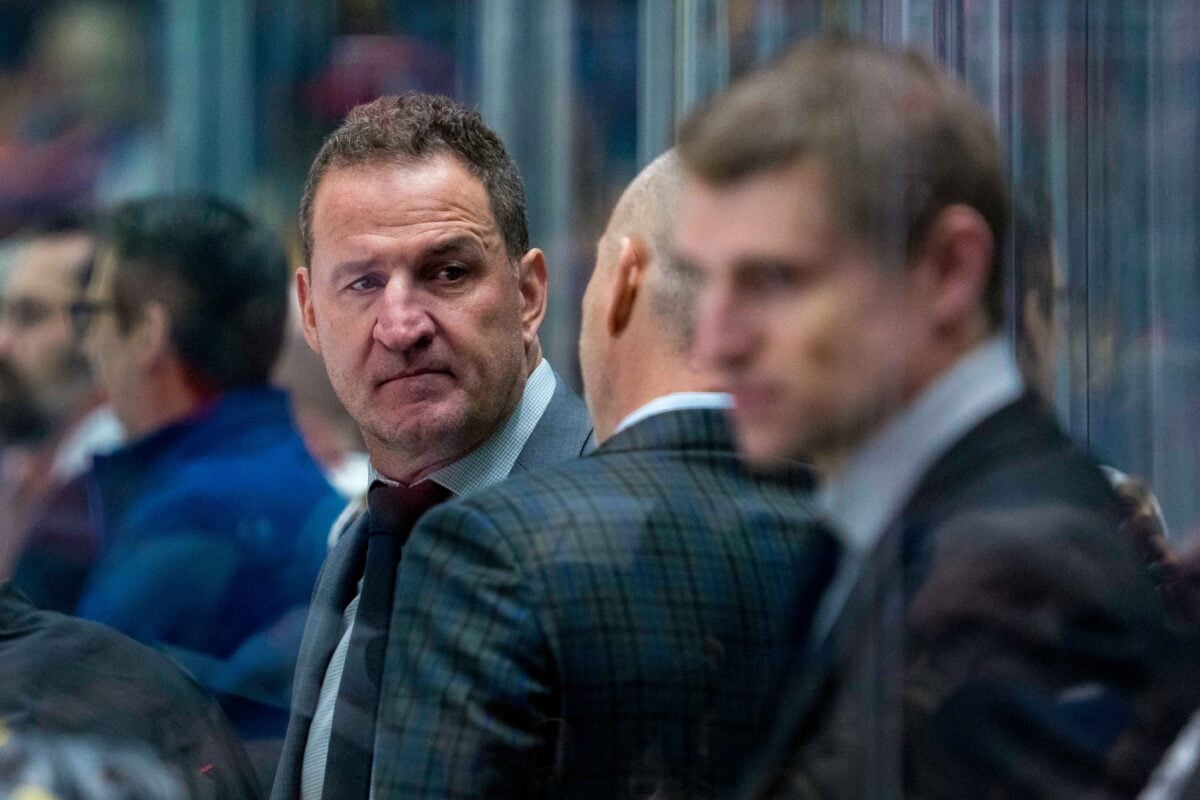
New head coach Adam Foote, a former shutdown defenseman himself, now leads a group whose strength mirrors his playing style. “Who better to coach a defence-first team than one of the best defensive players of his generation?” Halford asked. It’s a fair point.
Of course, every good defensive team needs at least one guy up front who can create magic. And that’s where Elias Pettersson—yes, the other one—enters the conversation. Halford & Brough jokingly called the Swedish forward the team’s “secret weapon” and “the wild card.” If he rediscovers the form he showed two seasons ago, there’s your game-breaker. “He is, theoretically,” Halford added. But you can tell they are not yet willing to believe he’s capable of a bounce-back season.
In this conversation, Halford and Brough compared the Canucks to Nashville. The Predators once leaned on blue-line strength and elite goaltending, only to eventually bring in a top offensive weapon (hello, Filip Forsberg) to put them over the top. The question is, where do the Canucks find their Forsberg?
The Canucks Playoff Path Might Be Through the Back Door
The bigger question is whether this kind of team—heavy on structure and light on offensive flash—can survive the grind of an 82-game season and emerge with a playoff spot.
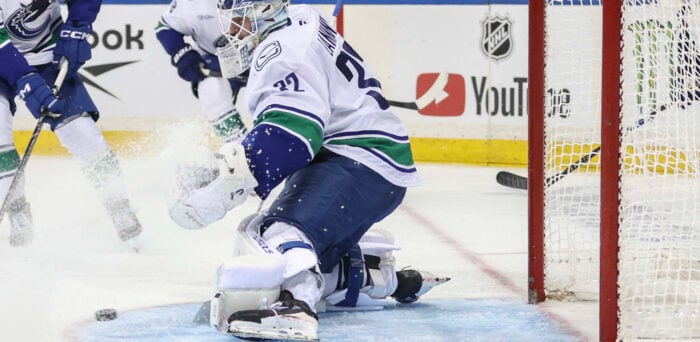
The answer probably depends on the goaltending. Thatcher Demko, when healthy, is elite. Kevin Lankinen is signed for a few more seasons, and he could be the real deal, too. With above-average goaltending and a maturing blue line, Vancouver could steal a wildcard spot, even with a “so-so forward group,” as the show put it.
And once you’re in? Well, anything can happen, especially if you’ve already built the kind of defence-first foundation that playoff hockey rewards.
So, What’s the Best the Canucks Hope for This Coming Season?
Hope isn’t always about banners and parades. Sometimes, it’s about stability. Structure. A clear path forward. Neither Halford nor Brough sees a team that’s capable of going a long way in a Stanley Cup postseason run. Their hope for this Vancouver team isn’t just that the Canucks make the playoffs.
Instead, it’s that the team finally figured out what kind of team they want to be. Defence-first. Goalie-supported. Tough to play against. With a little bit of magic sprinkled on top.
That might not sound like a Stanley Cup contender yet. However, after a decade of spinning their wheels, it sounds like progress.
Free Newsletter
Get Vancouver Canucks coverage delivered to your inbox
In-depth analysis, breaking news, and insider takes - free.
Subscribe Free →