It is often said that professional sports are a cold, transactional business. We look at salary cap sheets, parse through underlying analytical metrics, and debate asset management as if the names on the backs of the jerseys are merely chess pieces on a board. But inside the four walls of an NHL locker room, the human element is everything.
Culture isn’t just a buzzword thrown around by executives at season-ending press conferences; it is the fragile, living ecosystem that dictates whether a talented group of individuals can actually transform into a winning team, or collapse under the weight of expectations. It’s what makes top executives cautious when exploring trades, and leaves fans wondering if their team has done enough to improve.
The smoke continues to billow around the reports from Daria Tuboltseva of RG.org that the Montreal Canadiens and Columbus Blue Jackets could be close to a potential blockbuster trade involving Kirill Marchenko. The discussion has naturally centred on what the 26-year-old winger brings on the ice. His 27 goals, his right-handed shot, and his commanding 58.76% Corsi percentage are all tantalizing pieces of data for a Canadiens team desperate for a premium top-six scoring punch.
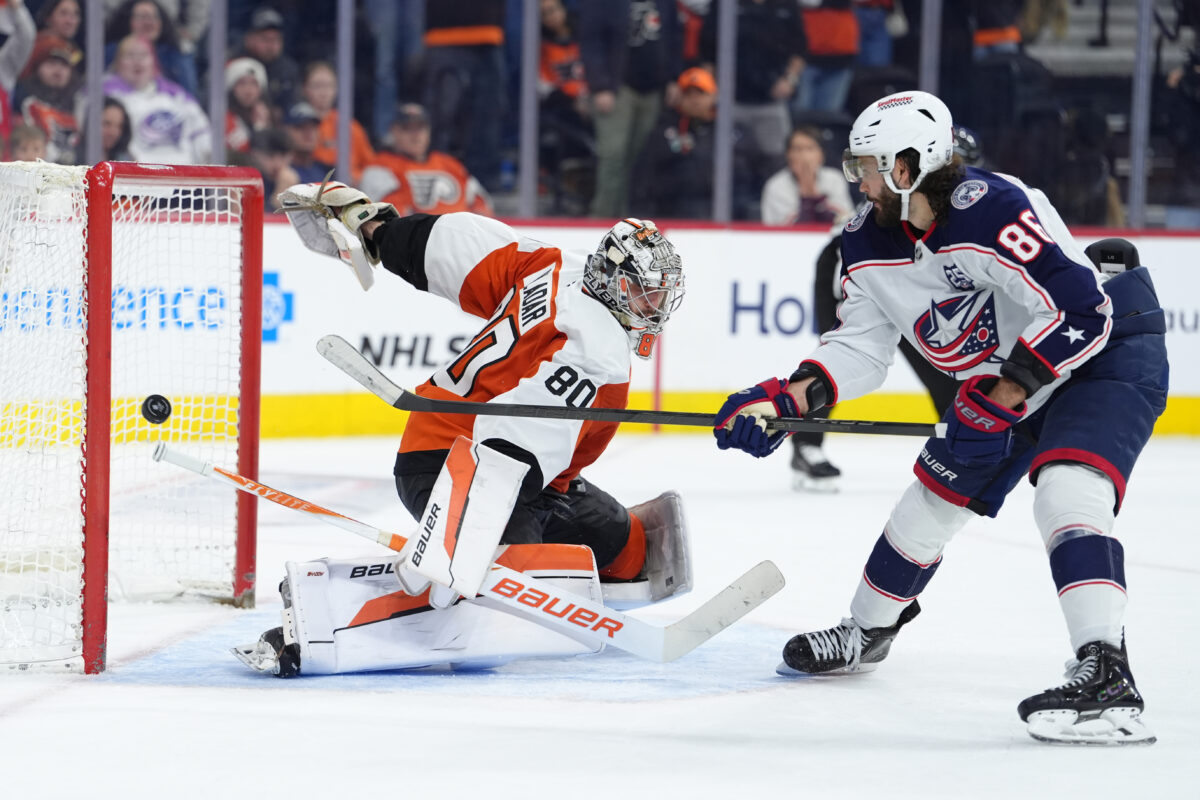
But if general manager (GM) Kent Hughes pulls the trigger on a deal of this magnitude, the most profound impact won’t just be felt on the stat sheet. It will alter the human dynamics of two entirely different dressing rooms, creating a fascinating ripple effect that touches everything from the integration of a future superstar to the emotional fabric of a tight-knit core.
The Big Brother Blueprint: Protecting Ivan Demidov
When the Canadiens selected Ivan Demidov fifth overall in the 2024 Draft, they didn’t just draft a hockey player; they drafted the future offensive anchor of the franchise. The hype surrounding the young Russian playmaker is already reaching a fever pitch in Montreal, a market that can swallow young players whole if they aren’t properly insulated.
Transitioning from Russia to the pressure cooker of Montreal is a daunting psychological mountain to climb. The language barrier, the cultural shift, the intense media scrutiny, and the sheer weight of expectation can isolate a teenager. We have seen it happen before in NHL history, even as the young Russian seems to be assimilating into it all very well.
This is where acquiring Marchenko transcends simple asset acquisition. He isn’t just an elite top-six winger; he is a charismatic, English-fluent, established NHL veteran who understands exactly what it takes to navigate the leap from the Kontinental Hockey League (KHL) to North America.
Inside the locker room, Marchenko would instantly be the ultimate safety blanket for Demidov. Having a fellow countryman on his line who can help navigate a coach’s subtle tactical cue on the bench, crack a joke in their native tongue during a stressful stretch, or guide him through the off-ice realities of living in a new country is an invaluable development tool.
Marchenko is well known in Columbus as one of the most infectious, positive personalities in the game. His smile is permanent, his energy is unceasing, and his teammates genuinely love being around him. For a quiet, hyper-focused rookie like Demidov, walking into a room and seeing that kind of exuberant support system can make a difference. It changes his comfort level, accelerates his adaptation, and allows him to just play hockey. Hughes and head coach Martin St. Louis have preached creating an environment where players can express themselves; Marchenko can provide the exact cultural bridge to ensure Demidov can do exactly that.
The Columbus Crisis: Culture vs. Leverage
On the flip side of this equation lies an entirely different human drama in Ohio. Don Waddell took over as general manager of the Blue Jackets with a clear mandate: stabilize an organization that has suffered through years of turbulence, draft lottery disappointments, and internal strife. Waddell wants to build a culture where players are proud to wear the jersey and fully committed to the long-term vision.
When a star player’s agent, like Dan Milstein, publicly or privately signals that his client has no intention of signing a long-term extension, it inflicts a deep wound on a locker room’s psyche. It sends a subliminal message to the rest of the roster that the current situation isn’t good enough, or that the grass is greener elsewhere.
For Waddell, the human element of managing this trade is a delicate tightrope walk. He cannot afford to let Marchenko’s contract situation become a toxic cloud that hangs over training camp. Young core pieces like Adam Fantilli and the rest of the leadership group need to feel that everyone in that room is pulling in the same direction.
But trading a popular, productive player because his camp forced the issue also carries risk. It can breed resentment among the players left behind, who look at Marchenko not as a trade chip, but as a friend and a vital offensive engine. It can trigger a domino effect that could force the franchise into a rebuild as other players demand trades. Waddell’s insistence on getting immediate, roster-ready talent back in any trade isn’t just about maintaining on-ice competitiveness; it’s a psychological necessity for his locker room. He needs to show his remaining players that if someone wants out, the team will bring in people who actively want to be part of the solution.
The Emotional Cost of Admission in Montreal
Beyond the cost of picks and prospects, if Hughes is to satisfy Waddell’s demand for established, young NHL talent, it means Montreal will have to part with players who are deeply embedded in the fabric of their own room. This is the hardest part of the human element in hockey, and likely what Milstein was referring to as the “steep tariffs”.
Outside of the usual prospects named, current NHL players like Alex Newhook, Kirby Dach, or Arber Xhekaj are routinely tossed around in trade hypotheticals. But to the players on the Canadiens, these aren’t names on a depth chart. Xhekaj is a folk hero and a fierce protector of his teammates, a player whose presence gives his peers an extra two inches of height on the ice. Newhook is a key depth piece with a Stanley Cup pedigree, for the young, tight-knit group that grew up together through the darkest days of the rebuild.
Trading an alternate captain or a beloved, homegrown core piece sends a shockwave through a dressing room. Captain Nick Suzuki has spent the last four years building a culture of brotherhood, where the bond between the players has carried them through difficult losses and gruelling developmental stretches. Breaking up that chemistry is an agonizing choice for a general manager.
When a popular teammate is shipped out, there is a mourning period in the room. Players have to adjust to the sudden absence of a friend in the stall next to them, while simultaneously welcoming a newcomer who is taking that friend’s spot. Hughes has to weigh whether the on-ice upgrade of Marchenko is worth the temporary emotional fracture it might cause within his leadership core. This is why a move before training camp instead of during the season makes more sense, as it makes it easier for all involved to digest and incorporate the changes without impacting game outcomes.
Managing the Internal Hierarchy
Should Marchenko arrive, St. Louis will also face the human challenge of managing egos and internal competition. The Canadiens’ top-six forward group is becoming increasingly crowded. The arrival of a 25-to-30 goal scorer means someone else’s ice time is getting cut.
Players like Zachary Bolduc, who fought tooth and nail for every minute of ice time, especially during the playoffs, and expanded his role, will likely see some of his ice time shrink, and any hope of earning power-play time disappear, despite his excellent release from the bumper. Marchenko’s high-volume shooting and right-handed one-timer make him a natural fit for the power play, a spot currently occupied by players who have earned that equity through sweat and loyalty. This would create some internal competition for the top unit, but also some friction.
Maintaining harmony when roles are diminished requires elite communication from the coaching staff. St. Louis excels at this, treating his players with transparency and respect. But the reality of a competitive NHL team is that internal competition can either elevate a group or create silent friction.
Ultimately, the Marchenko trade rumours are a stark reminder that hockey is played by people, not percentages. If a trade happens, it will be because Hughes believes the reward of stabilizing Demidov’s future and injecting a vibrant, proven goal-scorer outweighs the emotional cost of dismantling a piece of his current core.
Free Newsletter
Get Montreal Canadiens coverage delivered to your inbox
In-depth analysis, breaking news, and insider takes - free.
Subscribe Free →