A week ago, the San Jose Sharks looked like they had turned a corner. They had earned seven points in eight games, the kid line was humming, and the ugly start felt like it was behind them. Then the Calgary Flames came to town and smothered them 5-2, a listless effort that undid the good feeling in a single night. Head coach Ryan Warsofsky had seen enough.
What followed was three days of hard practice, two benched regulars, and a blunt message to his group, and the early returns suggest it worked. The Sharks responded by beating the Seattle Kraken 4-3 on Saturday, their fourth win in six games. It was not a coincidence. Warsofsky spent the week making his point in the clearest terms he had available to a coaching staff that had spent two months searching for consistency.
The Message Behind the Benchings
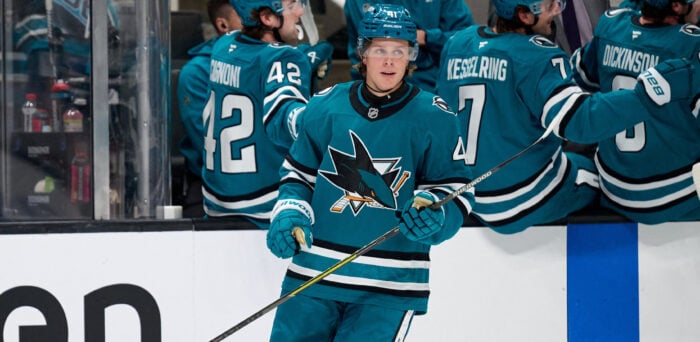
The centerpiece of the week was the healthy-scratching of forward Collin Graf and defenseman Michael Kesselring against Seattle; two regulars sat down to send a message the rest of the room could not miss. Warsofsky’s instruction to Graf was as direct as it gets. Skate faster, play harder. For a player who scored 21 goals a season ago and has just three this year, it was a pointed demand to raise his competitive level rather than worry about the scoresheet.
Kesselring got a similar talking-to, and he did not take it quietly. After being left out of line rushes at practice, the defenseman stayed on the ice alone once his teammates had gone, and he pushed back when asked about it, noting his underlying numbers had been fine. Warsofsky’s answer was that the game is about more than expected goals, that he wanted Kesselring to be simpler, harder to play against, and more trustworthy on his own end.
Both players believed they had been contributing. The coach disagreed, and he made the disagreement public. That tension is the point. Warsofsky has spent all season preaching identity and buy-in, and for a stretch it sounded like a coach losing patience with a roster that would not listen. The benchings flipped the dynamic. Instead of talking about accountability, he enforced it, and he did it with players who thought they were doing enough.
Hard Practices and a Clear Standard
The scratches did not stand alone. After the Calgary loss, Warsofsky put the Sharks through an uncharacteristically hard practice capped with a bag skate, then followed it with two more demanding days built around defensive-zone work, battle drills, and breaking out as a connected five. The lines were shuffled almost beyond recognition, with Celebrini and Smith split up and depth players moved all over, less a tactical plan than a way to shake the group out of its comfort.

Warsofsky was candid about what he was doing. As a coach, he said, you have to find different ways to get your message across, and the week was exactly that: a deliberate effort to make the standard impossible to ignore. The drills themselves were pointed. Arrivals in the defensive zone, tracking back hard, closing quickly on puck-carriers, all the details that had gone missing during the Calgary no-show.
The Saturday result rewarded the approach. San Jose scored on three of its first seven shots, built a 4-1 lead, and held on against a late Kraken push. Macklin Celebrini reached 10 goals, Ivar Stenberg scored the game-winner on the power play, and the team closed out a one-goal lead in the third period rather than letting it slip, the kind of finish that was beyond them a month ago.
Whether It Lasts Is the Real Test
None of this means the Sharks are fixed. They remain near the bottom of the Pacific Division, their 5-on-5 offense is still a problem, and one win over a middling Seattle team does not erase the larger issues on the roster. Benchings and bag skates are blunt instruments, and they tend to lose their effect if a coach reaches for them too often. The harder trick is sustaining the response once the message fades.
But the significance of the week is that Warsofsky got a response at all. The coach who was under fire a few weeks ago, whose own captain publicly pushed back on his buy-in comments, just leaned hard on his group and watched it answer. That is a meaningful shift in a season that has tested his standing. The Sharks are 4-1-1 in their last six, and the common thread is a team that is finally playing the way its coach has demanded since training camp. The tough love was a gamble. For now, at least, it is paying off.
Free Newsletter
Get San Jose Sharks coverage delivered to your inbox
In-depth analysis, breaking news, and insider takes - free.
Subscribe Free →