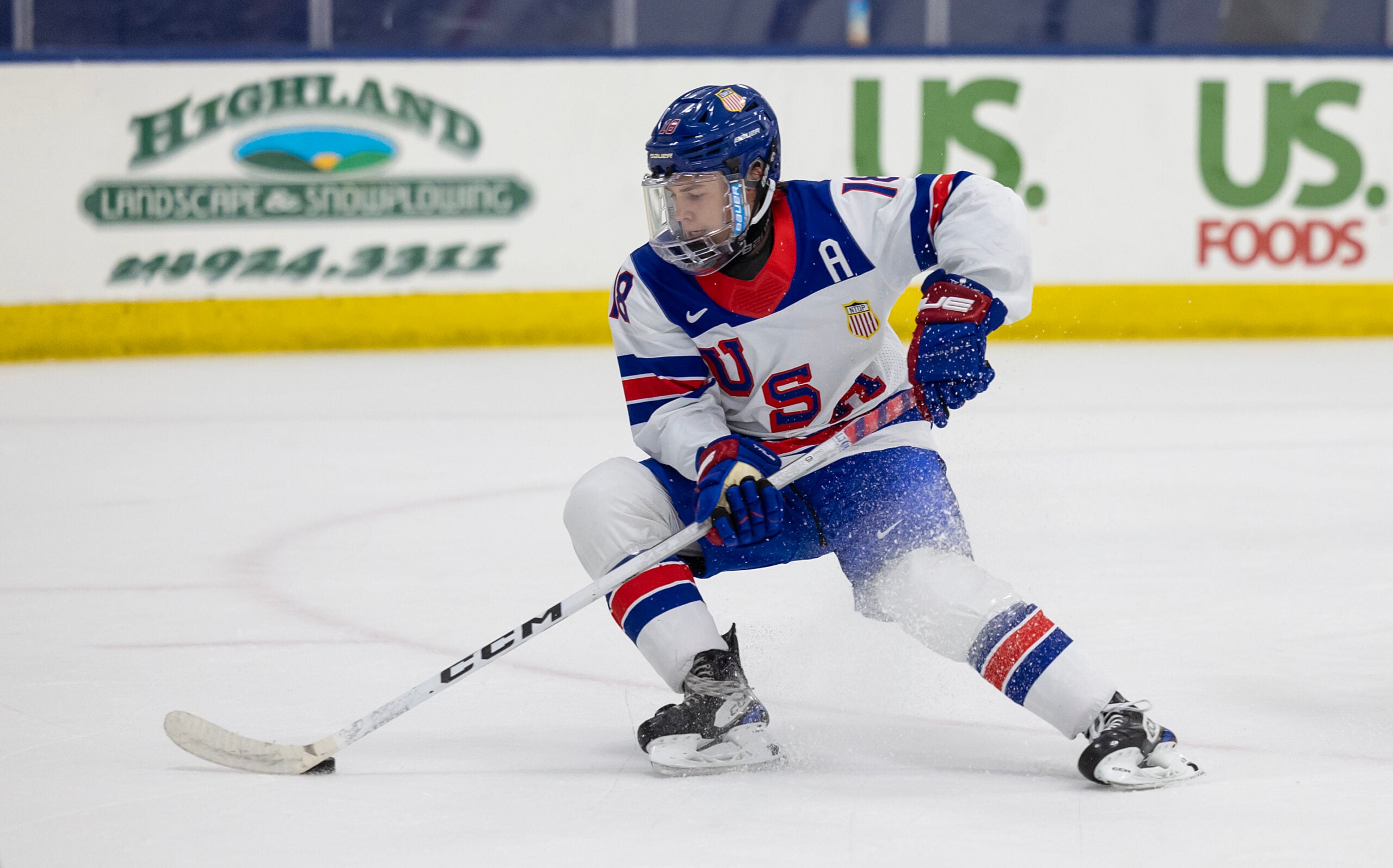
Day 2 of the NHL Draft is built on calculated bets, and when the Montreal Canadiens stepped up to the podium at 117th overall in Buffalo last June, they weren’t swinging for a highlight-reel power-play quarterback. They were betting on hockey sense, reliability, and a 6-foot left-shot defenceman out of Saskatoon who had scored just four goals in 68 games during his draft season.
Five months later, Brayden Klimpke is making that fourth-round flyer look like one of the quieter bargains of the 2026 class.
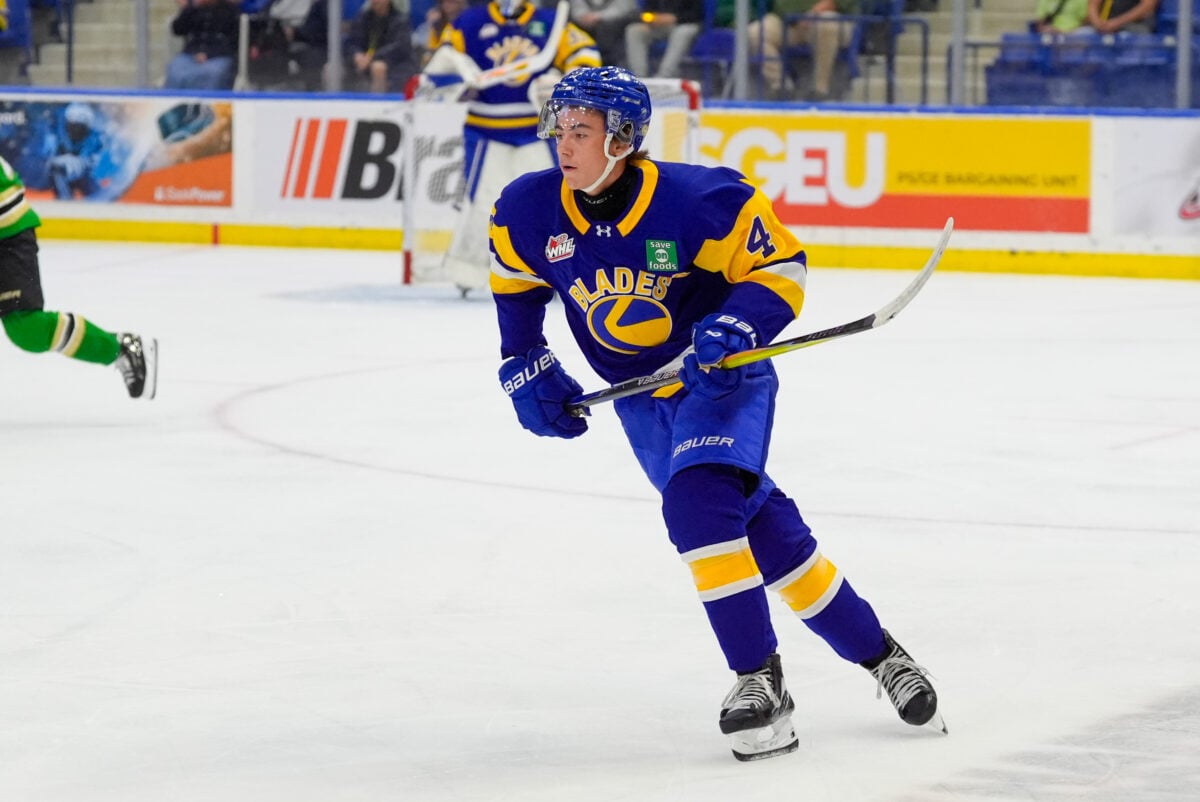
Wearing the “C” as the 65th captain in Saskatoon Blades history, the 19-year-old Calgary native has erupted out of the gate in 2026–27. Coming off back-to-back three-point nights, Klimpke sits atop the entire Western Hockey League (WHL) in scoring among defencemen with 30 points in his first 22 games, a 1.36 points-per-game clip that has more than doubled the 0.68 pace he posted a year ago.
And yet, as eye-catching as those numbers are on a November morning, what makes Klimpke genuinely intriguing for Montreal isn’t just what he’s doing in the WHL right now. It’s how his offensive breakout intersects with a developmental runway that barely existed in junior hockey two years ago, and how neatly that timeline aligns with the Canadiens’ crowded blue line.
Inside the Draft+1 Breakout
To appreciate how dramatic Klimpke’s jump has been, look at the role he occupied in Saskatoon last season. As an 18-year-old alternate captain, he was a deferential distributor, a player who moved pucks cleanly, killed plays early, and piled up 42 assists while rarely forcing his own shot. Four goals across a full 68-game schedule told the story of a defenceman content to facilitate from the perimeter.
This fall, with the captaincy stitched onto his chest, that hesitation is gone.
“I don’t expect everything to get handed to me. I knew I wasn’t a first-round pick coming into the Western League, so I knew I would have to work hard and earn my minutes; it gives you a chip on your shoulder. You practise as hard as you can every day and work as hard as you possibly can, and when you get your shot, you’ll be ready for it.”
Klimpke already blew past last season’s goal total before American Thanksgiving, and the underlying habits explain why. Instead of settling for low-percentage point shots into shin pads, he’s walking the blue line with purpose on the power play, holding the puck an extra beat to manipulate penalty killers and open cross-seam lanes. At five-on-five, he’s activating aggressively as the fourth man on the rush, attacking soft ice in the high slot rather than pulling up at the line.
Just as importantly, the production hasn’t come at the expense of the workload that got him drafted in the first place. Klimpke is routinely logging between 25 and 30 minutes a night in Saskatoon, anchoring the top penalty-kill unit and taking the ice whenever the Blades are protecting a one-goal lead in the final two minutes.
Nobody expects him to sustain a 110-point WHL pace over 68 games, and regression will naturally trim the raw totals. But his touch frequency, shot selection, and ownership of big moments point to real offensive evolution rather than empty secondary assists. Also, if he continues performing to this level, it will become increasingly difficult for Hockey Canada to overlook him when it comes time to invite players to the World Junior Selection Camp.
Building Replacements for the Roster
As the Canadiens transition from a rebuild into an active Stanley Cup contender window, maintaining a steady pipeline of prospects graduating to the NHL is critical to their long-term success.
So that general manager (GM) Kent Hughes doesn’t need to resort to only building out the supporting cast through expensive free-agent signings. Instead, he can also rely on their deep development system, spanning the Laval Rocket, the Canadian junior hockey leagues, NCAA, and European leagues, to continuously feed NHL-ready talent onto the roster.
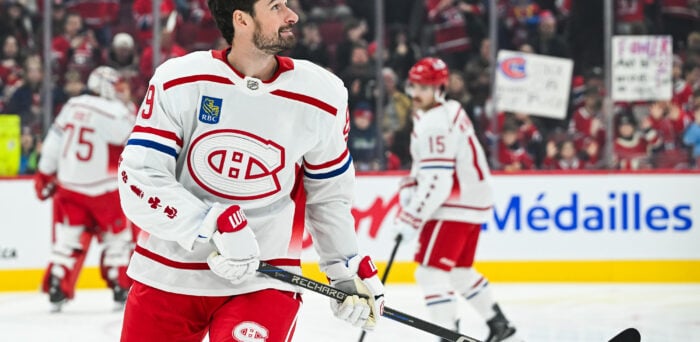
The ultimate competitive edge for Montreal lies in the massive surplus value provided by a prospect’s entry-level contracts (ELCs). Having young talent outperform bargain deals gives the Canadiens middle-six scoring, reliable defensive minutes, and capable goaltending at a fraction of market price. This cost certainty acts as a vital salary-cap relief valve, allowing the front office to absorb big-ticket additions, like Dylan Larkin or pursue aggressive upgrades in the offseason, without gutting their depth.
By cycling fresh waves of cheap, homegrown contributors into meaningful roles, such as Klimpke is being developed to become, Montreal can extend its championship window for years instead of stalling out due to cap exhaustion.
The CHL-to-NCAA Luxury
Player development now is more complicated, and patience is needed before a prospect becomes a reliable NHL player. But Montreal now has more options. In the old CHL-NHL transfer framework, a fourth-round junior defenceman tearing up the WHL in his 19-year-old season faced a rigid fork in the road next fall: either sign an ELC and fight for minutes in the American Hockey League (AHL) at age 20 or return to major junior as an overager against teenagers.
Klimpke won’t have to make that choice.
Because of the NCAA’s revised eligibility rules opening college hockey to CHL players, Klimpke is committed to the University of North Dakota for the 2027–28 season. For Hughes and Montreal’s player development staff, that provides them with choices.
Instead of rushing a 6-foot, 174-pound defenceman into the grind of the AHL before his frame is fully built out, the Canadiens get to watch him finish four full seasons of WHL mileage in Saskatoon and then transition directly into the NCHC.
Better still, Montreal retains his exclusive NHL signing rights until June 1, 2031, giving the organization up to four collegiate seasons in Grand Forks without burning a single year of his ELC or using a 50-contract-limit slot.
North Dakota will test Klimpke in ways the WHL simply can’t. Playing against 22-, 23-, and 24-year-old forwards will challenge his box-out strength below the goal line, his gap control against heavier wingers, and his ability to execute clean first passes under pro-style forechecks. If he thrives in that environment, Montreal won’t just be getting a prospect; they’ll be getting a finished, battle-tested defender.
Navigating Montreal’s Left-Side Logjam
Of course, any conversation about a left-shot defenceman in the Canadiens’ system has to acknowledge the traffic jam ahead of him. From the NHL roster in Montreal down through Laval and across junior hockey, the left side of the organization’s blue line has been its deepest area of surplus for years.
In a pipeline that already features high-pedigree talent alongside rising prospects like Adam Engstrom, Bryce Pickford, and Luke Mittelstadt, a mid-round pick doesn’t crack the lineup by trying to out-flash the competition. He survives, and eventually climbs, by being the easiest player for a coach to trust.
Ask scouts to pinpoint his single loudest physical tool, and most will tell you he doesn’t have one. He isn’t a burner who blows past forecheckers end-to-end, and he isn’t a 6-foot-4 bruiser clearing the crease by force.
That is where Klimpke’s profile separates him. With an NHL roster that boasts Lane Hutson, who is irreplaceable, it is good to have young prospects who can try to incorporate some of his puck-moving and zone-exit abilities. Klimpke discussed what it takes to be effective as a smaller defender with Marco D’Amico of R.org:
“I think being a smaller guy when I was younger has only helped me. You’ve got to learn how to play smarter and be effective in different ways other than your body,” Klimpke said. “I can kind of credit my skating ability to that. I knew I had to be a good skater to survive out there, and I had to learn how to spin off checks and put myself in good situations.”
– Brayden Klimpke
He is his own player, but like Hutson, he plays with a chameleon-like adaptability. Need someone to stabilize an aggressive, high-event partner? He adjusts his positioning and covers the middle. Need a clean exit under pressure? He keeps his head up, manipulates the first forechecker, and hits a winger in stride. Need someone to run a second power-play unit or kill a late penalty? He does both without needing prime deployment to stay engaged.
Look at the calendar, and the fit becomes even clearer. By 2028 or 2029, when Montreal’s core contracts are fully on the books and salary-cap efficiency dictates every roster decision, the Canadiens will need cost-controlled, low-maintenance defenders capable of handling bottom-four minutes without bleeding chances. If Klimpke spends two or three years maturing at North Dakota before arriving on a fresh ELC at age 21 or 22, he lands right in the sweet spot of Montreal’s competitive window. Or provides more fodder to be used in trades to fill gaps on the NHL roster.
The Long-Game Payoff
Fourth-round picks rarely generate November headlines, and Klimpke himself has made no secret of the chip on his shoulder after waiting until the middle of Day 2 in Buffalo to hear his name called.
He doesn’t need to become a top-pair NHL defenceman to validate the Canadiens’ patience. Between a breakout captaincy in Saskatoon, an unhurried collegiate apprenticeship at North Dakota, and a three-zone game built for modern bottom-four reliability, Klimpke is quietly turning a 117th-overall pick into the exact kind of long-game asset every contender eventually wishes it had.
Free Newsletter
Get Montreal Canadiens coverage delivered to your inbox
In-depth analysis, breaking news, and insider takes - free.
Subscribe Free →