The NHL trade market is always driven by deadlines. For the Boston Bruins, the clock isn’t just ticking toward the traditional March trade deadline; it’s racing toward the Olympic break.
General Manager Don Sweeney finds himself at a familiar crossroads. The team has stabilized recently, winning six of their last seven games, yet the rumors surrounding the club suggest management isn’t entirely sold on the current roster’s ceiling. The chatter has zeroed in on one specific target: Calgary Flames defenseman Rasmus Andersson.
This isn’t just idle speculation. The smoke signals coming out of Boston, Calgary, and rival front offices suggest a fire is burning. But as the Bruins weigh a blockbuster move for the 29-year-old Swede, the question isn’t just about whether Andersson makes them better—it’s about whether the cost undermines the very “retooling” philosophy the organization pivoted to just last year.
The Calgary Ultimatum
The urgency here is being dictated by the international calendar. Reports indicate the Flames are aggressive in moving Andersson before the NHL’s Olympic freeze begins on Feb. 4. The logic from Calgary’s perspective is sound: why risk your most valuable trade asset suffering an injury while playing for Sweden, effectively torching his trade value before the deadline?
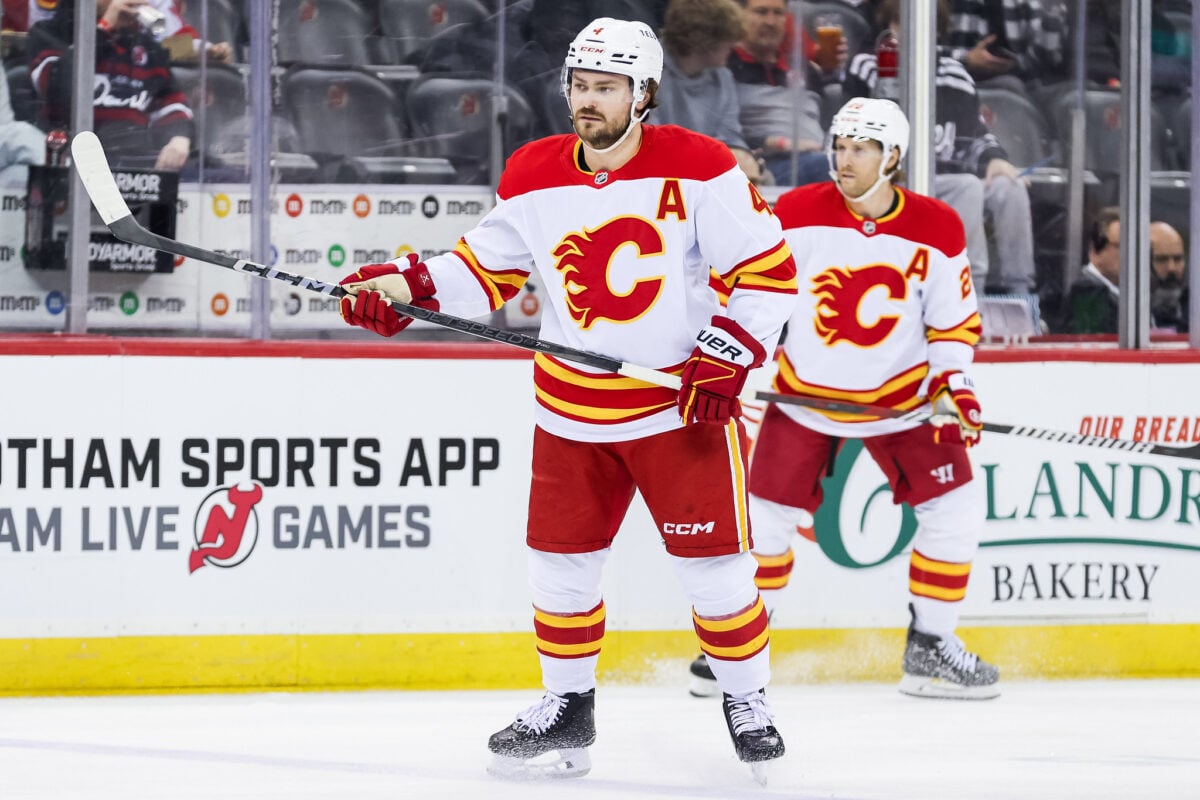
For Boston, this accelerates the decision-making process. There is no waiting until the eleventh hour to see if prices drop. If the Bruins want Andersson, they likely have to pay up now.
The reported asking price is steep. Sources suggest a package centered on young defenseman Mason Lohrei and a 2026 first-round pick. Thanks to the Brandon Carlo trade earlier in the timeline, the Bruins hold two first-rounders in that draft, giving them the currency to sit at the high-stakes table. But just because you have the chips doesn’t mean you should push them all in.
The Lohrei Paradox
The inclusion of Mason Lohrei in the rumored package is the flashpoint for most debates among the fanbase. Lohrei is a polarizing figure, which is often the case with young, offensive-minded defensemen learning the NHL game.
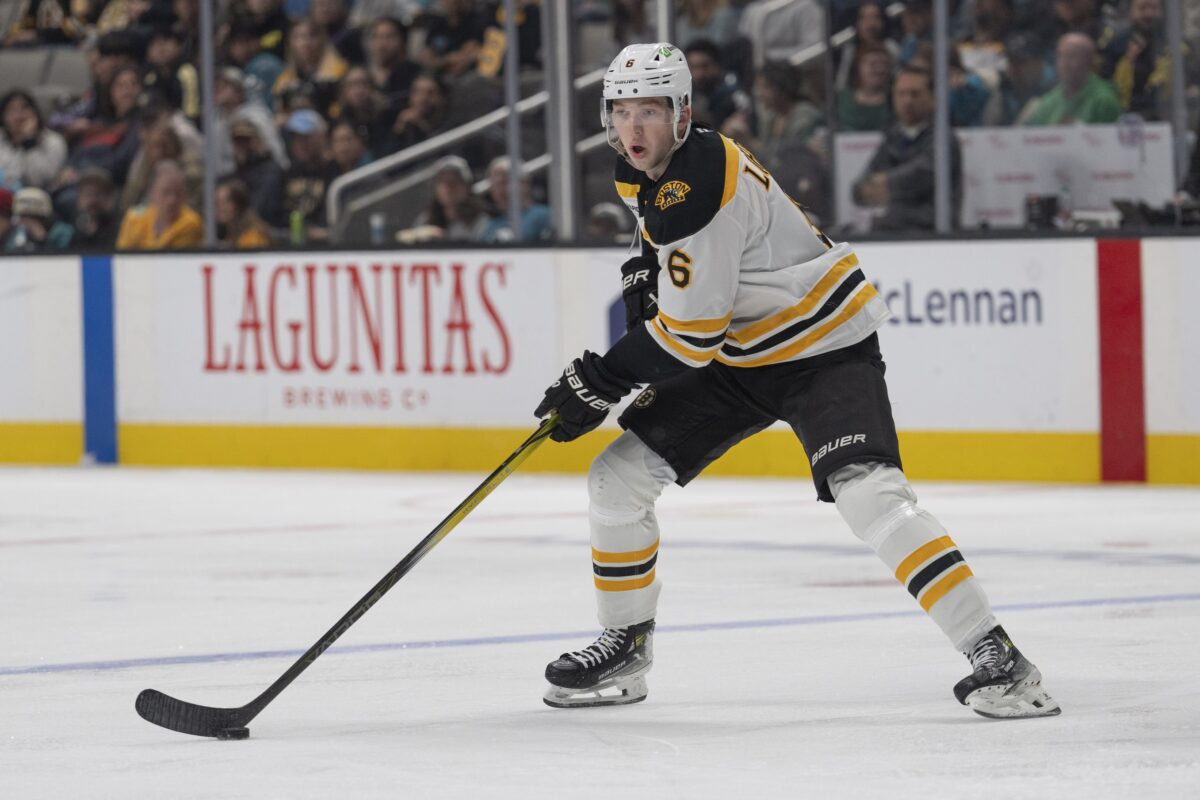
On one hand, you have the tantalizing skill set. He has put up 19 points and boasts a positive plus/minus rating—a simple but effective metric showing that good things tend to happen when he’s on the ice. Supporters see a player growing into his frame, providing the kind of puck-moving ability that is hard to draft and harder to develop.
On the other hand, critics point to the turnover rate and a lack of snarl in his own end. In a system that has historically prioritized defensive structure, Lohrei’s freelance style can induce anxiety.
Trading Lohrei for Andersson is essentially trading potential for certainty. Andersson is a known quantity—a legitimate top-four right-handed defenseman who can eat minutes and move the puck. But moving a cost-controlled youngster for a veteran is a move from the “win-now” playbook, not the “retool” manual.
The Extension Elephant in the Room
The trade cost is only half the equation; the contract cost is the other. Andersson is currently a bargain against the cap, carrying a hit of $4.55 million as a pending unrestricted free agent. However, that number is about to skyrocket.
Projections for an Andersson extension land in the neighborhood of a seven-year deal with an average annual value (AAV) around $8.46 million.
Related – Pastrnak Continues Climbing Bruins’ Milestone Rankings
This is where the math gets tricky. The Bruins currently have depth issues on the right side behind Charlie McAvoy. Henri Jokiharju and Andrew Peeke have faced scrutiny, and their futures in Boston are far from guaranteed. Bringing in Andersson solves that depth chart weakness instantly. But committing nearly $8.5 million to a defenseman entering his 30s is a move that echoes previous eras of Bruins management—moves that have sometimes aged poorly.
The Retooling Philosophy vs. The 2026 Draft
Perhaps the biggest hesitation regarding this deal is the inclusion of that 2026 first-round pick. The 2026 draft class is being touted by scouts as exceptionally deep, with talents like Gavin McKenna representing franchise-altering potential at the top.
While the Bruins surely hope their pick falls late in the first round, the volatility of the NHL means nothing is guaranteed. If the team’s performance fluctuates, that pick could become a lottery ticket the franchise regrets signing away.
Related – Bruins’ Aspirot Has More Than Earned Contract Extension
Sweeney’s strategy last year was defined as a competitive retool—staying good while getting younger. Trading a first-round pick and a rookie defenseman for a veteran pending unrestricted free agent feels like a deviation from that path. It signals a belief that the current window is wider than the retool timeline suggests.
The Case for Standing Pat
Complicating matters is the fact that the Bruins are actually playing good hockey. The team has won six of its last seven, finding a rhythm that eluded them earlier in the season.
The goaltending, a major question mark earlier, has locked in. Joonas Korpisalo and Jeremy Swayman have posted back-to-back shutouts, alleviating the desperate need to shelter the crease with elite defense. Furthermore, the emergence of Jonathan Aspirot on the top pairing has been a revelation. His steady presence has allowed McAvoy to activate offensively with more freedom, essentially fixing the top pair without an external trade.
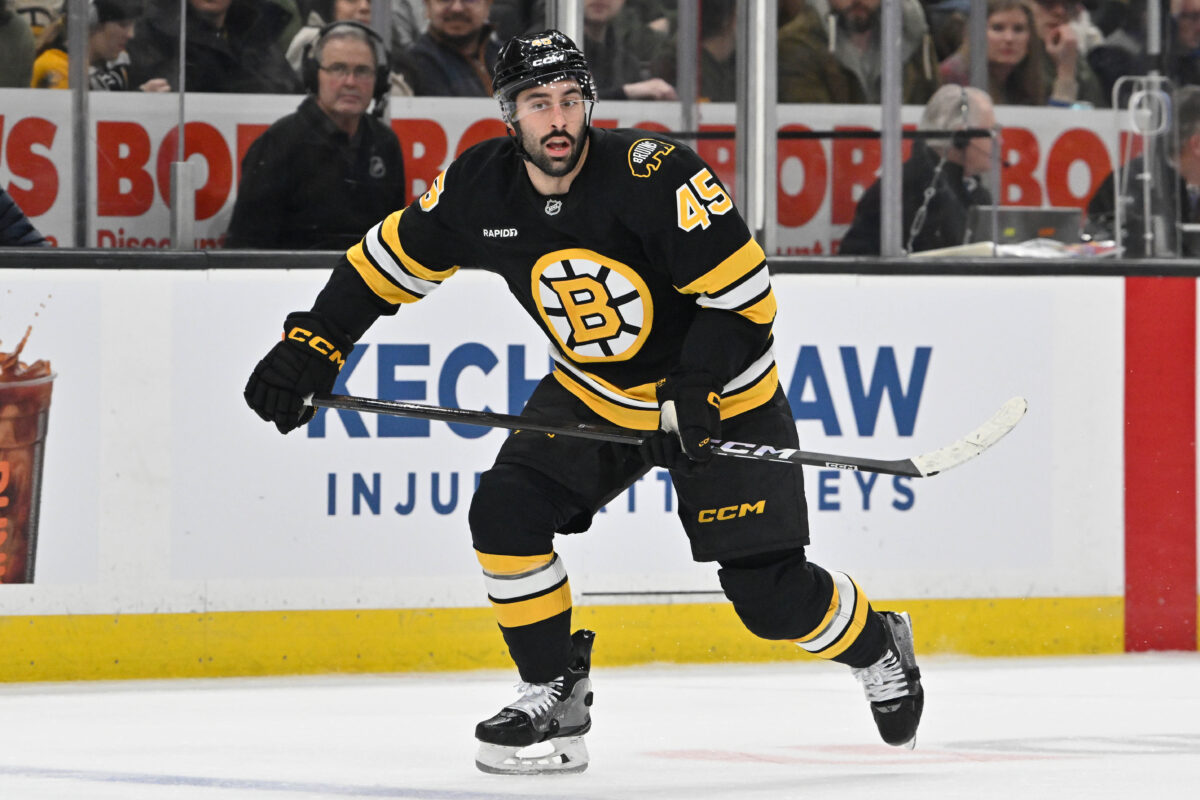
If Aspirot is the real deal, and the goaltending holds, the desperation to acquire Andersson diminishes. Why pay a premium for a savior when the current group is already saving themselves?
The Verdict
Sweeney has never been afraid to pull the trigger on a big deal, but this one carries distinct risks. The acquisition of Andersson would undeniably make the Bruins better today. It would solidify the right side of the defense and give the team a formidable top four for the playoffs.
However, the cost—both in terms of future assets (Lohrei, the 2026 pick) and future cap space—is substantial. It requires a belief that this specific group can contend for a Cup immediately.
As we approach the Olympic break, we will find out just how much faith the front office has in the current roster versus the allure of the big name on the market.
AI tools were used to support the creation or distribution of this content, however, it has been carefully edited and fact-checked by a member of The Hockey Writers editorial team. For more information on our use of AI, please visit our Editorial Standards page.
