


Montreal Canadiens General Manager (GM) Kent Hughes has identified several areas of need, but which ones are the most pressing, heading into the 2026 Trade Deadline?
Related: Canadiens’ Slafkovsky’s Growth & Experience Will Accelerate Due to Olympic Participation
The organization isn’t just looking to do well this season or even win a single playoff round; they want to be competitive for years to come and become a true Stanley Cup contender.
Canadiens Need Consistent Goaltending
Samuel Montembeault came into this season after a strong 2024-25 campaign and was expected to be the starter for the next few seasons. Yet he struggled heavily, and unreliable goaltending performances became a real issue for the team. Montembeault was sent to the American Hockey League (AHL) for a conditioning stint, allowing management to call up Jacob Fowler, who is seen as the goalie of the future.
In 10 games with the club, Fowler showed flashes of brilliance that reinforced that hope. He earned a 4-4-2 record with a 2.62 goals-against average (team lead) and a .902 save percentage (team lead). His advanced statistics were very promising as well. He leads the team with 1.8 goals saved above expected, the percentage of expected goals saved above average (6.51), wins above replacement (0.30), and he’s still second in the NHL in high-danger unblocked shot attempt save percentage (.889).
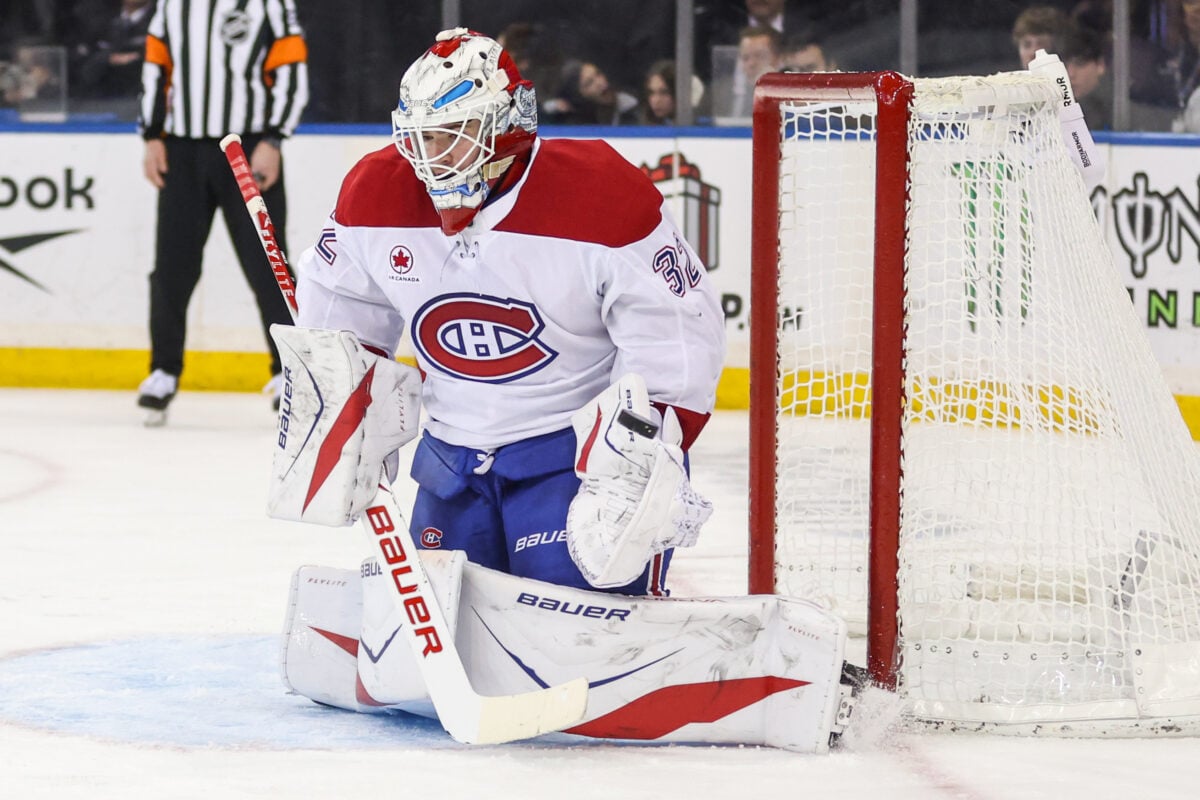
He has since been returned to the AHL’s Laval Rocket, while Montembeault continues to struggle, so Jakub Dobes has taken the reins, winning three games in a row last week. The Canadiens could target a veteran backup at the deadline, but they have the talent available within the organization to avoid overpaying for help in net. Any questions about the team’s goaltending future will be addressed in the offseason.
Montreal’s Defensive Balance
Before the season, the Canadiens seemed to lack a true top-pairing defenseman who could reliably shut down elite opposition. Yet the Mike Matheson and Noah Dobson pairing showed that they could defend using speed and mobility. Now, the return of Kaiden Guhle has provided the mobile and physical presence that the top-four was missing, and Lane Hutson has shown he is a capable defender.
That being said, the team still needs a physically capable defender with strong defensive reads, and who, ideally, shoots right, as the Canadiens’ top defenders (outside of Dobson) are all left-handed. Montreal does have David Reinbacher maturing in Laval, and he fits this need. However, if the club were to make a move, it would likely cost them a prospect like Reinbacher.
Canadiens Search for Bottom Six Depth and Grit
The Canadiens’ top-end forwards are ascending, but consistency and depth scoring beyond the top two lines is still a need. The third line has, for long stretches, lacked an identity, and finding it will be crucial for playoff success. Bringing back Phillip Danault helped with centre depth, faceoffs, and the penalty kill, but the team still lacks a third line that can play a shutdown role.
Most Stanley Cup contenders have a third line that provides elite shutdown capability, high-end skating, and reliable secondary scoring in the playoffs. Rather than just a defensive checking line, top-tier third lines have middle-six players talented enough to play in the top six but play a grittier, high-intensity game.

There is a specific role the Canadiens should target: a big, physical winger who can forecheck and win puck battles – a smart, reliable winger who can play a 200-foot game, with high-end speed or tenacity. While Zachary Bolduc has all the tools and, at times, has been that player, he still has to prove himself. This is where a player like Blake Coleman of the Calgary Flames could be of interest to Montreal.
This is the area management is most likely to address ahead of the trade deadline, but Hughes would need to be careful here because of the salary cap. With the cap rising by as much as $25 million in the next two years, they will have room to maneuver, but Ivan Demidov, Bolduc and other up-and-coming prospects will also need new contracts in that time. Hughes will have to decide how much cap space to devote to acquiring this type of player and consider his age and term.
Canadiens Second Line Centre Issue
One of the biggest holes on the roster was at second-line centre behind Nick Suzuki. This was widely considered a priority to remain competitive and to support young wingers like Demidov. Yet, Oliver Kapanen’s performance this season has lessened that need significantly, especially since Juraj Slafkovsky became the play-driver of that line.
This hasn’t slowed the rumour mill. According to Marco D’Amico of RG.org, Nazem Kadri of the Calgary Flames continues to be linked to the Canadiens. Kadri is exactly the kind of player contenders love to add at the deadline. But with Kapanen centring the second line, the need has evolved from a centre to a top-six forward, specifically a physical scoring winger who can play a puck retrieval role and complete a trio with Suzuki and Cole Caufield.
Montreal has a plethora of capable players, including Patrik Laine, Alex Newhook, Alex Texier, Kirby Dach, and more. Hughes could try to get one quality piece that fits his needs in return for quantity, offering one or more players, along with futures if necessary, to a team looking to retool on the fly. Coleman could be a good temporary fit as he can be used up and down the lineup.
Yet, according to gaming analytics, what would give Montreal better playoff odds would be to target a top-six power forward, someone like the St. Louis Blues’ Jake Neighbours. While skating is not his strength, he is capable of playing at pace. At 23 years old, he has a high hockey IQ, a high motor and compete level and plays a physical game that makes him a strong net-front presence and good at board battles.
Another target could be Columbus Blue Jackets forward Dmitri Voronkov. The 6-foot-5 winger has both size and skill and plays a style similar to Slafkovsky, which could make him a great fit on the top line. He plays a physical game, can win board battles, carve out space for teammates and create offence.
While there is no rush for Hughes to make a deal, especially with players close to returning from injury, he will need to make a decision that fits the long-term goal of becoming a Stanley Cup contender. While there are holes to fill on the roster, most of the solutions can be found internally. Those that cannot will have a high price, especially a young, reliable top-six forward. But with the number of picks, prospects and NHL roster players already in the organization, he can afford to target one or more players to complement his young core.

