Montreal Canadiens general manager (GM) Kent Hughes is watching his rebuild finally reward the patience of the fan base. The team made the playoffs last season, and this season, they are in the thick of competing for a top seed in the Atlantic Division. The fans are excited, and it’s fueling the performance of the players on the ice. But there are still areas that need to be addressed.
Related: Montreal Canadiens Need to Find the Right Fit for Kaiden Guhle
Yes, the Canadiens do have specific needs, some of which would be needed to unlock their top six’s full potential, but that doesn’t mean they absolutely must make a deal now. Time is a luxury, and patience is a virtue, and while these are clichés, that doesn’t mean they aren’t applicable here.
Canadiens Not Avoiding Trades
While patience is being preached by Hughes, that doesn’t mean he hasn’t been busy or avoiding making any deals. The season began, and the Canadiens desperately needed a second-line centre. The hope was that Kirby Dach would finally remain healthy and become the answer to that question. Unfortunately, he was injured again. What did happen, however, was that a rookie, Oliver Kapanen, was able to step into the role and do so well that he not only helped provide the club with a secondary offensive line, but he also filled a key role on the penalty killing units. This allowed them to let Nick Suzuki spend less time on ice defending, and more providing offence.
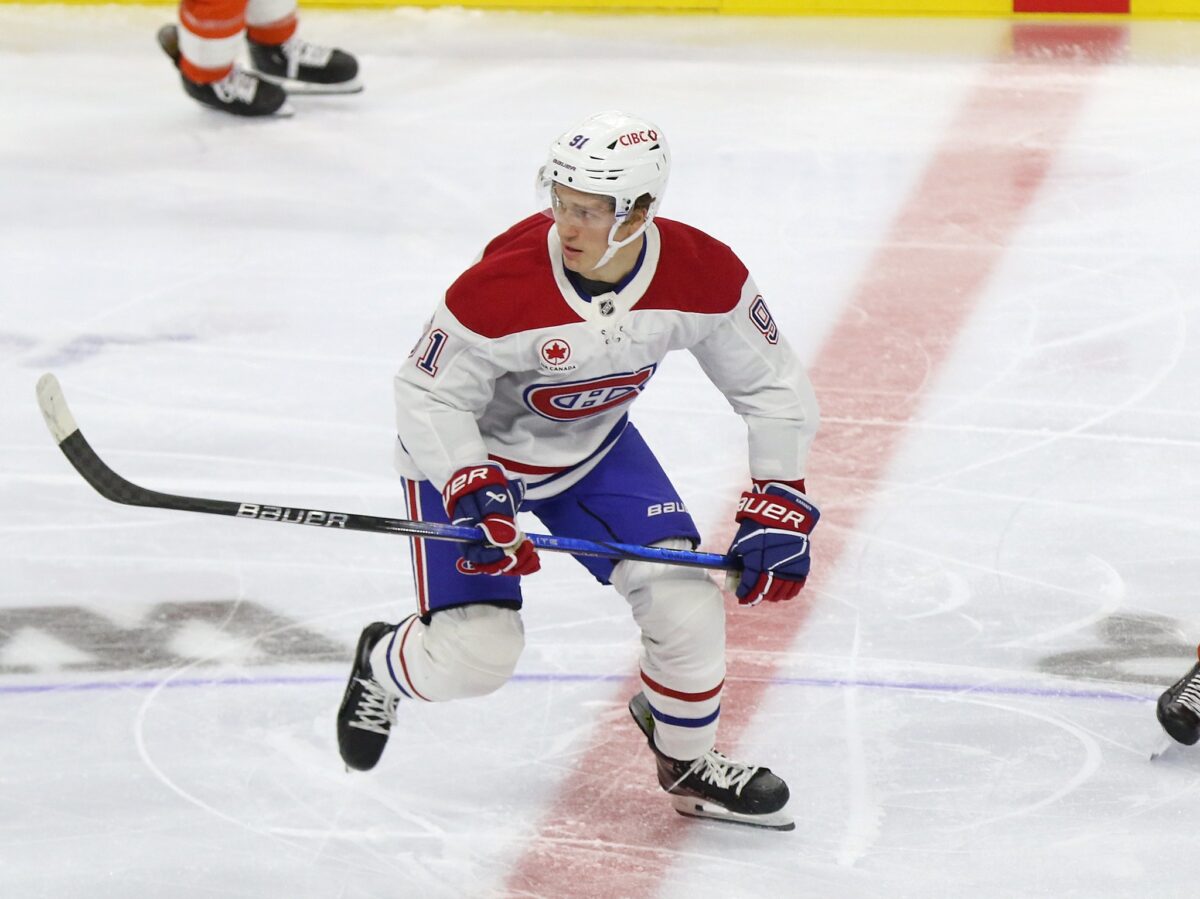
The storm of injuries has continued all season. After Dach, Alex Newhook, Jake Evans, and more filled the press box, the Canadiens found success thanks to those young players taking on the roles. Also, it is thanks to some timely depth acquisitions that helped them to weather the storm of injuries they’ve suffered since the start of the season.
Hughes first signed Alex Texier, who agreed to a mutual contract termination with the St. Louis Blues in November, and then acquired Phil Danault at the 11th hour before the NHL roster freeze in December. These deals aren’t blockbuster deadline deals, but they are the mortar that will help piece together the real building blocks of this rebuild. Something a blockbuster could derail if not done perfectly.
Canadiens Do Have Needs
Hughes has indicated the team is willing to “overpay” for the right player, specifically by giving up significant assets (picks, prospects) in trades, rather than reckless long-term free-agent deals, to accelerate the rebuild and acquire key pieces for their future contention window, even if it means paying a premium to land a top-six forward or elite centre. He’s stated this publicly, contrasting overpaying in assets for a trade versus locking into bad, long-term contracts in free agency. Yet, while having the assets and knowing where he’s willing to spend, it doesn’t mean now’s the time to just go on a spending spree like an entitled heiress.
Worst of all, the market doesn’t seem buyer-friendly at the moment. At best, it is filled with teams looking to move out problems rather than make hockey trades to find solutions. This was confirmed by Marco D’Amico of R.org whose sources have stated that:
“It’s certainly been a weird year when it comes to player personnel moves. We’re seeing more teams trade away their problems, rather than traditional selling, but that doesn’t mean there won’t be trades, especially for teams on the fringe of the playoffs.”
Should Hughes go out and get a top-line forward with size, scoring ability and experience? Absolutely. But to do that right now likely means taking on someone that is no longer a fit with their current club, so basically, a player in need of a “fresh start”.
Look at the New York Rangers; they would likely be willing to move on from Alexis Lafreniere. A player who has scored 20 goals or more only once in his career after going first overall in the 2020 NHL Draft and riding that one positive season to a seven-year, $7.45 million average annual value contract, and is struggling again this season, on pace to score less than 20 goals and under 50 points. Not exactly the kind of player teams would overpay to get or acquire to solve their issues to fill a top-line role or add grit or experience.
Acquiring a struggling, but once-promising, player for a low cost is a common strategy for NHL teams, but these projects often fail for specific reasons. First, the player really isn’t living up to their hype, and a change of scenery rarely solves that. Secondly, it’s a high-risk gamble. If you underpay for the asset, fine, but salary is also an issue; that’s why Patrik Laine was available for such a bargain when the Columbus Blue Jackets offloaded him to Montreal.
Canadiens Should Resist Urge to Move
Montreal really should resist the urge to make any more moves before the 2026 Trade Deadline because this season is about information, not impulse. For the first time in this rebuild, they finally have enough young NHL players in meaningful roles to evaluate what actually works at the highest level. Ivan Demidov, Juraj Slafkovsky, Kapanen, Kaiden Guhle, Arber Xhekaj and even prospects like David Reinbacher and Michael Hage all need an uninterrupted runway to either solidify themselves as core pieces or show where upgrades are required. Making deadline trades now could only serve to blur those evaluations, especially if roster spots or roles are suddenly shuffled to accommodate new faces.
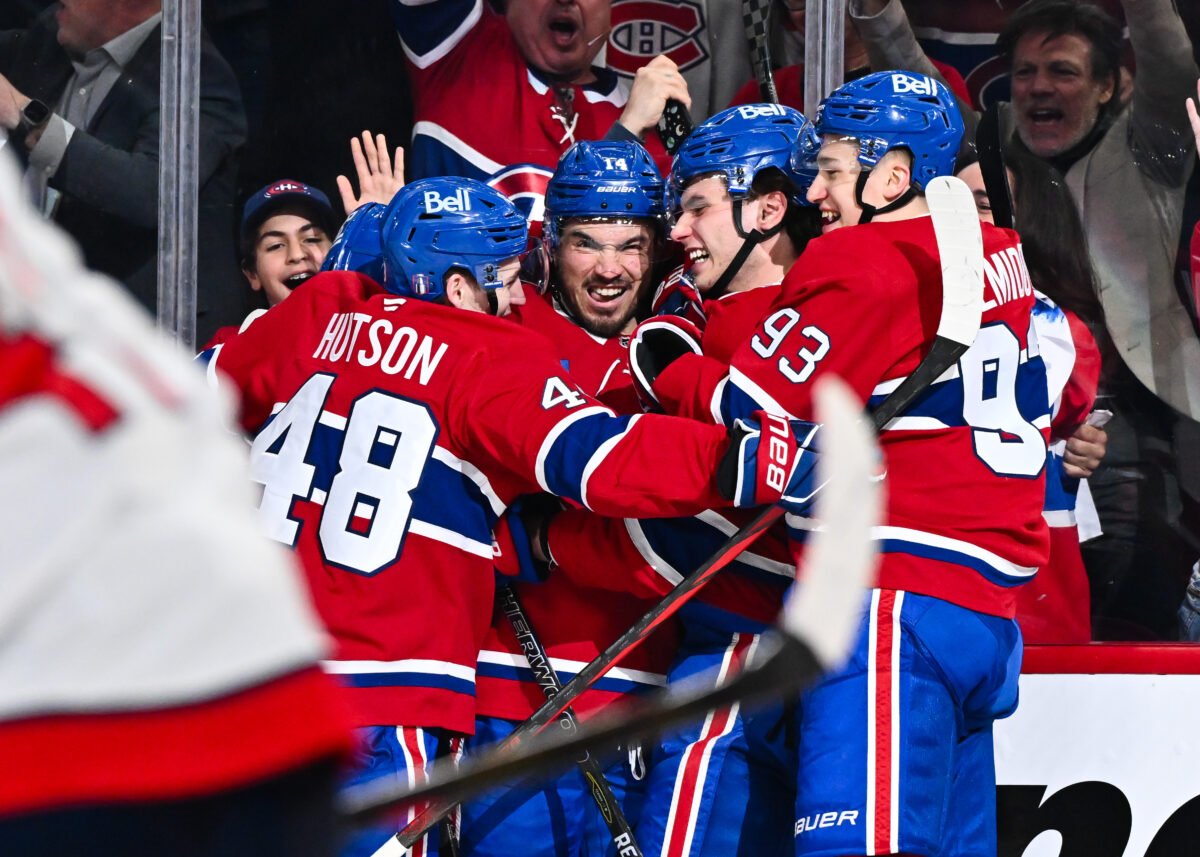
From an asset-management perspective, standing pat is also a smart play. Kent Hughes and Jeff Gorton have spent years building a deep reserve of picks and prospects, which gives Montreal something it hasn’t had in a long time: leverage. With the cap expected to rise to $113 million by 2027-28, and more teams pressing hard up against it, the Canadiens are better positioned to strike this summer or even during next season when distressed assets become available at a discount, especially once they are able to extend key players like Demidov.
Burning that flexibility at the 2026 NHL Trade Deadline for a short-term boost would go against the disciplined approach that has gotten the organization this far, and could easily lead to paying full price for players who don’t fit the long-term timeline. Most importantly, not making more deals protects the team’s chemistry and identity at a critical moment. Much like it did last season when management gave Suzuki the challenge of proving the team deserved to remain together.
This core group is in the early stages of learning how to win together, and that process is fragile. A steady lineup allows Suzuki, Cole Caufield and the newly emerging second-line led by Slafkovsky to develop on-ice trust and rhythm, while the young defence continues to establish roles and communication. Even if the Canadiens are thick in a playoff race, the long-term benefit of stability far outweighs the short-term excitement of a deadline splash. For a rebuild that is finally turning the corner, patience is not passive; it’s strategic.
