The NHL’s Central Division had a clear divide between the top four and bottom four last season. While the bottom half of the division has gotten better this offseason, that gap seems to remain. Let’s look around the division, what moves teams have made, and how it may play out in 2026-27.
Chicago Blackhawks
- Additions: Patrick Kane, Bowen Byram, Jordan Greenway, Ian Cole
- Subtractions: Ilya Mikheyev, Andre Burakovsky, Louis Crevier, Matt Grzelcyk
The Blackhawks’ most notable additions were Bowen Byram and Patrick Kane. Davidson sent a package that included the fourth overall pick in the 2026 draft to the Buffalo Sabres for Byram. They then signed him to a six-year, $12.5 million AAV extension. He’s not worth that price and is unlikely to ever live up to that contract, but he is better than what they had. Unfortunately, he will always be judged by what the Blackhawks paid to acquire him.
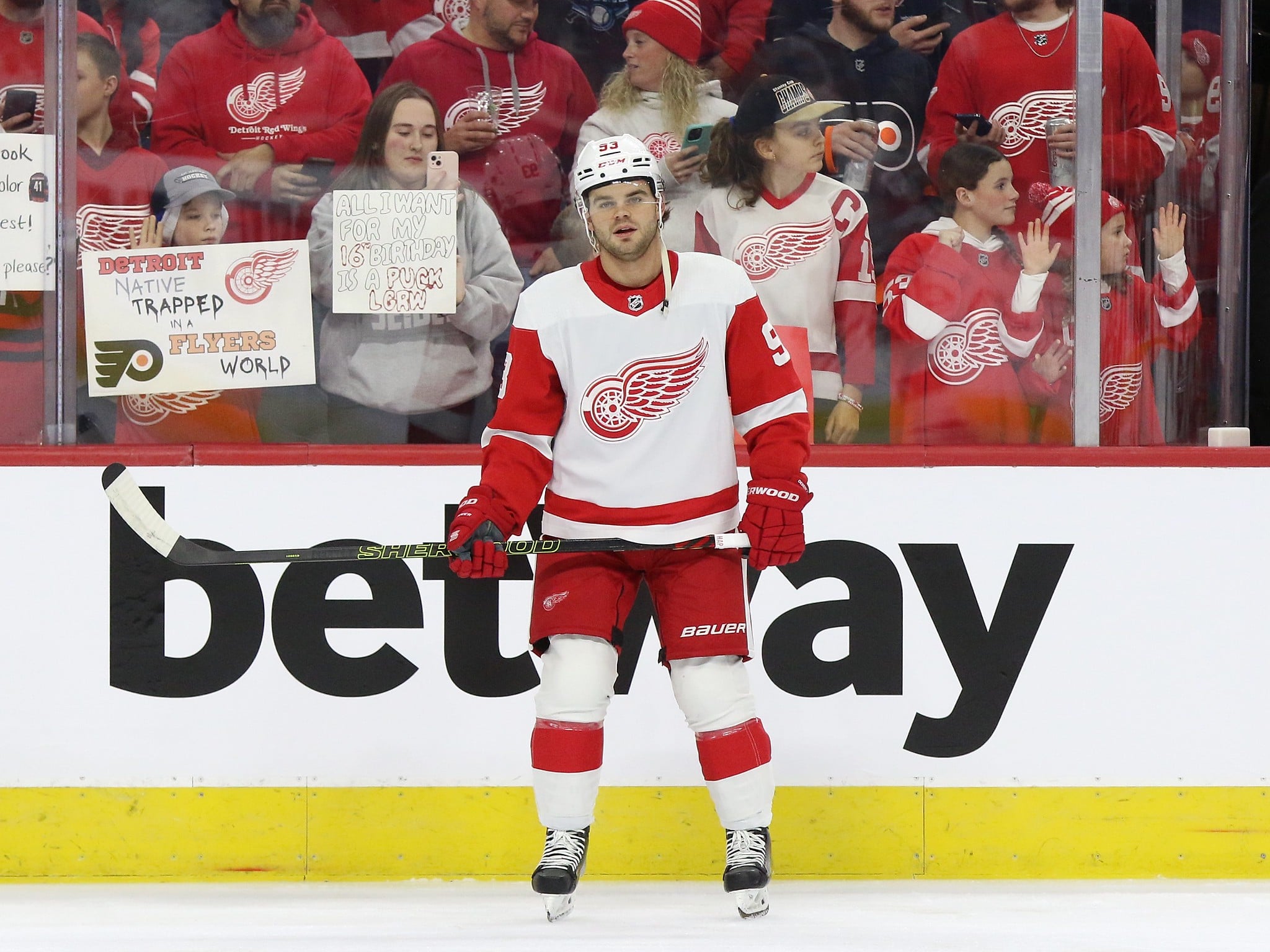
As for Kane, the Blackhawks overpaid to sign him, too, giving him a two-year, $8 million AAV contract in free agency. He’s coming off a quietly solid season with the Detroit Red Wings and is still a legit top-six winger. But it says something about the state of the Blackhawks that they had to give him $8 million per year to sign, especially given the history between the two sides.

Even though it’s fair to question the prices the Blackhawks gave out this offseason, they did improve. Kane and Byram were worth a combined wins above replacement (WAR) of 2.3 last season. However, Connor Bedard will be out until sometime in November after injuring his shoulder during training this offseason, and that could affect how much of a jump the Blackhawks make in the standings.
Winnipeg Jets
- Additions: Stuart Skinner, Mario Ferraro
- Subtractions: Jonathan Toews, Gustav Nyquist, Eric Comrie
The Jets could probably benefit from a full rebuild. They have one of the slower and older rosters in the NHL, but that doesn’t appear to be the M.O. right now. At the very least, they’ve had a decent offseason.
Time will tell what happens with Connor Hellebuyck, but he and Stuart Skinner could form one of the better netminding tandems in the NHL. Skinner was worth a WAR of 2.0 last season, and I doubt Hellebuyck posts an .899 save percentage again. On defense, Mario Ferraro should provide an upgrade. His play was worth a WAR of 1.1 last season, and his role should be different than what he had in San Jose.
The Jets have also shed some of the deadweight from last season’s roster. Unfortunately, they seem stuck in the mushy middle where they’re not bad enough for a high draft pick, but possibly not quite good enough for a playoff spot.
Nashville Predators
- Additions: Mavrik Bourque, Jack Drury, Ross Colton, Alex Kerfoot, Nils Höglander, Ilya Lyubushkin
- Subtractions: Erik Haula, Zachary L’Hereux, Fedor Svechkov
The Predators were just on the outside of the playoffs in the West last season, missing by only four points. Chris MacFarland took over as president of hockey ops and GM this summer and had an active first offseason.
His most notable addition was acquiring Mavrik Bourque from the Dallas Stars in exchange for a second- and third-round pick. Bourque totaled 20 goals and 41 points last season and has breakout potential. He was one of the Stars’ top five-on-five players, and he’s just entering the prime of his career.
MacFarland also improved the Predators’ bottom-six depth by adding Jack Drury and Ross Colton. Most importantly, their roster got a bit younger this offseason by adding Bourque, Colton, and Drury.
St. Louis Blues
- Additions: Mason McTavish, Connor McMichael, Brandon Carlo
- Subtractions: Jordan Kyrou
The St. Louis Blues are in a state of transition, with Alex Steen taking over the day-to-day operations as Blues GM. He made a couple of notable additions this summer, acquiring Mason McTavish in a trade with the Anaheim Ducks and Connor McMichael in the deal that sent Jordan Kyrou to the Washington Capitals.
McTavish is an interesting player. He’s played center most of his NHL career, but his lack of footspeed, defensive prowess, and play-driving ability may make him a better fit on the wing. It remains to be seen if the Blues deploy him as a wing, but that might be their best bet at getting the most out of him.
Even though Kyrou is a good bet to bounce back next season, it was time for a change of scenery. And, to be fair, McMichael is a decent bounce-back candidate himself. He’s not the play-driver Kyrou is, but he could chip in 20-25 goals.
On defense, I don’t love the addition of Brandon Carlo. The Blues need some more puck-moving ability on their blue line, which Carlo lacks. If anything, this team is marginally improved. But like the Predators, they only missed the playoffs by four points. Given how weak the bottom half of the West is, they could still be on the playoff bubble.
Utah Mammoth
- Additions: Anders Lee, Vincent Trocheck, Sebastian Cossa
- Subtractions: JJ Peterka, Ian Cole, Vitek Vanecek, Alex Kerfoot, Sean Durzi
The Utah Mammoth are probably not Stanley Cup contenders yet, but they’re a team on the rise in the Western Conference. They’ve had a solid offseason, upgrading their top nine up front and possibly in between the pipes.
Vincent Trocheck’s name had been in the rumor mill since last season’s trade deadline, but the Mammoth ended up being a somewhat surprising destination since the rumor was he wanted to stay east. That says a lot about how players may view the Mammoth, though, and Trocheck should help. His play was worth a WAR of 1.2 last season, and he’ll likely fill a second- or third-line role quite well.
The Mammoth may have traded JJ Peterka, but they probably upgraded when they signed Anders Lee in free agency. Lee may be in his mid-30s, but he’s still excellent at five-on-five. Like Trocheck, his overall play was worth a WAR of 1.2 last season.

Perhaps the most interesting bet the Mammoth made was acquiring Sebastian Cossa to back up Karel Vejmelka. Cossa is unproven in the NHL, but he’s played well in the AHL over the last two seasons, totaling a save percentage of .911 or better in each season. There might be something there.
Minnesota Wild
- Additions: Blake Coleman, Maxim Shabanov, Olli Maatta
- Subtractions: Vladimir Tarasenko, Marcus Johansson, Mats Zuccarello, Jacob Middleton
The Wild have lost a fair amount of firepower this offseason. Vladimir Tarasenko, Marcus Johansson, and Mats Zuccarello are three players who totaled between 45 and 55 points last season, and there haven’t been many moves to replace them.
Blake Coleman is still one of the better middle-six forwards in the NHL. His five-on-five impacts are quite good, and he can chip in around 15 to 20 goals and 40 points. He won’t replace all the offense the team has lost this offseason, though.
Maxim Shabanov might be a good buy-low bet, but the Wild do lack some offensive punch, especially down the middle. I don’t think this team is in danger of losing a playoff spot, but they could take a slight step back from the 104 points they totaled last season.
Dallas Stars
- Additions: N/A
- Subtractions: Mavrik Bourque
The Stars have had an interesting offseason, even though they haven’t made any significant moves. That’s largely because it took until late July to resolve Jason Robertson’s situation.
Unfortunately, Bourque became a cap casualty of the Robertson stalemate. The threat of an offer sheet likely forced GM Jim Nill’s hand, resulting in the trade to the Predators. Otherwise, they’ll be running back last season’s roster, though that’s not the worst thing considering they were a 112-point team.
Colorado Avalanche
- Additions: Jaden Schwartz, Zachary L’Hereux, Fedor Svechkov
- Subtractions: Valeri Nichushkin, Ross Colton, Jack Drury
The Avalanche are almost certain to regress next regular season since it’s hard to repeat a 121-point campaign. However, their offseason was a mixed bag. Losing Colton and Drury will hurt their depth, but Fedor Svechkov and Zachary L’Hereux are young players who have some upside and might be able to replace some of what they’ve lost in Colton and Drury.
Even though the Avalanche traded Valeri Nichushkin to the Columbus Blue Jackets, Jaden Schwartz should be able to replicate most, if not all, of the production they’ve lost in Nichushkin. Schwartz is a solid five-on-five player, and he regularly averages 40-50 points a season. He’ll be in a much better environment with the Avalanche than he was in Seattle, too.
Predicting the Central Division
Even though the Avalanche probably won’t put up 121 points again, they should still be the favorites to win the Central. Even though the bottom half of the division is improving, there’s still a fair gap between the top and bottom halves.
- Avalanche – 109 points
- Stars – 107 points
- Mammoth – 100 points
- Wild – 98 points (WC1)
- Predators – 88 points*
- Jets – 87 points*
- Blues – 83 points*
- Blackhawks – 75 points*
*= eliminated from playoff contention
Even though the Central has gotten a bit more competitive, the top four, other than the Mammoth and Wild flipping spots, should look the same. Don’t expect too much change next season.
Advanced stats from Evolving Hockey
Free Newsletter
Get Season Previews coverage delivered to your inbox
In-depth analysis, breaking news, and insider takes - free.
Subscribe Free →