With just six games remaining in the 2024-25 NHL regular season, the Tampa Bay Lightning are still waiting to find out their first-round playoff opponent. Numerous possibilities exist in the tight race for the Atlantic Division and Eastern Conference wild-card spots. Last week, we analyzed how the Lightning matched up against the Florida Panthers and Toronto Maple Leafs in a playoff series. However, there’s an unfamiliar face that the Lightning could end up playing in Round 1.
Related: Thompson Reaches 40-Goal Mark, Sabres Beat Lightning in Shootout Thriller
The Ottawa Senators are now two points back of the Panthers for third place in the Atlantic Division with five games remaining. While the Lightning have clashed with the Panthers and Maple Leafs frequently in recent memory, they haven’t faced the Senators in the playoffs since 2006. Here’s a preview of how the Lightning match up against their potential playoff opponents before the confirmed matchup.
Senators’ Offense
Five-on-Five
Starting at five-on-five, the Senators are an inferior offensive team relative to Florida and Toronto. They don’t generate many quality shot attempts from the middle of the ice. Most of their attempts come from low-percentage areas along the perimeter of the offensive zone. They rank 12th in low-danger scoring chances for per 60 (LDCF/60) and 24th in high-danger scoring chances for per 60 (HDCF/60) per Natural Stat Trick. Ottawa mainly generates off the forecheck, while the Lightning like to work the rush and cycle game. Tampa Bay prefers to look for high-quality scoring chances through more risky passing plays (cross-slot and behind-the-net passes). The Lightning also tend to shoot from low-danger areas, depending on the game.
Power Play
The Senators rank fourth in the league in power-play goals and 13th in power-play percentage this season. Their first unit features some firepower with Jake Sanderson as the quarterback, Tim Stützle on the half-wall, and Brady Tkachuk in front of the net. They typically generate shots from the tops of the circles from the flanks on the man advantage or the medium danger areas of the ice. All of Tampa Bay’s shots on the power play have shifted to the center lane with the departure of Steven Stamkos. The area he once operated in is now the least utilized with the man advantage. Instead, Victor Hedman is shooting the puck more from up top, and Jake Guentzel is finding opportunities from in tight. The Lightning rank seventh in power-play goals and ninth in power-play percentage.
Senators’ Defense
Five-on-Five
The Senators and Lightning are very similar in defensive style and results at five-on-five this season. Both teams suppress center lane passes and cycle offense very well per All Three Zones. However, the Senators struggle to defend the rush, especially on shots against off-controlled breakouts, an area where the Lightning thrive.
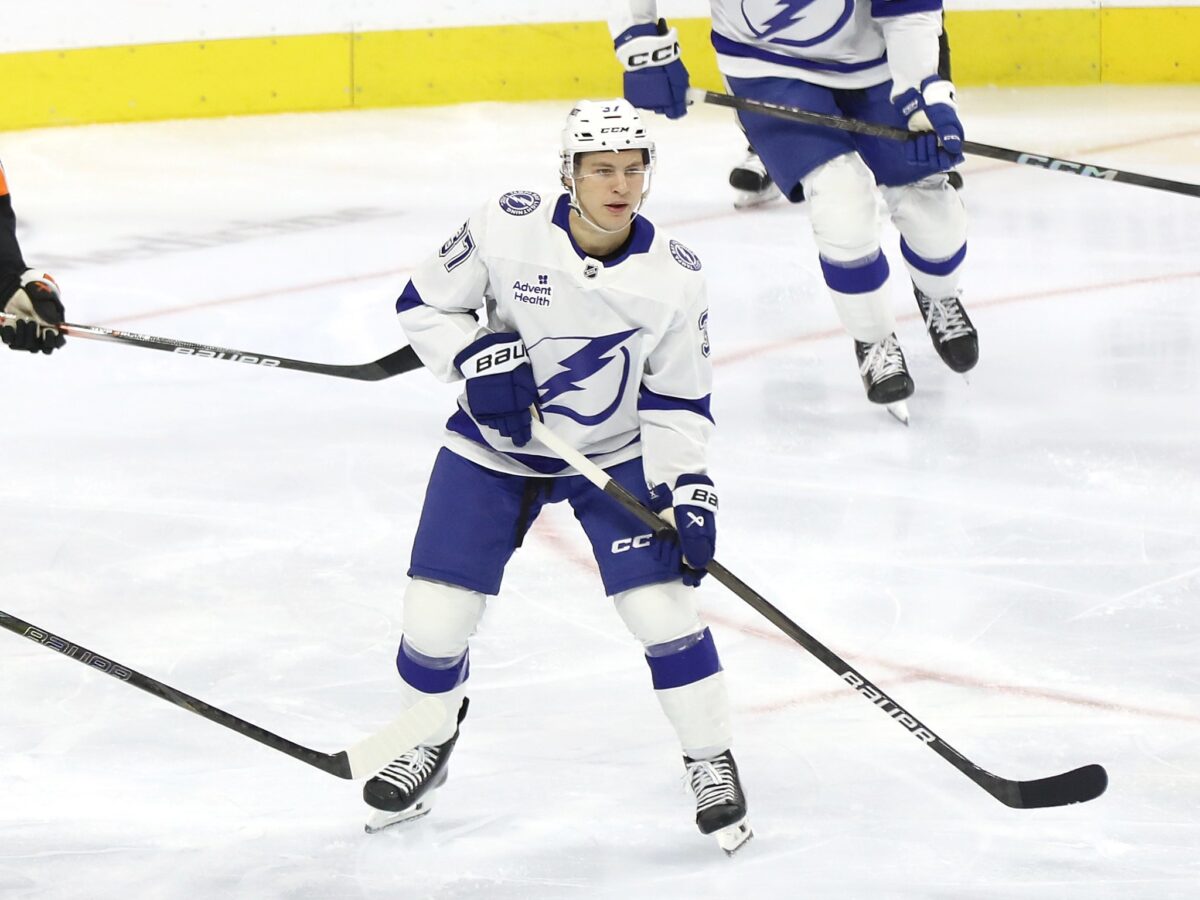
However, the Lightning’s poor puck retrieval due to their lack of foot speed on the back end could be an issue against a heavy forechecking Senators team. Nevertheless, both teams protect the house and prioritize keeping teams along the perimeter when defending.
Penalty Kill
Both teams rank in the top 10 in shorthanded goals this season, so “power kill” prevails again. Keep an eye out for youngsters Shane Pinto and Ridley Greig for Ottawa or Brandon Hagel and Anthony Cirelli for Tampa Bay. While the Lightning’s penalty kill efficiency ranks fifth, Ottawa’s ranks 17th league-wide. That’s an advantage the Lightning must exploit in a series that is more evenly matched than expected.
Senators Goaltending
Ottawa finally found their goaltender in Vezina Trophy-winner Linus Ullmark, who signed a four-year deal with the team following a trade with the Boston Bruins. He’s been a solid backbone for the team this season, ranking 15th with a .841 high-danger save percentage (HDSV%) and 37th with 3.26 goals saved above expected (GSAx) per Evolving Hockey at five-on-five. The Senators have one of the best backup netminders in Anton Forsberg, who ranks 31st in GSAx this season. Meanwhile, Andrei Vasilevskiy has had a Vezina Trophy caliber season and ranks sixth with 19.75 GSAx and first with a .877 HDSV% at five-on-five. Neither of these goaltenders has a true weakness and will be difficult to beat come playoff time.
Senators vs. Lightning X-Factors
For the Lightning, it’s their offensive stars like Nikita Kucherov and Brayden Point. The Senators are a balanced team, but the Lightning have superior star power who could be the deciding factor in this series. There is no correct answer for the Senators’ core entering the Stanley Cup Playoffs together for the first time. All their contributions will be vital from top to bottom – but the focus will be on their staple pieces like Tkachuk and Stütlze in their first taste of playoff action.
Early Preview: How the Lightning Can Win
With the final installment of this mini-series, the best-case scenario would be for the Lightning to host the Senators with home-ice advantage in Round 1. The Panthers’ tenacity on the forecheck will give a sluggish Lightning blue line issues on retrievals and breakouts, while the Maple Leafs’ high-powered offense continues to wear down the Lightning, as seen in previous matchups. If the Lightning could exploit a weaker Ottawa penalty kill and their star power prevails, they can walk away with a series win for the first time since 2022.
