There is a different way to look at the Toronto Maple Leafs heading into this season. Much of the discussion has focused on whether new general manager John Chayka has improved the roster enough, particularly on defence. Toronto’s blue line still looks a little fragile, especially given the age of some of its key players and the team’s heavy reliance on Chris Tanev to handle difficult defensive assignments.
But there may be a larger plan running through Chayka’s offseason moves. The Maple Leafs don’t necessarily have to solve every problem by adding another player at the position where the problem appears. Sometimes you can solve a defensive problem with forwards. Sometimes you can help your stars by making sure they don’t have to do as much.
If the Maple Leafs’ Blue Line Has a Problem, Can Their Forwards Help Solve It?
Much of the concern about Toronto’s blue line heading into the season is justified. The group is capable when everyone is healthy, but there isn’t much room for error. Tanev remains particularly important because he can handle the toughest defensive assignments. Jake McCabe showed last season that he can take on more responsibility, but he can’t realistically replace everything Tanev provides. Oliver Ekman-Larsson was excellent in stretches, but at 35, age is still part of the equation. The problem isn’t necessarily that this is a bad defence. It’s that it may be fragile.

That makes one of Chayka’s offseason decisions relevant. The Maple Leafs added bottom-six forwards with reputations for playing responsible defensive hockey. That might not sound like a major development compared with some of the team’s bigger moves, but preventing goals isn’t just the job of six defencemen and a goalie. It is a five-man job every time a team is defending.
If Toronto’s new forwards can consistently win battles, get above the puck and make life difficult for opposing teams, they could take some of the pressure off a blue line that probably shouldn’t be asked to defend for long stretches every night.
That is where the Maple Leafs could become more dangerous than they look on paper. The defence still has an age and health problem, and there is no reason to pretend otherwise. But perhaps Chayka isn’t expecting the blue line to solve that problem on its own.
A more responsible forward group could give Toronto something it hasn’t always had: defensive support from the forward lines. The great defensive teams understand this. You don’t protect an older or thinner defence simply by adding another defenceman. You protect it by making sure everyone defends.
The Maple Leafs’ Biggest Upgrade Might Be Giving Their Stars Less to Do
The Maple Leafs should be better this season, but perhaps not for the reason that will show up most clearly in the standings. As noted, the biggest change is depth. Toronto has added enough useful players that the team shouldn’t have to lean quite so heavily on Auston Matthews, William Nylander and John Tavares every game.
That doesn’t mean they suddenly have a collection of 20-goal secondary scorers. It means there should be fewer nights when the stars have to rescue the team simply because there aren’t enough other players capable of controlling a shift or winning a battle.
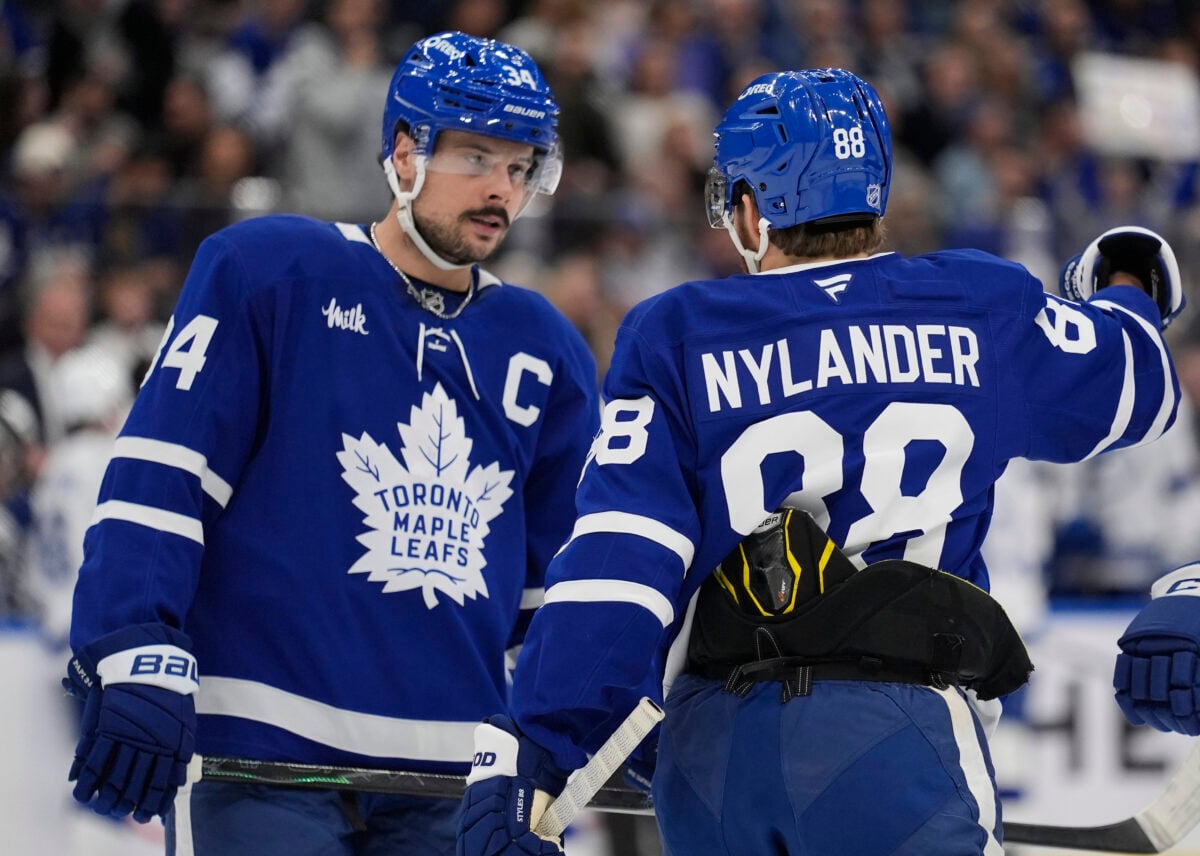
That could also change the way Matthews is used. One of the strange things about former head coach Craig Berube’s tenure was how often Matthews was asked to take on difficult defensive assignments because he was capable of handling them. He is an excellent defensive centre, but that doesn’t mean every important defensive shift has to be his.
Matthews is more valuable preparing for an offensive-zone faceoff than chasing an opponent around his own end. Better depth gives a coach the freedom to make that choice. It allows the best players to spend more of their energy doing the things only they can do.
That may be one of the more important differences between this team and last year’s version. Former GM Brad Treliving didn’t necessarily give Berube enough depth to avoid leaning on his stars, while Berube also came to Toronto wanting to turn a high-octane team into a more defensively responsible one. Neither decision was necessarily unreasonable on its own. Together, however, they produced a team that often asked its best players to do too many different jobs.
Will the Maple Leafs’ Depth Make a Big Difference This Season?
So, here’s the big question in today’s News & Rumours. Have the Maple Leafs improved their defence without dramatically improving their defence? If the forwards defend better, Tanev and McCabe don’t have to absorb quite as much punishment. If the bottom six can control shifts, Matthews, Nylander and Tavares don’t have to rescue every game by scoring more goals. And if the stars focus more on offence, will the team discover that giving them less responsibility gives them room to produce more?
That could ultimately be Chayka’s most important contribution to the roster. He didn’t simply add players. He may have given the Maple Leafs enough depth to change how they distribute responsibility. For a team that has spent years asking its stars to carry an enormous share of the burden, taking something away from them might be the biggest upgrade of all.
Free Newsletter
Get Toronto Maple Leafs coverage delivered to your inbox
In-depth analysis, breaking news, and insider takes - free.
Subscribe Free →