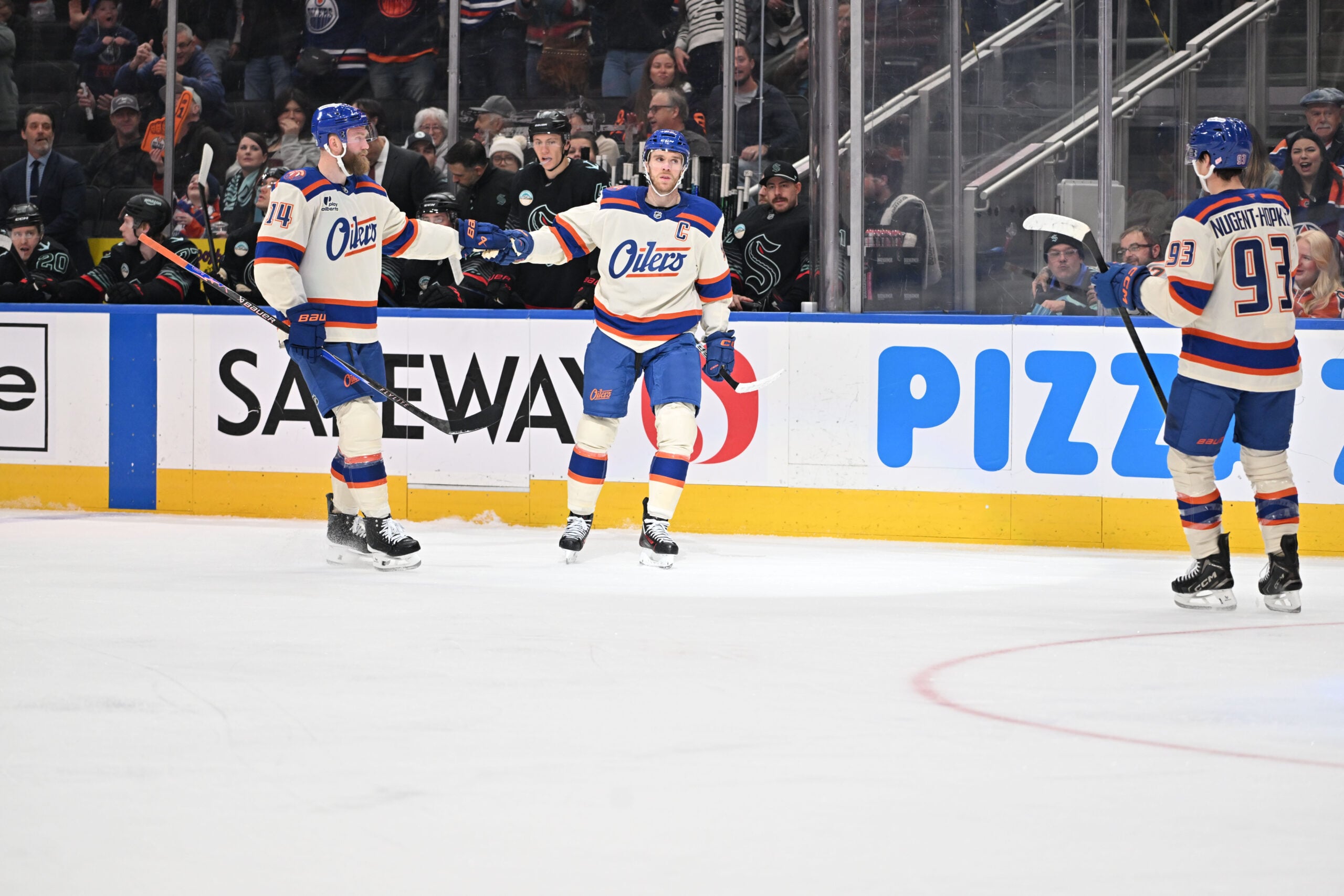
Leon Draisaitl needed just 10 seconds of overtime to end the Edmonton Oilers’ five-game winless streak. The Oilers erased a two-goal third-period deficit to beat the Seattle Kraken 3–2 on Nov. 28, improving to 18–7–4. They sat third in the NHL by points the following day, behind the Carolina Hurricanes and Minnesota Wild. That’s a strong position for a team whose five-on-five offence has spent much of the past month searching for answers.
The Stanley Cup isn’t won in December. What Edmonton can do in December is figure out why its offence has become easier to defend and which combinations can hold up when Connor McDavid and Draisaitl are on separate lines. The Oilers have already banked enough points to work through those problems without the same pressure to make up ground that has defined some of their recent seasons.
The Oilers Have Bought Themselves Time
The Oilers have 40 points through 29 games, nine more than they had at this stage last season and their best start over that span since at least 2006–07. Their previous high was 37 points in 2019–20. That cushion makes the rest of the schedule more manageable. Edmonton can reach 100 points by earning 60 over its final 53 games, a .566 points percentage. Last year, it would have needed a .651 pace from the same point in the season.

The Dave Tippett comparison is a reminder of how quickly an early cushion can disappear. The 2021–22 Oilers opened 16–5–0 before a 7–13–3 slide cost Tippett his job, and Jay Woodcroft took over. Edmonton has also seen how much a season can change in the other direction. The 2023–24 Oilers started 2–9–1 and recovered to reach the Stanley Cup Final. This year’s team has the benefit of working through its issues while it’s still near the top of the standings.
Better Goaltending Has Changed the Results
Edmonton’s clearest improvement has come at its own end. In the early-season sample, the Oilers allowed 2.16 goals per 60 minutes at five-on-five, down from 2.77 last season. Expected goals against per 60 dipped from 2.57 to 2.48, suggesting a modest improvement in the chances they’re allowing. The bigger change has been in net, where Edmonton’s five-on-five save percentage rose from .889 to .916. That helps explain why actual goals against fell so much more than expected goals against.
The offensive numbers show where the risk lies. Edmonton scored 2.63 goals per 60 at five-on-five in that same sample, up slightly from 2.57 last season, even as its expected rate fell from 2.76 to 2.10. Five-on-five shot attempts for per 60 also dropped from 40.68 to 34.41. If the finishing cools, Edmonton will need more shifts that produce a second chance after the first shot, especially when neither McDavid nor Draisaitl is on the ice.
Injuries Have Changed What Babcock Can Ask of His Lines
Edmonton leads the NHL in man-games lost per team game through Nov. 27, and the absences have affected nearly every part of the lineup. Devon Levi, Ryan Nugent-Hopkins, Jason Dickinson, Colton Dach and Isaac Howard have all missed time. Zach Hyman remained out with migraines affecting his vision, Filip Hallander went on long-term injured reserve (LTIR), and Matt Savoie was activated from LTIR and assigned to Bakersfield.
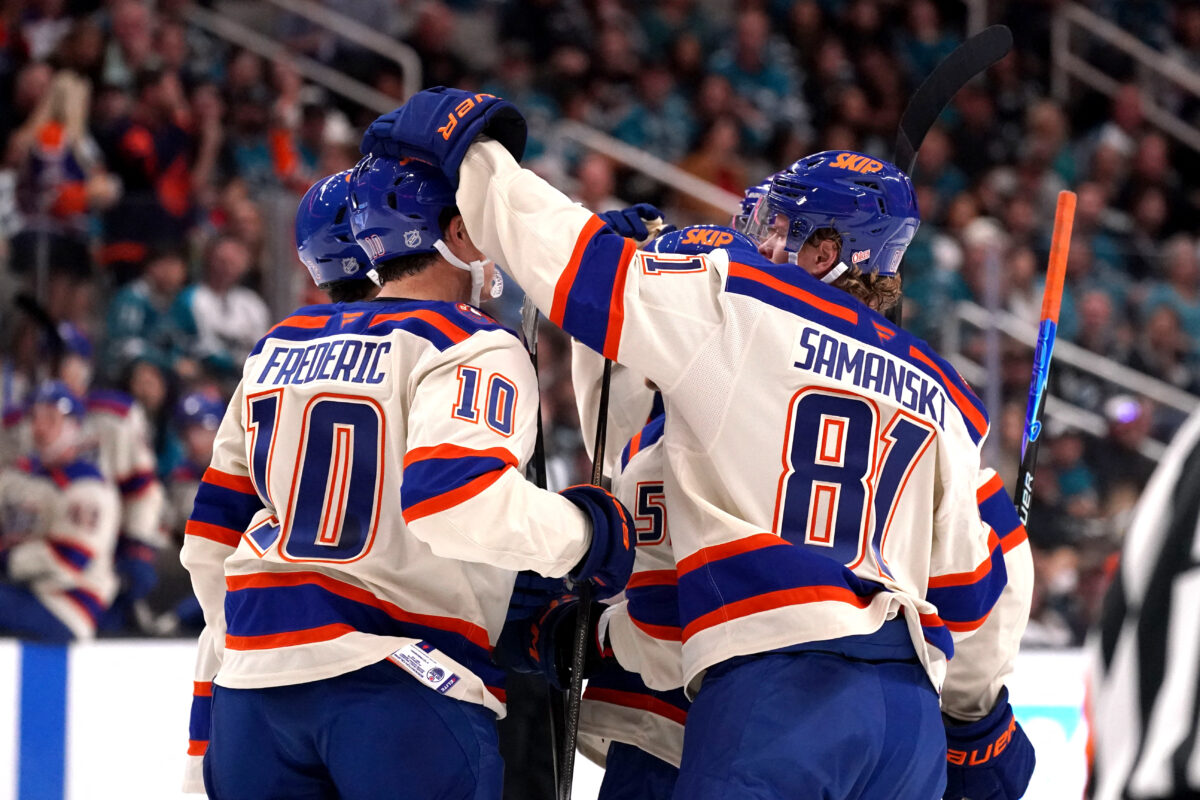
The impact goes beyond the number of games missed. Without Hyman, the Oilers lose a winger who retrieves pucks below the goal line and creates traffic at the crease. When Nugent-Hopkins or Dickinson is out, Mike Babcock has fewer options down the middle. Moving a winger into the top six also means finding someone to fill his role further down the lineup. With that much movement, it’s hard to know what Edmonton’s four lines can do when Babcock has more of his regulars available.
Babcock reunited McDavid and Draisaitl for the Seattle back-to-back after splitting them for three games. That pairing gives Edmonton a line that can change a game in one shift. It also makes the next question obvious. Can the other three lines get through the neutral zone with possession, recover pucks on the forecheck and turn that work into chances from the slot? A healthier roster will give Babcock more ways to answer it, and the current lineup gives him a baseline to measure against.
December Is the Time to Find Answers
Over the next month, I’d watch what Edmonton’s middle six does after winning the puck back. A good defensive shift can end with a clearance and a line change, or it can turn into offence. A clean breakout gives the forwards a chance to enter with possession. From there, can they get a puck to the slot, recover a rebound or force an offensive-zone faceoff? Even a shift that ends without a goal can put the next line in a better position to score.
That’s especially important when McDavid and Draisaitl play together. Babcock can load up his top line, but he needs the rest of the lineup to sustain pressure between those shifts. As players return, he’ll have more room to see which combinations can win pucks on the forecheck and which can carry possession through the neutral zone. In a playoff series, opponents have several games to take away a team’s preferred breakout or force its forwards to dump the puck. Edmonton can spend December figuring out how its depth lines respond when their first option disappears.
The points Edmonton has banked give Babcock room to stick with a promising combination through a few quiet games and judge it by the chances it creates. If those chances start coming as the lineup gets healthier, he’ll have more reasons to trust his depth in tight games. If the same problems persist, management can go into the trade deadline with a more specific question about what the group needs, whether that’s a winger who can recover pucks or a forward who can help carry possession through the neutral zone.
Free Newsletter
Get Edmonton Oilers coverage delivered to your inbox
In-depth analysis, breaking news, and insider takes - free.
Subscribe Free →