Team Canada’s run at the 2026 World Junior Championship came to an abrupt and frustrating end on Sunday night, falling 6–4 to Czechia in the semifinal. On paper, the final score suggests a competitive game — and for stretches, it was — but the underlying story points to a night where Canada couldn’t fully impose its identity when it mattered most.
Related: Guide to the 2026 World Junior Championship
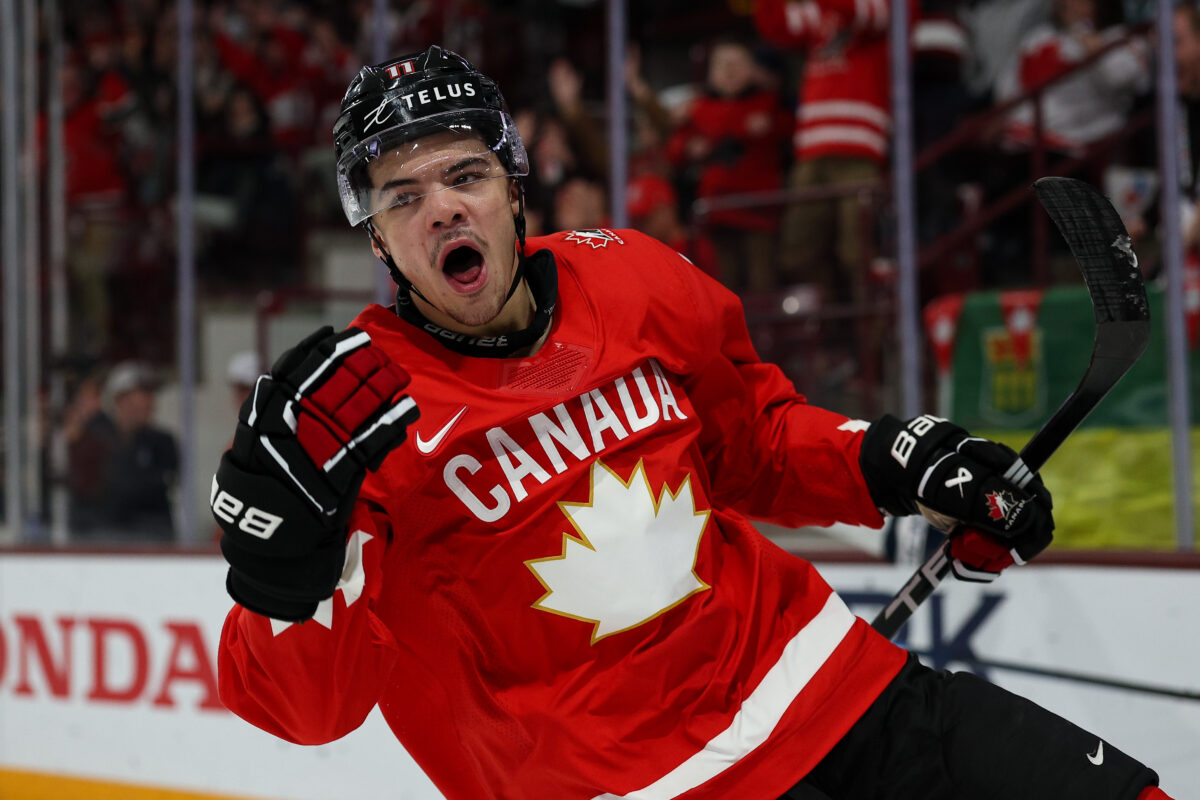
Canada did receive goals from key pieces of its core, including Tij Iginla, Zayne Parekh, Cole Reschny, and Porter Martone, but those contributions weren’t enough to overcome defensive breakdowns and a lack of discipline in critical moments. From a Team Canada perspective, this loss offers several clear lessons.
Discipline and Game Management Cost Canada at the Worst Time
In knockout games, margins are razor-thin — and Canada consistently made things harder on itself. The penalty total alone tells part of the story. Canada finished with 20 penalty minutes, compared to eight for Czechia, putting unnecessary pressure on both the penalty kill and the goaltending.
While Canada’s power play was effective (2-for-4), the constant parade to the box disrupted rhythm and momentum. The third period, in particular, highlighted the issue. With the game still within reach, Canada took back-to-back penalties late — including a goaltender interference call and a misconduct sequence that spiraled out of control. Czechia capitalized with an empty-net goal that effectively sealed the outcome.
This wasn’t about aggression or physicality — it was about composure. Canada chased the game emotionally rather than dictating it structurally. In past tournaments, Canada’s hallmark has been its ability to manage chaos late in games. That discipline wasn’t there when it mattered most.
Against a Czech team that thrives on counterattacks and opportunistic offence, every penalty felt amplified — and ultimately, they were.
Defensive Breakdowns and Coverage Issues Undermined the Push
Scoring four goals should be enough to win at this level — or at least give you a chance. The problem for Canada wasn’t offence; it was what happened away from the puck.
Six of their goals came from 37 shot attempts, and way too many of those opportunities originated from danger zones that were a direct result of lack of attention on defence. Miscommunication on defence, delayed rotations to the crease, and a lack of resistance in defending the interior of the ice caused opposing players to have far too much room.
It was hard for the Canadians to cope with the transition play of the Czechs, especially from the offensive blue line as the play broke down. This resulted in some odd-man rushes that left the Canadians on their heels.
Goaltender Jack Ivankovic faced a heavy workload and made several timely saves, but the defensive support in front of him wasn’t consistent. This wasn’t a goaltending issue — it was a team defence issue. Canada’s inability to close gaps quickly and manage puck support ultimately tilted the ice in Czechia’s favour during key stretches.
In the World Juniors, it’s not just about talent — but about structure as well. This is one area where Canada missed in this particular matchup.
The Offence Showed Depth, but Not Enough Sustained Pressure
If there’s a silver lining for Canada, it’s that the offence showed depth throughout the lineup. Goals came from different sources, including timely contributions at even strength and on the power play. The power play, in particular, delivered when opportunities arose — a positive sign given earlier tournament inconsistencies.
But what it didn’t have was sustained five-on-five pressure. Chances aside, the offence came in waves rather than extended shifts that wear down opponents. Czechia was comfortable defending in layers and countering quickly, while Canada struggled to keep plays alive below the goal line and consistently funnel pucks to the net.
In the third period, after pulling within one goal, Canada had a window to take control. Instead, momentum slipped away due to penalties and failed exits, preventing the offensive group from building sustained zone time.
This was not a talent issue — it was an execution issue. The pieces were there, but the cohesion wasn’t. At this level, especially in elimination games, it’s not enough to generate chances; you have to dictate tempo. Canada didn’t do that often enough.
Final Thoughts
This semifinal loss will be remembered not for a lack of effort, but for missed opportunities. Canada had chances to swing momentum, capitalize on power plays, and settle the game defensively — but failed to string those elements together consistently.
Czechia earned its win by staying composed, opportunistic, and disciplined. Canada, meanwhile, played an emotional game that drifted away from its strengths at the worst possible time.
For a program with championship expectations, this loss will sting — and it should. But it also provides a clear reminder: at the World Juniors, structure, discipline, and situational awareness are just as important as star power.
Canada had the talent to advance to the gold medal game. On this night, Czechia had the execution.

Free Newsletter
Get World Junior Hockey Championship coverage delivered to your inbox
In-depth analysis, breaking news, and insider takes - free.
Subscribe Free →