The Utah Hockey Club has had a turbulent start to the season. They have some big-time wins against perennial Stanley Cup contenders in the New York Rangers, Boston Bruins, and Carolina Hurricanes. But they also have some terrible losses to the San Jose Sharks and Anaheim Ducks, two of the worst teams in hockey.
Over a month into their inaugural NHL season, Utah has been inconsistent. Still, it has improved in several areas compared to past campaigns under the Arizona Coyotes. However, this team still has one fatal flaw that will derail their season if significant adjustments are not made soon.
Utah Hockey Club Struggling Against Opponents with Elite Special Teams
Utah has not had an easy schedule to start the season. Seven of their 19 games have been played against the top 10 teams in the NHL. In these seven games, Utah has a 2-4-1 record, with one of those wins being the game against the Carolina Hurricanes, in which Karel Vejmelka made 49 saves on 50 shots and saved 5.01 goals above expected.
With Utah being one of the youngest NHL teams, it may be unreasonable to expect them to compete consistently with the NHL’s best teams this early in the season. But Clayton Keller put playoff expectations on this team after being named the franchise’s first captain, and if they want to achieve this goal, Utah is going to have to start finding more points against the other teams competing for these spots.
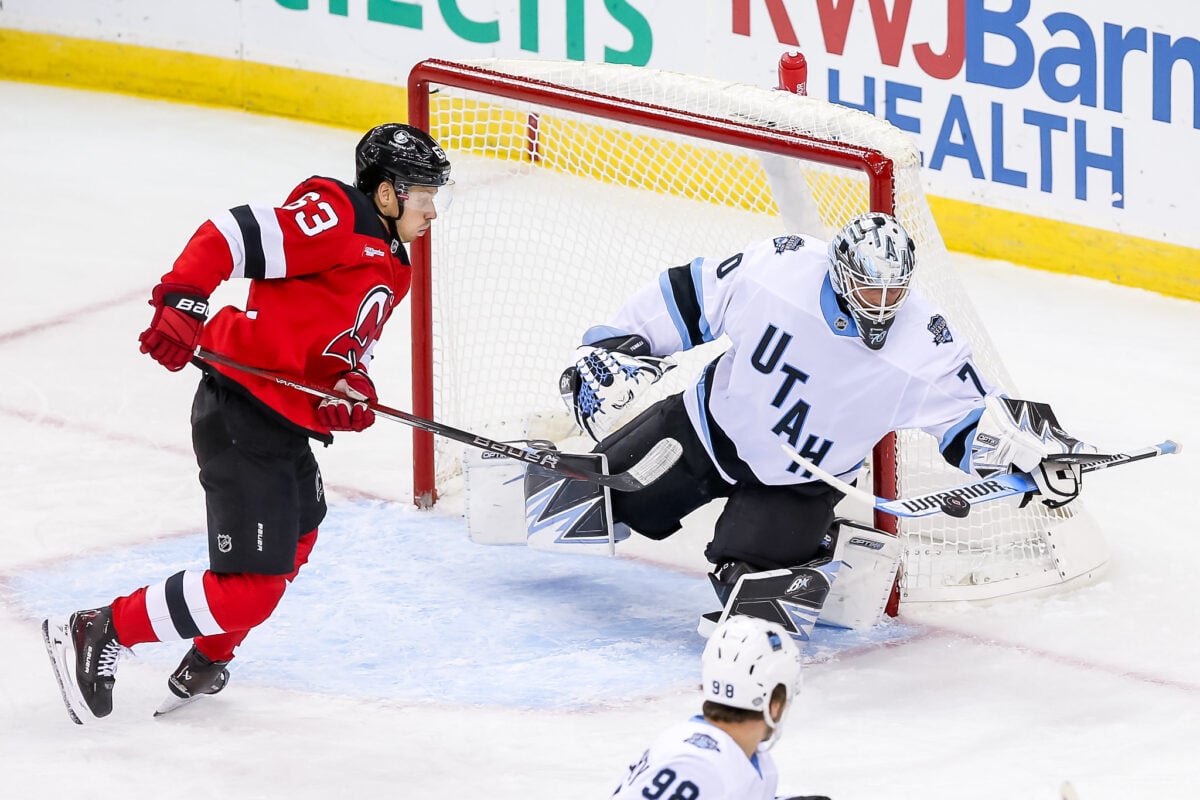
The common theme among the top teams in the league is their elite special-teams units. 10 of the top 12 teams in the league have a power play and penalty kill percentage that adds up to over 100%, compared to only six of the bottom teams. 20 teams have those stats add up to 100% or higher. This has been one of Utah’s most prominent issues as they rank third to last in the NHL in combined power-play and penalty-kill percentage, with theirs only sitting at 91.6%. Still, their special teams’ issues go deeper than that.
Utah’s Penalty & Penalty Kill Trouble
First, Utah is taking way too many penalties. They are averaging 5:59 minutes on the penalty kill per game, the most in the NHL. Not only are they taking too many penalties, but they are also not making up for it by drawing penalties. Utah is averaging 1:14 more minutes on the penalty kill per game than they are on the power play.
Simply, when you are playing the game at a disadvantage more than you are playing it at an advantage, it is going to be harder to win games. This is an issue the franchise has had ever since head coach Andre Tourigny was hired to take over the Arizona Coyotes. This would not be as big of a concern if Utah had a dominant penalty kill or an elite power play that could help cover this up.
Related: Utah’s Goaltending, Special Team Issues Lead to Capitals Win
Utah’s penalty kill percentage, at 75%, ranks 26th in the NHL. Clearly, this is not good enough to cover up averaging the most penalty kill time per game. They are also allowing the eighth-most goals, 10th-most expected goals, sixth-most scoring chances, and ninth-most high-danger chances per 60 minutes on the penalty kill this season.
To succeed in this area, Utah needs to either drastically limit the number of penalties it takes or find a way to limit the scoring chances it gives up as it has at five-on-five this season.
Utah’s Power Play Has Gone Silent
Utah is tied with the St. Louis Blues and New York Islanders for the least power-play goals scored in the NHL with seven. Utah has the third-worst power play percentage in the NHL, only ahead of the Islanders and the Boston Bruins.
Utah is not just struggling to score on the man advantage; they need to generate more scoring chances. Utah averages the seventh-least expected goal per 60 minutes and the third-least high-danger chance per 60 minutes. Between Clayton Keller, Logan Cooley, and Dylan Guenther, this power play is far too talented to continue struggling this badly. We have seen the flashes of this unit’s potential early in the season as they had three power-play goals in their first three games.
Utah must better get the puck into high-danger areas of the ice. They are well below the league average in shots from the slot on the power play and spend too much time trying to set up one-timers from the top of the circles. While this power play is immensely talented, it sometimes needs to simplify and get back to getting the puck on the net and putting pressure on the opposition’s defenders and the goalie.
What makes these special teams issues so frustrating is that Utah has been much improved at five-on-five, where they have an even goal differential and are plus-3.10 in expected goal differential. In addition, Utah is allowing the third-least shot attempts, second-least scoring chances, and fifth-least high-danger chances per game.
Utah has been exceptional on the defensive end. Still, they continue to take too many penalties, exposing their weak special teams units. Suppose Utah starts limiting how many penalties they are taking per game. In that case, they will have much more success and an excellent chance to get back into playoff position, considering how well they are playing at five-on-five. However, if they do not find increased discipline and continue to take penalties at the NHL’s highest rate, their special teams’ units will be what ruin their chances of making a push for the playoffs in their inaugural season.
All stats from NaturalStatTrick & ESPN
