The 2025-26 season was supposed to be when the Detroit Red Wings firmly shut the door on their decade-long rebuilding narrative. Looking at the standings in late December, you could argue they are doing exactly that. They are at the top of the Atlantic Division, although the separation between first place and sixth is a razor-thin five points.
But if you look past the point totals and watch the games, you see a team walking a tightrope. The primary source of anxiety isn’t the scoring or the power play; it’s a goaltending situation that has become the most unpredictable subplot of the season. General manager Steve Yzerman built this roster to compete now, but the reliance on two veteran netminders, John Gibson and Cam Talbot, has created a dynamic that is as fascinating as it is frustrating.
The “Freaky Friday” Syndrome
In the modern NHL, the concept of a true “starter” playing 60-plus games is all but extinct. You need a tandem. You need 1A and 1B to push each other, or at the very least, to hold the fort while the other resets.
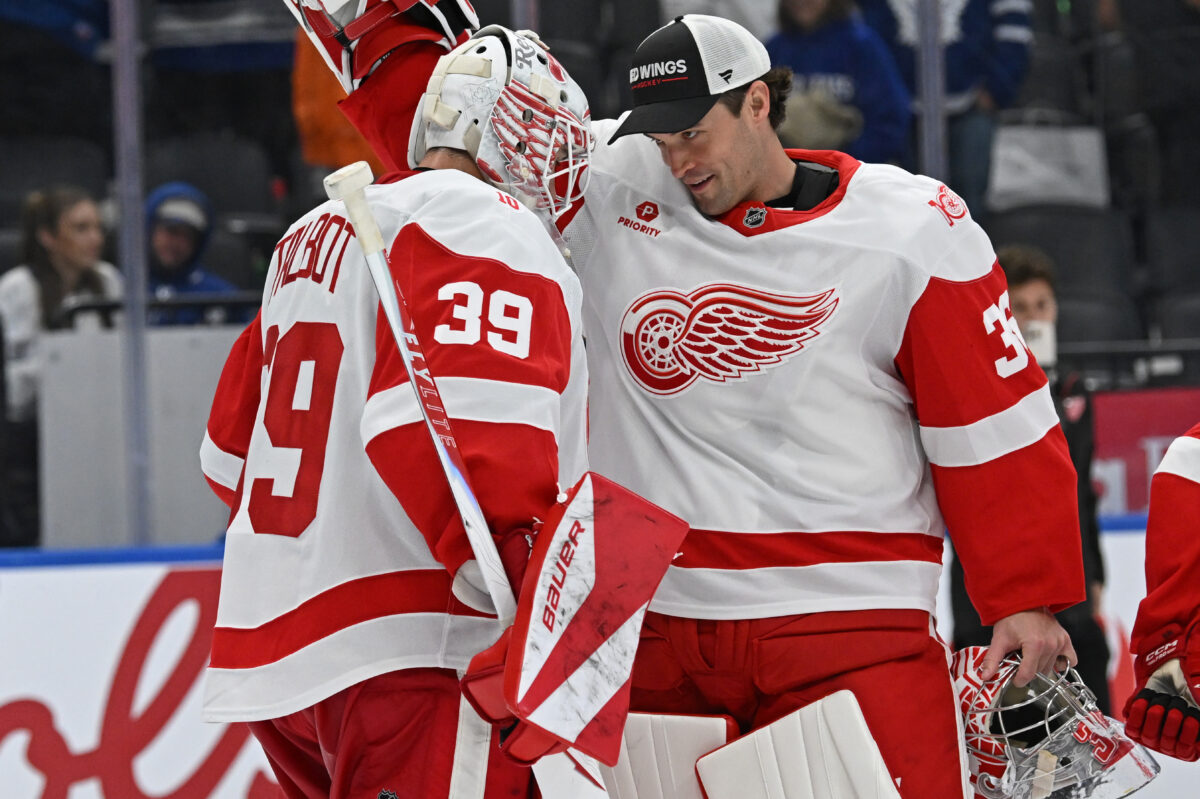
Detroit hasn’t had a tandem this season; they’ve had a seesaw.
Call it the “Freaky Friday” effect. Earlier in the season, John Gibson looked lost, starting with a brutal 0-5-1 record that had many wondering if the acquisition was a mistake. Meanwhile, Cam Talbot was the steady hand. Fast-forward to December, and the roles have flipped. Just as Gibson found his groove—winning seven straight and posting two shutouts—Talbot entered a skid.
Related – Red Wings Week Ahead: Schedule & Storylines – Atlantic Lead, Depth Scoring and More
This lack of synchronization is the team’s biggest hurdle. In a league compacted by heavy travel and back-to-back sets, you cannot survive with only one goalie bringing his “A-game” at a time. When one goalie heats up, the other seems to freeze over. For a team trying to break a historic playoff drought, that level of volatility in the crease isn’t just an annoyance; it’s a structural liability.
Hanging Them Out to Dry
To place all the blame on the men in the masks would be lazy analysis. Goaltending doesn’t exist in a vacuum, and right now, Detroit’s defensive environment is hazardous to its netminders’ health.
Yzerman was blunt in his assessment recently, noting that the team gives up “more than we should.” He’s right. Even during Gibson’s red-hot streak in December, he’s facing an average of over 30 shots a night. You can ask a goalie to steal a game here and there, but asking them to consistently bail out a porous defense is unsustainable.
Father Time and the Olympic Reprieve
There is also the elephant in the room: age.
Gibson and Talbot form one of the oldest tandems in the National Hockey League. Cam Talbot is 38 years old. In professional sports, specifically at a position demanding the hip flexibility and reflex speed of goaltending, 38 is ancient. There is a legitimate fear regarding durability as the season grinds toward the “down the stretch” phase. Can Talbot physically handle the workload required to pull out of his slump? Can Gibson maintain his health after years of heavy lifting for the Anaheim Ducks?
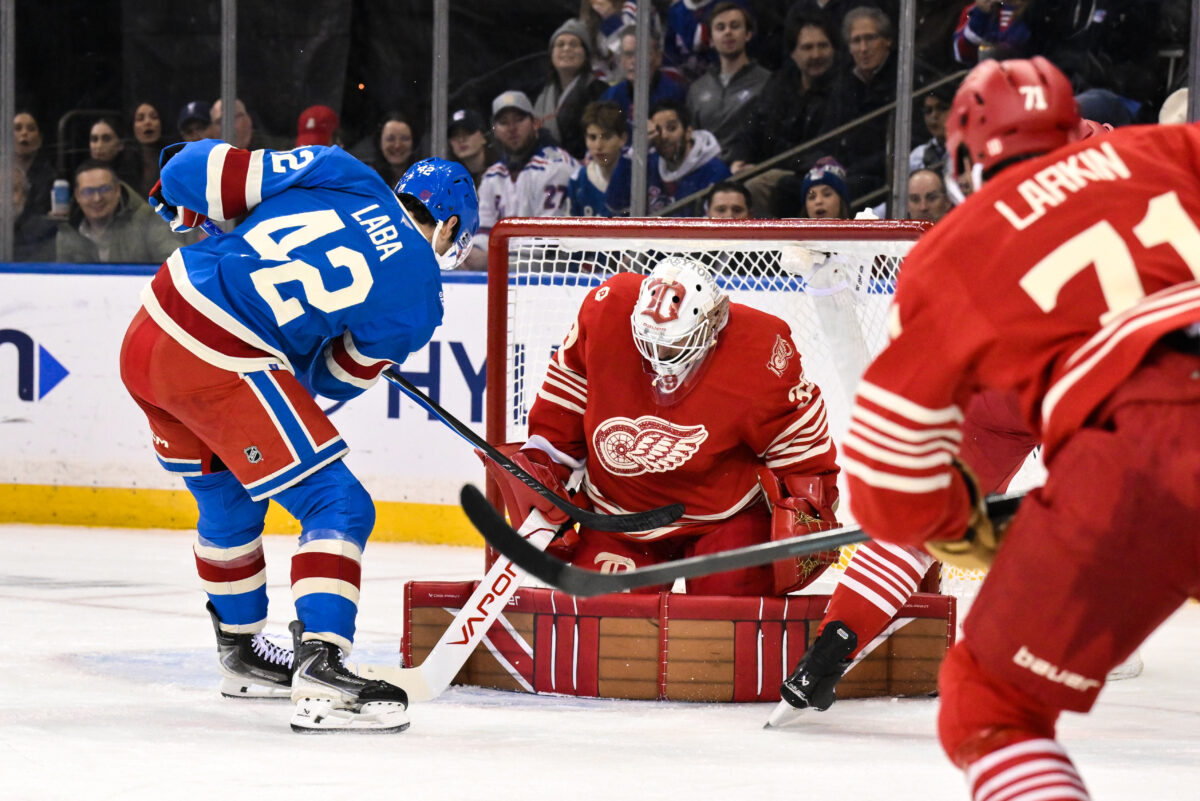
This is where the schedule makers have accidentally done Detroit a massive favor. The 2026 Winter Olympics break in February is looming as a potential season-saver.
Related – Projected Lineups for Stars vs Red Wings – 12/23/25
For a young team, a two-week break can kill momentum. For a team relying on two netminders with significant mileage on their odometers, it’s a godsend. That fortnight off allows for physical recovery and mental resetting right before the trade deadline and the final playoff push. It might be the only thing that keeps this veteran duo fresh enough to endure the intensity of March and April.
The Margin for Error
We are looking at a photo finish in the Atlantic. Yzerman has emphasized that “every single point” matters, and he isn’t using clichés. When five points separate first from sixth, a bad week can drop you from home-ice advantage to outside the wildcard looking in.
The Red Wings have the offensive firepower to compete. They have the coaching. But the fate of their 2025-26 season will rest largely on the consistency of their goaltending. They don’t need Gibson and Talbot to be Dominik Hasek and Patrick Roy; they just need them to be average or better at the same time.
If the “Freaky Friday” routine continues, Detroit might find itself with plenty of time to analyze what went wrong come mid-April. But if they can synchronize their watches and get steady play from both men, the drought might finally be over.
AI tools were used to support the creation or distribution of this content, however, it has been carefully edited and fact-checked by a member of The Hockey Writers editorial team. For more information on our use of AI, please visit our Editorial Standards page.
