If you’re trying to get an accurate read on who the Montreal Canadiens actually are through the first quarter of this 2026-27 season, good luck. You might as well throw a dart at a board and see which version of this hockey team shows up on any given night.
On paper, sitting at 14-7-4 and holding down third place in the Atlantic Division with 32 points as they head out on this daunting western road trip starting against the Colorado Avalanche, things look pretty good. In fact, if you just look at the standings, you’d think head coach Martin St. Louis has finally guided this group out of the developmental woods and into the territory of a legitimate, night-in, night-out contender.
Spend five minutes watching them over the last two weeks, though, and you’ll realize that reliability and stability remain the final, and perhaps steepest, hurdles for this roster to clear.
Final Hurdles
Even at the NHL level, the talent gap between a Stanley Cup contender and a lottery team is razor-thin, meaning a slight dip in focus immediately levels the playing field in a single game. Over a grueling 84-game grind, top players subconsciously manage their energy against the struggling clubs, gliding on backchecks, looking past a Tuesday night matchup toward a weekend rivalry, or over-passing in search of highlight-reel plays instead of grinding out high-percentage shots.
Compounding that mental drift, coaching staffs often use weaker opponents to rest key defensemen, start the backup goaltender, or roll the fourth line more frequently, subtly disrupting the team’s rhythm and margin for error. Something the Canadiens, especially when playing at home, and looking to provide fans something to clip for a highlight reel.
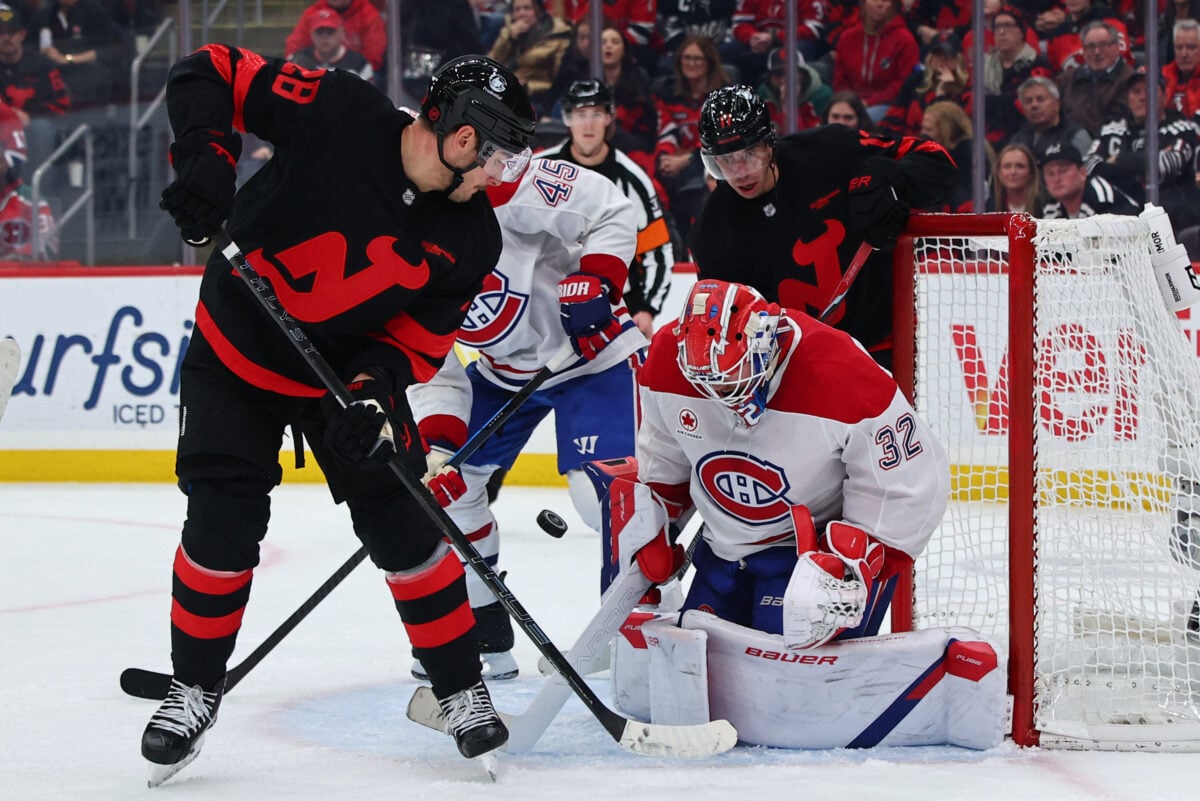
Meanwhile, struggling rosters treat matchups against powerhouses as a measuring stick, playing a desperate, north-south style built on relentless forechecking, blocked shots, and clogging the neutral zone. When an elite team lacks the patience to chip pucks deep and win dirty board battles against a tight defensive shell, frustration sets in, leading to risky blue-line turnovers and odd-man rushes the other way.
Factor in hockey’s high degree of randomness, where a hot opposing goaltender or a couple of bad bounces off the glass can erase a massive possession advantage, and a disciplined underdog playing at 100 percent will routinely beat a talented favorite coasting at 85, especially in a league where parity is the norm.
Canadiens Challenges
Right now, the Canadiens are the ultimate NHL chameleon. Put them up against the league’s elite, back them into a corner in a hostile building, and they’ll rise to the occasion with the kind of pace, structure, and tenacity that makes you believe they can hang with anyone. Put them on Bell Centre ice against a struggling opponent they’re supposed to beat, like their recent visitor the Los Angeles Kings, and suddenly the details vanish, the execution gets sloppy, and they drag themselves right down into the mud.
We just saw the textbook example of that duality play out over a six-day stretch that encapsulates everything encouraging, and everything frustrating, about this team.
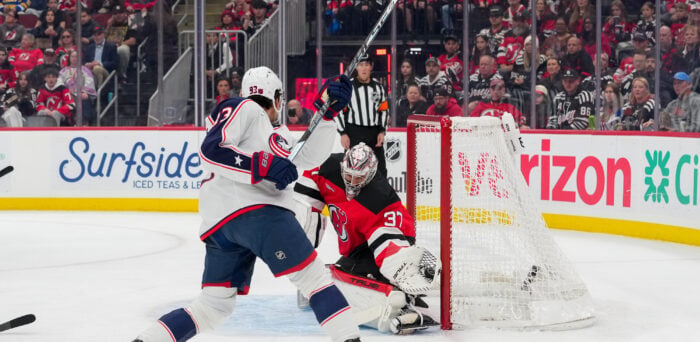
Last week, the Canadiens went into Newark and Raleigh on consecutive nights, two of the toughest buildings in the Eastern Conference, and walked away with four massive points. They edged the New Jersey Devils 3-2 on a Wednesday, then went into Lenovo Center 24 hours later and knocked off a powerhouse Carolina Hurricanes squad 2-1 in overtime. Against Carolina, a team averaging over four goals a game, Montreal was dialed in from puck drop. Their gaps were tight, their exits were clean, and when things broke down, they competed with desperation to protect the middle of the ice. That game was seen as a launching point by the head coach, displaying they have improved as a team.
“I think we got better as a team tonight, we got what we deserved.”
-Martin St. Louis
It was the exact type of mature, connected road hockey St. Louis has been preaching for years. You looked at that back-to-back sweep, coming right on the heels of statement road wins, like the one against the Boston Bruins earlier in the month, and thought, Okay, they’ve turned a corner.
Then they came home.
Jekyll and Hyde
Then, only two days after that gutsy performance, they welcomed a middling Philadelphia Flyers team to the Bell Centre and coughed up a 4-3 loss. Forty-eight hours later, on Monday night, Los Angeles arrived in town with a 7-12-2 record, a team bleeding goals and struggling to kill penalties, walked out of Montreal with a 2-1 victory.
That isn’t an isolated blip, either. It’s a recurring theme. Earlier this season, Montreal went into Dallas and dismantled the Stars 5-2, only to come home and drop an overtime decision to the San Jose Sharks. They’ve beaten the Winnipeg Jets on the road yet dropped a home game to that very same club in dramatic fashion, giving up four goals in 2:39 at the end of the third period and losing in overtime. It was the latest four-goal comeback in NHL history, smashing the previous mark by more than four minutes. Teams had a record of 0-10299-0 when facing a deficit of at least four goals entering the final three minutes of regulation before that night.
So, why does a team capable of suffocating Carolina on the second half of a back-to-back look completely disjointed against a 7-12-2 Kings squad on home ice?
Finding Solutions
When you talk to players and coaches around the room, the answer almost always circles back to the same two words: standards and habits.
Against a juggernaut like Carolina, or in a pressure-cooker environment like TD Garden or Scotiabank Arena, the emotional engagement is automatic. Nobody needs to remind Nick Suzuki, Cole Caufield, or Lane Hutson that if they cheat for offense against the Hurricanes, the puck will be in the back of their net ten seconds later. The fear of getting embarrassed forces every player on the bench to respect the game plan. They chip pucks behind the defense, they reload above the puck, and they keep their shifts short and efficient.
Against teams lower in the standings, human nature creeps in. With an average age of 25.81 (the second youngest team in the NHL), and core pieces like Hutson, Juraj Slafkovsky, and Kaiden Guhle still navigating the grind of expectations, there is a subconscious tendency to exhale. Instead of letting their structure dictate the terms of the game, they start looking for easy offense. They make the cute east-west pass at the offensive blue line instead of putting the puck deep. They make the soft drop pass that is easily anticipated. They linger on the ice for 65-second shifts chasing a point, leaving the next line out of sync.
Worse yet, when a desperate, struggling opponent like Los Angeles comes into Montreal playing a heavy, north-south, low-event game, the Canadiens have a habit of matching the opponent’s tempo rather than imposing their own. Instead of using their speed to blow the doors off a slower roster, they get bogged down in wall battles, turn pucks over in the neutral zone, and let an opposing goaltender, like Darcy Kuemper stopping 29 of 30 on a Monday, settle into a groove without ever really making his life difficult.
To keep a young, skill-heavy roster from playing down to weaker opponents, St. Louis and the Canadiens need to replace emotion-driven habits with non-negotiable structural rules, the same blueprint used by recent Cup champions like the Tampa Bay Lightning. First, the coaching staff should enforce a strict north-south mandate during the opening 10 minutes of each period against sub-.500 teams, banning cute east-west passes and drop passes at the blue line in favor of putting pucks behind slower defensemen to wear them down on the forecheck. Simultaneously, capping even-strength shifts at a hard 40 to 45 seconds will eliminate the 65-second drifts that sap Montreal’s speed advantage, allowing them to roll four lines at maximum tempo and force heavy, low-event teams out of their comfort zone.
Off the ice and on the bench, stabilizing lineup deployment and leaning on veteran leadership will raise the team’s night-to-night floor. And now with Suzuki and newly acquired center Dylan Larkin anchoring two distinct, self-sustaining lines, Montreal has a built-in matchup shield and uses Larkin’s relentless north-south pace as an emotional thermostat when younger players like Hutson and Slafkovsky start forcing plays. Finally, pairing fixed bottom-six line identities and pre-set goaltending blocks for Jacob Fowler and Jakub Dobes with an emphasis on layered net-front screens will turn unscreened perimeter volume into messy, high-percentage rebounds, ensuring the Canadiens dictate the terms of the game regardless of who is across the ice.
For St. Louis, this is the classic transition phase of a rebuild turning into a contender. Learning how to win is one thing; learning how to win consistently, regardless of the opponent, is an entirely different animal. Good teams don’t rely on emotion or the quality of their opponent to dictate their effort level. They bring the exact same baseline of competitiveness to a Monday night game against a bottom-feeder as they do to a Saturday night showcase against a contending team.
Right now, the Canadiens have proven they have the ceiling to beat anyone in the NHL. Until they raise their floor and eliminate the nights where they play down to the competition, though, every step forward is going to feel like it comes with a frustrating step back. And with Colorado, Vegas Golden Knights, and Utah Mammoth waiting on this western swing, they’re about to find out just how quickly they can rediscover the version of themselves that showed up in Raleigh.
Free Newsletter
Get Montreal Canadiens coverage delivered to your inbox
In-depth analysis, breaking news, and insider takes - free.
Subscribe Free →