The narrative surrounding the Dallas Stars this season has been a pendulum swinging violently between catastrophe and resilience. For a team sitting second in the Central Division, the mood in the locker room has been tested by a relentless attrition of talent that would have sunk lesser rosters. Yet, in the cold, calculated world of NHL roster management, significant injuries often open a paradoxical window of opportunity.
As the trade deadline approaches, general managers across the league are watching Dallas. They aren’t watching out of pity for the team’s medical reports, but out of wariness. The Stars are bruised, yes, but they are about to become flush with the most valuable commodity in the salary cap era: financial flexibility.
The Cost of Attrition
The medical updates out of Dallas have been nothing short of grim. The headline loss, undoubtedly, is Tyler Seguin. Losing a top-nine winger and a primary locker room leader to a torn ACL is the kind of setback that alters a franchise’s trajectory. Head coach Glen Gulutzan didn’t mince words, calling it simply a “tough day” for the organization. For Seguin, this injury is a cruel sequel to a previous season largely lost to hip surgery, effectively ruling him out for the remainder of this campaign.
Related – Stars’ Tyler Seguin Expected to Miss Remainder of Season With Torn ACL
But the anxiety didn’t stop with Seguin. The collective breath of the fanbase was held recently when Roope Hintz, the team’s bona fide number-one center, needed help off the ice after taking a shot to the ankle. While Hintz has been producing at a near point-per-game pace, the visual of him leaving the ice raised alarm bells about the team’s center depth.
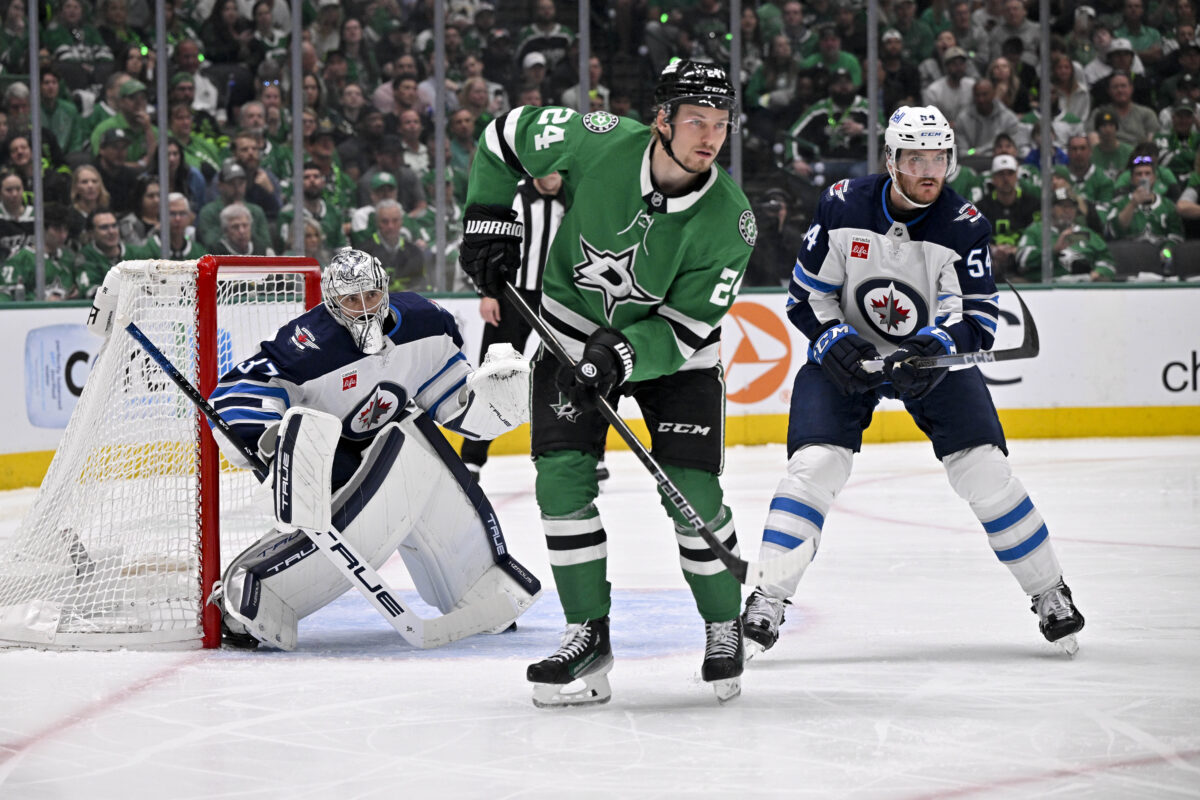
The blue line hasn’t been spared, either. The defensive corps has been operating as a makeshift unit for weeks. Thomas Harley lost a dozen games, coupled with Nils Lundkvist’s two-month absence. At one point, the team was staring down the barrel of fielding only five NHL-caliber defensemen. While Harley and Lundkvist are filtering back into the lineup—with Harley desperately needed to stabilize the top four—the depth chart remains fragile.
Reinforcements from Within
Despite the crowded infirmary, the Stars haven’t collapsed. This is largely due to the “next man up” culture that Gulutzan has preached. It is a cliché in sports, but in Dallas, it has been a survival mechanism.
The internal strategy relies heavily on the reintegration of Matt Duchene. Having missed 25 games, Duchene’s return from long-term injured reserve (LTIR) in December provides a massive boost (from ‘Matt Duchene, Nils Lundkvist return to Stars lineup from injury after nearly two months,’ – The Dallas Morning News – Dec. 7, 2025). We are talking about a veteran who was scoring at a point-per-game clip in the 2024-25 season. His presence centers a line and eases the pressure on the younger forwards.

Speaking of youth, the door is now wide open for Mavrik Bourque. The organization has been high on Bourque for some time, and necessity is often the mother of promotion. The Stars are banking on internal growth to patch the holes in the hull until external reinforcements can arrive.
The Silver Lining of LTIR
Here is where the conversation shifts from medical recovery to asset management. The NHL’s salary cap rules regarding LTIR are complex, but the layman’s version is straightforward: if a player is out long-term, the team is allowed to exceed the salary cap by the amount of that player’s contract to replace him.
Related – Wild Bounce Back, Take Down Stars 5-2
With Seguin likely out for the season, the Stars have placed his contract on LTIR, along with defenseman Lian Bichsel. This move could potentially free up well over $10 million in cap space. In a league where contenders usually have to move money out to bring talent in, Dallas suddenly has the ability to absorb a massive contract without subtracting from their current roster.
This transforms Dallas from a wounded animal into a predator. After three consecutive exits in the Western Conference Final, the front office knows the current core is close. They aren’t looking to just fill a jersey; they are looking to load up for a Stanley Cup.
The Trade Targets: A Blockbuster Strategy
With newfound financial freedom, the Stars are linked to several high-profile names. The shopping list suggests a team looking to solve specific problems: scoring depth and defensive grit.
The Calgary Package: The most intriguing rumor involves a double dip into the Calgary Flames’ roster for Blake Coleman and Rasmus Andersson. Coleman is the prototype of a playoff winger—gritty, defensively responsible, and capable of scoring clutch goals. Andersson addresses the need on the back end, providing a minute-munching defenseman who can play in all situations. But this isn’t a cheap fix. Acquiring two impact players from a division rival would require a significant package of draft picks and prospects.
The Buffalo Scorer: If the goal is pure offensive elevation, Alex Tuch of the Buffalo Sabres is the ideal target. Tuch brings size and speed, but more importantly, a proven scoring touch. Adding him would arguably make the Stars’ offense the deepest in the league. Tuch carries a $4.75 million cap hit, which is incredibly efficient for his production. Even without the full LTIR relief, he fits; with it, he is a luxury they can easily afford.
The Brotherly Connection: A smaller, but narratively rich option is Nicholas Robertson from the Toronto Maple Leafs. A dependable depth forward, Robertson has struggled to find consistent ice time in the Leafs’ top six. Moving him to Dallas would unite him with his brother, superstar Jason Robertson. While sentimental, it is also practical—Nick offers middle-six scoring punch that the Stars need to replace Seguin’s lost production.

The Wild Card: Nazem Kadri remains a name on the board. His abrasive style is built for the playoffs. However, his contract is heavy, and the logistics of fitting him in long-term are more complicated than the other options.
The Bottom Line
The Stars are in a unique position. They are a competitive team that has been handed a devastating blow, yet that very blow has provided the mechanism to fix their problems.
The front office is no longer restricted by a tight salary cap. They have the assets, they have the motivation of three straight Conference Final losses, and now, they have the money.
AI tools were used to support the creation or distribution of this content, however, it has been carefully edited and fact-checked by a member of The Hockey Writers editorial team. For more information on our use of AI, please visit our Editorial Standards page.
