The Hartford Wolf Pack made quite the hire when they brought in Kris Knoblauch to be head coach in 2019. He got the most out of his roster, but when the opportunity came for him to coach in the NHL, he took it. Knoblauch is a tough coach to follow, even for a veteran like Steve Smith, who was the interim last season but was replaced in the 2024 offseason.
Related: AHL Gap Between Hartford & Hershey Is Minimal
Enter Grant Potulny. He was hired as the next up-and-coming head coach, which many American Hockey League (AHL) teams are looking for. Coming from the college ranks, Potulny knows how to develop prospects, a trait the Wolf Pack wanted behind the bench.
Potulny learned firsthand that in the AHL, the development and maturity of prospects can throw a wrench into the season and that he can only do so much with a roster that constantly changes. “That’s the league. You’re going to have guys up and down, in and out,” Potulny noted after a game when he lost four regular defensemen just hours before puck drop.
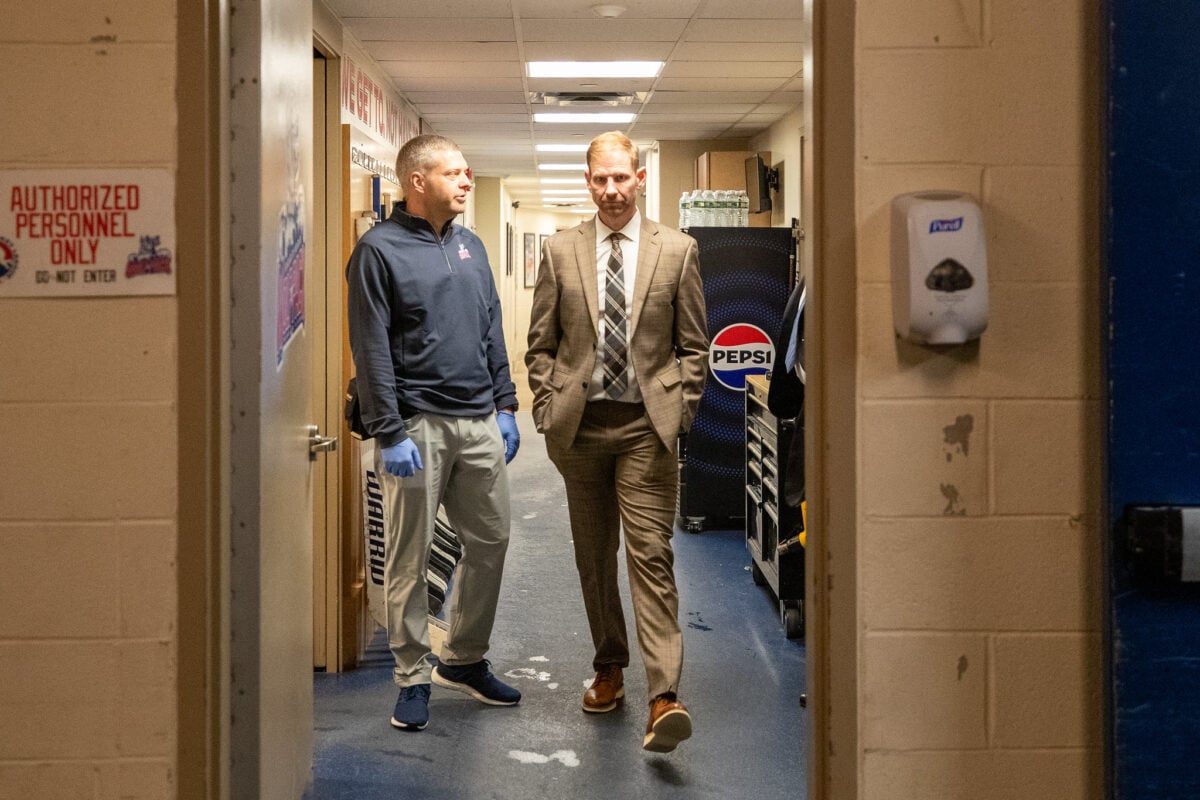
It’s a part of the growing pains of joining the AHL, which has plenty of highs and lows. The Wolf Pack are having a rough season, ranked near the bottom of the Atlantic Division and are making a late-season push for a playoff spot. Like his players, Potulny is learning how hard it is to win at that level.
Follow-Up Act To Knoblauch
When Knoblauch was hired to be head coach of the Edmonton Oilers, the Wolf Pack knew they needed another young coach. Smith has a great hockey mind and knows the game better than most coaches in the league, but the problem was his style. He was an old-school coach who didn’t work well with the younger players, notably the New York Rangers’ developing stars. It’s why the 44-year-old Potulny got the call after spending seven seasons at Northern Michigan University.
Knoblauch has the Oilers playing balanced hockey with structured defense. He’s also a calm presence behind the bench. Whether it’s a five-game winning streak or a rough stretch, he remains the same – crucial in a market where fans are quick to call for his head, as they did during the team’s early season struggles.
Potulny has a similar demeanor. He won’t react differently if the Wolf Pack get on a hot or cold streak – and they’ve had both this season. After the March 7 loss to the Wilkes-Barre Scranton Penguins, a 7-1 defeat that was by far their worst of the season, he knew the team had to understand it but without a hard disciplinary approach. “I’m not in that business. I think there are lots of ways to learn from it. Will we skate? Yes. Will we practice? Yes. Will we watch video? Yes, we will, and we will learn from it,” Potulny noted after the game.
Most teams like to hire retreads or older coaches who have been around the league for a while since they know what they will get. Moving from the college system to the AHL is an adjustment because the coach has less control of the roster. There’s more change within a season, and the losses hit harder. Potulny’s coaching style has helped him in his first season with the Wolf Pack.
Potulny’s Coaching Style Brings Pros & Cons
The Wolf Pack are a physical team that tries to set the tone on the forecheck, but it comes at a cost. They are undisciplined, with a division-leading 905 penalty minutes. Being forced to kill penalties has prevented them from building momentum early on in games, which leads to slow starts. It’s the give and take of Potulny’s coaching style.
“If you ask any coach, they can handle the penalties that are done at full speed – maybe it’s a charge or a rough, because you do want to get going, and you don’t get scored on those most of the time,” Potulny noted after a 6-2 loss to the Penguins on Dec. 7, a game where the team took three penalties in the first period and allowed two power-play goals. “The ones you get scored on are the slashing, the cross-checkings, and the hooking penalties.”
The Wolf Pack have taken both types of penalties, the ones at full speed and the undisciplined ones. Usually, a coach will bench a player who takes those penalties or scratch them from the next game. Potulny doesn’t. Instead, he moves players around the lineup – players who earn their ice time are promoted to the top two lines. It explains why Dylan Roobroeck, a depth forward to start the season, became a top-six forward for the home stretch.
Potulny also makes sure his team plays the same way regardless of the time of year or the opponent. “The message stays the same,” he remarked after an early season victory. While it’s good to have a style to stick with, some successful coaches have changed over time. Knoblauch had to adapt when he arrived in Edmonton, facing a roster with Connor McDavid, Leon Draisaitl, and the star power that led the team to the Stanley Cup Final in 2024. Great coaches adapt to the roster they have. It’s why Jon Cooper, Rod Brind’Amour, and Jared Bednar are three of the four longest-tenured coaches in the NHL.
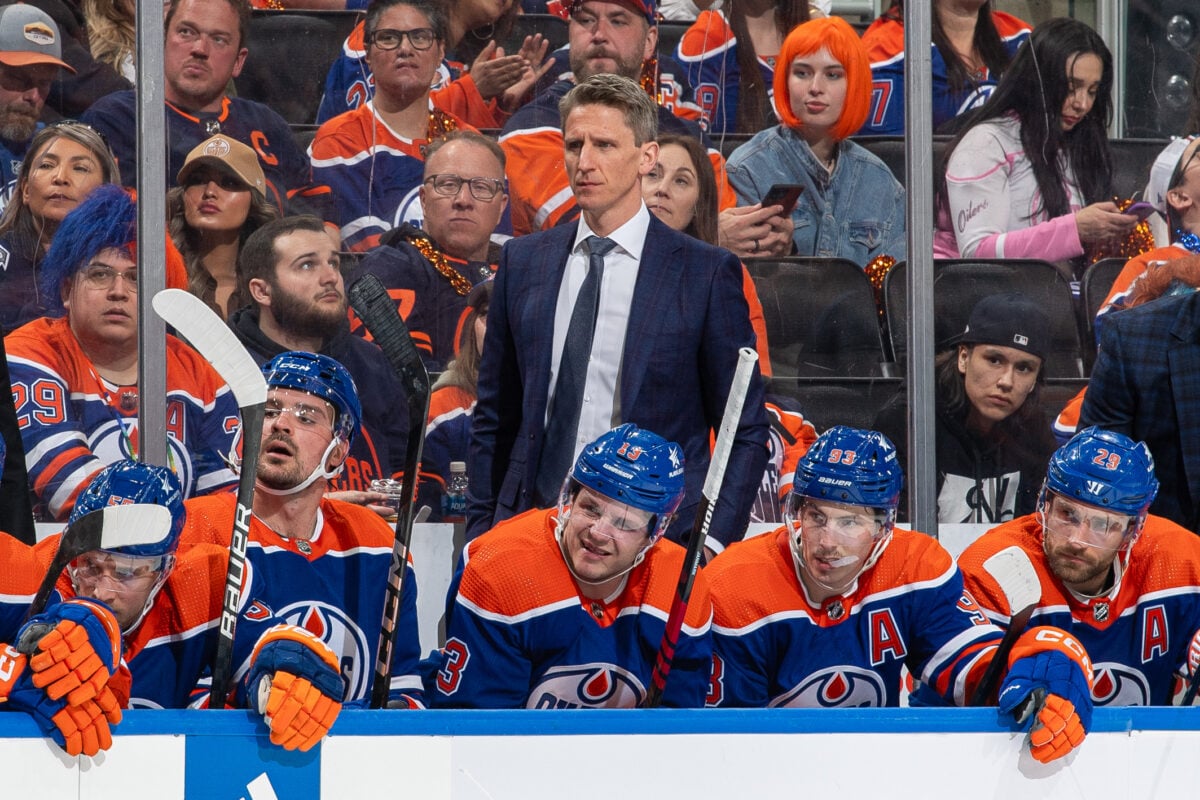
Potulny has had the Wolf Pack playing the same way since the start of the season. They play a physical game even if they aren’t a physical team. Matt Rempe was called up to the NHL early, and the team became a smaller and more skilled group, yet they were playing physical. It’s one of the reasons the losses piled up in the middle of the season as the Wolf Pack went from fourth place in the Atlantic Division in early December to seventh by the AHL All-Star Break.
At the same time, a coach who doesn’t alter their system based on a small sample size will succeed. “Whatever level you’re at, you have to do what you believe in. Whether you’re an offensive coach, a defensive coach, you have to be true to who you are,” Potulny noted after a 4-3 March 21 comeback win over the Hershey Bears, a game where the Wolf Pack won using their forecheck. The team endured some tough times, but they stuck to the process and their identity, which has allowed them to find their footing enough to make a run. “Are we doing the right things? And if the answer is yes, then you have to move past the rough times.” The Wolf Pack have put themselves in a position to make a push for a playoff spot.
Potulny will always strike that balance between sticking to his identity and pivoting to get the most out of the group. He will have the team playing a hard-hitting style, which he considers key to victory. “When you have physicality, you eventually start to find some space.” In the AHL, space is hard to come by. That said, if the Rangers’ prospect pool brings more speed and skill to the Wolf Pack, Potulny will try to get the most out of it and fit the skaters into a system that can win at both ends of the ice.
Possession & Valuable Shots: Potulny’s Vision on Offense
Every coach has to decide whether they value possession or shot volume. “They can’t score when you have the puck,” Potunly stated after the Wolf Pack defeated the Charlotte Checkers 4-2 on Nov. 15, a team with a high-powered offense that could not get anything going as Potulny’s side controlled possession.
That game demonstrated that it’s all about possession for Potunly. “I’m a believer in shooting the puck, if you can, from within the dots. If you shoot from outside the dots, and there’s nobody in front of the net, it’s a wasted shot,” he noted after a 3-2 shootout loss on March 1 against the Utica Comets. The goal is to control the puck, the pace and, eventually, find the right spots to shoot the puck. “We’re trying to get the pucks inside the dots, and there are plenty of ways to do that, whether it’s defensemen moving or pulling people to the net – I’m not a huge shoot shoot shoot guy,” he continued.
The goal is to find shots in the high-danger areas and allow skaters to find open looks and good rebounds. It’s why solid offensive zone presence and positioning are key. It’s also why moving the puck into the offensive zone and finding proper positioning after a turnover are important. “If you’re in the offensive zone and they get the puck out. If you’re a forward and you come to the blue line, then their defense is going to be right on you. But if you can get to the red line, you can get that puck and have speed coming,” Potulny noted after a 4-3 overtime win on Feb. 12 against the Bridgeport Islanders.
In that game against the Islanders, the Wolf Pack trailed 3-1 heading into the third period and needed their offense to steal a victory. They turned a corner once they started opening up the Islanders’ defense – the forwards skated more in the offensive zone and in the neutral zone to create space. “Even if you get into high ice as a forward, somebody’s got to cover you, and now there are two fewer bodies at the net, and there are more opportunities for rebounds, more opportunities to get free,” Potulny noted after the game, one where Brennan Othmann tied it up with a goal near the crease. “You’re not only trying to make a play in space, but you’re trying to pull away a player from their net, so there’s an opportunity for something to happen there.”
Positioning is everything for Potulny, and it’s not just on the offensive end. In his mind, hockey is a game of chess where the center of the board, especially at the beginning of the game, matters. Ideally, the puck is in the offensive zone the entire game, and the players are in a position to score. Being in the right place makes a big difference. “You gotta keep getting to the right spots, and eventually, it’s going to work out,” Potulny stated. That means helping out the goaltending as well as the offense.
While the offense is built on structure, the defense is built the same way but with forechecking in mind. “We have to be a puck-pressure team,” Potulny mentioned following a 4-3 win on March 21 over the Bears. “We have to put pressure on people and create turnovers, and you never know when that turnover is going to happen, so you have to do it all the time since that one turnover might be the difference in the game,” he stated after Blade Jenkins created a turnover on the forecheck to set up Roobroeck for the game-winning goal.
With the offense trying to get to the shooting lanes, the defense must stop opponents from getting there. “We keep people in the ice that wasn’t dangerous. We keep them on the outside of the ice,” Potulny stated after a 4-0 shutout victory on Dec. 6 against the Rockford IceHogs, a game where the defense only allowed 24 shots on net, and only six in the final period of play. It’s worked for the most part, but against skilled teams, it’s only been so effective. “You try to put pressure on them with your feet, and then you try to get in the shot lane,” Potuntly stated after a 4-3 loss against the Laval Rocket on Jan. 24. In that game, the Wolf Pack defense stepped up and played well, but the opposition’s skill took over, as Logan Mailloux scored two goals, including the game-winner with shots from the point.
His offensive vision works in theory, but the team doesn’t score. The Wolf Pack are averaging only 2.79 goals per game, a mark well below the league average. The AHL is where teams that succeed, especially in the offensive zone, are willing to take more risks. Goaltending in the league varies from borderline NHL caliber to hapless, and sometimes, a simple shot on net is all that’s needed to spark the offense.
The best teams in the AHL have that balance. They don’t shoot all the time or play at an overwhelmingly fast pace, but if they have a good or decent look, they’ll take the shot. The Bears, Penguins, Rocket, and Rochester Americans get quality shots on net and speed up the game when needed. Potulny has one way of doing things, and it’s made the Wolf Pack one-dimensional on the offensive end of the ice. The best teams win in multiple ways, and if Potulny proves he can win fast-paced games, he’ll take the team to the next level, from borderline playoff team to the top of the AHL.
Why Hartford Will Benefit from Potunly in the Long Run
This season has been rough for Potulny and the Wolf Pack. They remain in seventh place in the Atlantic Division, and they had multiple rough patches, including a four-game losing streak to wrap up November and a seven-game losing streak that started with the Jan. 24 loss to the Rocket. However, over time, he’ll make the team great. Knoblauch didn’t hit the ground running when he became coach – very few first-year head coaches do.
The AHL is a development league. That applies to everyone from the players, the coaches, the officials, the announcers, and the media members (like the one writing this article). Everyone in the arena is looking to improve, and in the XL Center, everything is under construction (it’s just temporary, they promise). The AHL is one step below the NHL, and everyone senses how close they are to the best hockey league in the world.
Potulny is the embodiment of the league. He’s adjusting to the AHL, and the wins, losses, heartbreaks, and one-goal games don’t reflect how he’s done behind the bench. What matters is that the Wolf Pack play competitive hockey, and even when they lose, they often make the games close and battle until the end.
“This team doesn’t have any quit, and I will say that,” Potulny mentioned after a 6-3 loss to the Americans. That was a game they trailed 5-1 after two periods, and then chaos ensued as the horn for the second intermission sounded, and all the skaters on the ice dropped the gloves for an all-out brawl. Yet, they battled back to make the game close. “You appreciate the fact that we continue to play until the end of the game,” Potulny added.
The process and Potulny’s vision will eventually translate to success. It’s why it took all season before the Wolf Pack played their best hockey and explains how they’ve put themselves back into the playoff chase with only a few games left in the season. The Wolf Pack are a better team with Potulny behind the bench and will be one of the better teams in the league by the start of next season because of him.
