- Quinn Hughes: Speed, Skill, and Energy for Toronto
- The Philosophical Change Hughes Would Bring to the Maple Leafs Would Be Challenging
- Matthew Knies Would Bring Power and Playmaking to Vancouver
- Breaking It Down: What Changes for Each Team
- Why a Hughes for Knies’ Trade Is Worth Thinking About
- Are Maple Leafs Fans Ready to Readopt the Shanaplan?
Imagine this: the Toronto Maple Leafs pull off a trade for defenseman Quinn Hughes from the Vancouver Canucks, sending Matthew Knies the other way. It’s not happening — probably never will — but it’s a fun experiment.
Related: Maple Leafs News & Rumours: Laughton, Joshua, Roy & Benning
What if it did? What does imagining this trade reveal about each team’s identity? How would it change the Maple Leafs? How would it reform the Canucks?
Quinn Hughes: Speed, Skill, and Energy for Toronto
Hughes makes the game look easy. His effortless skating, brilliant vision, and stamina seem almost unfair. He can play 25 minutes a night, keep his legs fresh into overtime, and still be sharp with the puck. He’s smart with his energy, picking his moments to burst forward, and reading the play so he’s almost always in the right spot.

For the Maple Leafs, Hughes could be a game-changer. He can handle the puck in the defensive zone, drive it up ice, and link up with Auston Matthews or William Nylander before the opposition even knows what hit them. On the power play, he could add a new dimension, jumping into shooting lanes or setting up clean shots from the point.
The Philosophical Change Hughes Would Bring to the Maple Leafs Would Be Challenging
Of course, there’s a flip side. Toronto’s defensive corps isn’t exactly overflowing with offensive firepower. Morgan Rielly is the clear offensive standout, and Oliver Ekman-Larsson is having a strong season. However, he is getting a bit long in the tooth. Hughes would not just be another skilled blueliner; he’d be an issue to the team’s philosophy. He’s the kind of player head coach Craig Berube seems reluctant to build around.
Related: NHL Rumors: Nylander Injury, McDavid Irked, & Formenton Offer Sheet
Hughes is not a strict north-south, straight-line player; he moves the puck in every direction, diagonally, east-west, north-south, constantly circling, probing, and creating. The most significant transformation Hughes would bring to the Maple Leafs isn’t measured in points or minutes — it’s philosophical. Adopting his style would force the Maple Leafs to rethink how they move, defend, and attack. He would be that impactful.
Pairings would shift, responsibilities would change, and the entire team would have to adjust its game. The question isn’t just whether Hughes could help the Maple Leafs win; it’s whether the team could truly play the way he plays. He’s a former-coach Sheldon Keefe kind of player, but perhaps not Berube.
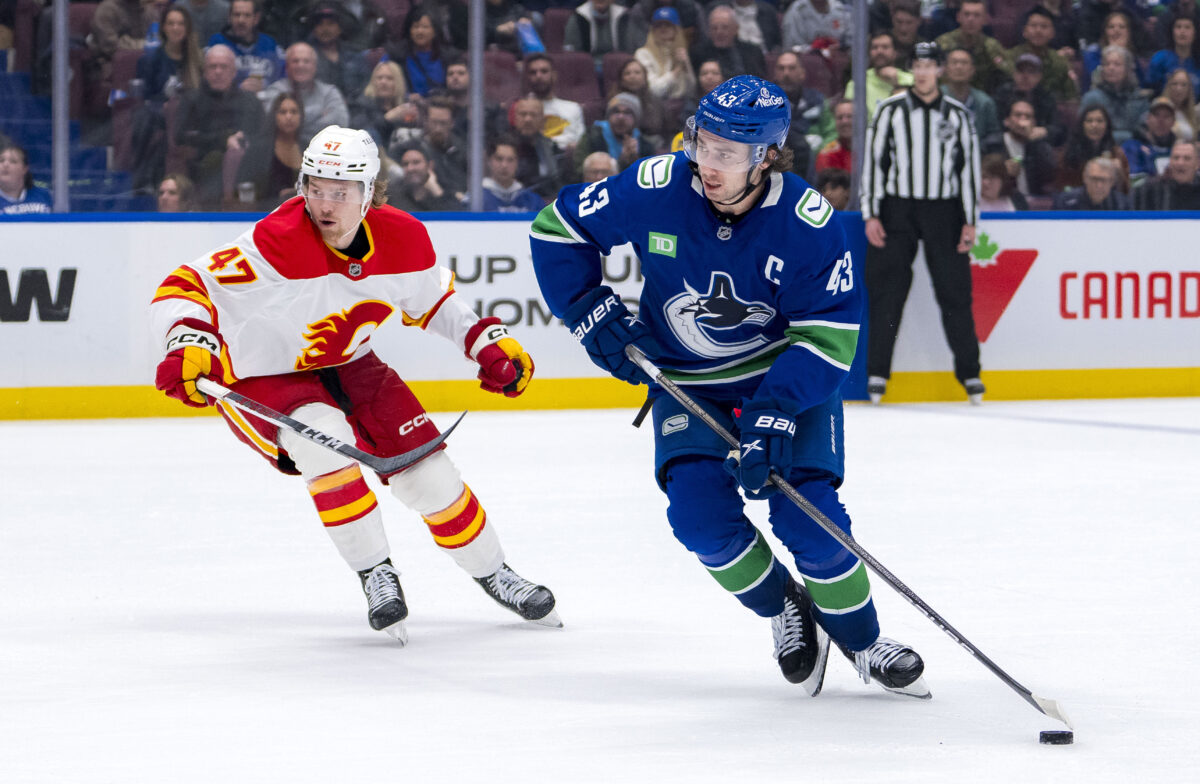
Still, the upside is tantalizing. The team would almost be forced to move back to a puck-control game, seeking more creative options and a faster pace. Hughes is a defender who can influence every shift, but the adjustment would be profound. Well, perhaps for everyone except Nylander (and maybe Matthews).
Matthew Knies Would Bring Power and Playmaking to Vancouver
Knies is a different kind of weapon. He’s a modern power forward with the brains to match his brawn. He’s starting to fill the role that Mitch Marner once occupied: a forward who can score but who can also create for his teammates.
Related: Pundit Suggests Bizarre Maple Leafs Trade Proposal for Quinn Hughes
Looking at the stat sheet this morning, Knies has quietly matched Marner’s production at this point in the season, posting 26 points to Marner’s 25 while scoring the same number of goals (five) in fewer games. He’s generating more shots (52 to 46) and finishing at a slightly higher rate. He’s also doing it while playing nearly identical minutes each night. For a young winger still growing into his role, Knies is delivering Marner-level output without needing the puck as much — a sign of how rapidly his impact is rising.
But Knies has an advantage over Marner in a Berube-style offence. With his size, he can dominate in the high-traffic areas around the net in ways that Marner never could. Knies can cycle hard, protect the puck, and chip in wherever the team needs him. Although I admit I probably missed it, I cannot remember a time when Marner engaged in any puck cycle. He tended to quarterback plays from distance rather than engaging in puck cycles.

For the Canucks, adding Knies could accelerate the rebuild while giving the top six some serious depth. He brings energy, net-front presence, and a knack for making teammates better. It’s a move that could pay dividends immediately.
But there’s a trade-off. Losing Hughes means losing a rare puck-moving defenceman who dictates the pace and controls transitions. Vancouver would have to find a way to replace that elite skating, vision, and tempo — not an easy task.
Breaking It Down: What Changes for Each Team
With Hughes, the Maple Leafs gain a high-end, minute-eating defenceman capable of creating offence from the back end. Power plays could be sharper, breakouts faster, and Matthews and Nylander might see more clean lanes. But letting go of Knies means giving up a rising forward who’s starting to define himself as a top-six contributor. Toronto would need to manage roster balance carefully to make this net positive.
Related: Friedman Weighs In on Quinn Hughes and the Canucks’ Hard Choice
With Knies, the Canucks pick up a versatile forward who can drive possession, score, and energize the top six. Knies can play in all situations, from penalty kills to net-front chaos. He could rejuvenate Elias Pettersson, but in a far more subtle way than J.T. Miller ever did. Still, losing Hughes leaves a hole in defensive mobility and transition play. Vancouver would need to adjust structurally to make up for his absence or risk the back end getting exposed.
Why a Hughes for Knies’ Trade Is Worth Thinking About
The trade is unlikely, but the scenario is telling. It’s a lens into team identity, player value, and how one move can ripple across a roster. It allows Maple Leafs fans to imagine a blue line that skates like the top forwards, while Canucks fans see a forward who could immediately impact scoring and energy in every game.
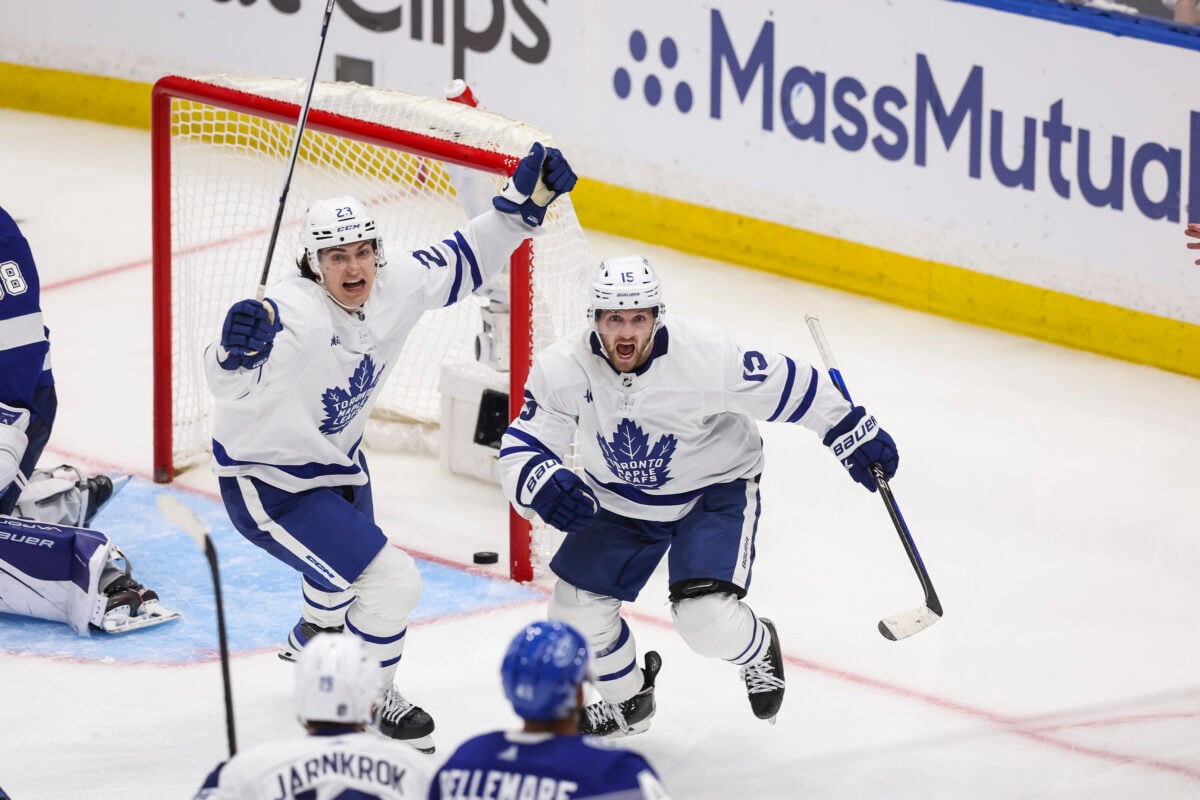
At the end of the day, this analysis isn’t about announcing headline-breaking news. It’s about thinking through what could happen if the pieces moved, and how that would affect team dynamics. Sometimes, imagining the impossible shows you a lot about what each team really needs. The most significant change for the Maple Leafs if the organization brings in Hughes is that it moves the team back to where it was before Berube was hired as head coach.
Are Maple Leafs Fans Ready to Readopt the Shanaplan?
If the Maple Leafs ever added Hughes, the most significant shift wouldn’t be on the ice — it would be philosophical. His style naturally pulls a team back toward the core ideas of the old Shanaplan. He would bring skill over size, pace over grind, creativity over rigidity, and defenders who would be play-drivers, not just stoppers.
Berube’s current structure leans more on predictable routes, north–south pressure, and simplified reads. Hughes forces the opposite: his is a connected, fluid, puck-first game where the defence initiates offence, not just supports it.
Related: Canucks News & Rumours: Reichel, Kampf, Edler, Cootes & Patterson
Adding Hughes would nudge Toronto away from the Berube-style straight-line identity and back toward the “skate-and-create” identity former president Brendan Shanahan envisioned at the start of his tenure. It’s not just a roster change; it’s a reversion to the organization’s original blueprint that former general manager Kyle Dubas imagined for the team when he took over.

Free Newsletter
Get Toronto Maple Leafs coverage delivered to your inbox
In-depth analysis, breaking news, and insider takes - free.
Subscribe Free →