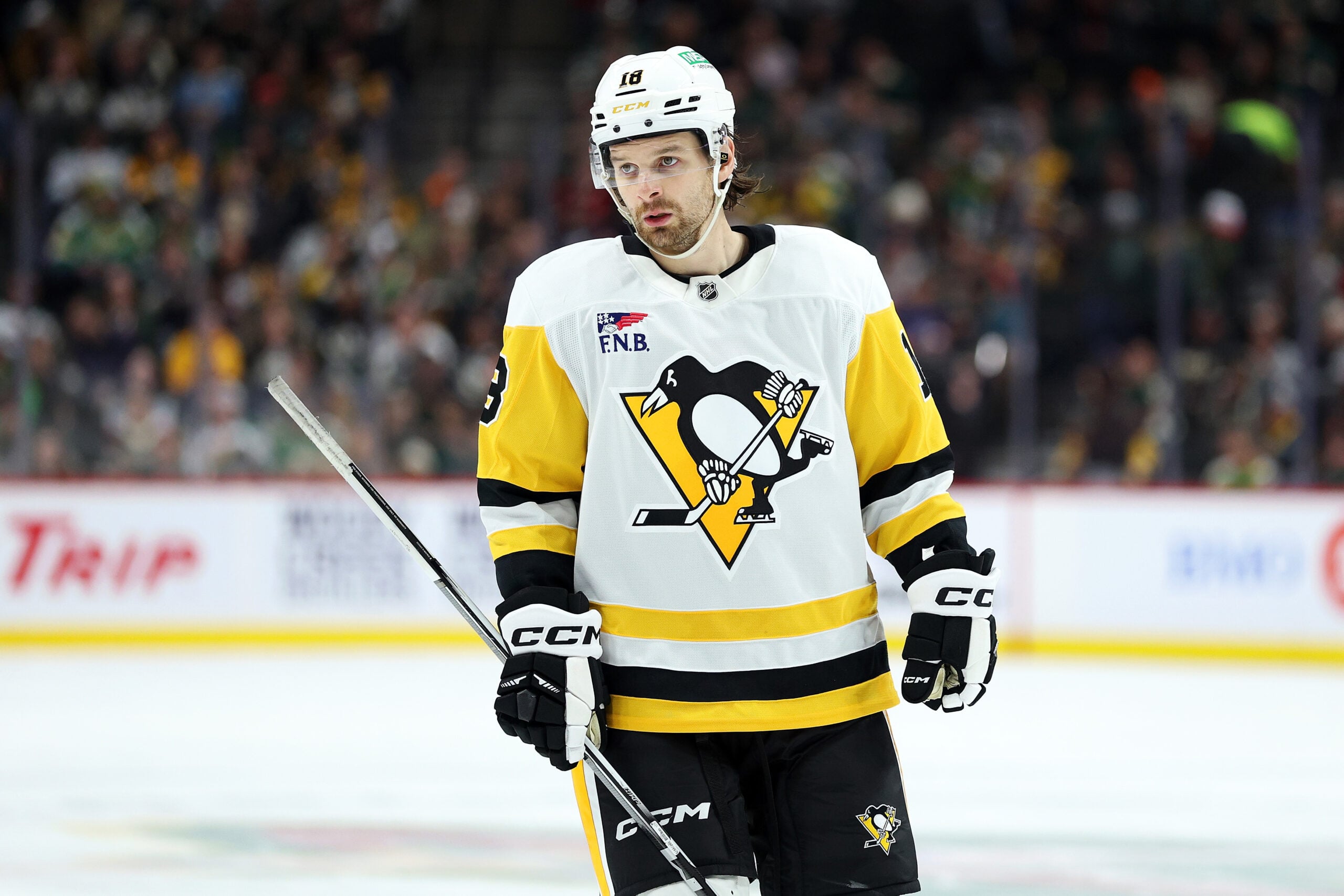
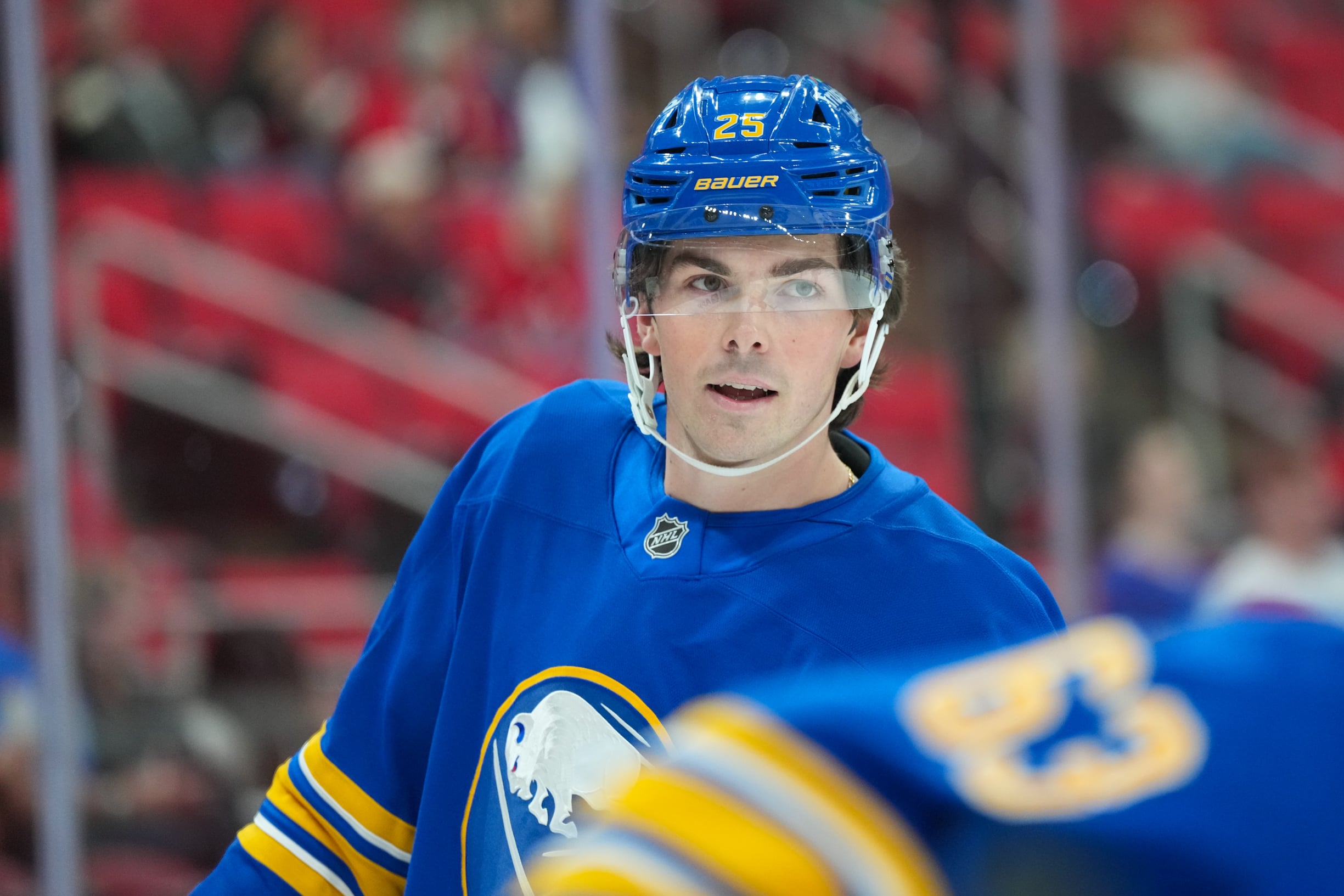
The Pittsburgh Penguins may still need a bigger trade. That does not mean every prospect should be available.
That is the balance president of hockey operations and general manager Kyle Dubas has to manage. The Penguins are still trying to build a roster that can stay competitive around Sidney Crosby, but they are also trying to repair a prospect pool that had been worn down by years of win-now trades. Those goals can work together, but only if Pittsburgh avoids treating its best young pieces like disposable currency.
The organization finally has more prospects worth discussing. Pittsburgh Hockey Now recently noted that 17 of Pittsburgh’s top 20 prospects were acquired under Dubas during the last three years, which shows how much the system has changed in a short time. That progress gives the Penguins more flexibility, but it also creates a new danger.
If Dubas wants to chase a Shane Wright-type center or add another long-term forward, prospects of a Jason Robertson-level swing later will naturally enter the conversation. The key is knowing which names should be protected unless the return is a true franchise-shaping piece.
Here are five prospects Dubas should be careful trading.
1. Ben Kindel
Ben Kindel should be the hardest prospect for the Penguins to move because he is no longer only a prospect. He is already part of the NHL roster.
Kindel’s rookie season gave Pittsburgh immediate value. He produced 17 goals and 35 points in 77 games as a teenager, which is exactly the kind of internal win the Penguins needed. He also plays center and wing, giving head coach Dan Muse flexibility while the team sorts through a middle-of-the-ice picture that remains unsettled behind Crosby.
His contract makes him even more valuable. Kindel’s entry-level contract details give Pittsburgh a cap hit below $1 million through 2027-28. For a team trying to support an older core while becoming younger, that type of cheap NHL production is difficult to replace.
There are prospects who can be moved because they are still years away or blocked by better players. Kindel does not fit that category. He already helps Pittsburgh now and still has room to become more important later.

The Penguins’ prospect reset taking shape starts with players like Kindel becoming real NHL contributors. Trading him would only make sense if Pittsburgh were landing a young, controllable star. Anything short of that would risk undoing one of the clearest development wins of the Dubas era.
2. Sergei Murashov
Sergei Murashov is the goalie prospect Pittsburgh should protect most carefully.
Goalies are difficult to project, which can make them tempting trade pieces. Teams often hesitate to bet too heavily on young netminders because development is rarely linear. Murashov carries that usual risk, but his upside is too important for the Penguins to treat casually.
His American Hockey League (AHL) performance put him in a different category. Murashov was named to the AHL Top Prospects Team, and his AHL numbers included a .917 save percentage and 2.26 goals-against average in 37 regular-season games for the Wilkes-Barre/Scranton Penguins.
That is not a guarantee he becomes an NHL starter. It does make him one of the most important players in the organization’s future goalie plan. The Penguins’ current NHL crease has Artūrs Šilovs, Joel Blomqvist, and Murashov all pushing for roles, but none has fully locked down the long-term answer yet.
Pittsburgh’s biggest goalie questions entering 2026-27 begin with stability. If Murashov becomes that answer, the Penguins could solve one of hockey’s hardest positions internally and cheaply. Moving him before that picture becomes clearer would be dangerous.
The return would have to be significant. Not every promising goalie prospect becomes a starter, but Pittsburgh does not have enough high-ceiling internal options to give one away for a short-term fix.
3. Rutger McGroarty
Rutger McGroarty is the prospect who could be easiest to talk into trading because his NHL path is crowded. That is also why Pittsburgh has to be careful.
McGroarty is not a perfect fit on the current depth chart. The Penguins added Nicholas Robertson, Andrei Kuzmenko, Hendrix Lapierre, and others while still carrying veterans like Bryan Rust and Rickard Rakell. Ville Koivunen is also pushing for opportunity. That creates pressure for every young winger trying to break through. Still, roster congestion should not automatically make McGroarty expendable.
His entry-level contract status gives Pittsburgh a $950,000 cap hit, and his AHL production showed he is close enough to matter. McGroarty had 34 points in 30 games with Wilkes-Barre/Scranton last season, then added nine points in 15 playoff games. He also played 24 NHL games with Pittsburgh, giving the organization a clearer view of where he stands.
McGroarty’s crowded NHL path is real, but his profile still fills a need. He brings a heavier, more direct style than some of Pittsburgh’s other young forwards. If the Penguins move him, they risk trading away the kind of player they may soon need more of.
There is a price where any prospect can be moved. For McGroarty, that price should be higher than convenience. He should not be included in a trade only because Pittsburgh has too many forwards on paper.
4. Owen Pickering
Owen Pickering should be protected because Pittsburgh still does not have enough long-term certainty on the left side of the blue line.
Pickering is not a finished product. He still has to prove he can handle NHL pace, defend with consistency, and turn his size into reliable minutes. That uncertainty is fair. It is also exactly why trading him too soon could backfire.
The Penguins need defense prospects to hit. Their NHL blue line has veterans, short-term additions, and players trying to reclaim roles, but the long-term picture remains unsettled. Samuel Girard gives Pittsburgh one left-shot answer, while Ryan Graves is still trying to salvage his contract. Declan Carlile and Ilya Solovyov are depth options. Tomas Galvas is promising, but not ready to solve anything immediately.
Pickering’s current contract status keeps him at an $886,667 cap hit before restricted free agency after 2026-27. That makes any NHL progress extremely useful. If he becomes even a steady third-pair option, Pittsburgh would gain a cheap left-shot defenseman at a position of need.
The Penguins’ blue-line picture remains unsettled because the left side lacks clean answers behind Girard. Pickering may not become one, but he is still one of the better internal candidates.

That should make Dubas cautious. Trading Pickering for the wrong veteran would create the same cycle Pittsburgh is trying to escape: losing young, affordable defense options before they have a chance to help.
5. Bill Zonnon
Bill Zonnon is the longest-term name on this list, but he might be the exact type of prospect the Penguins should avoid moving too early.
Zonnon is not as close to Pittsburgh as Kindel, McGroarty, or Pickering. That naturally makes him easier to include in hypothetical trade talks. Teams often ask for younger prospects with upside when they are moving established NHL talent, and Zonnon has the profile to interest other clubs.
The Penguins signed him to a three-year entry-level contract that begins in 2026-27 and runs through 2028-29. He also remained productive despite missing time last season, posting 46 points in 35 regular-season games for the Blainville-Boisbriand Armada.
Pittsburgh Hockey Now’s prospect overview mentioned Zonnon as a player who should be on other teams’ radars. That alone should make the Penguins cautious. If other clubs see him as a strong target, Dubas has to be sure he is not moving him before his value climbs.
Zonnon gives the system a different forward profile. He can play center or wing, brings size, and has enough scoring touch to develop into more than a depth prospect. He may not be a sure thing, but Pittsburgh’s pipeline needs exactly this kind of player: skilled, competitive, and not yet fully priced by the market.
The Penguins’ recent Jason Robertson pivot in focus showed why Dubas still needs larger solutions. Zonnon could eventually be part of a package for one, but moving him for anything less than a meaningful long-term answer would be difficult to justify.
Penguins Cannot Undo Their Prospect Progress
The Penguins are in a tricky spot. They finally have enough prospects to make trades possible, but they are not deep enough to spend recklessly.
That distinction is important. A stronger pipeline gives Dubas more options. It does not give him permission to treat every young player like currency. Pittsburgh spent years thinning its system to support Cup contention. The organization is only now beginning to rebuild the layers underneath the NHL roster.
The reported Wright interest at center shows the kind of market Pittsburgh should explore. A young, controllable center would be worth serious consideration. A true top-six forward with term would also force a harder conversation. Those are the kinds of players who can justify moving real prospects. A short-term veteran or marginal upgrade should not.
Kindel, Murashov, McGroarty, Pickering, and Zonnon all carry different levels of risk. None is untouchable in the strictest sense. Almost no prospect should be. The point is that the Penguins need to price them correctly.
Pittsburgh still needs a bigger move, but it also needs the prospect pool to keep improving. If Dubas trades from strength, the system can survive. If he moves the wrong player too early, the Penguins could lose part of the progress they spent the last three years building. For a team trying to bridge the Crosby era with whatever comes next, that is the line Dubas has to protect.
Free Newsletter
Get Pittsburgh Penguins coverage delivered to your inbox
In-depth analysis, breaking news, and insider takes - free.
Subscribe Free →