Jersey numbers are usually one of the lighter parts of the offseason. They give fans something to debate, help new players feel real in a different uniform, and create a few harmless arguments about which numbers look right. For the Pittsburgh Penguins, this year’s number changes also say something about the roster.
The Penguins still have the familiar numbers at the top. Sidney Crosby is still No. 87. Evgeni Malkin is still No. 71. Kris Letang is still No. 58. Those numbers are part of the franchise’s modern identity, and they continue to anchor the team visually as much as competitively. Look beyond them, though, and the roster is starting to feel different.
President of hockey operations and general manager Kyle Dubas has added enough new faces that the Penguins’ lineup is filling with unfamiliar numbers. That does not guarantee the team is better, younger, or more dangerous. It does show how much Pittsburgh is changing around the players who have defined the last two decades.
Penguins’ New Numbers Reflect a Changing Roster
The Penguins’ new jersey number list is fun on the surface. Trevor van Riemsdyk wearing No. 57, Hendrix Lapierre taking No. 22, Kaedan Korczak keeping No. 6, Nicholas Robertson landing at No. 14, and Andrei Kuzmenko moving to No. 10 all give fans something small to attach to each addition. The bigger takeaway is how many new numbers there are.
Pittsburgh did not make one major change and call it an offseason. The front office added forwards, defensemen, prospects, and depth pieces while continuing to reshape the middle and bottom of the roster. Some of those players are short-term bets. Others are younger options. A few may become important pieces if they take advantage of larger roles.

The new numbers make that turnover easier to see. The core remains, but the supporting cast looks much less familiar. For a franchise that spent years defined by continuity, the visual change is another reminder that Pittsburgh is moving through a transition, even if it is not calling the process a full rebuild.
Robertson and Lapierre Represent the Youth Bet
Robertson and Lapierre are two of the more interesting number changes because they fit the larger theme of Pittsburgh’s offseason.
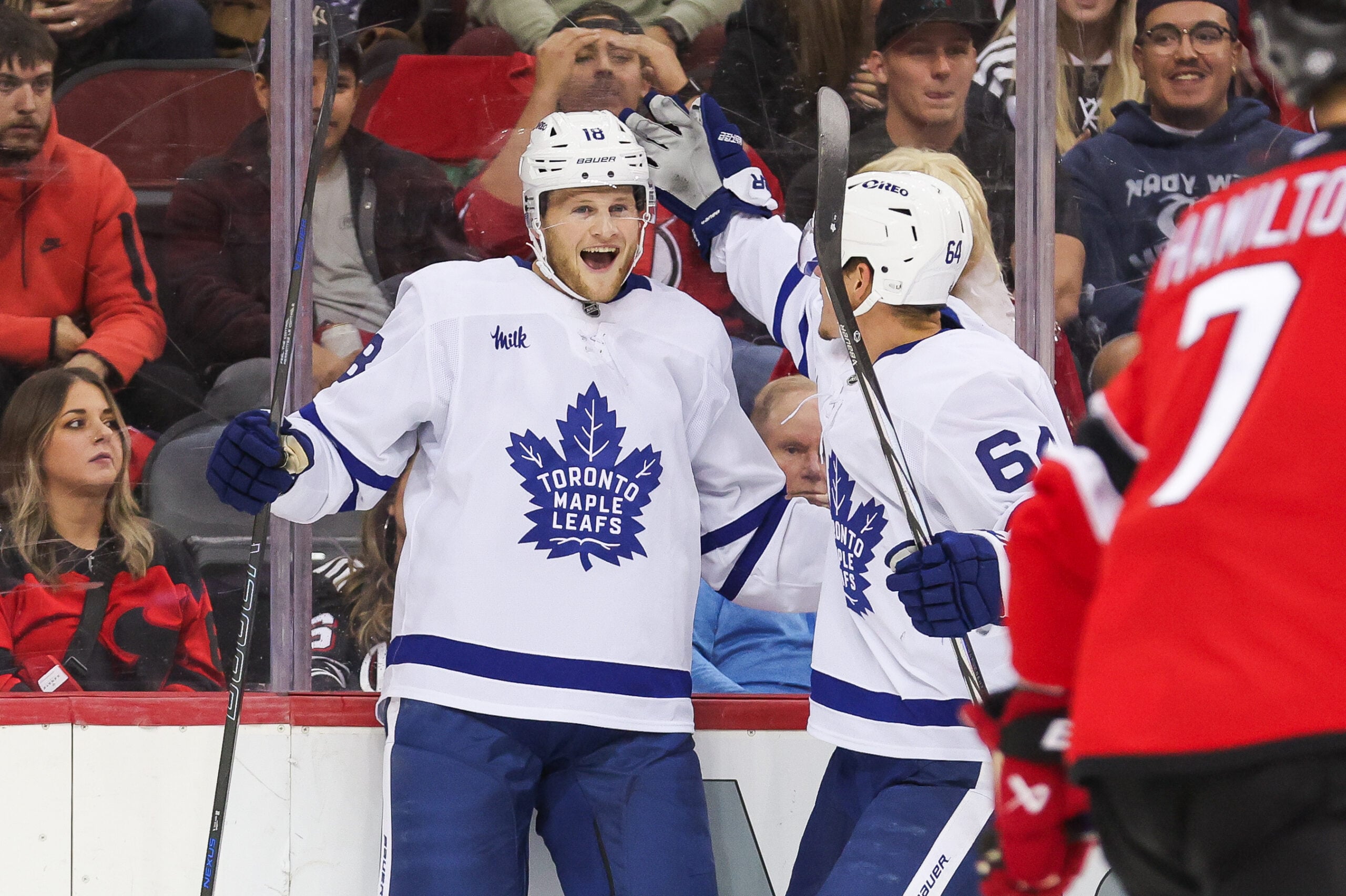
Robertson will wear No. 14 after spending his Toronto Maple Leafs career in No. 89. His two-year Penguins contract gives Pittsburgh a real look at a young winger with scoring tools and enough NHL experience to make the bet worthwhile. The number is different, but the question is the same: can he become a defined top-nine scorer instead of another crowded-roster option?
Robertson’s role question in Pittsburgh will matter far more than the number on his back. Still, No. 14 now becomes part of how fans identify one of the organization’s more important fresh-start players. If his shot translates, that number could become familiar quickly.
Lapierre’s No. 22 has a different feel. The Penguins acquired him from the Washington Capitals, then signed him to a two-year contract. He gives Pittsburgh another young center option at a time when the structure behind Crosby remains unsettled.
The Penguins’ center problem remains unresolved, which makes Lapierre more than a depth addition. He does not have to become a star for the move to work. He needs to prove he can hold a useful role, support the middle of the lineup, and give head coach Dan Muse more flexibility.
New numbers do not create opportunity by themselves. Robertson and Lapierre still have to earn their spots. Their arrivals show how Dubas is trying to add younger, cheaper players who can grow into something more.
Kuzmenko and van Riemsdyk Show the Short-Term Side
Not every new number points toward the future. Some show how Pittsburgh is still trying to patch the current roster.
Kuzmenko taking No. 10 stands out because he has worn No. 96 elsewhere in the NHL. His one-year Penguins contract gives Pittsburgh another scoring bet without a long-term commitment. He is not a prospect, and he is not a foundational piece. He is a short-term attempt to add finishing talent to a team that still needs more offense beyond its aging stars.
That is a different type of roster turnover. Kuzmenko’s number may look new, but his job is simple: score enough to justify the opportunity. If he does, the Penguins become more dangerous. If he does not, the one-year term keeps the mistake contained.
van Riemsdyk is another short-term fit, even though his deal runs two seasons. His two-year Penguins deal gives Muse a veteran defenseman who can kill penalties, play lower in the lineup, and bring defensive structure. No. 57 arriving in Pittsburgh is less about flash and more about stability.
The concern is price and role. The Penguins already have Letang, Erik Karlsson, Korczak, and van Riemsdyk on the right side. That creates a competition for minutes and responsibility, especially if Pittsburgh wants Korczak to become more than a depth defenseman.
Kuzmenko and van Riemsdyk show the other half of Dubas’ plan. Pittsburgh is not only adding young players. It is also adding veterans who can help bridge the roster while the younger group develops.
Korczak and Galvas Add Blue-Line Layers
Korczak keeping No. 6 gives the Penguins another visual reminder of what they are trying to change on defense.
The former Vegas Golden Knights defenseman brings size, right-shot value, and a longer runway than some of Pittsburgh’s older options. His contract status with Pittsburgh makes him more than a temporary depth piece. If he settles into a regular role, the Penguins will have a younger defenseman who fits beyond one season.
Galvas wearing No. 32 is more of a future note than an immediate NHL storyline. The Penguins signed the young defenseman to a three-year, entry-level contract, giving the system another left-shot prospect with offensive upside. He may not help Pittsburgh right away, but his arrival adds another layer to a blue-line pipeline that needed more skill.
The Penguins’ prospect reset under Dubas is not only about forwards. It also depends on defensemen like Galvas, Korczak, Owen Pickering, Harrison Brunicke, and Jake Livanavage becoming real options.
The numbers are small details. The larger picture is more important. Pittsburgh has spent years needing more young defense options. Korczak and Galvas represent two different attempts to address that issue, one closer to the NHL and one built for later.
Penguins Still Have Familiar Faces at the Top
The new numbers make the roster feel different, but they do not erase the team’s central reality. Crosby, Malkin, and Letang still define the Penguins. Pittsburgh’s direction is still shaped by how long those players remain productive and how much support Dubas can build around them. The new additions help, but the franchise has not fully handed the roster to the next generation yet. That is why the jersey-number turnover feels like a halfway point.
The Penguins are not rebuilding from the ground up. They are not running back the same group either. They are trying to create a new supporting cast while the old core remains in place. That is a difficult balance, and the new numbers highlight how much of the roster around the stars has changed.
This season will decide whether the turnover has enough substance behind it. Robertson has to score. Lapierre has to claim a role. Kuzmenko needs to provide offense. van Riemsdyk must steady the defense. Korczak has to keep growing. Galvas has to continue developing.
If those players help, the new numbers will become part of a more interesting Penguins season. If they do not, they will be remembered as another sign of roster churn without enough progress.
For now, they show one thing clearly. The Penguins may still look familiar at the top, but the rest of the roster is starting to change around them.
Free Newsletter
Get Pittsburgh Penguins coverage delivered to your inbox
In-depth analysis, breaking news, and insider takes - free.
Subscribe Free →