The Pittsburgh Penguins’ prospect pool is not suddenly one of the NHL’s best. That would still be too generous. It is getting deeper, though, and the latest Top 25 Under 25 discussion shows how much the organization has changed.
For years, Pittsburgh’s prospect rankings were thin enough that almost every interesting young player could earn a spot near the bottom. That is no longer the case. Some legitimate prospects are now being pushed outside the top 25, not because they have no value, but because president of hockey operations and general manager Kyle Dubas has added enough young players to create real competition throughout the system.
The Penguins’ best-of-the-rest group included Quinn Beauchesne, Atley Calvert, Gabriel D’Aigle, Kale Dach, and Travis Hayes. None made the main Top 25 Under 25 list, but each still gives Pittsburgh something worth tracking.
That is the point. A healthier system needs more than obvious names at the top. It needs a middle class of prospects who can climb, create depth, and eventually become NHL pieces or trade assets.
Here are five Top 25 snubs who show why the Penguins’ prospect pool is growing.
1. Quinn Beauchesne
Beauchesne is a good place to start because he represents the type of defense prospect who would have been harder to leave off Pittsburgh’s rankings a few years ago.
Beauchesne was a fifth-round pick in 2025, going 148th overall, and he has already taken a few useful steps since joining the organization. His offensive numbers with the Guelph Storm did not explode last season, but his game is not built only around production. He gives the Penguins another right-shot defenseman with mobility, some edge, and a path that now runs through college hockey.
The organizational depth outlook listed Beauchesne among the unsigned reserve-list players, which is the part of the system that can be easy to overlook. Those players are not on the NHL roster, and they are not always driving immediate American Hockey League (AHL) decisions, but they still help build a deeper pipeline.
That is why his exclusion from the top 25 says more about Pittsburgh’s improved depth than any major disappointment. The Penguins have added more defensemen around him, including Tomas Galvas, Harrison Brunicke, Owen Pickering, Jake Livanavage, Peyton Kettles, and others. Beauchesne now has to climb through a more crowded blue-line group.
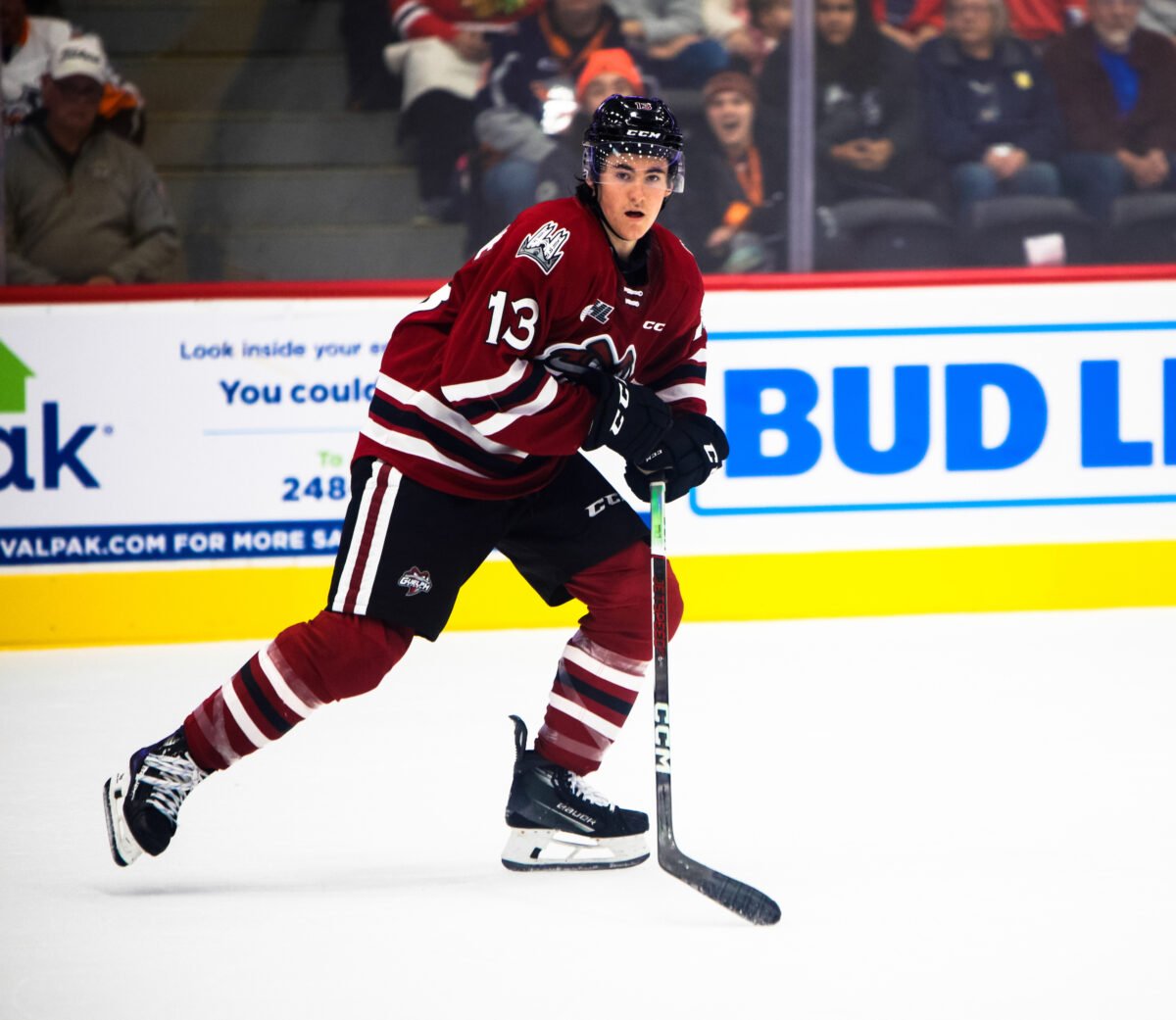
The challenge is clear. Beauchesne needs a strong NCAA season to push himself back into the conversation. If he handles stronger competition, adds more polish with the puck, and continues developing physically, he can become more than a late-round name.
Pittsburgh’s top prospect group already has several defensemen ahead of him. A deeper pool makes the climb harder, but it also makes a strong season more meaningful.
2. Atley Calvert
Calvert is different from the other names on this list because he is older and already under an NHL contract. That makes his “snub” more about role and ceiling than distance from the professional game.
The Penguins signed Calvert after he earned his way from an AHL contract into the NHL-contract conversation. His two-year contract carries a $930,000 cap hit, which gives Pittsburgh an inexpensive forward who can compete within the organization without much financial risk.
Calvert had to take the harder road. He was not a high draft pick, and he does not carry the same prospect shine as players selected in the early rounds. His path is built around proving he can keep producing, keep improving, and keep forcing the organization to take him seriously.
That kind of player matters in a deeper system. Not every prospect has to project as a top-six forward or top-four defenseman. Some become useful because they survive every cut and eventually turn into call-up options. Calvert’s job is to show he can be that kind of player while pushing for more.
The next step is becoming a stronger AHL contributor. If he plays meaningful minutes in Wilkes-Barre/Scranton, produces enough offense, and shows that his game can hold up against older professionals, his standing in the organization could change quickly.
The Penguins’ young players pushing forward have already created a crowded development picture. Calvert has to separate from the middle of that group rather than simply remain part of it.
3. Gabriel D’Aigle
D’Aigle may be the most interesting name among the snubs because goaltenders rarely develop on a clean timeline.
The Penguins drafted D’Aigle in the third round, 84th overall, in 2025, then signed him to a three-year entry-level contract that begins in 2026-27 and runs through 2028-29. That alone makes him more than a casual name in the system.
His junior numbers require context. D’Aigle played behind a Victoriaville Tigres team that allowed a heavy workload, and his environment made evaluation more difficult. CBS Pittsburgh noted he faced a league-high 37.1 shots per game while posting a .908 save percentage during the 2025-26 season. That type of usage can distort the picture, but it can also prepare a goalie for pressure if handled properly.
Pittsburgh already has Artūrs Šilovs, Sergei Murashov, and Joel Blomqvist in the broader goalie conversation. That group naturally pushes D’Aigle down the immediate ranking, but it should not erase his upside. He is younger than the goalies ahead of him and does not need to rush into the NHL picture right away.
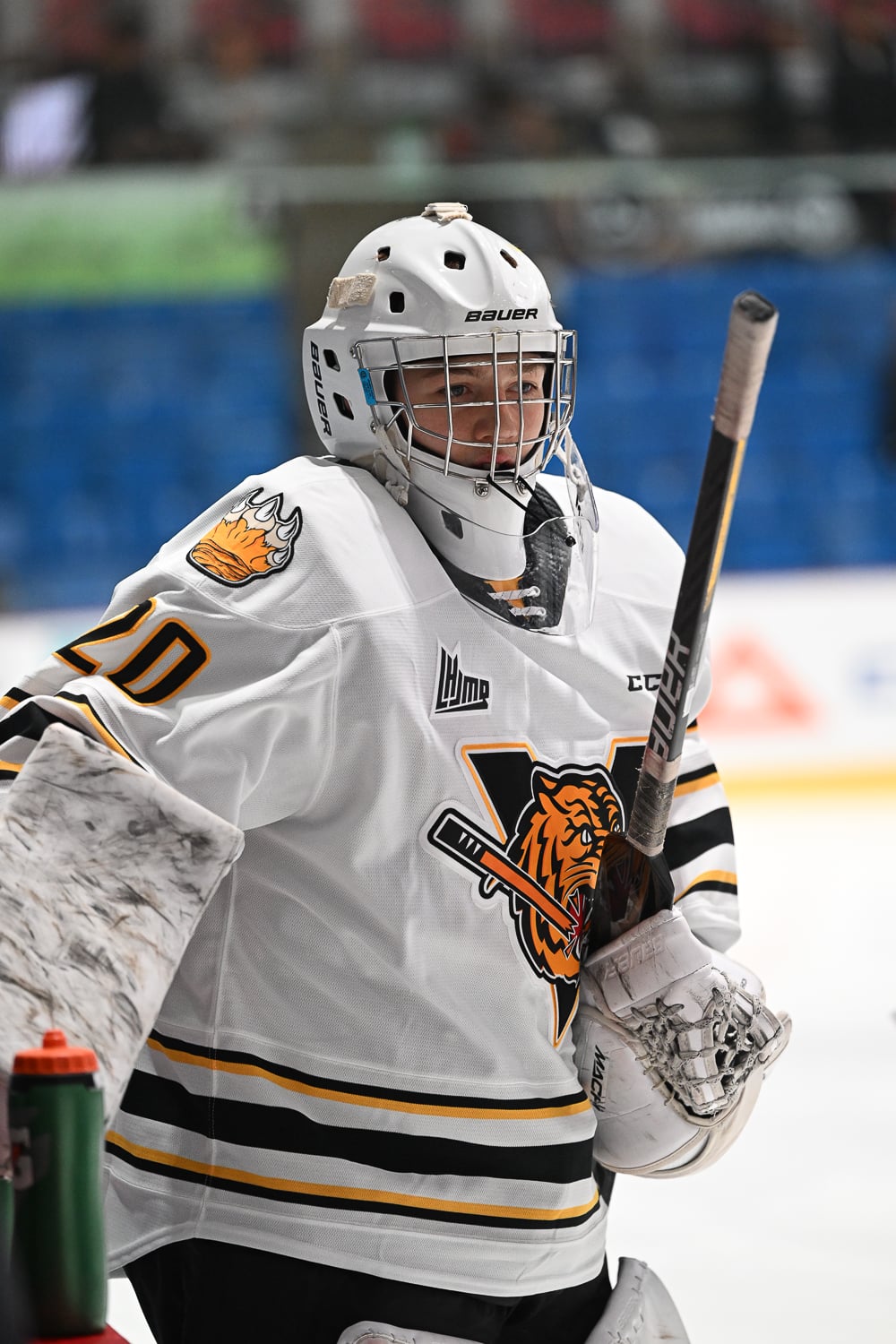
The main question is how the Penguins manage his next few seasons. Their young goalie questions already center on Šilovs, Murashov, and Blomqvist. D’Aigle sits behind that group for now, which gives Pittsburgh time to be patient.
A strong season would make it harder to leave out next summer. For goalies, one big year can change everything.
4. Kale Dach
Dach is one of the more intriguing snubs because he combines production with a different development path.
Dach was a seventh-round pick in 2025, going 201st overall, but his draft slot should not be the only way to view him now. He is coming off a strong Western Hockey League (WHL) season with the Calgary Hitmen, and his move to Penn State for 2026-27 gives Pittsburgh another prospect entering a high-level college environment.
His freshman profile at Penn State listed 34 goals and 41 assists in 63 WHL games last season. That is legitimate production from a late-round pick, and it makes him a more interesting player than the draft position alone suggests.
Dach still has to answer questions. He is undersized, and college hockey will test whether his scoring translates against older, stronger players. The jump to the Big Ten should help Pittsburgh learn more about him quickly. If he keeps producing there, his standing in the system will rise.
His path also shows why prospect rankings can change fast. A seventh-round pick who goes to college and scores can become a real asset. A player who struggles with the physical jump can fade into the background. Dach’s 2026-27 season should give the Penguins a clearer read.
The snub is understandable because Pittsburgh has more high-profile forwards above him. The opportunity is still there. If he becomes one of Penn State’s more productive players, he will not stay outside the conversation for long.
5. Travis Hayes
Hayes is another player whose name probably would have carried more ranking weight in a thinner version of the Penguins’ system.
The Penguins drafted Hayes in the fourth round, 105th overall, in 2025. Their 2025 draft class introduction listed him as a Soo Greyhounds forward, and the obvious connection is that he is the younger brother of Avery Hayes. That family tie is interesting, but it cannot be the main reason to track him.
Hayes has to build his own case. His 2025-26 season showed enough offensive progress to keep him relevant, and PensBurgh’s previous Top 25 Under 25 coverage noted that he is expected to continue developing in the Ontario Hockey League (OHL) before becoming eligible for full-time AHL work. That longer timeline makes him easier to leave outside the top 25 this year.
The key for Hayes is turning junior growth into a more projectable professional profile. Scoring in the OHL is useful, but the Penguins need to see whether he can add pace, details, and consistency. If he does, he can become the kind of mid-round forward who climbs over time.
His exclusion also highlights the improved depth around him. Pittsburgh now has more forwards with stronger immediate cases, including Ben Kindel, Rutger McGroarty, Ville Koivunen, Nicholas Robertson, Bill Zonnon, Markus Ruck, Pierce Mbuyi, and others.
Hayes still has upside, but he needs a strong OHL season to avoid getting lost in a deeper forward group.
Penguins’ Snubs Are a Good Sign
The Penguins should want better prospects than these five at the top of their system. The encouraging part is that they now do.
Beauchesne, Calvert, D’Aigle, Dach, and Hayes missing the Top 25 Under 25 does not make them irrelevant. It shows that Pittsburgh finally has enough names to force hard choices. Some of these players might have ranked higher in weaker versions of the pool from only a few years ago. That is progress.
The Penguins’ prospect pool reset has created more layers, and those layers are what every rebuilding or retooling organization needs. The system still lacks guaranteed stars outside its best few names, but it has more competition, more timelines, and more paths to value.
For Dubas, that gives the front office options. Some players can be developed slowly. Some can be used in trades. Others can create internal pressure from the middle of the system.
The next step is turning depth into results. The Penguins do not need every snub to become an NHL player. They need enough of them to keep the pipeline moving.
If Beauchesne, Calvert, D’Aigle, Dach, or Hayes climb this season, Pittsburgh’s prospect pool will look even healthier next summer. Even if only one or two make that jump, the larger message remains clear. The Penguins finally have enough young talent that being left out of the top 25 no longer means being written off.
Free Newsletter
Get Pittsburgh Penguins coverage delivered to your inbox
In-depth analysis, breaking news, and insider takes - free.
Subscribe Free →