The Philadelphia Flyers are off to a brilliant start through 28 games. After missing the playoffs five seasons in a row, tying a franchise record, they are 16–9–3. Should that pace be maintained, they’d reach the 100-point mark for the first time since 2011–12. Something real may be brewing in the City of Brotherly Love.
Fans haven’t seen this level of success in a very long time. Unfortunately, the Flyers are cheating the rebuild here. Not because they’re winning, but because of how they’re winning. It will be to their detriment long-term.
Breaking Down the Flyers’ Play Style
Under new head coach Rick Tocchet, the Flyers have heavily altered their play style. This season, their primary responsibility is to prevent rush chances—the easiest way to score goals in hockey. After setting a record for the worst team save percentage of the 21st century in 2024–25, more discipline in the neutral and offensive zones was an offseason priority.
Related: Flyers’ Head Coach Rick Tocchet Appears to Quietly Diss Matvei Michkov
The Flyers haven’t perfected this art, but my eye test suggests a lot of goals they’re allowing now are defensive breakdowns—a simple mental error, rather than a system issue. There are also times when they get too overzealous and give up an unnecessary rush, but for the most part, they’ve done a good job.
The trade-off is a less dangerous offense, but fortunately, a seventh-ranked shooting percentage at 5-on-5 has them doing just fine. Plus, given Trevor Zegras’ brilliance in the shootout (17-for-25 in his career), if the first 65 minutes end in a draw, Philadelphia is more than likely coming away with a win. They’re 5–0 in the skills competition this season.
To summarize, the Flyers rely on a balanced structure, timely saves, and a bit of puck luck to win games. Their talent shines the most in shootouts, where they’re able to grab the extra standings point with ease. This has them ahead of other rebuilding teams record-wise, such as the Chicago Blackhawks and San Jose Sharks, who lean on their high-end youth but lack consistency.
Does Tocchet’s Play Style Win Cups? So Far, No
There is one big problem with this. The Flyers have proven themselves capable of being a potential playoff team, but qualifying for the best-of-16 isn’t the ultimate goal. Winning the Stanley Cup is the ultimate goal.
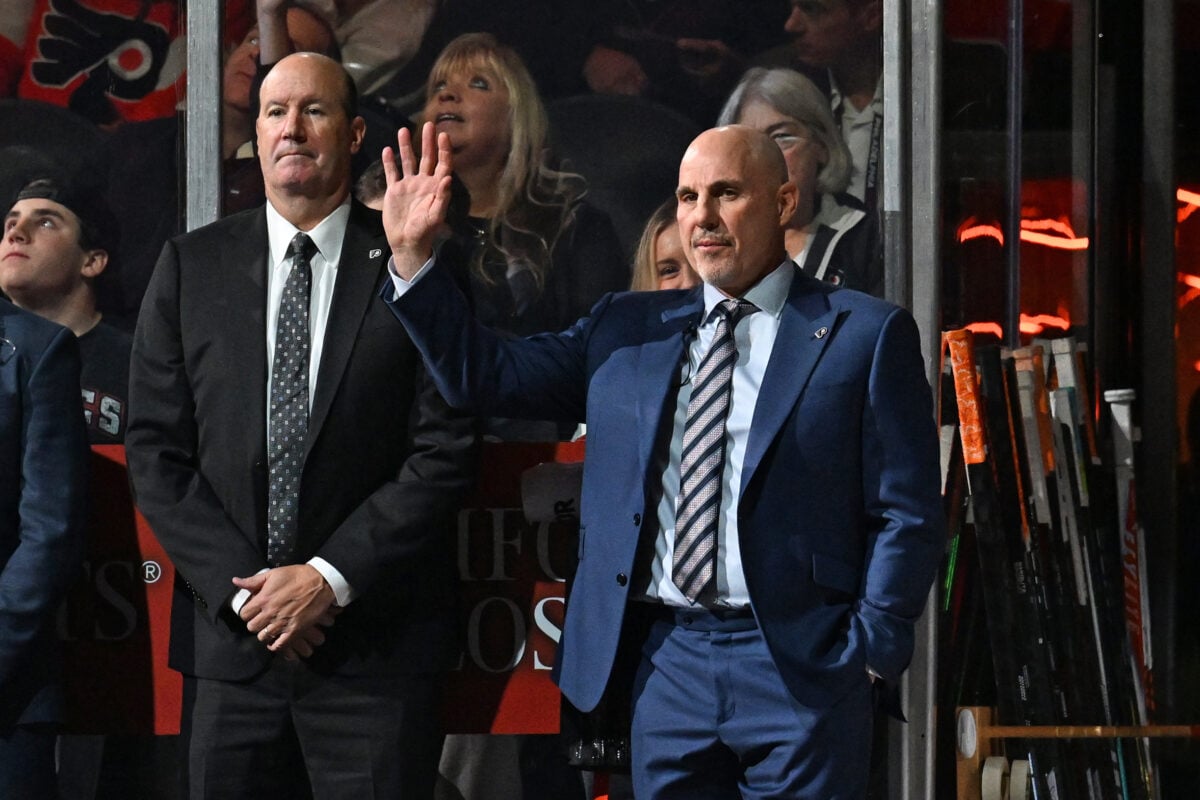
In a sense, the Flyers are cutting corners. Instead of letting their presumed face of the franchise, Matvei Michkov, develop like all other rebuilding teams, they’ve gashed his minutes and forced him to play “the right way.” Against the Sharks on Dec. 9, he had less ice time than Garnet Hathaway—a 34-year-old grinder with zero points in 28 games this season.
Tocchet’s system doesn’t rely that much on talent. It’s why winger Tyson Foerster’s absence, to this point, hasn’t hurt the team in the win-loss column. It’s also why Michkov’s lack of usage hasn’t hurt the team. Sure, skill matters to a certain extent, but you don’t need jaw-dropping plays to win games.
In Tocchet’s introductory press conference, general manager Daniel Brière praised the coach’s ability to win games with the now-defunct Arizona Coyotes, defying low expectations. This floor-raising play style most definitely played a role.
But there is an elephant in the room. Tocchet has only won one playoff series as a bench boss across nine seasons (excluding this one): with the Vancouver Canucks in 2024. That team, mind you, had a 103-point center, an 89-point center, a Norris Trophy-winning defenseman, and a Vezina Trophy finalist between the pipes.
There’s an argument to be made that his system limits ceilings. It undermines players like Michkov, whose two-way game is still lacking. This results in high-skill teams, such as the Edmonton Oilers in 2024, sending Tocchet home without any hardware.
The Blackhawks, Ducks, and Sharks Are Doing It Right
With the eighth-best points percentage in the NHL, buoyed by a young roster and a new coach, it may seem like the Flyers are doing it right. But a structure-over-talent approach has a limited ceiling. Letting the youth take the wheel, like the Blackhawks, Anaheim Ducks, and Sharks are doing, wins Cups.
Connor Bedard (Blackhawks), Leo Carlsson (Ducks), and Macklin Celebrini (Sharks) are the newest superstars, it seems. Despite all being under the age of 21, they have been given the keys to drive their teams to glory. While Anaheim is the only team with a better record than the Flyers, the Blackhawks and Sharks have “future juggernaut” written all over them, too.

These teams play a skill-based game, letting their youth overpower their foes. The Blackhawks and Sharks, despite terrible records last season, have been very competitive this time around. Once they add veteran talent and their prospects graduate and enter their primes, it’s safe to say they’ll be near the top of the standings.
But the Flyers? With the way they’re going, that simply doesn’t seem likely to happen. You can only go so far when you emphasize structure, rather than letting your talent dictate where you go. Things may seem good now, but they may get stale in a few years as they watch all three clubs surpass them.
Yes, the Flyers are winning hockey games, and it’s a refreshing sight. But this is bad news long-term.