On Wednesday morning, Mollie Walker of the New York Post reported that New York Rangers top prospect Gabe Perreault would be a healthy scratch after just three NHL games. Soon after, head coach Peter Laviolette confirmed that Brett Berard would draw into the lineup against the Philadelphia Flyers on Wednesday night while Perreault would watch from the press box. On the surface, it may seem like a routine roster tweak. But in reality, it’s another baffling decision that raises serious questions about the Rangers’ approach to asset management and player development, a recurring issue that continues to haunt the organization.
Burning a Year of Perreault’s ELC for What?
On Mar. 31, the Rangers agreed to terms with Perreault on an entry-level contract (ELC). As Perreault turns 20 before the end of the year, his ELC is not eligible to slide a year. As a result, the Rangers opted to burn the first year of his ELC, meaning he will become a restricted free agent after the 2026–27 season rather than the 2027–28 season had he signed after July 1.
When Perreault signed his deal, the Rangers were tied with the Montreal Canadiens for the second wild-card spot in the Eastern Conference, though Montreal had two games in hand. The Rangers went on to beat the Minnesota Wild in Perreault’s debut, a game in which he played well and could have easily picked up a few points.
Now, just a week later, the Rangers have dropped games to the New Jersey Devils and Tampa Bay Lightning, while the Canadiens have gone on a six-game winning streak. As a result, the Rangers now have a tragic number, the opposite of a magic number, of three. They are all but mathematically eliminated from the playoffs. Yet, Perreault will not play tonight.
Perreault Has Earned More, Not Less
This decision makes no sense and reflects a long-standing issue with how they handle their young players that has plagued the Rangers. It aligns with the organization’s troubling history of mismanaging assets and prospects. What was the point of burning a year off their top prospect’s ELC just to have him sit in the press box for what would have been his fourth career NHL game?

It would be understandable if Perreault wasn’t ready for the NHL, but he is. Yes, he could use a bit more size, something he’s acknowledged himself, but if Alexis Lafrenière tips in a perfect pass, or Johnny Brodzinski’s shot doesn’t ring off the post, or Andrei Vasilevskiy doesn’t just barely get a pad down in time on a Sam Carrick attempt, Perreault would be sitting on three points in three games.
Yes, hockey is a results-driven sport, and none of those plays resulted in goals, but Perreault has generated multiple high-danger chances in his first few games. On the Carrick chance, he made a smart play on the forecheck, knocking down a clearing attempt and delivering a quick pass to the front of the net. The Lafrenière opportunity happened on one of his first NHL shifts. The Brodzinski chance came on the power play, yet Perreault’s second unit has barely seen the ice, while the first unit has gone just 3-for-49.
Despite this promising start, Laviolette made the inexplicable decision to move Perreault out of the top six before the Lightning game on Monday and now has removed him from the lineup altogether.
A Familiar Rangers Pattern: Mismanaging Youth
It’s not just Perreault who’s been mishandled. Brennan Othmann, the 16th overall pick in the 2021 NHL Draft, has played his best hockey alongside Artemi Panarin and Vincent Trocheck. Yet Othmann, with just two points in 19 games, was pushed down to the fourth line and has received barely any power-play time despite excelling in that role both in juniors and with the Hartford Wolf Pack. Yes, two points in 19 games is underwhelming, but most of his games have come with limited ice time, often alongside Matt Rempe and Johnny Brodzinski. That line has been solid defensively, but it’s hardly a group known for offensive production, especially in a limited role.
Related: New York Rangers Are Running Out of Time to Save Their Season
This trend goes back years. The Rangers selected Kaapo Kakko second overall in the 2019 NHL Draft. He was quickly pulled from the power play and averaged just 14:17 of ice time during a season that was never supposed to be competitive. The following season, they selected Lafrenière first overall, and he averaged only 13:53 in his rookie season. It’s a clear pattern: young players do not get meaningful ice time in their formative years. Kakko is now off the team. Lafrenière, after a breakout last season, has regressed, even though he still has the second-most even-strength points on the team. Othmann is averaging 9:48 a night. Perreault, through three games, has averaged 13:31.
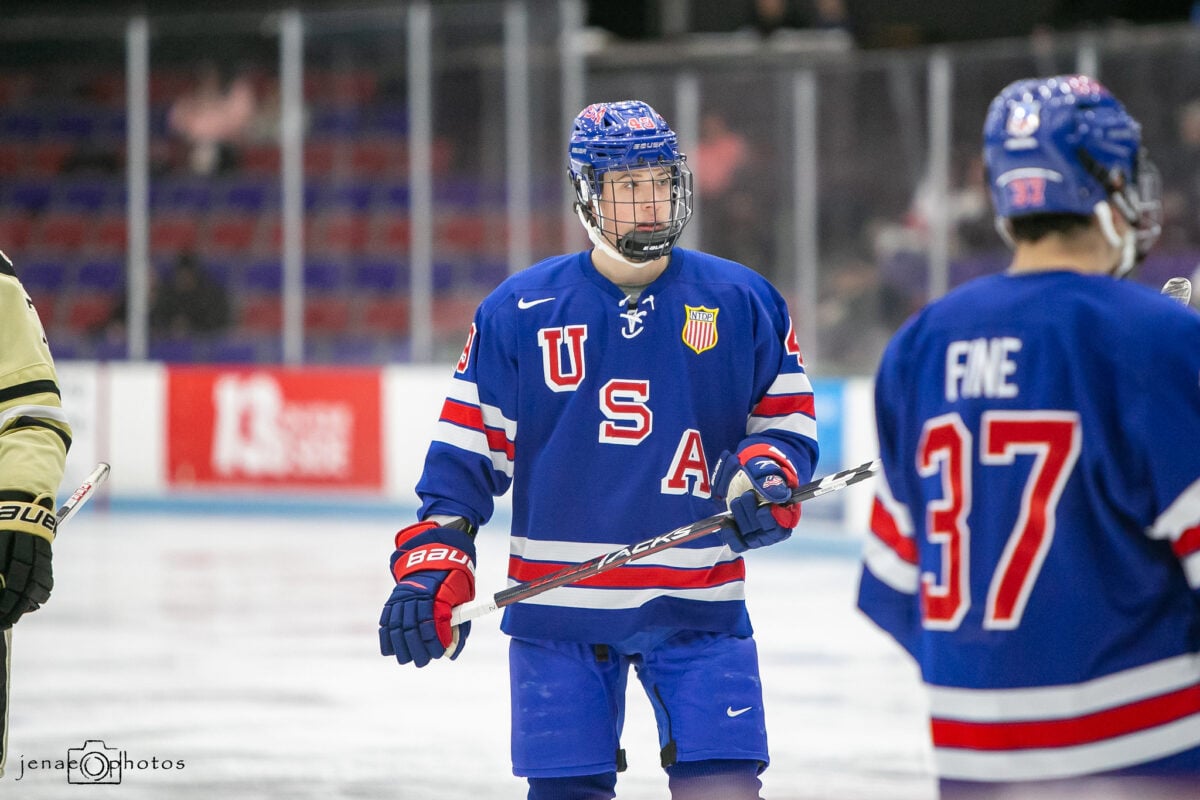
There are two ways to interpret this: either the Rangers have been extraordinarily unlucky, somehow managing to draft multiple top-tier prospects who just aren’t that good, or their approach is actively stunting development. Playing prospects in limited roles, avoiding defensive zone faceoffs, withholding power play time—these are all development killers. Just look at Kakko, now with the Seattle Kraken. He’s on pace for 51 points, with 18 goals and 33 assists, thriving in a consistent top-six role with power-play time.
This is an organizational flaw and one that seems to have already severely shortened the Rangers’ competitive window.
The Buchnevich Trade: A Turning Point in Mismanagement
Finally, there’s the asset management question. After the 2020–21 season, then-newly appointed Rangers general manager Chris Drury traded Pavel Buchnevich to the St. Louis Blues in a deal that ranks among the worst in franchise history, receiving only Sammy Blais and a 2022 second-round pick in return. The motive behind the trade was to clear space for Kakko and Lafrenière to step into top-six roles. Yet, throughout that season, Lafrenière averaged under 14 minutes of ice time per game, while Dryden Hunt and Barclay Goodrow were regularly slotted into the top six.
Rather than allowing Kakko and Lafrenière to play full seasons in prominent roles, the Rangers kept them on the third line. While the duo played well together, this likely hindered their development. Since trading Buchnevich, the Rangers have had a clear and persistent hole on the right wing alongside Chris Kreider and Mika Zibanejad, yet neither Kakko nor Lafrenière was ever given a consistent chance to fill that role.
Now, the two young wingers waiting for opportunity are Othmann and Perreault, and they’re not getting it either. While Othmann hasn’t lit up the scoresheet, there is skill in his game. At the very least, he’s shown that he can finish checks, drive play, and take hits to make plays. But if the Rangers fail to give him and Perreault real opportunities in the top six and on the power play, they may never find out what they truly have, and worse, they risk repeating the same developmental missteps they made with Kakko and Lafrenière.
The Lesson Still Hasn’t Been Learned
There’s a lesson here, not just for the Rangers, but for the entire league: give your young players time to grow. It’s hard to place the blame on the prospects when New York’s track record speaks for itself. The Rangers have struggled for decades to develop top forward talent, and their most successful first-round pick upfront in the last half-century, J.T. Miller, reached his potential after leaving the organization before his return this season.
Since Steve Vickers was drafted in 1971 – yes, 54 years ago – the best developmental success story the Rangers can point to for a first-round pick at forward is Kreider. That’s a damning indictment of an organization. With the decision to scratch Perreault in his fourth NHL game, it’s clear that the lesson still hasn’t been learned.
