The silence in the Florida Panthers’ locker room these days is deafening. For a team coming off back-to-back Stanley Cup championships, the current atmosphere—described by insiders as “somber” and devoid of the usual chirping and music—is a stark departure from the swagger we’ve come to expect in Sunrise.
Entering the season, the expectation was a dynasty in the making. Instead, we are looking at a team sitting at 12-12-1, currently in last place in the Eastern Conference. While the panic button hasn’t been officially pressed by management, the glass case protecting it has certainly been shattered.
The question circulating among the beat writers and the fanbase is simple, yet loaded: Can this team actually turn it around, or is the championship hangover finally lethal?
A Roster in Triage
To be fair to Florida, this isn’t entirely a case of underperformance; it is a case of missing limbs. The roster has been decimated by injuries in a way that few contenders can withstand. The headline, of course, is the loss of captain Aleksander Barkov. Losing your top center and premier two-way forward for the entirety of the regular season due to a knee injury is a catastrophe that changes the fundamental identity of the team.

Compounding that loss is the absence of Matthew Tkachuk. While there is a glimmer of hope that the star winger will return around Christmas following his recovery from adductor and hernia surgery, the Panthers are currently fighting without their emotional and physical engine.
When you remove two superstar forwards from the lineup, you aren’t just losing points; you are losing the ability to dictate the pace of the game. The Panthers look like a compromised version of themselves, struggling to impose the heavy forecheck that won them two titles.
The Marchand Paradox and Thin Margins
In the absence of the core stars, the scoring burden has fallen on the shoulders of the team’s high-profile trade deadline acquisition, Brad Marchand. The 37-year-old, currently on a six-year deal, has been a soldier, leading the team with 27 points. Sam Reinhart has also done his part with 14 goals.
But beyond those two, the well runs dry.
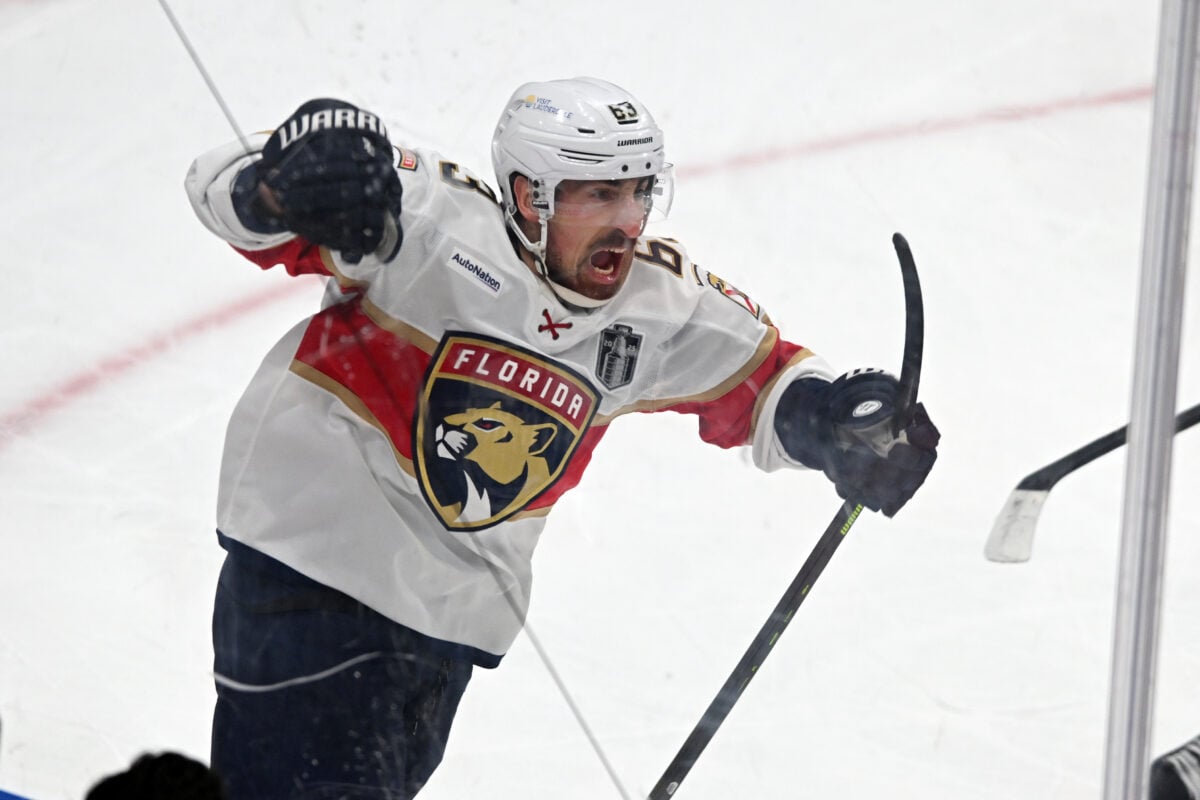
The Panthers are suffering from a classic case of top-heavy reliance. Secondary scoring is virtually non-existent, creating a razor-thin margin for error. The statistics paint a grim picture of this dependency: when the Panthers manage to score four or more goals, they are unbeaten (7-0-0). However, in games where the offense sputters to three goals or fewer, they hold a dismal 5-12-1 record.
Related – Maple Leafs’ Depth Steps Up In 4-1 Win Against Panthers
There is a legitimate concern regarding sustainability here. Can a 37-year-old Marchand continue to carry an offense at this pace? Without reinforcements from the bottom six, the Panthers are asking for a heroic effort every single night just to stay competitive.
Goaltending Controversy Brewing?
Defensive struggles usually expose goaltending, and that is happening in Florida. Sergei Bobrovsky, a goaltender who has made a career out of proving critics wrong, has looked pedestrian this season. He hasn’t provided the bail-out saves the team desperately needs while the offense struggles.
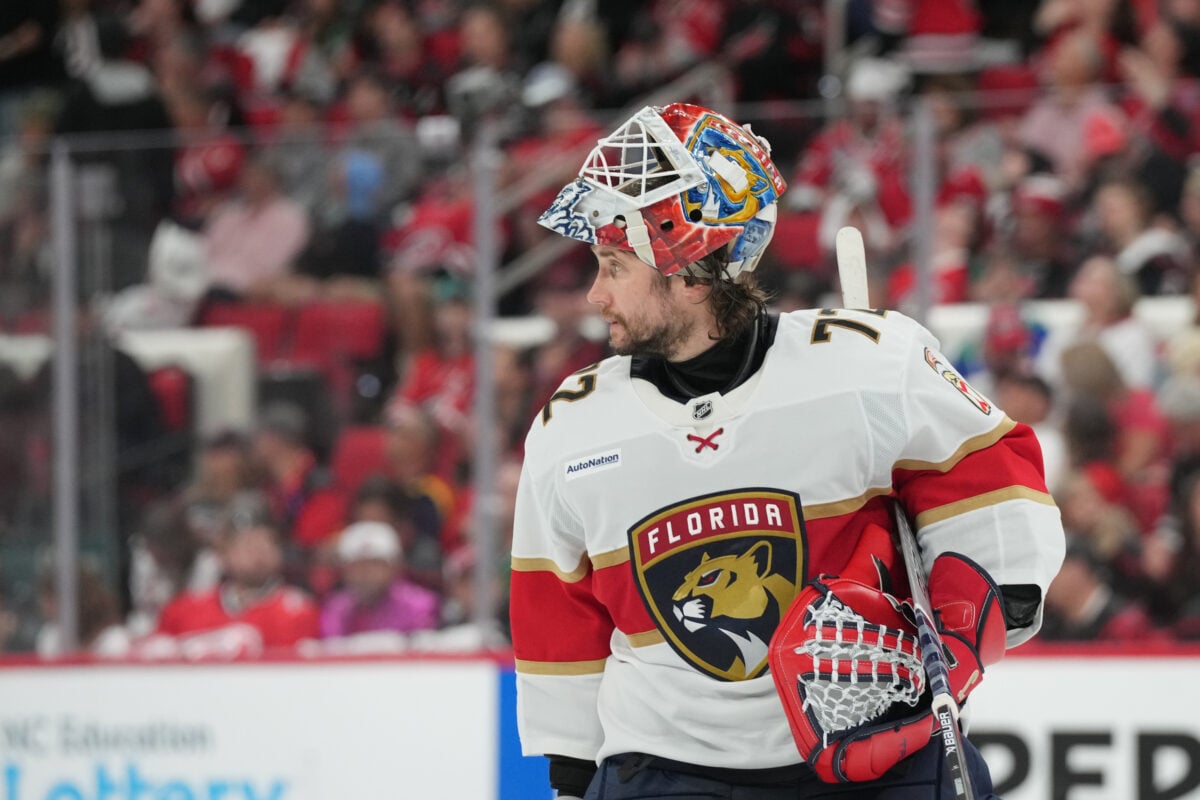
Conversely, Daniil Tarasov has been a quiet revelation. With a .907 save percentage, he has arguably been the more reliable option. This has led to murmurs that Tarasov should see an increased workload. It’s a delicate situation for coach Paul Maurice; do you ride the proven veteran hoping he finds his game, or do you trust the hot hand of the backup when every single point matters?
The “Just Get In” Gambit
Despite sitting six points out of a wild card spot, the internal messaging remains defiantly optimistic. General manager Bill Zito and the front office are clinging to the “Just Get In” philosophy. They point to their 2023 run, where they entered the playoffs as an 8th seed and went the distance, as proof that regular-season seeding is vanity, while entry is sanity.
There is also the context of the Eastern Conference itself. It is, to put it politely, weak. As of early December, no team has run away with the conference lead (no one has topped 34 points). This parity—or mediocrity, depending on your view—keeps the Panthers within striking distance. They don’t need to be excellent to make up ground; they just need to be slightly above average.
Related – Dear Santa: Florida Panthers’ 2025 Wish List
Coach Maurice admits the patience required right now is “brutal,” but he insists the pedigree of the locker room will win out. The belief is that if they can tread water until Tkachuk returns, the engineering of the roster will eventually take over.
Waiting for a Spark That May Come Too Late
The danger in this approach is the assumption that a team can simply “flip a switch.”
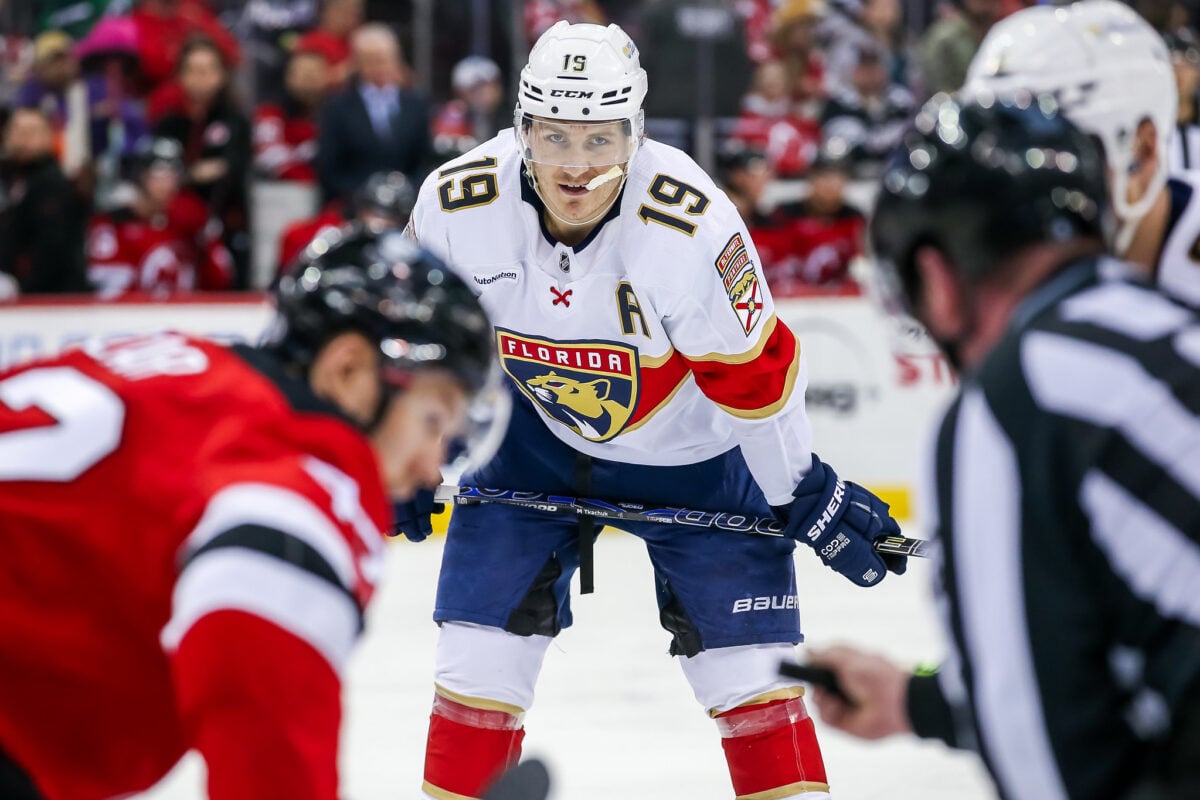
Hockey history is littered with talented teams that dug a hole too deep to climb out of—look at the struggles of the Toronto Maple Leafs or Buffalo Sabres in years past. The fear is that by the time Tkachuk is back up to full speed, the Panthers may have to leapfrog seven or eight teams to get back into contention. That is a mathematical nightmare, regardless of how weak the conference is.
Furthermore, even when Tkachuk returns, Barkov will still be missing. This isn’t a team getting back to 100%; it’s a team getting back to maybe 75%.
The next month is critical. If Florida can grind out ugly wins and keep the deficit manageable, they have a shot. If the slide continues, the back-to-back champions might be watching the playoffs from the golf course.
AI tools were used to support the creation or distribution of this content, however, it has been carefully edited and fact-checked by a member of The Hockey Writers editorial team. For more information on our use of AI, please visit our Editorial Standards page.
