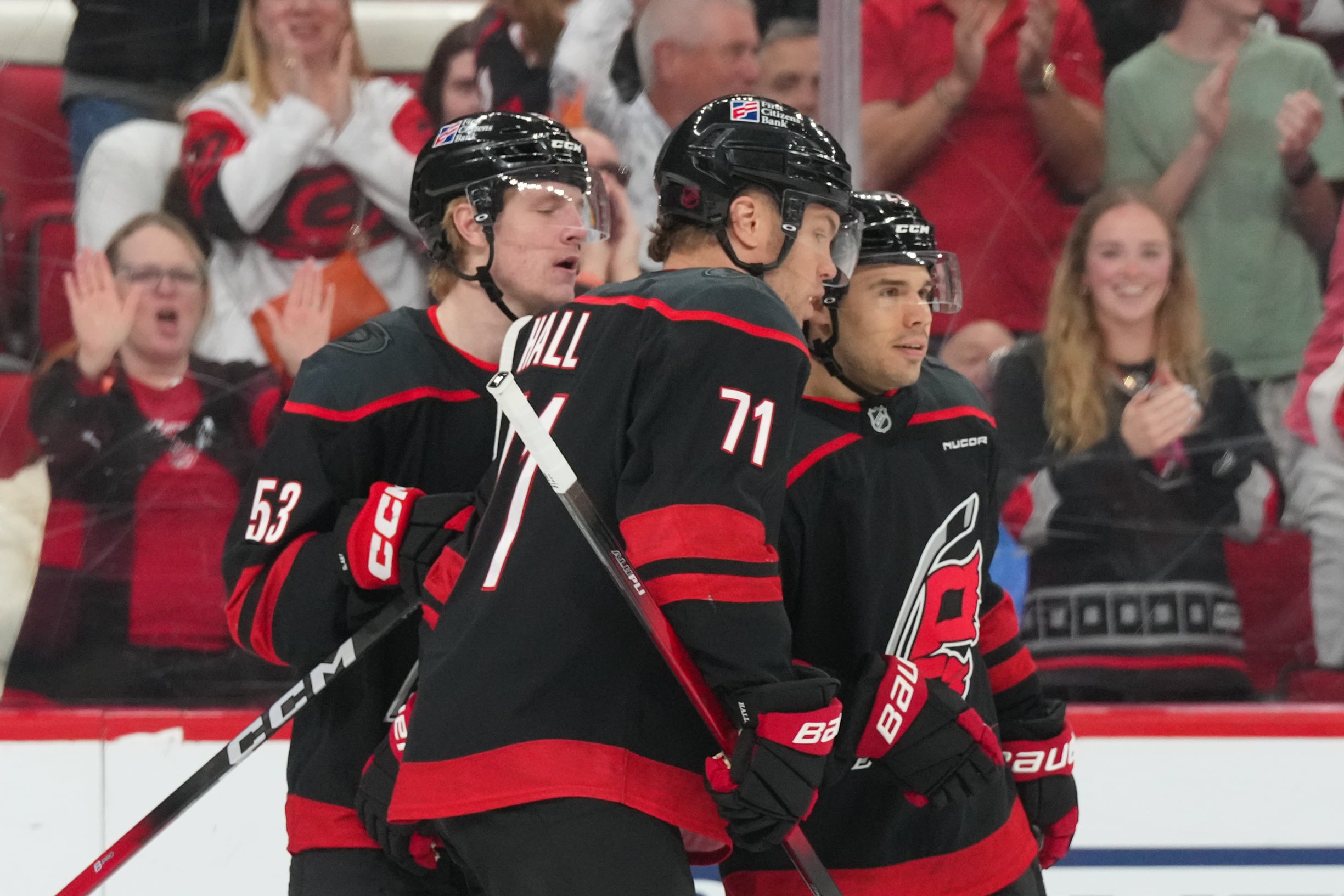
We live in an age where analytics are a focal point of nearly every single sports debate. In the sport of hockey, analytics evolve daily, helping fans and front offices alike evaluate players in ways never seen before.
Following the 2024-25 season, 26 different National Hockey League (NHL) players received votes for the Hart Trophy (MVP), highlighting just how subjective player value can be.
Now, MVP conversations surrounding young superstar Macklin Celebrini during the 2025-26 season have only added to that debate. While many writers have come forward to say he received their first-place vote, Celebrini wasn’t named a finalist, meaning at least three players received more support overall.
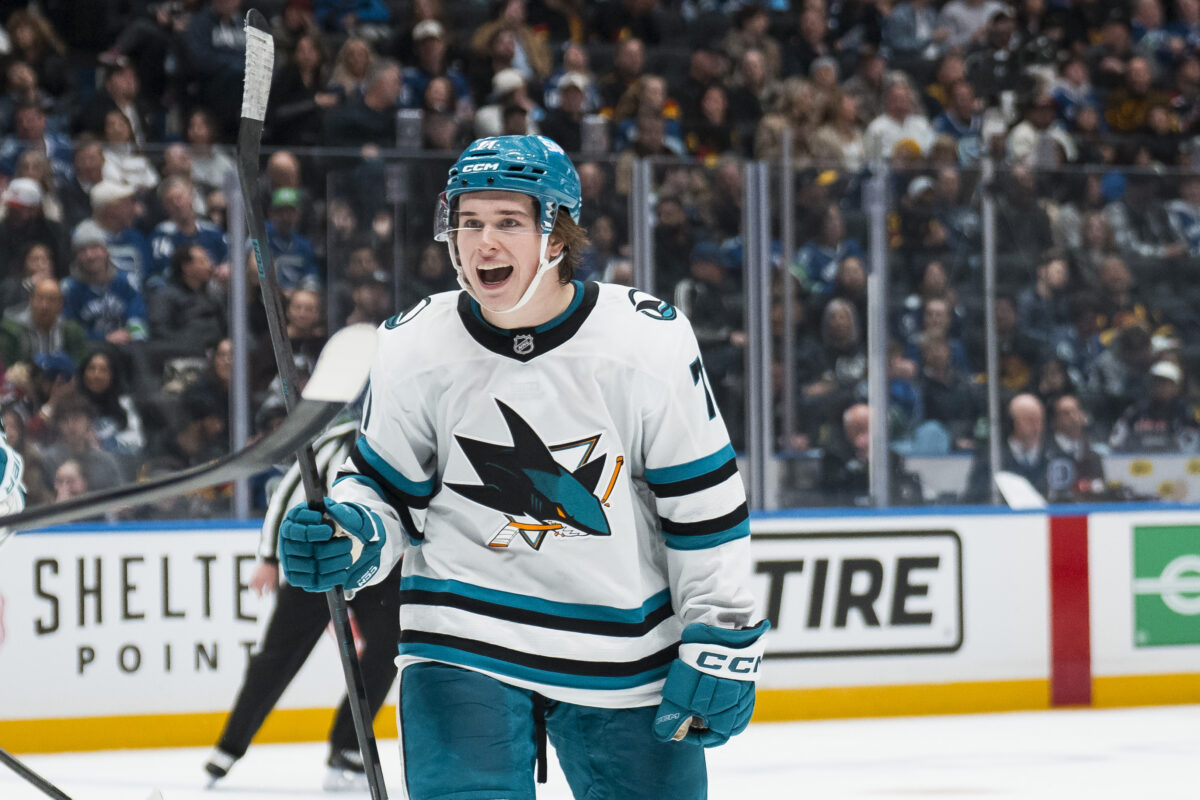
That begs the question — How is the value of a player determined? There’s no true, definitive way to answer that. Otherwise, every front office would act the same and all voters would hold matching opinions.
Analysts should always be searching for new ways to meaningfully evaluate players. While there will likely never be a be-all, end-all solution, a popular statistic used in the sport of baseball could become another useful tool to aid that evaluation process.
Baseball’s “Leverage Stats”
Major League Baseball analysts and fans have adopted “leverage stats”, which measure how effective a player is (or isn’t) when the stakes are raised.
In baseball, high leverage situations are defined as those where one play could dramatically change the outcome of the game. While there are many different scenarios, a prime example would be a hitter coming up in the bottom of the ninth, tie game, bases loaded, and one out.
A hit wins the game immediately, while a strikeout drastically improves the defending team’s odds of winning. An example of a medium leverage situation would be fifth inning, down 3-2 with runners on first and second and one out. The plate appearance matters, but the game still has significant time remaining.
A low leverage spot would be the seventh inning, leading 8-1 with bases empty and two outs. Even a negative outcome would barely alter the overall win probability.
| Split | G | GS | PA | AB | R | H | 2B | 3B | HR | RBI | SB | CS | BB | SO | BA | OBP | SLG | OPS | TB | GDP | HBP | SH | SF | IBB | ROE | BAbip | tOPS+ | sOPS+ |
|---|---|---|---|---|---|---|---|---|---|---|---|---|---|---|---|---|---|---|---|---|---|---|---|---|---|---|---|---|
| High Lvrge | 21 | 30 | 20 | 9 | 6 | 0 | 0 | 3 | 9 | 1 | 0 | 9 | 4 | .300 | .533 | .750 | 1.283 | 15 | 0 | 1 | 0 | 0 | 2 | 0 | .231 | 153 | 250 | |
| Medium Lvrge | 25 | 43 | 34 | 12 | 7 | 0 | 0 | 5 | 9 | 2 | 0 | 9 | 15 | .206 | .372 | .647 | 1.019 | 22 | 2 | 0 | 0 | 0 | 2 | 0 | .143 | 96 | 187 | |
| Low Lvrge | 38 | 104 | 89 | 13 | 25 | 6 | 0 | 7 | 11 | 2 | 2 | 13 | 32 | .281 | .379 | .584 | .963 | 52 | 1 | 1 | 0 | 0 | 1 | 2 | .360 | 88 | 166 |
A player’s leverage-based statistics are then compiled by tracking their performance across all of those situations throughout a season. This allows analysts to compare how a player performs in low-, medium- and high-pressure moments.
Over time, those situations create a larger sample that can reveal meaningful trends. Some players produce relatively consistently regardless of game state, while others may see dramatic rises or declines in performance as leverage increases.
Importantly, leverage-based statistics are not meant to replace traditional statistics. But they do act as an additional layer of context.
Sports fans have always debated which players are “clutch.” Certain athletes develop reputations for elevating their play in the biggest moments, while others are criticized for disappearing under pressure.
The problem is that those discussions are usually driven almost entirely by memory, narrative and selective examples. Leverage-based statistics help ground some of those debates with actual long-term data, allowing analysts and fans alike to better evaluate whether certain players consistently perform differently when it matters most.
Applying Leverage-Based Stats to Hockey
Websites MoneyPuck and ESPN already have the formulas and capability to show a team’s probability of winning at any given moment. That’s a great first step. From there, we can take that win probability and assign it to different moments a player is on the ice.
It’s first important to note that baseball and hockey, by nature, are incredibly different. Baseball is a lot more linear; the pitcher pitches, and the batter either fails or doesn’t. Hockey, meanwhile, is far more fluid. Ten skaters and two goaltenders are constantly moving simultaneously, with momentum, puck possession, line matchups and defensive structure all influencing the outcome of a given play.
While there are no individual events like plate appearances in hockey, time-on-ice can instead be factored into leverage-based analysis. Shifts could then be categorized based on score, time remaining and overall game state. Here are some examples of what low-, medium-, and high-leverage spots could look like (excluding empty net goals for further accuracy):
Low Leverage: Multi-goal blowouts, Early first-period goals, Late-game situations with a three- or four-goal lead
Medium Leverage: Second-period tie games, One- or two-goal games during the middle stages of regulation
High Leverage: Overtime, Final five minutes of a one-goal game, Third-period tie games
The exact and comprehensive situational thresholds would be determined mathematically through win probability models, which already exist, to help determine just how important each event/timestamp is. Then, we can break the stats down in an easy, more digestible way for fans and analysts alike:
For skaters, we could have points-per-60 for each situation. Here’s a theoretical table that could easily be cleaned up and displayed on a broadcast:
Player A
| Category | Points | Time On Ice | Points/60 |
|---|---|---|---|
| High leverage | 24 | 310 min | 4.65 |
| Medium leverage | 51 | 890 min | 3.44 |
| Low leverage | 21 | 620 min | 2.03 |
This player very clearly seems to perform better — ~63% better — when the moment is most important. Let’s say Player A is a public consensus runner-up for the Hart Trophy with 101 points.
Player B seems to be the public consensus favorite with 116 points. Here are their leverage stats:
Player B
| Category | Points | Time On Ice | Points/60 |
|---|---|---|---|
| High leverage | 16 | 430 min | 2.23 |
| Medium leverage | 41 | 780 min | 3.15 |
| Low leverage | 59 | 660 min | 5.36 |
At first glance, Player B‘s traditional statistics would appear significantly more impressive. However, here’s where leverage statistics could potentially provide additional (and important) context.
While Player B produced more overall offense, their production rate actually declined substantially — ~37% — in the game’s highest-pressure moments compared to all other situations. It would then be up to voters to factor in other context — teammates, systems, deployment, and competition — to determine whether Player B‘s 15 extra points are still enough to outweigh Player A‘s significantly stronger production during the game’s most pivotal moments.
The same concept could be extended to defensive metrics and goaltending performance in differing situations as well.
Why Leverage-Based Stats Could Be Useful
Of course, leverage statistics would not suddenly become the definitive answer to player evaluation. Hockey is far too random and fluid for any single metric to fully capture a player’s value.
However, the same criticism applies to virtually every advanced statistic already used throughout sports. Expected goals, goals saved above expected and countless other metrics all contain imperfections and contextual limitations. That has not stopped analysts, teams and fans from using them as valuable evaluation tools. This is no different.
Over the course of a single season, leverage-based performance could still be influenced by randomness and sample size. But over the span of a few seasons, or an entire career, dramatic and consistent differences between a player’s high- and low-leverage performance could begin to paint a meaningful picture. If one player repeatedly elevates their production during the game’s most pivotal moments over thousands of minutes, while another consistently declines under the same conditions, it becomes harder to dismiss entirely as coincidence.
At minimum, it would create a more nuanced way to discuss player impact beyond their raw point totals. At maximum, it could eventually become another meaningful tool used by analysts, broadcasters, award voters and even NHL front offices.
In a sport constantly searching for better ways to evaluate player value, the concept is at least worth exploring.
Free Newsletter
Get Advanced Stats coverage delivered to your inbox
In-depth analysis, breaking news, and insider takes - free.
Subscribe Free →