Whenever general manager (GM) Kent Hughes drops a hint about his next big move, he creates the kind of excitement that has defined the Montreal Canadiens’ new “entertainment era”, with a fan base that fully bought into a meticulous rebuild, but is starving for that one piece to tip the scales from promising competitor to legitimate Stanley Cup contender.
For months, speculation has been relentless. Montreal needs a premier second-line centre (2C) signed long-term. The logic is sound on the surface. While Nick Suzuki holds down the top line with his trademark cerebral, 200-foot efficiency, the vacuum behind him has often forced square pegs into round holes. The whispers continue online about blockbuster trades, pointing to high-profile targets like Robert Thomas or Mason McTavish as the missing link to solidify the roster’s spine.
But inside the organization’s management suite, panic purchases are strictly forbidden. Hughes and president Jeff Gorton have made patience their main weapon, and the 2025-26 NHL regular season proved that there is no need to sell the farm for a long-term solution to their second-line puzzle, because the short-term solution is already in the dressing room.
The Evolution of Oliver Kapanen
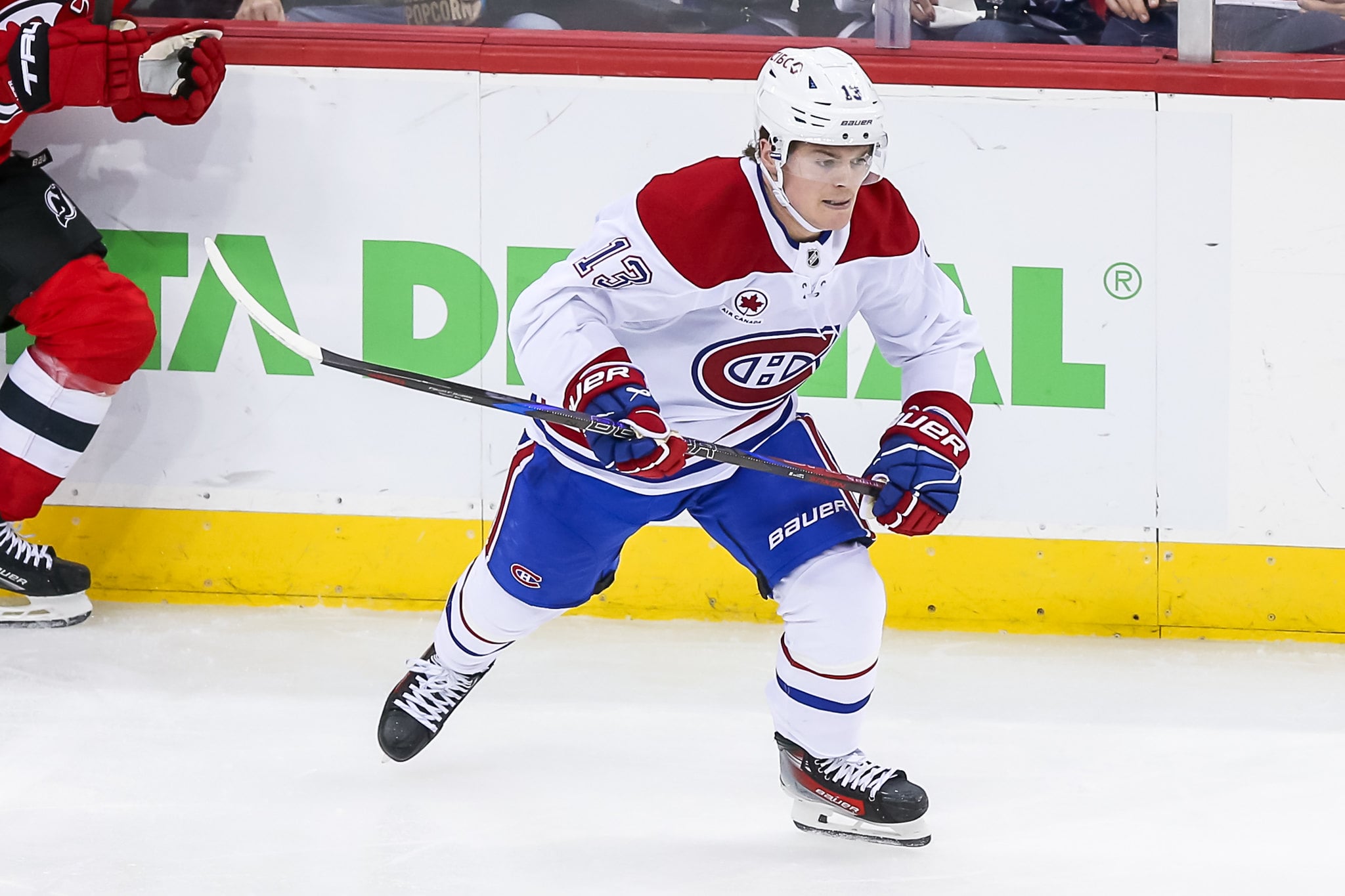
When Oliver Kapanen made his entrance at the start of the season, scoring a spectacular shorthanded goal on opening night against the Toronto Maple Leafs, he seemed to be nothing more than a neat trivia answer: He became the first Canadien since Chris Chelios in 1984 to pot a shorty for his first career NHL goal.
What followed was far more significant than a historical footnote. Kapanen didn’t just survive the rigours of an 82-game NHL season; he stabilized Montreal’s top six, pairing well with fellow rookie Ivan Demidov. Finishing his rookie campaign with a robust 22 goals (second best among all rookies) and 37 points, while maintaining a mature plus-4 rating, the 22-year-old Finn proved he is capable of steering a second line next season.
Playing Kapanen with Demidov allows their contrasting styles to create a balanced offensive ecosystem. Demidov is a breathtaking, high-risk playmaker who requires freedom to improvise and manipulate defenders out of position, and Kapanen’s elite two-way discipline provides the ultimate safety net to allow exactly that. Because the young centre is so defensively responsible and highly structured, he consistently covers for Demidov’s creative risks while handling the heavy lifting in low-ice puck battles.
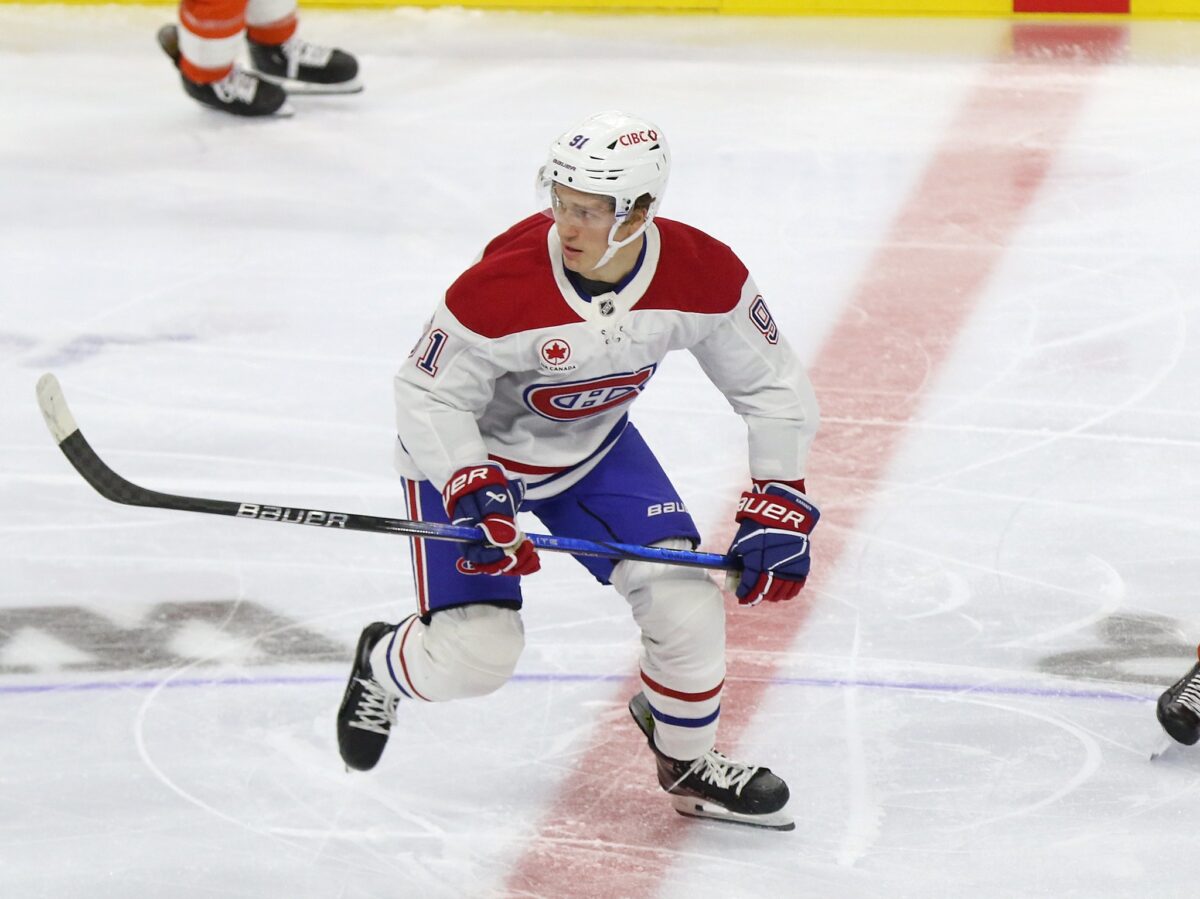
That isn’t to say Demidov is weak defensively, only that Kapanen provides him more freedom to create without as much risk. More importantly, Kapanen possesses a rare, cerebral ability to read the play a step ahead, quietly drifting away from defensive coverage into soft areas of the ice. When Demidov inevitably draws two defenders and throws a cross-seam pass through traffic, Kapanen is invariably there, acting as the open-space outlet to turn Demidov’s planned chaos into high-danger scoring chances.
The underlying metrics paint an even more vivid picture. Kapanen brings structure to his line. He plays the traditional Finnish style – he is very organized, highly intelligent, and connected on both sides of the puck. As Jake Evans has done for the bottom six, Kapanen provides the template that head coach Martin St. Louis calls “boring hockey” in two zones, which allows pure skill to take over in the third. He doesn’t chase the game; he waits for the game to make a mistake, using lethal off-puck instincts and high-end defensive positioning to suffocate opposing transitions.
It is precisely this stabilizing, two-way equilibrium that makes chasing a costly trade for an established centre a redundant, counter-productive exercise. Once Montreal becomes true contenders for the Stanley Cup, Kapanen would be an ideal candidate to be their third-line centre, but for now, his ability to fill in on the second line should buy management enough time to avoid overpayment for a player that isn’t the exact fit for the role they envisioned.
The Staggering Cost for NHL Centres
It’s a seller’s market, and teams do not casually part with premium pivot men. To pry an established, high-impact centre away from a rival organization, Hughes would have to surrender a package that would fundamentally gut the foundation the rebuild is built on.
The conversation would start with at least one, if not two, guaranteed unprotected first-round draft picks. From there, we are talking about parting with one of Montreal’s blue-chip prospects, pieces like Michael Hage or Alexander Zharovsky, who are essential to the offensive identity the Canadiens are building. Then there is undoubtedly a young roster player to be included.
Why spend that precious, hard-earned capital to fix a position where Kapanen has already demonstrated his short-term, top-six ability? Smart money says the Canadiens won’t. They will keep the internal solution on his highly cost-effective entry-level salary, allowing him the developmental runway to grow and eventually cede his role to Hage. By trusting Kapanen to hold down the centre spot, Hughes can preserve his asset chest, keeping it entirely intact to plug a real structural deficit: skilled offensive players with size and grit.
Hughes Must Maintain the Long-Term Vision
The Canadiens are building something meant to last. Trusting Kapanen at centre gives management the ultimate asset: clarity. It allows them to see exactly how their young core matures under pressure, keeping their books clean for when the perfect, long-term opportunity presents itself.
Montreal doesn’t lack project players or energetic depth pieces. What the roster desperately needs is pure finishing talent on the wing; a big, physical, dynamic scoring winger who can tilt the ice and convert Kapanen’s elite puck-retrieval work or Demidov’s elite vision into goals, building a second line with a power forward, a responsible 2C, and a dynamic line-driver. If Hughes allocates his premium trade chips toward a winger rather than a centre, he can fill a position of need without emptying his chest while still having room to fill other holes.
The blueprint for a Kent Hughes acquisition doesn’t involve chasing standard players. He targets specific, high-leverage profiles: individuals with a distinct mix of size, structural intelligence, and top-tier finishing skill. Most importantly, they must fit neatly into a carefully managed salary cap structure.
Kapanen is a dependable, cost-controlled centre – a luxury in today’s NHL. Keeping him in his role next season would allow management to aggressively search for an elite winger on the trade market, as they did in their hunt for Matthew Knies. Unfortunately, with Toronto winning the draft lottery and acquiring Darren Raddysh to shore up their roster, the chances of that trade being revisited are very low.
Affordable Trade Targets
If the Canadiens want to take a massive swing on a winger with elite upside, New York Rangers forward Alexis Lafrenière is the exact type of high-leverage target Hughes covets. The 24-year-old left wing is fresh off a campaign of 24 goals and 57 points, all while pulling strong underlying metrics on a spectacularly underperforming Rangers squad.
Lafrenière boasts a stellar 53.5% expected goals for percentage (xGF%) and a 52.44% Corsi for, proving he is a self-sustaining play-driver who routinely drags his line into high-leverage scoring areas. His small-area operational intelligence and willingness to hunt pucks in the greasy areas below the hash marks would provide a physical and structural complement to Kapanen’s two-way reliability and Demidov’s creativity.
The true brilliance of targeting Lafrenière lies in the immense value of his contract. Signed to a long-term deal with a $7.45 million cap hit until he reaches age 30, he would be an excellent fit on the second line as well as a plug-and-play top-six winger at a locked-in, cost-controlled price tag as the cap continues to skyrocket.
Because the Rangers are facing their own re-evaluation, the cost to acquire the 2020 first-overall pick would likely be more affordable than any centre on the market. A package centred around Montreal’s 28th overall pick this year, and a high-end American Hockey League defensive prospect like Adam Engstrom would allow Hughes to keep most of his assets while also landing a player who fits the team’s developmental timeline.
If Hughes wants to inject some north-south speed, two-way play and proven playoff pedigree into his second line, pulling the trigger on a trade for Vancouver Canucks left wing Jake DeBrusk would also be worthwhile.
DeBrusk signed a seven-year contract with an average annual value of $5.5 million in 2024. At the time, he thought he was joining a club on the rise with the Canucks coming off one of the best regular-season performances in franchise history. Now, rumours out of the Pacific Northwest suggest the 29-year-old is motivated to join a playoff-bound club.
He remains a top-six scoring asset who posted 23 goals and 42 points in 81 games last season. His game is defined by speed and an ability to attack high-danger areas out of transition. Pairing his quickness with a centre like Kapanen would create synergy; Kapanen controls the middle of the ice, allowing DeBrusk to stretch opposing defences and back them off the blue line.
From a financial perspective, DeBrusk is a good fit for the cap structure. Because he is viewed as a slightly distressed asset in Vancouver, Hughes wouldn’t likely have to surrender a premium package of first-rounders to get him.
Ultimately, addressing the second-line wing position instead of paying a premium for a big-name 2C would provide a mid-term answer in the top-six while maintaining assets to address other gaps on the roster in the future. Weaponizing their prospect pool and draft assets to target a scoring winger allows the Canadiens to inject the necessary size and finishing talent at a fraction of the cost for a top-tier centre.
Keeping Montreal’s blue-chip prospects and future draft capital intact buys the team crucial developmental time for future pillars like Hage. It is textbook asset management, maximizing the current competitive window through opportunistic value on the wing, while keeping the long-term pipeline primed for a sustainable Stanley Cup era.
Free Newsletter
Get Montreal Canadiens coverage delivered to your inbox
In-depth analysis, breaking news, and insider takes - free.
Subscribe Free →