For the Vancouver Canucks, the defining moment of their season arrived the day Quinn Hughes was traded. From that point on, pretending this was still a normal season became a kind of polite fiction. What I saw in my early-morning research was a sense that the Canucks should tank the season to move completely toward a rebuild.
I understand the logic that hockey analysts have spewed out. I honestly do. If the team is going to pick up the best of the talent available in the 2026 NHL Entry Draft, they should move value while they can. Make hard business choices, and don’t get dragged toward the mushy middle. Embrace short-term pain so the long-term plan has the best chance of succeeding. In a hard-cap league, set a direction that matters. Drifting is how teams disappear.
Related: Today in Hockey History: Dec. 26
But call me old if you will, what I find harder to accept is how quickly tanking has become something people talk about as if it’s just another strategy — like a neutral-zone forecheck or an icing to relieve the opposition’s pressure. It’s as though deliberately losing is not only acceptable, but somehow enlightened thinking.
On the contrary, I think it’s illogical and wrong-minded. The longer I consider the logic, the more incoherent it seems in the long term. And it keeps coming back to three problems I can’t shake.
Problem One: Cheating to Lose Is Still Cheating
We can dress it up with phrases like “asset maximization” or “controlled burn.” Still, at its core, tanking asks players and coaches to do something unnatural. They should compromise the competitive instinct that got them to the NHL in the first place. We don’t call it cheating because everyone agrees to look the other way, but the intent is the same. You are no longer trying to win the game when you jump onto the ice.
(Bob Frid-USA TODAY Sports)
That matters. The standings won’t remember it, but the people who cheated to lose will. Hockey has always been built on the idea that you earn your outcomes honestly, even when the outcome means you lose. Once you cross the line into intentional failure, you change the moral ground on which the sport stands. And once that becomes normal, it’s very hard to argue for anything else.
Related: Canucks May Get More From Liam Ohgren Than They Expected
It cheats fans, and it cheats the game. It’s a side door to steal money from families who attend games, buy overpriced beer, and watch underperforming players.
Problem Two: Treating Your Best Players as Your Biggest Problems
One of the most off-putting parts of the tanking conversation is who gets labelled as expendable. Not underperformers. Not passengers. The problem players, it seems, are the ones who play the game too ethically and who refuse to lose.

(Bob Frid-Imagn Images)
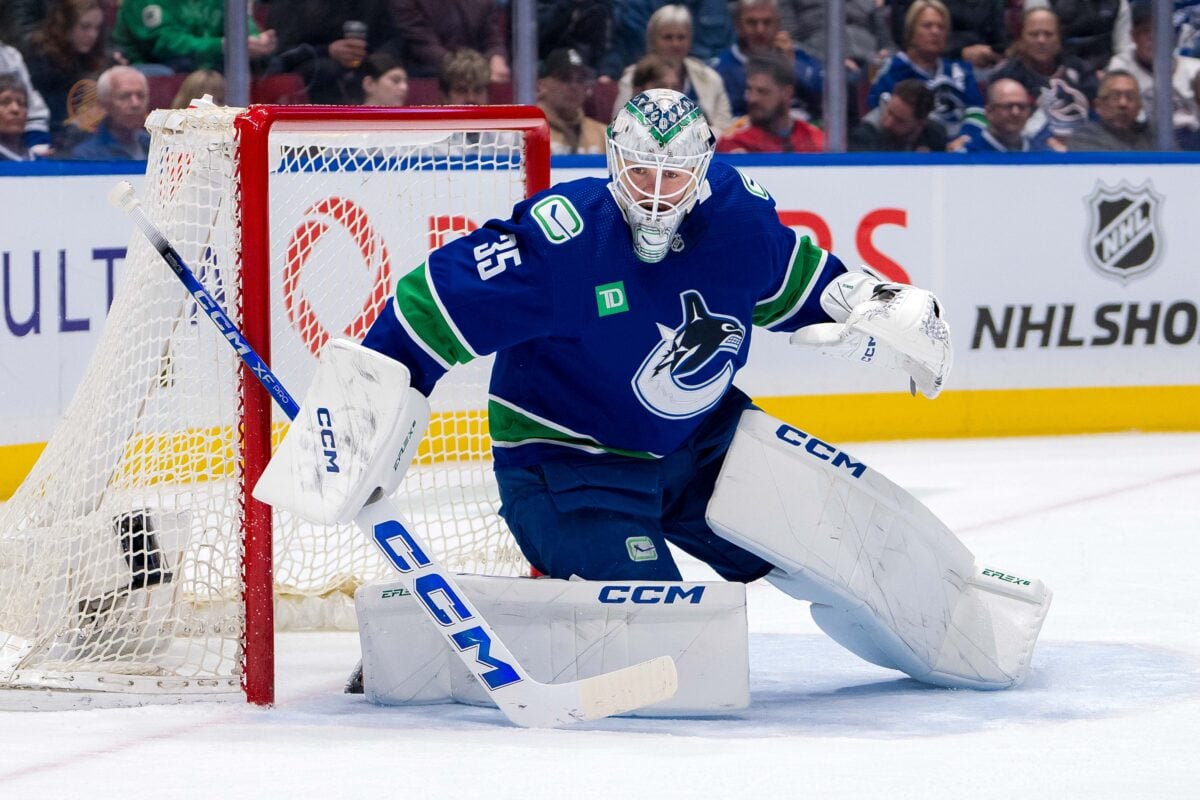
Today, two Canucks’ players were explicitly named. First, Thatcher Demko wins too many games. Second, Kiefer Sherwood competes too hard and drags people into the fight whether they’re ready or not. Dump ’em. In the tanking framework, these two players aren’t strengths — they’re obstacles to be removed so the losses become more efficient.
Related: NHL Rumours: 2 Teams & Fleury, Failed Kotkaniemi Trade, Canucks “Hybrid Rebuild”
That should bother all of us who are Canucks’ fans. Because these are exactly the players organizations usually spend years trying to find. If you teach a room that excellence is inconvenient and competitiveness is something you trade away, you don’t just lose games. You also lose your compass. Long term, that’s far more damaging than finishing 22nd instead of 29th.
Problem Three: The Habits You Embed Don’t Leave When the Season Ends
Young players don’t develop in losing cultures; at best, they survive them. There’s a difference. When losing becomes part of the plan, effort becomes negotiable. Details slip on purpose. Mistakes get rationalized away instead of corrected. Players learn, consciously or not, that results don’t really matter as long as the broader narrative stays intact.

That lesson doesn’t evaporate when the roster turns over or the draft pick arrives. Habits are stubborn things. Once you give players a rationale for not being professional every night — for not emptying the tank win or lose — you don’t just flip a switch later and get it back.
Related: Canucks News & Rumours: Kane Trade, Sasson, Hughes & Buium
Fans deserve better than that. So does the Canucks’ primary symbol. The orca on the Canucks crest was never meant to symbolize retreat or surrender. Along the Pacific coast, where I live, the orca has long been understood as a symbol of strength, intelligence, and communal responsibility. These qualities sit uneasily beside any argument for intentional weakness. An orca looking for an easier way doesn’t make sense.
And frankly, so do the players themselves, whether they realize it in the moment or not.
A Final Thought About the Canucks’ Current Season
My post isn’t an argument that tanking never works. From a particular perspective, sometimes it does. But the way it’s being discussed now — as though it’s a mark of intelligence — must be considered from the longer-term view.
Hockey teams don’t just represent draft strategies. They represent communities, histories, and values meant to endure even when the season goes sideways. Losing happens. Losing on purpose is different.
What’s been sitting with me all morning isn’t whether the Canucks can tank. It’s whether normalizing tanking is a world I want the sport to live in. Because once cheating to lose becomes just another tool, we shouldn’t be surprised when the game starts to feel far emptier than it used to.
