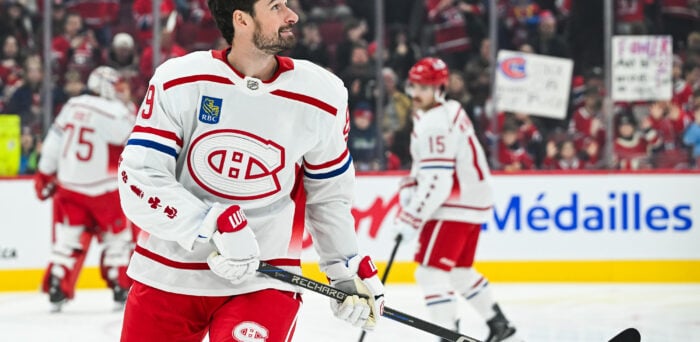
We’re a little bit over a month through the 2026-27 NHL campaign. Though that’s a small sample size, the Calder Trophy race looks a lot different than it did before this season’s action began. Who are the top five rookies so far?
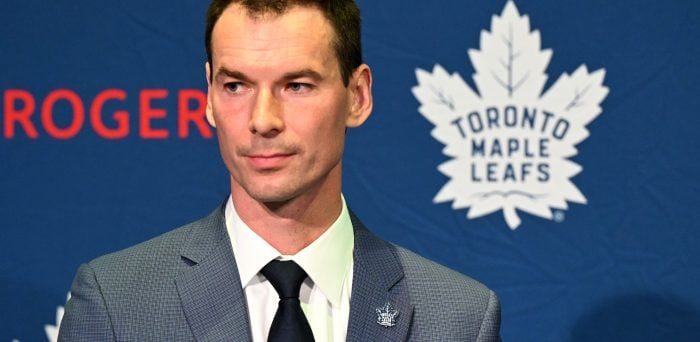
5. Gavin McKenna, F, Toronto Maple Leafs
Gavin McKenna entered the 2026-27 season as one of the major favorites for the Calder Trophy. It seems less likely through a month of the campaign, given the limited usage he’s endured: 13:44 of average ice time.
That’s not a criticism of head coach Jim Hiller, to be clear, since there are things McKenna can work on. At the same time, the 18-year-old has done everything you could have reasonably expected from him. He has recorded five goals, six assists, 29 shots, and a minus-6 rating across 16 contests.
The good news is that McKenna’s skill set has mostly translated to the NHL. He’s a terrific shooter, a high-end playmaker, and skates well. Defense hasn’t been his strong suit to this point, but that wasn’t the expectation—especially not for his teenage years. While No. 92 may not win the Calder Trophy, he’s a budding star.
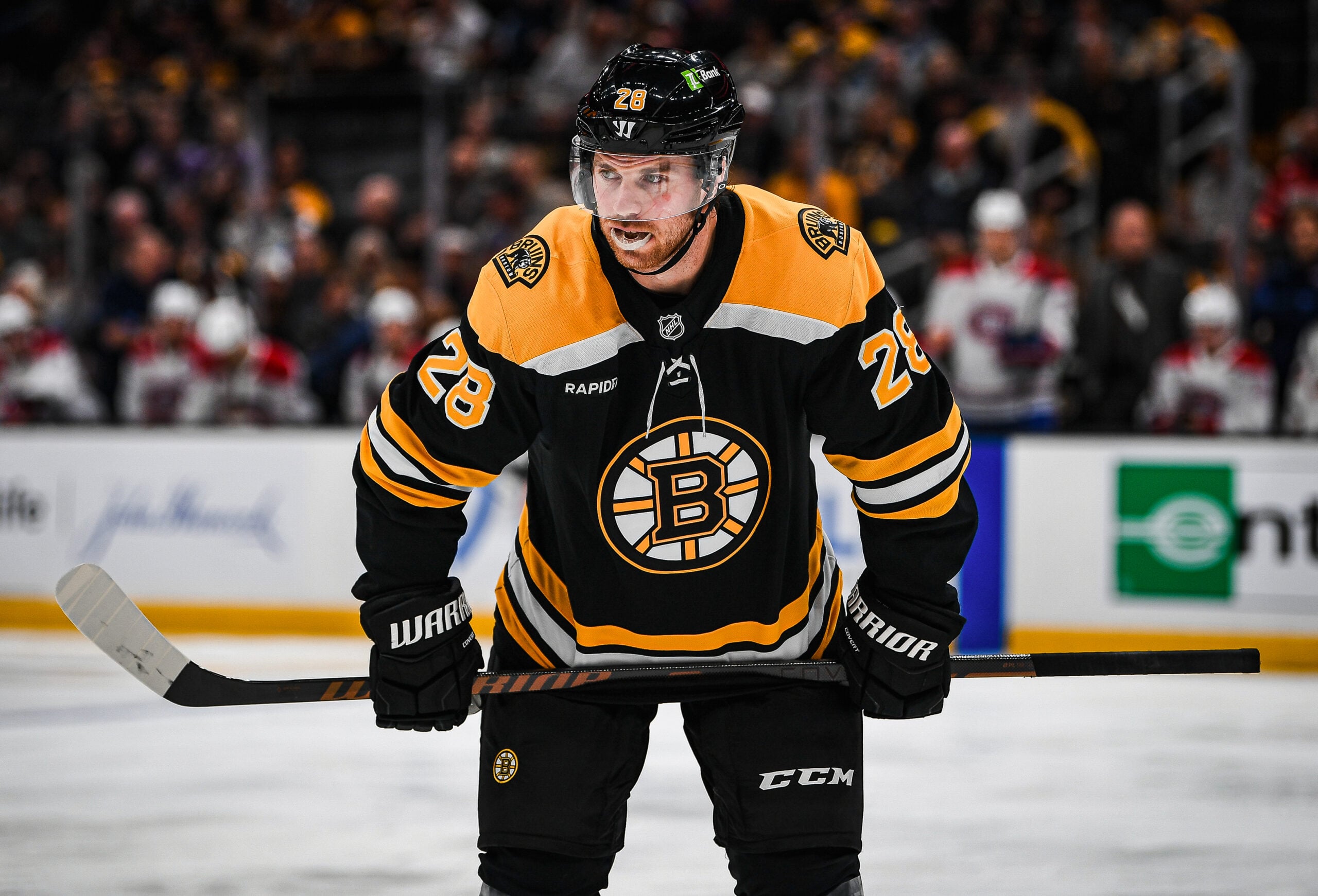
4. James Hagens, F, Boston Bruins
James Hagens has averaged a modest 13:10 of ice time, which hurts his Calder Trophy case, but he’s been a strong contributor for the Boston Bruins in their impressive start to the season. The soon-to-be 20-year-old has accumulated five goals, six assists, 27 shots, and a plus-6 rating in 15 games.
Sustainability needs to be put into question here, which is partially why Hagens isn’t higher. He’s shooting at an 18.5% clip, and at 5-on-5, he has a 1.081 PDO (sum of save and shooting percentage).
If Hagens doesn’t get a boost in his minutes, there will be regression coming, so he’s probably a long shot for the Calder Trophy. Still, his play has been encouraging thus far despite limitations. He could do a lot of damage next to David Pastrňák full-time, but the youngster may have to wait for that opportunity.
3. Michael Brandsegg-Nygård, F, Detroit Red Wings
This is where we get into the truly high-end performers, in my eyes. Michael Brandsegg-Nygård doesn’t have the same name value or point production as Hagens or McKenna, which will almost certainly hurt his Calder Trophy candidacy, but he has been a two-way menace. He has posted a 64.23% expected goal share at 5-on-5 and has respectable base stats to boot, with two goals, six assists, 28 shots, and a plus-9 rating in 14 games.
It’s a little early in the season to assume Brandsegg-Nygård is as good as he has played, though. In fact, we can almost guarantee regression, even if advanced metrics like expected goals are more predictive of future success than actual goals. No forward who recorded 500 minutes of 5-on-5 ice time last season finished with even a 61% expected goal share.
The likelihood of regression aside, Brandsegg-Nygård has dominated the opposition and put up points, even with a 7.1% shooting clip. The Detroit Red Wings may have themselves a player.
2. Cole Hutson, D, Washington Capitals
He’s no Matthew Schaefer, but Cole Hutson looks like he could end up becoming that type of player someday. He’s done everything Brandsegg-Nygård has done at 5-on-5—dominating opponents and all—with a level of flair that you don’t see very often. The Washington Capitals blueliner has been a skilled two-way force.
Hutson has four goals and as many assists with 26 shots and a plus-4 rating in 13 games. He’s averaging 19:08 per night, so he’s far from a workhorse, but the 20-year-old has been an immense bright spot in D.C. Hutson is showing the qualities of a future No. 1 defender.
It’s early, but it’s looking like Cole and Lane Hutson could be the next great brother duo in the NHL. Unlike some other brother duos, though, both of them were overlooked in their respective draft classes, going later than they should’ve.
1. Jacob Fowler, G, Montreal Canadiens
Leading the pack is Jacob Fowler, who is as much of a Vezina Trophy candidate as he is a Calder Trophy one. The 21-year-old netminder has a 7-1-0 record in eight contests with a 1.84 goals-against average and a .932 save percentage. He has taken the starter role from Jakub Dobeš, who finished fourth in Calder Trophy voting in 2025-26.
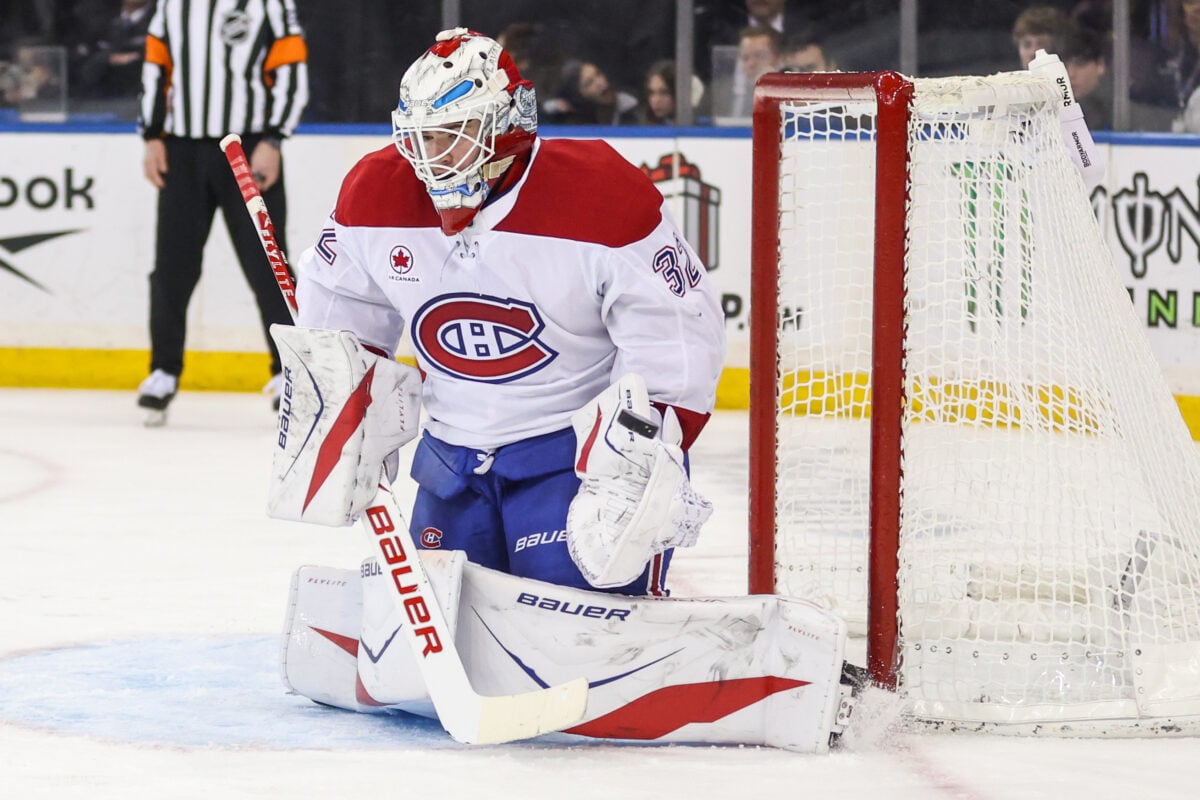
Fowler is tied for the NHL’s third-highest goals saved above expected mark, according to Hockey Stats, at 9.0. He has been effectively flawless to this point—nobody else deserves the No. 1 rookie spot. As good as Hutson has played, there is a wide gap between him and Fowler through the first month.
Given the young netminder’s success at the collegiate level and in a small sample last season, we should expect this performance to continue to some extent.
Most teams have played a little more than a dozen games so far, so these rankings should be taken with a grain of salt. However, Fowler and Hutson are having special seasons. For now, the rest seem to be competing for a finalist nod.
Stats courtesy of Natural Stat Trick (unless specified otherwise)
Free Newsletter
Get Boston Bruins coverage delivered to your inbox
In-depth analysis, breaking news, and insider takes - free.
Subscribe Free →