- Maple Leafs Player #13: Jake Muzzin
- Muzzin Was the Maple Leafs’ Best Defenseman Before Last Season
- Muzzin Intimidated Opponents, Like Dion Phaneuf Used To
- Muzzin Was Intimidating and Punishing In Front of the Net
- Although Not Fast, Muzzin Has Good Control on His Skates
- By Contrast, the 2021-22 Muzzin
- Bottom Line, Will a Healthy Offseason Re-Engage Muzzin?
In previous posts, we have done player reviews of all the Toronto Maple Leafs’ forwards who will be returning from last season’s roster. We have also now reviewed two members of the Maple Leafs defense – Morgan Rielly and TJ Brodie. In today’s post, we’ll do a player review of Jake Muzzin.
As a reminder, if you missed the first 11 posts, we’re basing these reviews on the extensive film study and note-taking of long-time Maple Leafs’ fan Stan Smith. When he reviews each game after it’s played, he notes what each player does with the puck, without the puck, where they are, and what they’re doing while not directly involved in the play, etc.
Maple Leafs Player #13: Jake Muzzin
To accurately report on what we see with Jake Muzzin, we had to break his review into two time periods. The Muzzin between January 2019 when Kyle Dubas first acquired him and the end of the 2020-21 season, and the Muzzin we saw during 2021-22.
Muzzin Was the Maple Leafs’ Best Defenseman Before Last Season
For Muzzin’s first two seasons plus 30 games into the next season, we considered him the Maple Leafs’ best all-around defenseman. In fact, it wasn’t even close. Morgan Rielly was their best offensively and Muzzin was their best defensively.
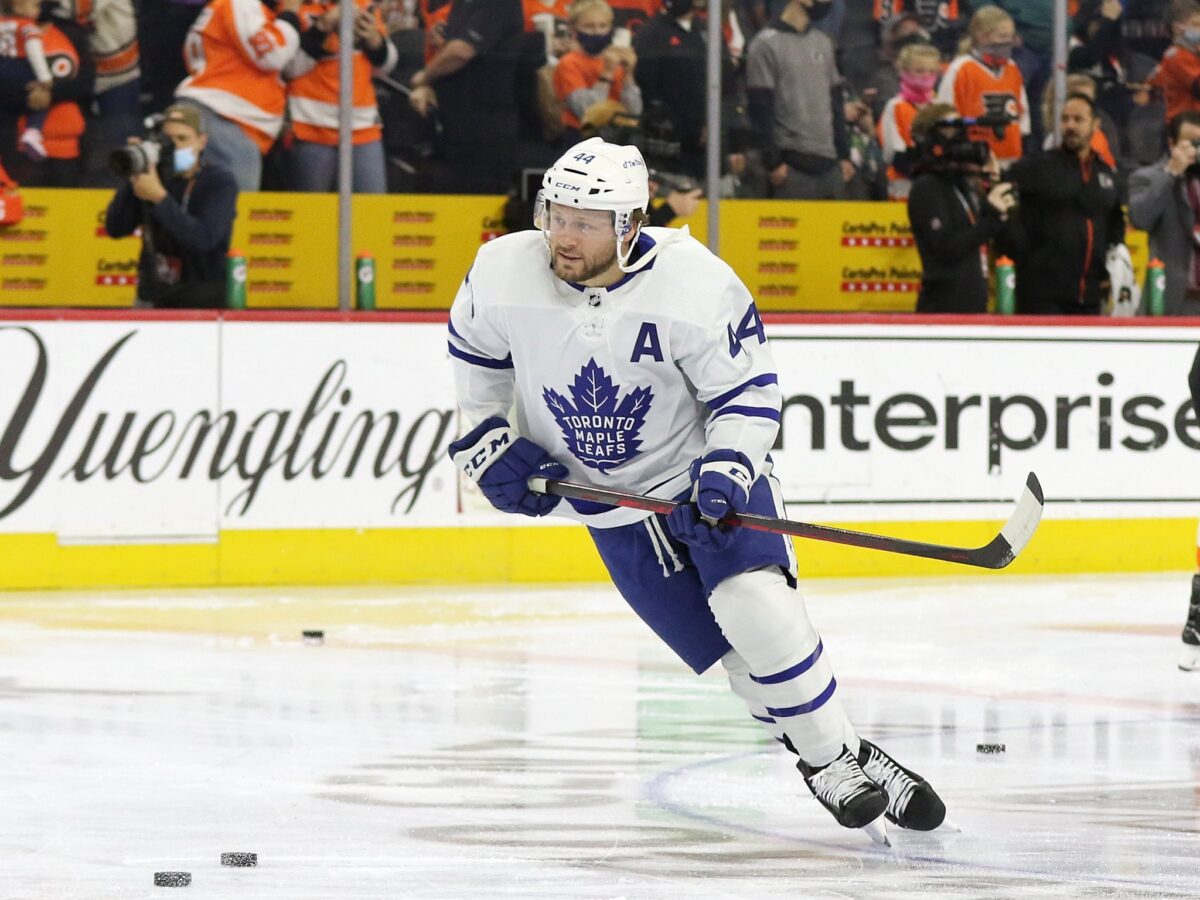
While Rielly was offensively more gifted than Muzzin, could skate faster, and could do more with the puck, Muzzin’s production (50 points from 2019 to 2021) was not that much less than Rielly’s (62 points from 2019 to 2021). But Muzzin’s solid defensive game more than made up for the gap in production.
Muzzin Intimidated Opponents, Like Dion Phaneuf Used To
While we have always felt you can break the game of hockey down in any number of ways statistically to learn different things, the game’s main goal can be summed up as the effort to impose your will over your opponents. When Muzzin is on top of his game, that’s exactly what he does. He intimidates and dominates opposing players.
When Stan started to really study the game, he noted something interesting. At that time Dion Phaneuf and Carl Gunnarson were partners on defense. Phaneuf was a polarizing player for the Maple Leafs. Fans either loved him or hated him.
Phaneuf was big at 6-foot-4 and 225 pounds. He was strong, and he loved to hit. He looked for opportunities to punish players entering the Maple Leafs’ zone on his side. On the other side of the ice, Gunnarson was a decent stay-at-home defenseman; however, he was not that physical.

In one game Stan watched, opposition players constantly dumped the puck into the Maple Leafs’ zone on Phaneuf’s side of the ice. He wondered if they were exploiting a weakness in Phaneuf’s game, so he watched videos of the game afterward. In most instances where players were dumping the puck, they were doing so and changing, not chasing the puck into the corner.
Players rarely dumped the puck and changed on Gunnarson’s side of the ice.
From that game onward, Stan would watch for that move and be amazed at the number of times players dumped the puck behind Phaneuf and changed. The only reason he could see for that was they were intimidated by Phaneuf and knew they would likely be punished if they attempted to enter the Maple Leafs’ zone on his side of the ice.
Muzzin Was Intimidating and Punishing In Front of the Net
Stan still watches for that today. There have only been two Maple Leafs’ defensemen where he’s seen opposing players doing that dump-and-change against often, Roman Polak and Jake Muzzin.
Muzzin intimidates opposing players on his side of the ice and they know to avoid him. It forces them to make two choices, give up the puck or take the punishment they know is coming.
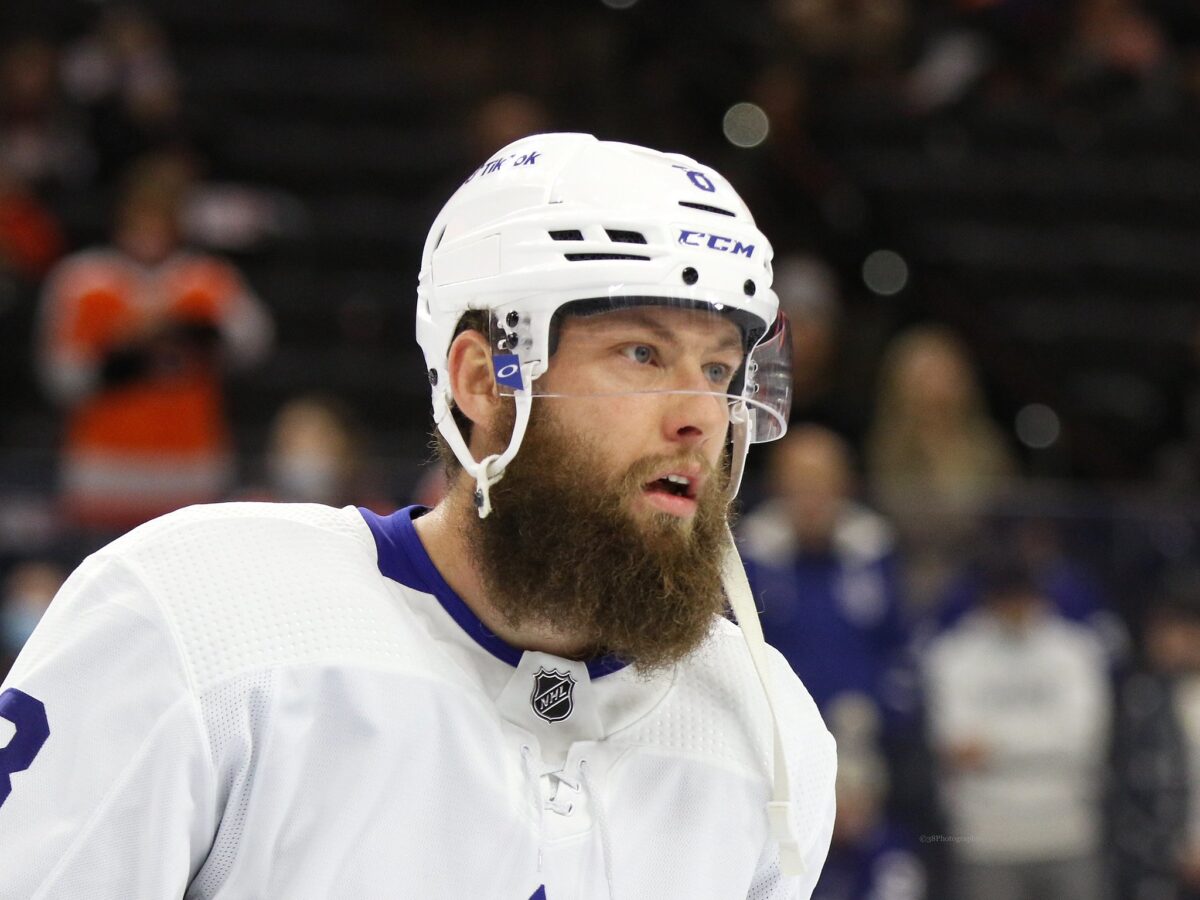
One other thing Muzzin was never shy about was punishing players in front of the net. Muzzin is, or was (more about that later) good, at giving opposing players a few crosschecks if they were in the goalie’s space. When he’s defending in front of the net, he can use his strength and physicality to move players away from in front of his goalie.
He is also an excellent shot blocker and can do so without taking himself out of the play.
Although Not Fast, Muzzin Has Good Control on His Skates
Muzzin has never been fleet of foot, but he makes up for that with good gap control. He can also go from skating backward to changing direction and stepping forward into a player. Muzzin has an uncanny knack for knowing when to pinch at the opposing blueline. He rarely gets caught when doing so.
On the downside, Muzzin does occasionally take himself out of position to throw a hit. If he fails and misses, he does not have the foot speed to recover.
By Contrast, the 2021-22 Muzzin
That was our view of Muzzin before the 2021-22 season. Last season was a terrible season for Muzzin. In the past, he was making the above plays regularly, but last season he always seemed a step behind or a step slow.
One other strength Muzzin had before last season was his ability to make sharp first passes out of his zone. In 2021-22, he appeared to have more of those passes intercepted.
As the regular season went, Muzzin seemed to lose confidence. We know his offseason training was severely curtailed due to an injury he received in the Montreal Canadiens series the season before. We have also read that he requires constant treatment for various ailments that have taken their toll on his 33-year-old body.
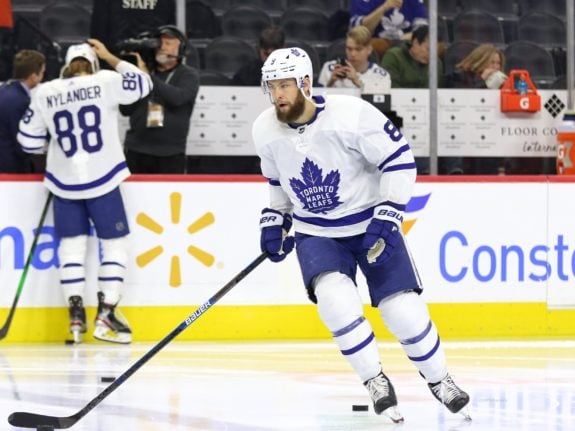
A rule “change” or a rule “refinement’ during the 2021-22 season also made one part of Muzzin’s job more difficult defensively. That was the crackdown on rule #59, crosschecking. Last season referees called that rule more strictly than they had in the past. It took away from Muzzin’s effectiveness in front of his own net.
Bottom Line, Will a Healthy Offseason Re-Engage Muzzin?
Moving forward, we wonder whether, similar to John Tavares, with a complete offseason where he’s been quite healthy and able to train harder, will we see him return to the old Muzzin. Or. will he continue to struggle?
Muzzin seemed more like his old self in the playoff series versus the Tampa Bay Lightning. Hopefully, he can build on that.
[Note: I want to thank long-time Maple Leafs’ fan Stan Smith for collaborating with me on this post. Stan’s Facebook profile can be found here.]
Free Newsletter
Get Toronto Maple Leafs coverage delivered to your inbox
In-depth analysis, breaking news, and insider takes - free.
Subscribe Free →