On the surface, the Ottawa Senators look like a team that has finally figured it out. They have won three of their last four, capped off by a clinical 4-0 dismantling of the Pittsburgh Penguins that felt like a statement game. But scratch the surface, and you find a front office that is anything but complacent.
General manager Steve Staios isn’t sitting back and admiring the view. He’s working the phones with a level of urgency that suggests he knows this current run, while impressive, is being built on a foundation that has developed some worrisome cracks.
As we approach the NHL holiday roster freeze—the annual mid-season pause where the trade market goes dormant—the Senators find themselves in a fascinating position. They are being carried by their elite talent, yet they are desperate for depth. It is a high-wire act, and management knows they are one more injury away from losing their balance.
The Heavy Lifting
You cannot talk about the Senators’ recent form without acknowledging the sheer workload being shouldered by the team’s core. If you needed proof that the “Big Three” concept is alive and well in Ottawa, this stretch has been it.
Tim Stützle recently suited up for his 400th NHL game, a milestone that allows us to step back and look at his trajectory. He has been nothing short of dominant lately, driving play and seemingly creating offense at will. When Stützle is on his game, the Senators look like a playoff team. He isn’t just collecting points; he is tilting the ice.

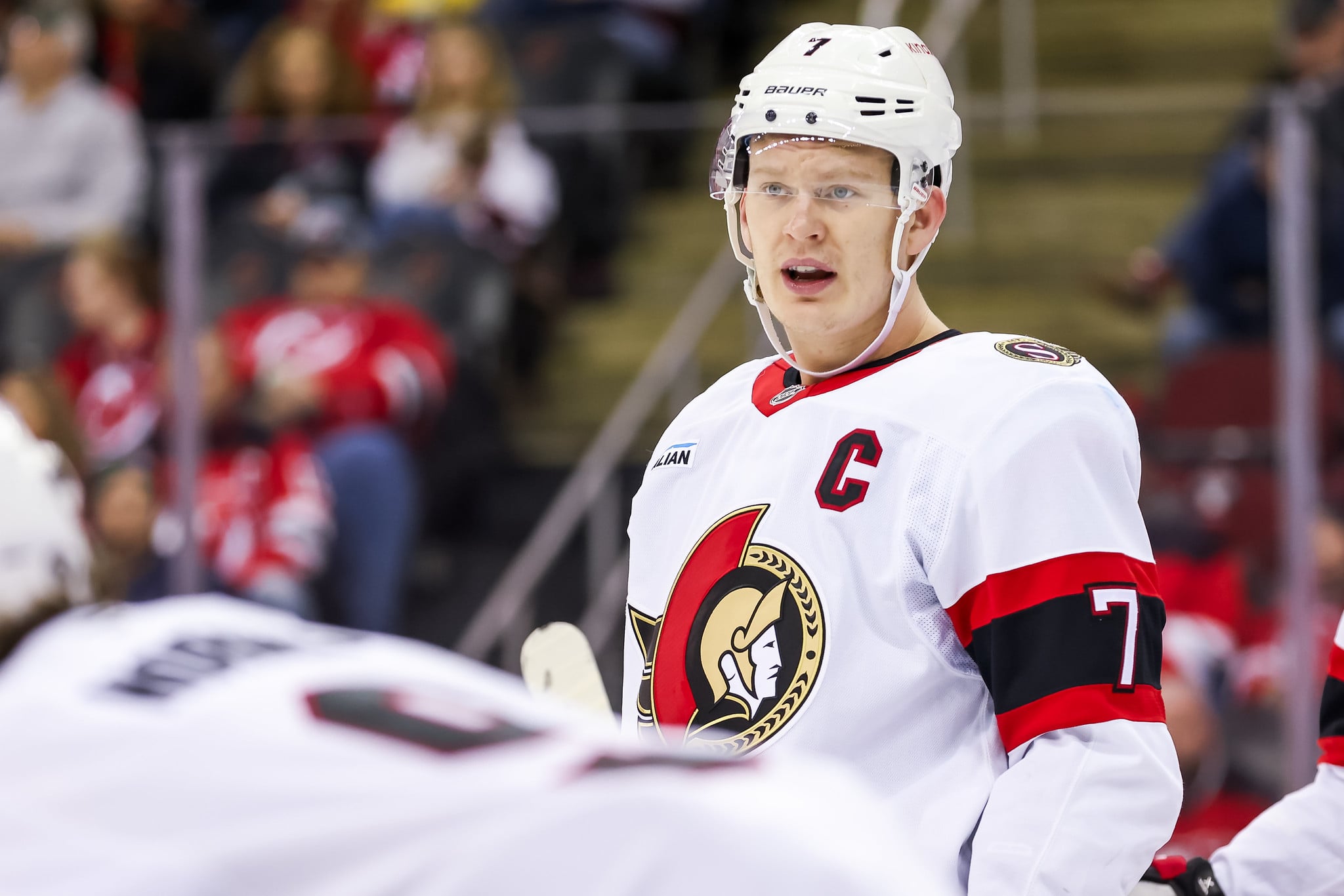
Then there is the captain. Since Brady Tkachuk returned from that nagging thumb injury, the team’s identity has shifted back into gear. We often talk about “analytics” in abstract terms, but in Tkachuk’s case, it is simple: when he is on the ice, Ottawa controls the puck and generates the bulk of the dangerous chances. The team’s five-on-five play has stabilized drastically since his return, turning them from a lottery team into a legitimate threat on any given night.
Next, of course, Jake Sanderson. With the blue line decimated by injuries, Sanderson has quietly turned into a machine. He is logging over 25 minutes a night—an absurd number in the modern NHL—and doing it almost flawlessly. He is filling the void left by veterans and playing with a poise that belies his age.
Related – NHL Rumors: Oilers Like Lyon, Maple Leafs Draw Line, & Scouring Senators
Backing them up is Linus Ullmark, who looks to have finally settled in. His shutout against Pittsburgh was exactly what this team paid for: calm, cool, and collected. When your goalie isn’t scrambling, the defense stops panicking. It’s a symbiotic relationship that is finally paying dividends.
The Injury Tax
However, you can only ask your stars to play hero ball for so long. The reality is that the Senators are bleeding depth. The injuries to Thomas Chabot, Shane Pinto, and Lars Eller have hollowed out the lineup.
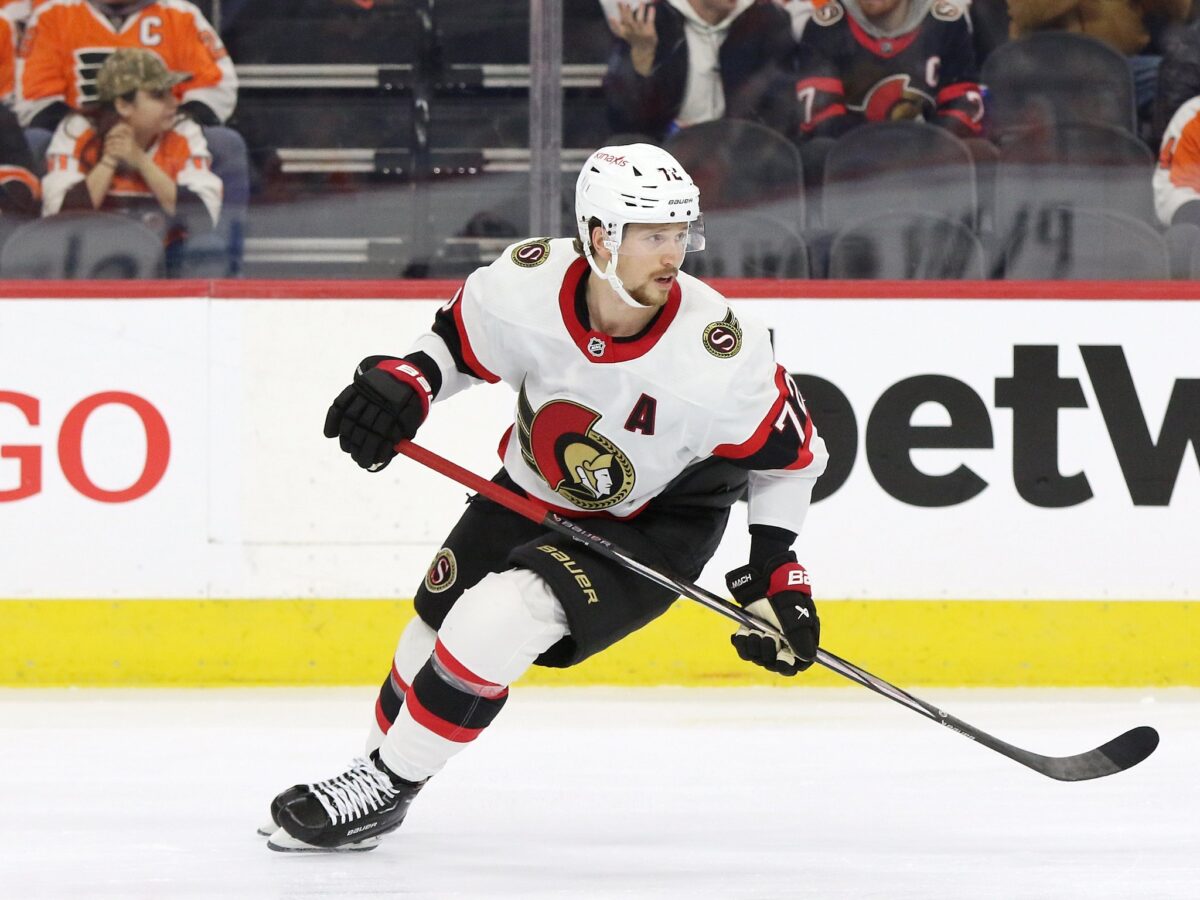
These aren’t peripheral losses. Chabot is a minute-muncher; Pinto stabilizes the middle of the ice; and Eller, acquired to bring veteran savvy, leaves a hole in the checking line that the current call-ups are struggling to fill.
The result is a lineup that is extremely top-heavy. The stars are shining, but the supporting cast is being asked to punch above their weight class, and that is rarely a recipe for sustained success in the Atlantic Division.
The Price of Poker
This brings us to the trade chatter. Staios has been aggressive, reportedly touching base with the Calgary Flames, St. Louis Blues, and Nashville Predators. The mandate is clear: find a top-nine forward and a defenseman who can step in immediately.
The name most frequently linked to Ottawa has been the Vancouver Canucks’ Kiefer Sherwood. On paper, he is the perfect fit—a gritty, two-way winger with a cap hit that doesn’t ruin the books. He brings the kind of energy that fits Tkachuk’s style of play.
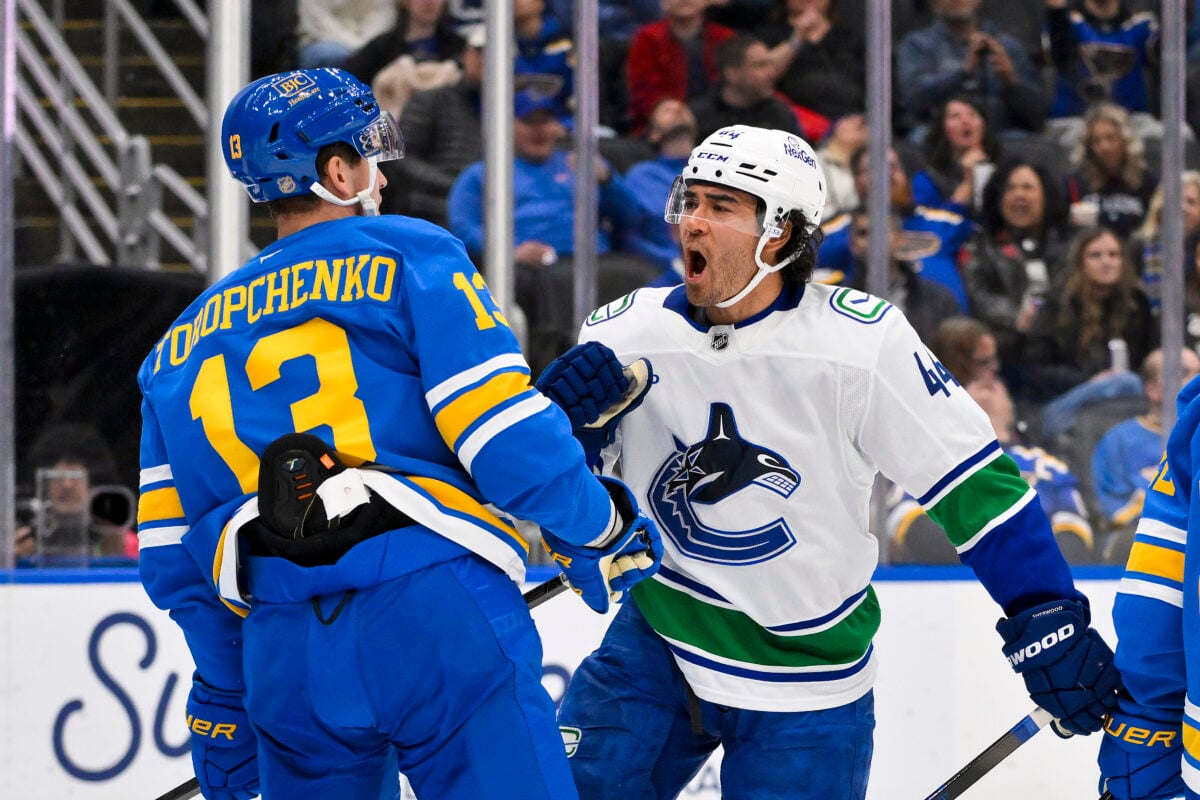
But here is the snag: the cost. Reports indicate that the Canucks are holding firm on an asking price of a first-round pick. For a player like Sherwood, as useful as he is, that is a steep price to pay. It’s the classic deadline dilemma arriving in December. Do you mortgage a significant future asset for a player who, while helpful, isn’t a superstar? Staios seems to have hit a roadblock there, unwilling to overpay just to plug a leak.
Related – Senators Prospect Report: Midseason College Check-In
Other names floating in the ether include Blake Coleman and Jonathan Marchessault. These are “championship pedigree” guys. They fit the mold of what Staios values—veterans who have won and know how to close out games. But acquiring players of that stature requires cap gymnastics and asset management that make any deal complicated.
A Difficult Calculus
The dilemma facing the front office is classic asset management. On one hand, you have a team that is finally executing the game plan, driving possession, and banking points in a ruthless Atlantic Division. On the other, you have a roster held together by tape and adrenaline. The asking prices for reinforcements—specifically the first-round premium placed on targets like Kiefer Sherwood—force a difficult calculus. Is immediate relief worth burning premium draft capital that could serve the franchise for a decade?
Stützle, Tkachuk, and Sanderson are carrying the team forward despite the conditions, but injuries to key stabilizers like Chabot and Pinto have made the Senators vulnerable. Staios is currently scrambling to secure some relief before the schedule drags them into the stormier waters of January.
AI tools were used to support the creation or distribution of this content, however, it has been carefully edited and fact-checked by a member of The Hockey Writers editorial team. For more information on our use of AI, please visit our Editorial Standards page.

Free Newsletter
Get Ottawa Senators coverage delivered to your inbox
In-depth analysis, breaking news, and insider takes - free.
Subscribe Free →