The Montreal Canadiens came a long way in 2025–26. They won the Atlantic Division, advanced to the Eastern Conference Final, and proved their young core is ready to compete. But somewhere between the regular season and their eventual playoff exit at the hands of the Carolina Hurricanes, a familiar crack resurfaced on the blue line, one that a coat of optimism cannot fully cover heading into the offseason.
According to ESPN’s Ryan Clark and Kristen Shilton, the Canadiens are entering the 2026 offseason in an enviable position, stable and competitive, but targeting improvements on the blue line. That framing feels accurate, if a touch conservative. The reality is starker: until general manager Kent Hughes adds a bona fide top-four defenceman, Montreal’s ceiling will remain lower than it needs to be.
The Guhle Problem Is Real, and It’s Recurring
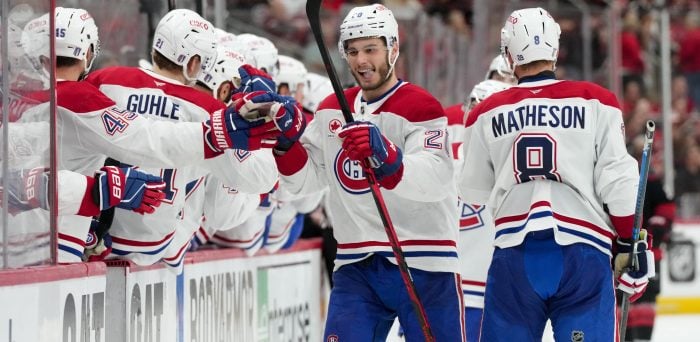
Any honest evaluation of the Canadiens’ defence has to start with Kaiden Guhle, a player capable of anchoring a second pair, but one whose durability has become a genuine concern. This past season, Guhle missed 39 games after partially tearing an abductor muscle, a timeline that ballooned when he opted for surgery, adding a full extra month to his recovery.
This was not an isolated incident. Expectations were higher for Guhle in 2025–26, but injuries once again disrupted his progression. Over two seasons now, Guhle has been sidelined for significant stretches, and each time, the Canadiens have been exposed. The issue is that Montreal’s defence is not yet built to absorb that kind of absence. When he goes down, the depth drops quickly.
As one analysis put it bluntly, the Canadiens are one injury away from having Arber Xhekaj or Jayden Struble in the top four, which is not an ideal situation for a team with legitimate playoff ambitions.
Reinbacher Is Not the Answer Yet
The counterargument often offered is that David Reinbacher, the fifth-overall pick from 2023, is just around the corner. While that may eventually be true, the timeline has been persistently pushed back by circumstances beyond anyone’s control.
Reinbacher’s 2025–26 season was disrupted once again when he broke a bone in his hand during exhibition games, delaying his American Hockey League (AHL) debut until late October, the latest chapter in a development story marked by significant setbacks, including knee surgery that wiped out most of his 2024–25 campaign.
His progress since returning has been meaningful. He finished the regular season with five goals and 24 points in 57 AHL appearances and was eventually recalled in April. That is encouraging. But building a competitive playoff structure around a prospect who has never played a full professional season is a gamble Montreal can no longer afford to take. Reinbacher is a long-term asset, not a summer solution.
The Playoffs Exposed the Gap
For all the promise the Canadiens showed this spring, the Carolina Hurricanes series laid bare exactly what the blue line still lacks: a calm, experienced, right-shot presence who can be trusted in high-leverage situations when the opponent turns up the pressure.
Multiple analysts noted that Montreal is finding out there is still a meaningful gap between being a really good playoff team and a legitimate Stanley Cup contender, and that adding another right-shot defenceman should be high on the priority list this summer.
Alexandre Carrier had an up-and-down season, struggling with defensive coverage and consistency in stretches, and while he remained serviceable, he did not consistently elevate the group. That is exactly the profile of a player who belongs on a third pair, not as a load-bearing piece of a contending defence.
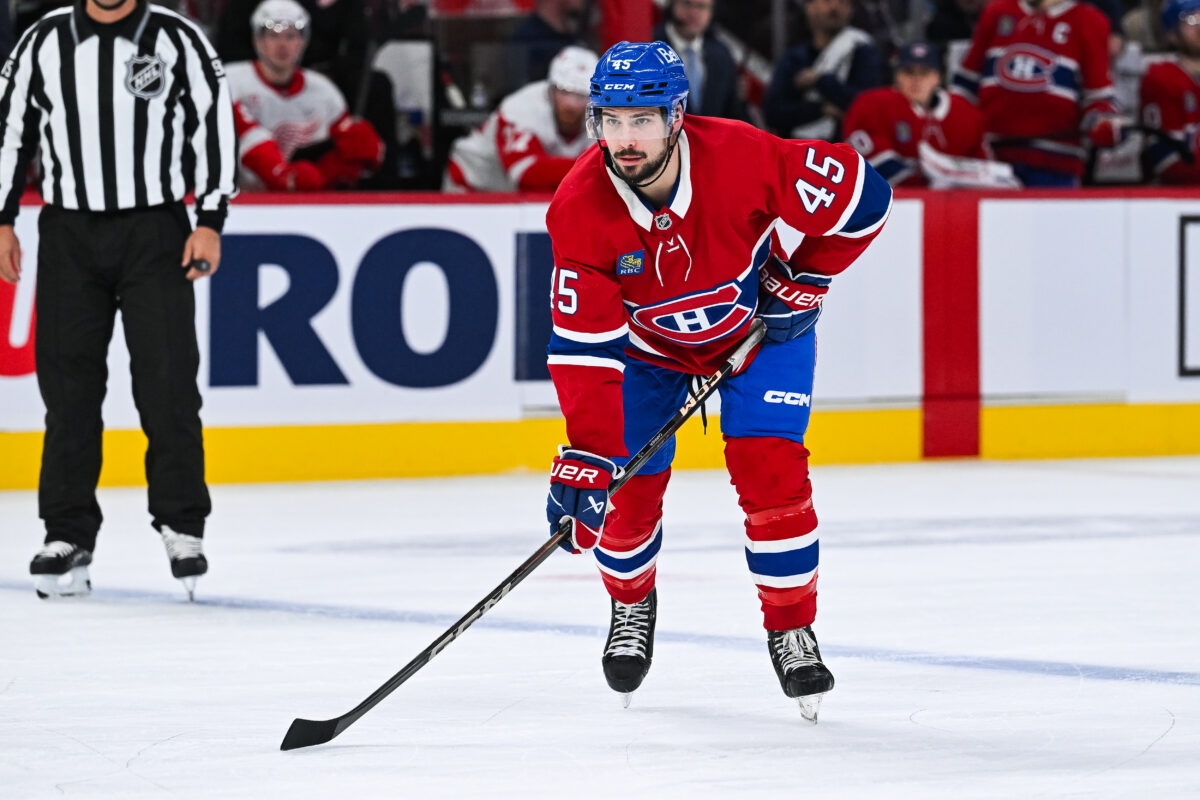
Lane Hutson is electric. Noah Dobson is everything the team hoped for when they acquired him. But the Canadiens’ young defence core was still in the bottom ten in goals-against per game the year prior, and while they have improved, the infrastructure beneath the top pair needs to be stronger.
Hughes Is Already Moving
To his credit, Hughes appears to understand this. He confirmed at his season-ending media availability in Brossard that he has already started calling other teams to assess what players may be available this offseason, unusually early action that signals real urgency.
Reports surfaced that Hughes had tried to move Patrik Laine at the trade deadline specifically to land a defenceman, a telling detail that confirms the blue line upgrade was already a priority before the season even ended. The question now is whether he can pull it off this summer, in what is expected to be a trade-heavy market.
ESPN notes that while Montreal’s defensive situation is not dire, there is room for improvement, and that adding a free agent capable of boosting the third pairing and shoring up a penalty kill that ranked in the bottom half of the league would be a logical place to start. A mid-tier signing might help at the margins, but the more meaningful move would be targeting a legitimate second-pair, right-shot defender who can hold his own in tough minutes, someone who can take pressure off Dobson and provide a real safety net when Guhle’s body fails him again.
The Window Is Opening, Don’t Miss It
This Canadiens group is genuinely exciting. Nick Suzuki, Cole Caufield, Juraj Slafkovsky, Ivan Demidov, and the entire back-end core give this franchise a foundation few teams can match. The Canadiens are more dangerous, more capable of coming back in games, and far less reliant on perfect defensive play just to stay competitive.
But windows open and close quickly in the NHL, and the gap between a team that loses in the second round and one that hoists the Cup in June is often one or two targeted additions. For Montreal, one of those additions needs to come on the blue line: a proven, reliable, top-four defenceman who can play the heavy minutes, eat up the hard matchups, and take this roster from very good to genuinely dangerous.
Hughes has already picked up the phone. The next step is making the call that matters.
Free Newsletter
Get Montreal Canadiens coverage delivered to your inbox
In-depth analysis, breaking news, and insider takes - free.
Subscribe Free →