If you were looking at the NHL standings in late October, you would have been forgiven for finally writing the obituary on the Tampa Bay Lightning.
Starting the 2025-26 campaign with a solitary win in their first seven games wasn’t just a slump; it looked like the inevitable collapse of a dynasty that had run out of gas, money, and health. The narrative was easy to construct: the salary cap had finally cannibalized the core, the veterans were too old, and the window was shut.
Fast forward a few months, and that narrative has been shredded. An 11-game winning streak hasn’t just righted the ship; it has vaulted Tampa Bay to the top of the Eastern Conference with the best goal differential in the bracket. In spite of a shootout loss to the St. Louis Blues Friday night that broke the streak, the Lightning have clearly become a team to be feared in the East.
Related – Lightning Prospect Check-In: Duke, Geekie, and O’Reilly Roll into 2026
This turnaround wasn’t a fluke, nor was it reliant on a single superstar dragging the team across the finish line. It was a calculated, multi-faceted resurgence built on goaltending, surprising defensive depth, and a front office that seems to have won its biggest gambles.
Here is how the Lightning engineered the season’s most dramatic U-turn.
The Big Cat Is Back on the Prowl
For the last year or so, there were whispers that Andrei Vasilevskiy was arguably human. Battling injury recovery and the sheer fatigue of multiple deep playoff runs, his invincibility cloak seemed to have frayed.
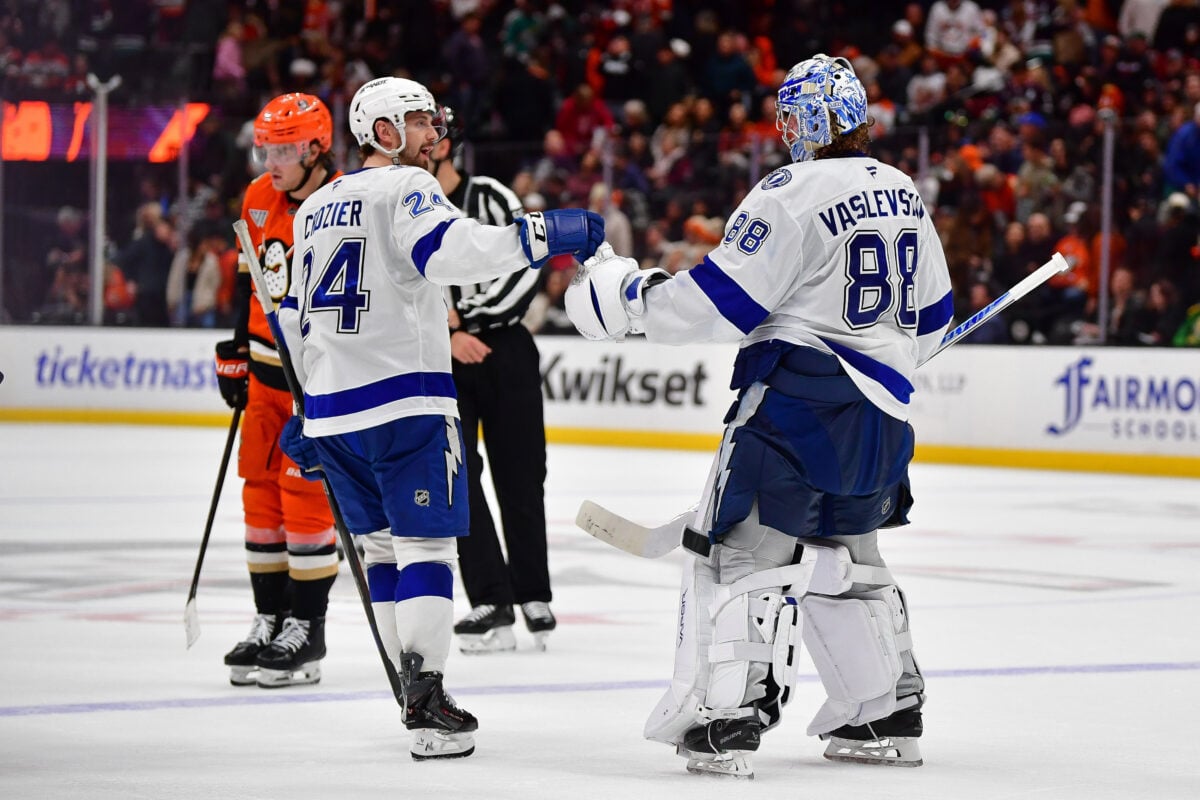
That is no longer the case.
Vasilevskiy’s return to elite form is the bedrock of this turnaround. Anchoring a defense that now ranks second in the league in goal differential, he has posted a 19-7-3 record with a 2.26 goals-against average. But the raw numbers don’t tell the whole story; it’s the timing of his saves. During the 11-game heater, Vasilevskiy was in the crease for eight of those wins, refusing to allow more than three goals in any contest since before Christmas.
When your goaltender provides that level of consistency, it allows the skaters in front of him to play with more aggression and less fear. He has stabilized the foundation, allowing the rest of the roster to find its footing.
Blue Line Breakouts Amidst the MASH Unit
Perhaps the most impressive aspect of Tampa’s resurgence is that it happened while the medical staff was working overtime. Losing veteran anchors like Victor Hedman, Erik Cernak, and Ryan McDonagh should have been a death knell for the defensive structure. Instead, it forced the Lightning to uncover a diamond in the rough.
Enter Darren Raddysh.

In late October, Raddysh was a healthy scratch, watching games from the press box. Now, he is averaging over 21 minutes a night, quarterbacking the top power-play unit, and sitting on a career-high 39 points in 39 games. This isn’t just a “next man up” success story; it is a young player taking advantage of his opportunities to become a genuine breakout.
Raddysh’s partnership with J.J. Moser has been nothing short of suffocating. In over 400 minutes of 5-on-5 ice time together, the Lightning have outscored opponents 26-4. That is a staggering differential that speaks to elite two-way efficiency. While the big names were out, this makeshift top pairing didn’t just tread water—they dominated the deep end.
Winning the Hard Minutes at 5-on-5
Historically, the Lightning have terrified opponents with a lethal power play. While the man advantage remains dangerous, this winning streak is being driven by dominance at even strength, which is a far better indicator of sustainable playoff success.
Related – NHL’s 2026 Trade Deadline Predictor: Hamilton, Panarin & More
Of the 53 goals scored during their 11-game run, 43 came at even strength. They aren’t waiting for referees to hand them the game; they are taking it.
Much of this energy comes from the newly formed “Identity Line” of Zemgus Girgensons, Yanni Gourde, and Pontus Holmberg. In modern hockey, your bottom six cannot just check; they have to cycle the puck and chip in offensively. This trio has provided the necessary “snarl,” taking on difficult defensive matchups while surging offensively. When guys like Girgensons and Gourde are hitting four-game point streaks while burying the opposition in their own zone, it creates a matchup nightmare for opposing coaches.
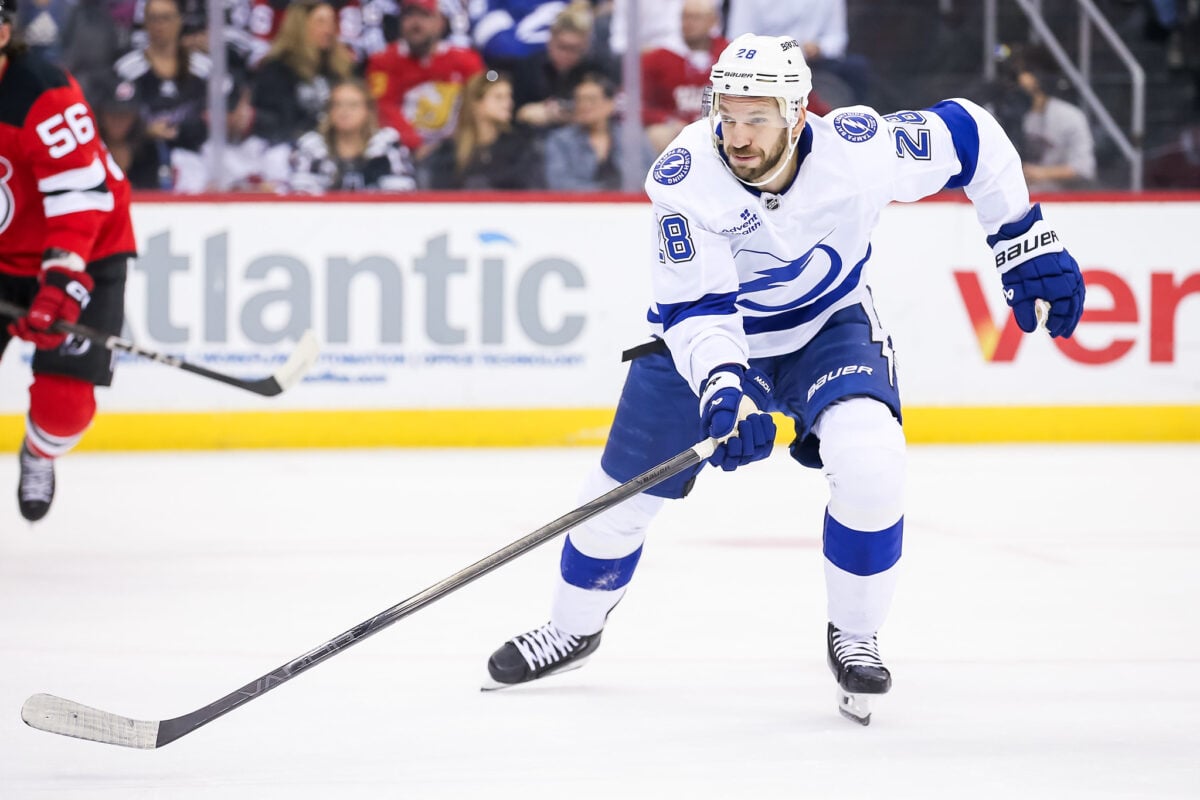
Head coach Jon Cooper cited “buy-in” as the catalyst for moving past the 1-6-0 start, and nowhere is that more evident than in the 5-on-5 metrics.
The Front Office Gamble Pays Dividends
Finally, we have to give credit where it is often most scrutinized: the general manager’s office. Julien BriseBois took immense heat for the roster restructuring over the summer, specifically the emotional decision to move on from captain Steven Stamkos and the trade of Mikhail Sergachev.
Looking at the roster now, those moves appear surgically precise.
Replacing Stamkos with Jake Guentzel has proven to be a masterstroke in terms of stylistic fit. Guentzel has been a goal-scoring machine, netting 61 in 125 games, providing the team with a different look that opponents haven’t quite solved.

Furthermore, the Sergachev trade opened the door for the depth we are seeing now. By moving that massive $8.5 million cap hit, the Bolts acquired assets like J.J. Moser and Conor Geekie. The aggregate performance of the new defensive core—specifically Moser and Raddysh—has recreated, and arguably surpassed, Sergachev’s production for a fraction of the cost. The combined cap hit of Raddysh and emerging talent Charle-Édouard D’Astous is roughly $1.75 million.
In a hard-cap world, getting premium production at bargain-bin prices is the only way to keep a championship window open. The Lightning pro scouts identified undervalued assets in players like Brandon Hagel, Nick Paul, and Holmberg, keeping the roster deep enough to withstand the early-season stumble.
The Lightning aren’t just back; they have evolved. They are younger, deeper, and perhaps most frighteningly for the rest of the East, they are hungry again.
AI tools were used to support the creation or distribution of this content, however, it has been carefully edited and fact-checked by a member of The Hockey Writers editorial team. For more information on our use of AI, please visit our Editorial Standards page.
