


The Bridgeport Islanders are counting down the games until this season is over. It’s a bad one, historically bad. As of March 31st they are 15-43-4-3 and have the worst record in the American Hockey League (AHL) by a significant margin (13 points separate them from the second-worst team in the league).
Related: Bridgeport Islanders’ Chris Terry Reached 800 AHL Points Through Consistency & Adaptability
This team only has four wins at home. There have been more months in the 2024-25 season than home victories. The Islanders average only 2.58 goals per game, and its second-worst offense is the AHL (the Manitoba Moose average 2.39 goals per game.) They allow 4.07 goals per game, which is the worst mark in the league. The Islanders are bad hockey team across the board.
It takes a lot to reach this level, even in the American Hockey League (AHL.) This is a league known for having teams struggle and put together miserable seasons, yet this one is up there as one of the worst. The Islanders are a broken team and to fix them, significant changes are needed.
This team needs a 12-step program, a program well known for those recovering from addiction but relevant for a team that needs to make some big changes. The first step is admitting there’s a problem, which, oddly enough, is a hard thing for the Islanders to do. A common sentiment heard from the coaching staff and the players on this team is “We’re better than our record indicates.” Say they were 10 wins better, they’d still be the worst team in their division and third-worst in the AHL. The bottom line is this team needs to improve across the board and 12 steps is a start.
1. A Plan in the Offensive Zone
The offense averaged only 2.25 goals per game last season, so, ironically, the Islanders improved on that side of the ice. A season ago, they had no direction in the offensive zone and their best hope was flinging the puck on the net from the point and hoping for the best. That was when they still had Ruslan Iskhakov, who was the best playmaker and scorer in the forward unit. He left in the offseason, and a team without direction offensively was sure to get worse.
The Islanders brought in Chris Terry to fill the Iskhakov void, and he did. Terry has 19 goals and 43 assists, proving he can be a great player regardless of who he’s playing alongside. The problem is that Terry was the only upgrade, and he leads a great line but the Islanders have been a one-line team for the majority of the season.
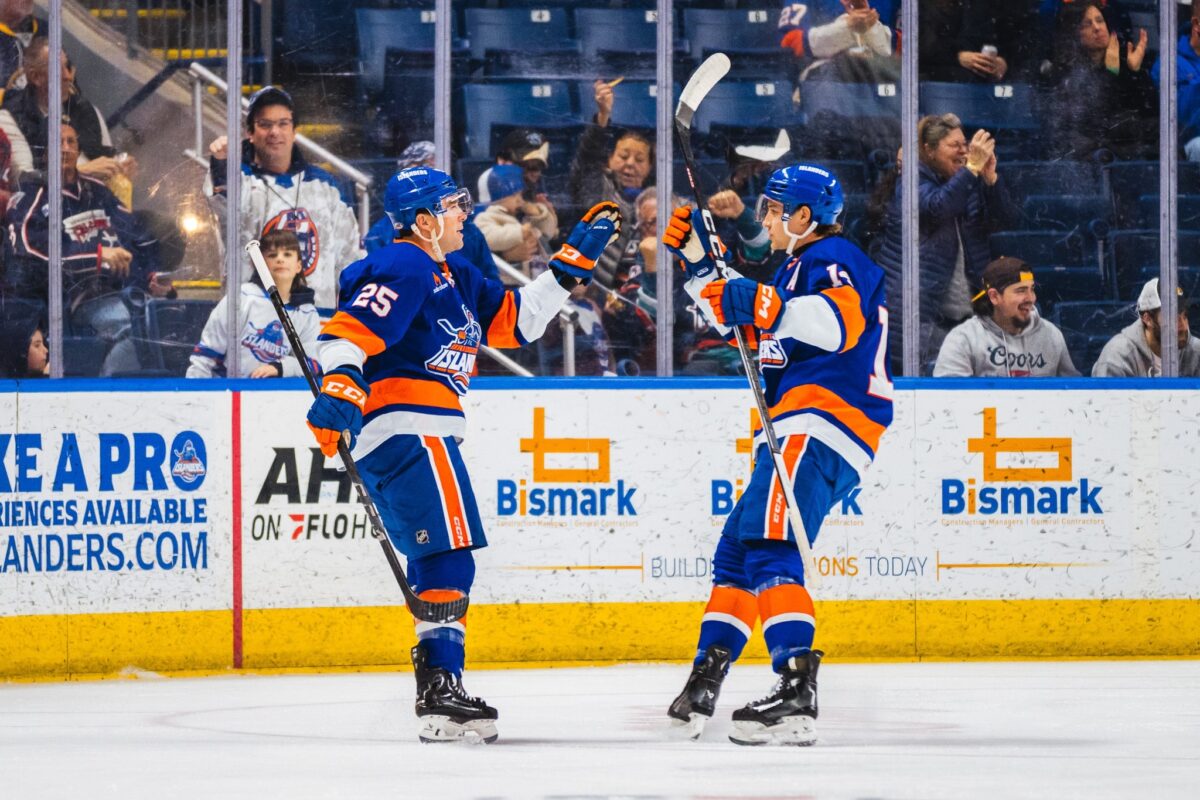
When the Islanders control the puck in the offensive zone, the same problems from last season linger. There’s no puck movement, no plan to score— aside from shooting the puck on the net and getting the rebound — and they hope for the best. This is a team that doesn’t have a plan or at least something they can turn to when they establish an offensive-zone presence, and they need one, especially since Terry can only do so much.
It starts with how the Islanders enter the puck into the offensive zone. This is a team that loves the chip and chase. They send the puck deep into the offensive zone and look for the forecheck to create a turnover and a quick scoring chance. This makes sense when the lineup has a lot of physical forwards who can’t score. That said, the Islanders need to set up the offense, and it starts with a strong offensive-zone presence and the ability to carry the puck into the zone.
2. A Good Forecheck
If there’s one thing the Islanders do well, one thing they can hang their hat (with that ugly fisherman logo) on, it’s the forecheck. They get the puck into the offensive zone and dare the opponent to go the full length of the ice to score. It’s why some teams, especially early on in the season, struggled against Bridgeport.
There are two issues with how the Islanders forecheck. The first is that it’s done in layers. One forward will get down the ice while the other will be behind by a few feet. This gives the opposition room to work with when a forecheck is supposed to be suffocating. The other issue is that these teams know it’s coming, especially after playing a full game or a few games against the Islanders. Once they handle that first forward, they can easily move the puck up the ice, and they do.
Since it’s one of the Islanders few strengths, they shouldn’t abandon it; rather, they must build on it. The forecheck needs more structure where they can pin the opponent in the corner or close in on them with two skaters coming at the same time. The Islanders need it to become a team that forces turnovers with a plan to set up the offense.
3. A Better Backcheck
Then, there’s the other issue with the forecheck: It only works when there’s a good backcheck in place. When teams skate past the forwards, notably that first wave, it’s easy from that point onward. The Islanders allow the other team to navigate their forecheck and suddenly have a breakaway or an odd-man rush to find the back of the net.
The best teams in the AHL forecheck, but they also backcheck well. They create turnovers by chasing down opponents and picking up the puck to immediately set up the offense. The Islanders don’t do this and it’s why the forecheck only takes them so far. They don’t chase down opposing skaters with the puck and as a result, they end up chasing the game, often by trailing 2-0 or 3-1 after the first period.
4. Defensive Zone Discipline
One of the warning signs of a poorly-coached team is the inability to protect the middle of the ice. When the other team has plenty of open looks from the slot and near the net, it shows that a team isn’t coached to defend and it’s something that must be addressed with a change behind the bench. Lane Lambert’s tenure with the New York Islanders was a short one mainly for this reason as his teams didn’t protect the middle of the ice and allowed shots on the net at will.
The Bridgeport Islanders have been a mess on defense all season, and it hasn’t done their goaltending any favors. This team must defend with discipline and, more importantly, have the entire team buy in on the defensive end. Some of the defensemen block shots but they allow opponents to get to the dirty areas and score with ease. The forwards must step up defensively along with the defensemen and the chain reaction will have the team limiting shots that find the back of the net.
This isn’t a team that must win with defense. They aren’t built to win low-scoring games where they blank the other team 1-0 or win 2-1. The Islanders just need to make games closer, where instead of allowing four goals or more, they allow three or fewer goals to give themselves a chance. Limiting shots on the net and playing with structure is a step in the right direction.
5. Puck Movement From the Defensive Zone
Jerry Remy had his famous “Here comes a pizza” line in a 2007 baseball game. It’s a line that has somehow gone hand in hand with the Islanders’ puck-handling abilities in their zone. For those who aren’t familiar with the lingo and are wondering what a pizza is in hockey, it’s when one team gives up the puck in their zone to the other team for an instant scoring chance the other way, notably on an outlet pass.
The Islanders have had too many “pizzas” to count this season. Some of them came from difficult passes that didn’t make it to the blue line. Others were great plays by the opposition, plays where they read the Islanders and intercepted the pass. Then there are the comical ones (my favorite wasn’t by a defenseman but came in the 4-2 Feb. 22 loss to the Utica Comets courtesy of Henrik Tikkanen).
The problem isn’t that this team commits these sloppy turnovers. It’s how the Islanders are moving the puck up the ice. The defense doesn’t handle the puck effectively, and when they pass it, they do a poor job. It’s one of the reasons the Islanders are often pinned in their own end most nights, as they can create turnovers but do nothing with them and instead cough the puck back up to the other team.
The question is how the Islanders fix this. The easy answer is to bring in puck-handling defensemen. They have one in Isaiah George, yet they’ll need another one, considering George will likely be called up to the NHL at some point. Even if the Islanders add another two-way defenseman, they still must change their strategy. Last season, the defensemen shot the puck on the net from the point and hoped for the best. This season, they clear the puck to the blue line and home for the best, and the next area of improvement is carrying the puck into the offensive zone. That’s a plan that doesn’t require hope attached to it.
6. Goaltending Stability
If there’s one issue that stood out throughout the season, it’s goaltending. The unit started the season with a Jakub Skarek and Marcus Hogberg duo. The two struggled as they split starts with both goaltenders failing to put up a save percentage (SV%) above .900. When both of them were called up to the NHL (a response to Semyon Varlamov’s injury), the goaltending went from bad to worse.
Tikkanen was expected to be the next great goaltender for the Islanders after showing flashes last season in the AHL. This season is when the rest of the league caught up to him. He still has time to become a reliable goaltender, but he must prove he’s more than just a 6-foot-8 scarecrow in the net, someone teams can fling the puck at and assume it will go in if it doesn’t hit him.
The issue is that there’s no easy fix to poor play in the net. The best hope is for the Islanders to bring in a veteran who can split starts, but as Hogberg proved this season, it’s a shot in the dark. Hunter Miska and Tristan Lennox both proved they are far from AHL caliber and must develop in the ECHL before joining the Islanders, and it’s why the best option is to find a veteran with NHL experience to rotate starts with Skarek and Tikkanen.
7. A New Face Behind the Bench
All the issues listed above circle back and are a reflection of the coaching staff behind the bench. The Islanders are a poorly-coached team. There’s no other way to put it. Sure, there’s only so much Rick Kowalsky could have done to improve a team that doesn’t have a lot of talent, but the Islanders need a coach who will improve things and show progress.
Kowalsky was hired in the 2023 offseason, and the Islanders were expected to take a step forward after winning only 25 games in his first season with the team. They instead took a step back, a big step back. The Islanders are wrapping up a historically bad season, and the blame, at least some of it, falls on the coach.
Patrick Roy, who coaches the NHL team, might bring in his guy or have a say in who is hired. He was hired in the middle of the 2023-24 season, and if he’s around in the long term, he’ll want an AHL team that is well coached and he could bring in someone from his amateur coaching days or his playing days.
The bottom line is this team needs a change and someone who can instill an identity. Kowalsky still has time to be a great coach in the AHL but when the Islanders are playing like this, a new voice is needed to lead them. There’s nothing the team is good at, and they need someone who can at the very least allow the Islanders to hone in on something specific to be a competitive team.
8. Jefferies & Maggio Resurgence
William Dufour, Alex Jefferies, and Matthew Maggio entered the season as the top prospects in the Islanders’ system. The trio was expected to not only carry the offense but also prove they could join the NHL roster at some point. The three skaters have 26 goals this season while adding only 36 assists to the offense. Terry, with 62 points, has the same number of points as the Islanders’ top three forward prospects combined.
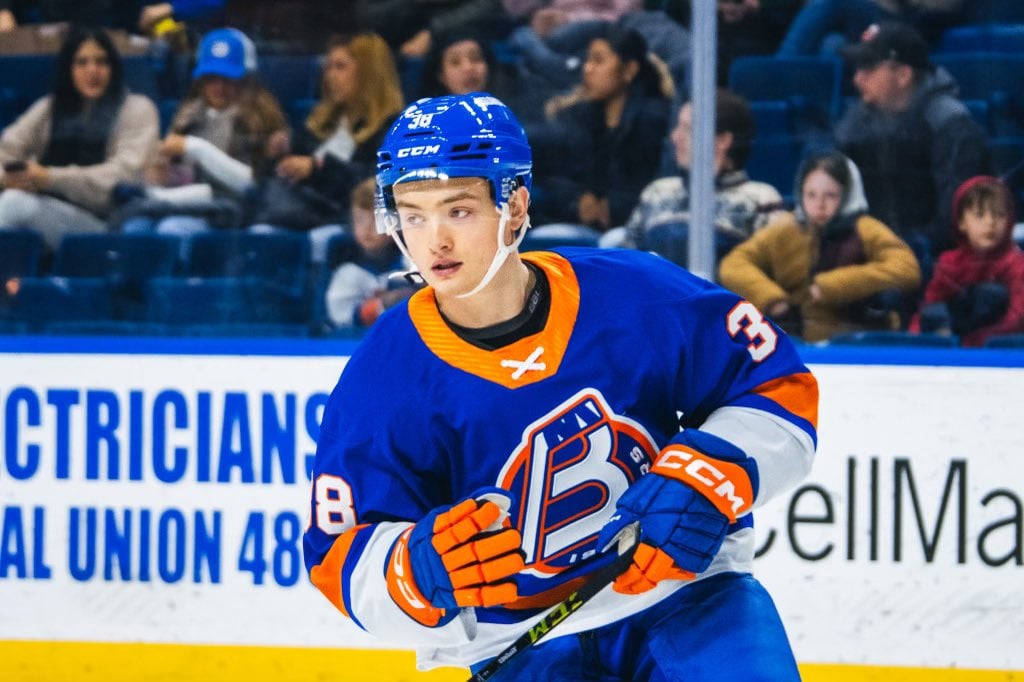
Dufour particularly fell off in his third season with the Islanders. He scored only eight goals and moved into a bottom-six role. Trading him to the Colorado Avalanche as part of the Brock Nelson trade was an easy decision as he ran his course with the Islanders, and there was no path for him.
Jefferies and Maggio remain on the roster and will be key parts of the forward unit next season. They both must rebound and find that skill that made them talented prospects. Maggio had his hot streaks but must find consistency, and for Jefferies, it’s about creating space to operate. If both skaters play better, everyone around them will as well, and the offense won’t look as hapless as it has this season.
9. A Plan for the “Next Wave” of Prospects
There is some good news for the Islanders. There are a handful of prospects on the way. Ideally, Calum Ritchie, Cole Eiserman, Kamil Bednarik, and even Danny Nelson are ready for the NHL. It’s possible one of them will be by next season, but it’s more likely all four will start in the AHL.
The catch for the Islanders is they must make sure they don’t waste the prospect talent that’s on the way, something they did with the Dufour and Maggio wave. Those two skaters never improved in the AHL and instead, the league humbled them and stagnated their careers. The Islanders have to make sure their prospects keep developing and working on their primary skill sets but also adapt to a league that is bigger, physical, and focused on defense.
That’s why the Islanders must have a system in place to help out their younger skaters while also adding players to the roster who can get the most out of them. Eiserman and Bednarik have a strong chemistry as teammates at Boston University and will likely play on the same line if both are in the AHL but Ritchie will need wingers who can take his game to the next level as well. Finding the right head coach to optimize their skills is one thing but the team needs more talent as well, leading to the next issue.
10. Veteran Scoring
The bright spot all season was Terry, who has been the definition of a great player on a terrible team. He was the Islanders best all-around player, and along with making the other skaters on his line better, he added a veteran presence to the lineup. He is a mentor for a team that needed one. The problem is there hasn’t been much of that presence outside of Terry, who at 37 years old, doesn’t have many more seasons left in him (and might play next season elsewhere if he hopes to win a title before retiring).
The Islanders must add another veteran who can help out the younger skaters while also adding a spark to the offense. By doing so, they’ll accomplish two things. It will improve the offense and add scoring depth to a group that is a one-line team this season. It also adds another mentoring presence for the next wave of prospects who will learn about the differences between the amateur and AHL game next season.
11. Finding Strengths & Building Off Them
Assuming there’s an overhaul and the Islanders look different next season, there should be a few things to build off of. They will either be a fast team that can win with offense or a disciplined team that protects the goaltender and wins low-scoring games. The talent will indicate which direction the team goes in but the key is to create an identity and build off of it.
This is another aspect that falls on the head coach, and it’s under the same theme of finding a style that gets the most out of the roster. Steve Konowalchuk was hired this offseason by the Springfield Thunderbirds, a team that’s had plenty of highs and lows in his first season behind the bench. However, his team plays fast and it’s allowed the prospects to take that next step. The Islanders don’t need to play a fast pace, and on the contrary, they should look to play a balanced style of hockey. However, if the roster is proving they can win a certain way, it’s up to the coach to lean into that.
12. Complete Buy-In to Win
Disastrous seasons like this one start at the top. Historically-bad teams will lack talent and might be poorly coached. They also have an ownership group or a front office that has neglected the team for years and created a mess on the ice. This season was years in the making for the Islanders, with years of poor management leaving them a mess. It’s frustrating for a fanbase that continues to support the team regardless (the attendance isn’t a sellout crowd every night, but still respectable for a terrible team).
It’s hard to say the Islanders’ ownership doesn’t care about the team. Likewise, the general manager (GM) of the NHL team, Lou Lamoriello, has a mixed bag history with the AHL, and it’s rubbed off on his son, Chris, who is the AHL team’s GM. Lamoriello was the New Jersey Devils GM when he built up the Albany River Rats into a Calder Cup winner in 1995 with multiple prospects who would go on to be key parts of the NHL roster that won multiple Stanley Cup titles. Likewise, he protects his players and thinks of them first and foremost.
Terry, who has played on multiple AHL teams in his career, noted “The facilities here are great, they treat you really well,” and Adam Beckman, who was acquired halfway through the season, echoed the same sentiment. “The facilities are unbelievable, right up there with the NHL,” and it’s a reflection of how Lamoriello thinks and his priorities.
Lamoriello cares about the players and is known for having a great relationship with them but there are downsides to how he operates as well. While he cares about the players, specifically, those who can either join the NHL roster or be a part of a trade to add NHL talent, he doesn’t care about the AHL team or building a winning culture in Bridgeport, which explains back-to-back last-place finishes. It’s why the coaching staff, the AHL team, the winning culture, and everything else are ignored. It’s also why Lamoriello has a reputation for running AHL teams into the ground with teams in Albany, Binghamton, and Lowell being relocated or folding. The Islanders are spending on the players but cutting corners elsewhere and it’s reflected in their play.
Whether Lamoriello and his son return is anyone’s guess. The NHL team is also having a rough season where they might miss the playoffs and it could be what forces the ownership group to make a change. However, whoever runs this team next season must change the culture. In the AHL, that’s how a team becomes a contender. The Hershey Bears are the standard as reigning Calder Cup champions who have brought 13 titles to “Chocolatetown,” but the history of this league has shown that teams willing to spend and make an impact across the board will be rewarded. It’s what the Islanders must focus on as they wrap up a forgettable 2024-25 and look ahead to 2025-26.

