Yesterday, I wrote a column about the idea that Connor McDavid might be growing frustrated with consistently coming so close to winning it all without actually achieving the ultimate goal, which could potentially lead to a departure from Edmonton. I had some fun with the chatter floating around Leafs Nation, where Toronto fans seem steadfast in their belief that McDavid is coming. The post discussed McDavid joining the Toronto Maple Leafs and what a potential trade might look like, should the Oilers decide to maximize their return instead of letting the best player in the world leave for nothing.
Today, I’ll focus on what I believe to be the more likely scenario: McDavid re-signs with the Oilers.
Speculation about his future with the Edmonton Oilers continues to swirl. With McDavid eligible to sign a contract extension as early as July 1—and no deal imminent based on his comments from the team’s end-of-season media availability—there’s understandable anxiety among fans. But according to Elliotte Friedman’s latest 32 Thoughts column, there’s no need to panic if it doesn’t get done immediately. In fact, it might be better for both McDavid and the Oilers if the captain signs a shorter-term extension rather than a long-term commitment.
It seems like the obvious win would be to lock in McDavid long-term. Financially, that’s probably true as the salary cap continues to rise. However, if the priority is winning and being a team that never stops making moves to ice the best roster possible, a short-term deal could be the key to keeping both sides sharp, motivated, and on the same page.
The Case for Short-Term with McDavid
McDavid, who turns 29 in January, is arguably in the prime of his career. He’s already shown loyalty to the Oilers, taking less than the maximum salary during his last extension to give the team more cap flexibility. And there’s a chance he does so again with no indication he’s eager to leave Edmonton. He’s repeatedly spoken about his “unfinished business” after back-to-back trips to the Stanley Cup Final fell just short.
But that doesn’t mean he’s leaving. Nor does it mean he’s guaranteed to stay long-term without conditions.
Related: What Would a McDavid to the Maple Leafs Trade Look Like?
A short-term extension—two or three years—would give McDavid the ability to reassess the organization’s trajectory every few seasons. It would also send a clear message to the front office: complacency is not acceptable.
The Oilers have made massive strides, reaching the Stanley Cup Final in the past two seasons. This year, they ran through Los Angeles, Vegas, and Dallas before hitting a wall against the Florida Panthers. What the Final showed was that even with a deeper team, a strong transition game, and two of the best players in the world in McDavid and Leon Draisaitl, there are no guarantees, and some teams are just better and deeper.
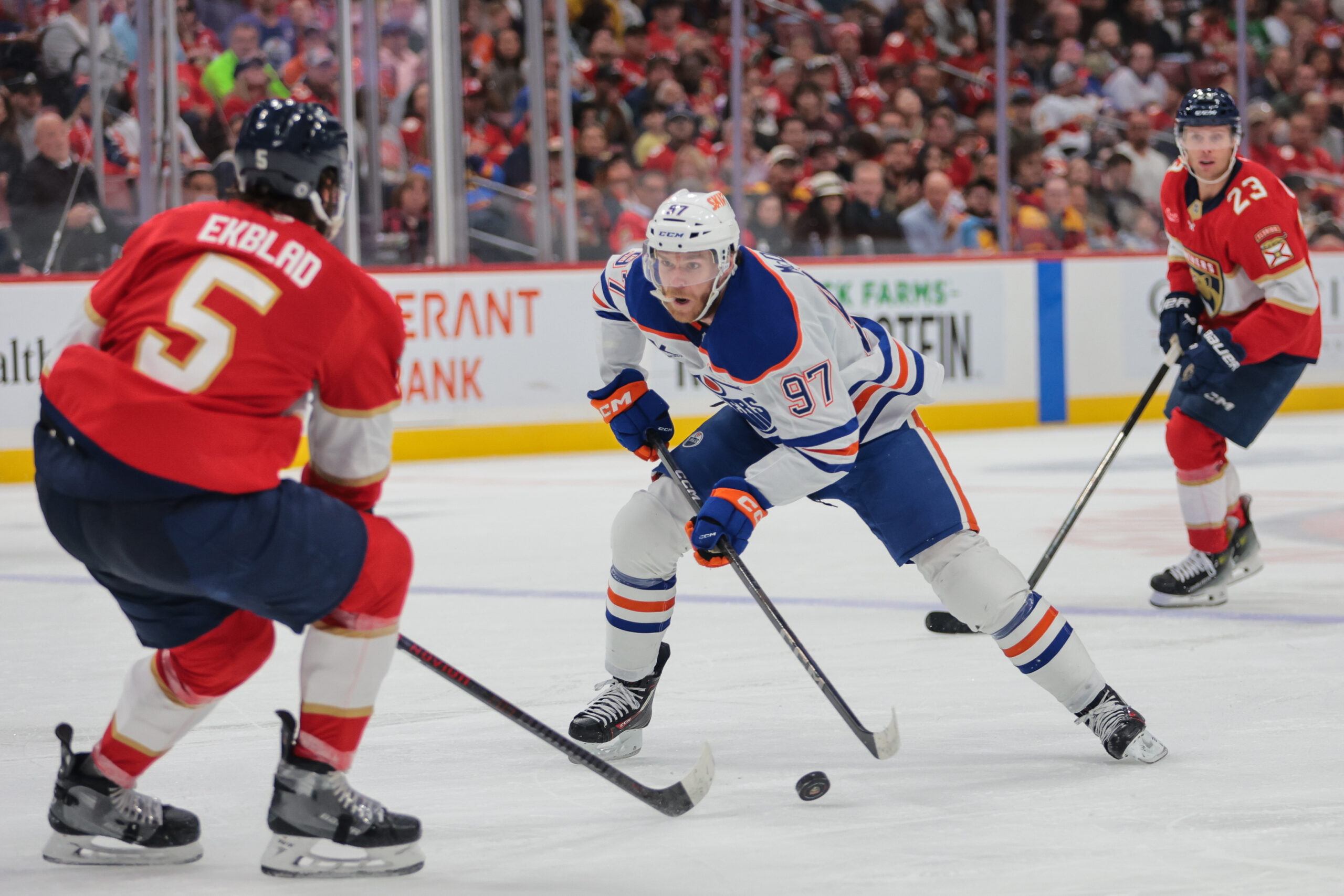
McDavid’s comment after the Final loss—“fu–ing trying the same thing over and over again, just banging our heads against the wall”—was the first sign that the Oilers’ captain was frustrated. When he said that if he feels the team can win over and over again, he sees no issues signing, that was the second warning.
This wasn’t just frustration; it was a challenge to the organization. If he’s signing a short-term deal, McDavid seems ready to sacrifice stability and term, putting his money where his mouth is. Remember, should an injury or some other unfortunate situation occur, there is a risk in this for McDavid.
McDavid Should Hold the Oilers Accountable
The Oilers are a solid team. You don’t get to the Final twice if you aren’t. But, there were signs this summer that Edmonton signed some players just because they could. Jeff Skinner and Viktor Arvidsson were added to try and find a winger for Leon, but both were smaller, skilled players whose production is/was declining. One could argue that Edmonton got carried away because players suddenly wanted to jump on the Oilers’ playoff bandwagon. Those signings cost them Dylan Holloway and Philip Broberg (lost to offer sheets). And, if rumors that the Oilers are shopping Arvidsson are true, Edmonton could have nothing left to show for it.
McDavid likely watched the decisions made by his old agent and the management team and didn’t like what he saw. Perhaps it’s time he used his incredible leverage as a powerful tool of accountability. Force the Oilers to really think about the decisions they’re making, ensuring they improve while also not sacrificing the future. If the Oilers know that McDavid is constantly evaluating their moves, they’ll make sure to limit the negative fallout.
This Is a Strategic Commitment by McDavid, Not a Divorce
McDavid’s agent, Judd Moldaver, also represents Auston Matthews, who signed a four-year deal with the Toronto Maple Leafs instead of a long-term max. A shorter-term deal for a superstar is not new territory, and there’s no reason McDavid can’t do the same in Edmonton, especially now that the salary cap is rising.
With Draisaitl set at $14 million on his new deal and Evan Bouchard potentially commanding an eight-figure salary of his own, the Oilers are about to make some critical decisions. McDavid’s shorter-term commitment could help ensure smart, focused roster-building without allowing bad habits to creep in.
It’s important to note that this wouldn’t be a signal of an exit. Yes, it gives McDavid somewhat of an out, but let’s be real, if he wanted to leave, all he would have to do is say so. The Oilers could trade him without issue for a massive return. Instead, McDavid might want management to know that there is a price for being lazy and not considering the consequences of key roster decisions. The real leverage McDavid holds is the threat that he could walk away. He may never actually do it — because it doesn’t seem like that’s the type of person he is — but it would be risky for the Oilers to call his bluff.
The Oilers are close. Very close. But “close” isn’t good enough for someone like McDavid, who isn’t chasing personal accolades anymore. He’s chasing Cups—and he now knows how hard it is to win one. He wants to increase his odds and know that he can chase them every single year. There are two ways he can control that: play well and help force management to make the right moves without actually calling the shots himself.
