If you’ve been watching the Nashville Predators over the last six weeks, you’d be forgiven for thinking the window is wide open. The team is rolling. Since late November, they’ve put together a 16-8-0 run that has dragged them from the basement right up to the doorstep of the postseason. As of mid-January 2026, they sit just a single point out of a wild card spot.
In the locker room, the vibe is defiant. You hear it from guys like Michael McCarron, who insists that if they just keep winning, they can force management’s hand. The players believe they can save this group. They believe they can make a run.
But up in the general manager’s office, Barry Trotz is looking at a different set of numbers. And if you peel back the curtain on the actual probability of this roster contending for a Stanley Cup, the hard truth becomes impossible to ignore: The Predators should be, and almost certainly will be, sellers at the deadline.
Here is why the recent success is a mirage, and why the organization is preparing for a painful, but necessary, pivot.
The Mathematics of Mediocrity
The most dangerous place to be in the modern NHL isn’t the bottom of the standings; it’s the “mushy middle.” That is precisely where Nashville resides. While the proximity to a playoff spot is exciting for the ticket-buying public, the underlying data tells a sobering story.
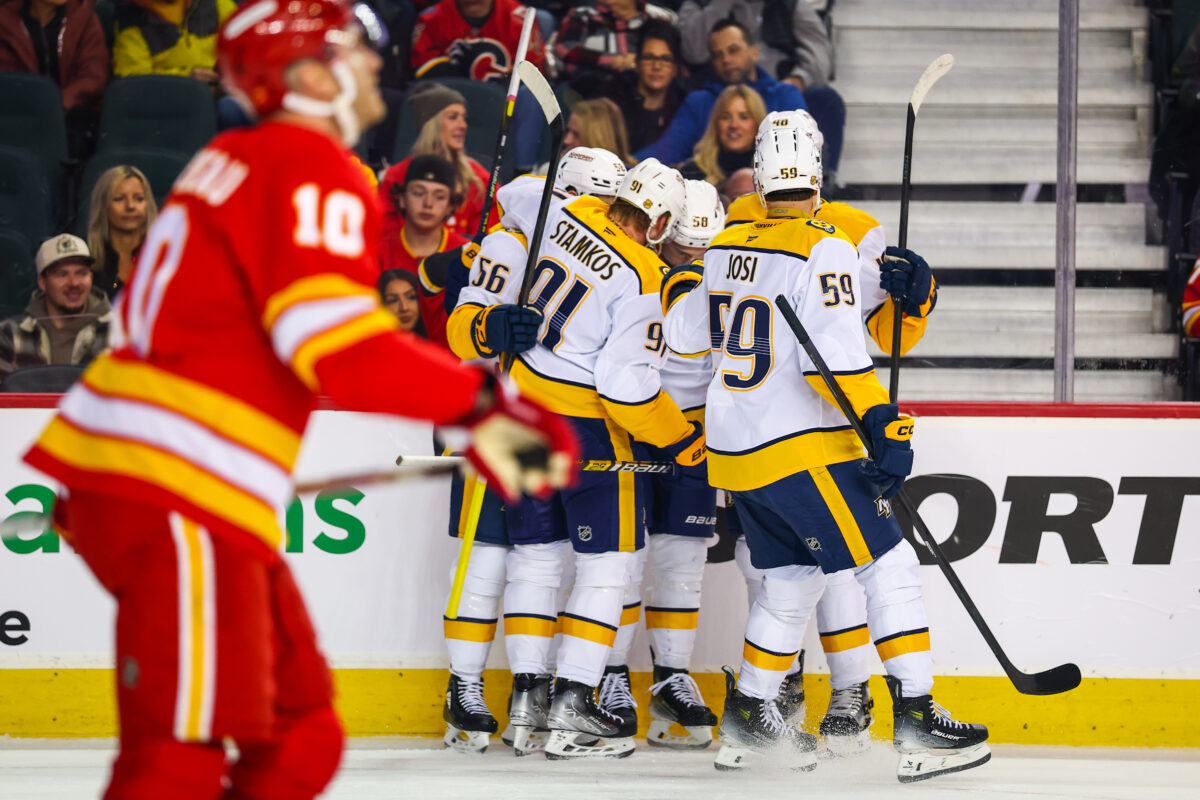
Despite the recent hot streak, statistical models peg Nashville’s playoff chances at roughly 24%. More damning is the projection for what happens if they actually get there: the models give this roster a negligible 0.1% chance of hoisting the Stanley Cup. Even the sportsbooks have taken notice, listing the Preds as heavy favorites (-180) to miss the cut entirely.
Related – Matt Duchene Trade Analyzed
The reality is that this roster was built to compete for a championship, not to scrape by for the privilege of a first-round exit. Trotz knows that “hope” is not a strategy. He has gone on record stating that the organization’s plan isn’t going to change just because of a few good weeks in December and January. The goal isn’t to be average; the goal is to be elite, and the metrics suggest this group simply isn’t there.
Admitting the Experiment Failed
To understand why a sell-off is looming, we have to look back at how this roster was constructed. The headline-grabbing signings of Steven Stamkos and Jonathan Marchessault were intended to be an accelerant—a move to turn a competitive team into a juggernaut.
It hasn’t worked.
Sources indicate that internally, management views this veteran-heavy experiment as largely unsuccessful. The chemistry hasn’t materialized consistently, and the team speed required to compete with the league’s top tier just isn’t there. When Trotz says “everybody is available,” he isn’t bluffing. With the sole exception of captain Roman Josi, no one is safe.

The front office has realized that this specific collection of talent cannot win together at the highest level. Holding onto aging assets in a futile attempt to chase the eighth seed would be a dereliction of duty.
The Contractual Quagmire
However, knowing you need to sell and actually executing those trades are two very different things. This isn’t going to be a scorched-earth fire sale, largely because the salary cap situation makes it nearly impossible.
Steven Stamkos represents the biggest hurdle. While his name generates clicks in the rumor mill, moving him is a logistical nightmare. He carries an $8 million annual cap hit and a full no-movement clause (NMC). Very few contenders have the cap space to absorb that contract without Nashville retaining significant salary—something the organization may or may not be willing to do. Unless Stamkos forces a move to a specific team that can make the money work, he likely stays put.
Jonathan Marchessault, on the other hand, is the chip to watch. With a $5.5 million cap hit and a Conn Smythe pedigree that screams “playoff performer,” he is the most moveable piece among the stars. He also has trade protection, but the belief is he would waive it for a legitimate shot at another ring. If a blockbuster happens, expect Marchessault to be the centerpiece.

Interestingly, Ryan O’Reilly appears likely to survive the purge. Despite being a valuable trade asset, his leadership is viewed as essential for keeping the culture intact during this transition. He wants to stay, and the team needs him to help steer the ship alongside Josi.
The “Hybrid Retool”
So, what does this deadline actually look like?
Don’t expect a tank. Expect a “hybrid retool.” The priority is asset management—getting something for players who won’t be here when the team is ready to contend again.
Related – Annunen Leads Predators to 3-2 Victory Over Capitals
We will likely see the departure of mid-tier veterans and pending unrestricted free agents like Erik Haula, Michael Bunting, and Michael McCarron. Losing these players for nothing in free agency would be a disaster. By moving them now, Trotz gains draft capital and, perhaps more importantly, opens up roster spots.
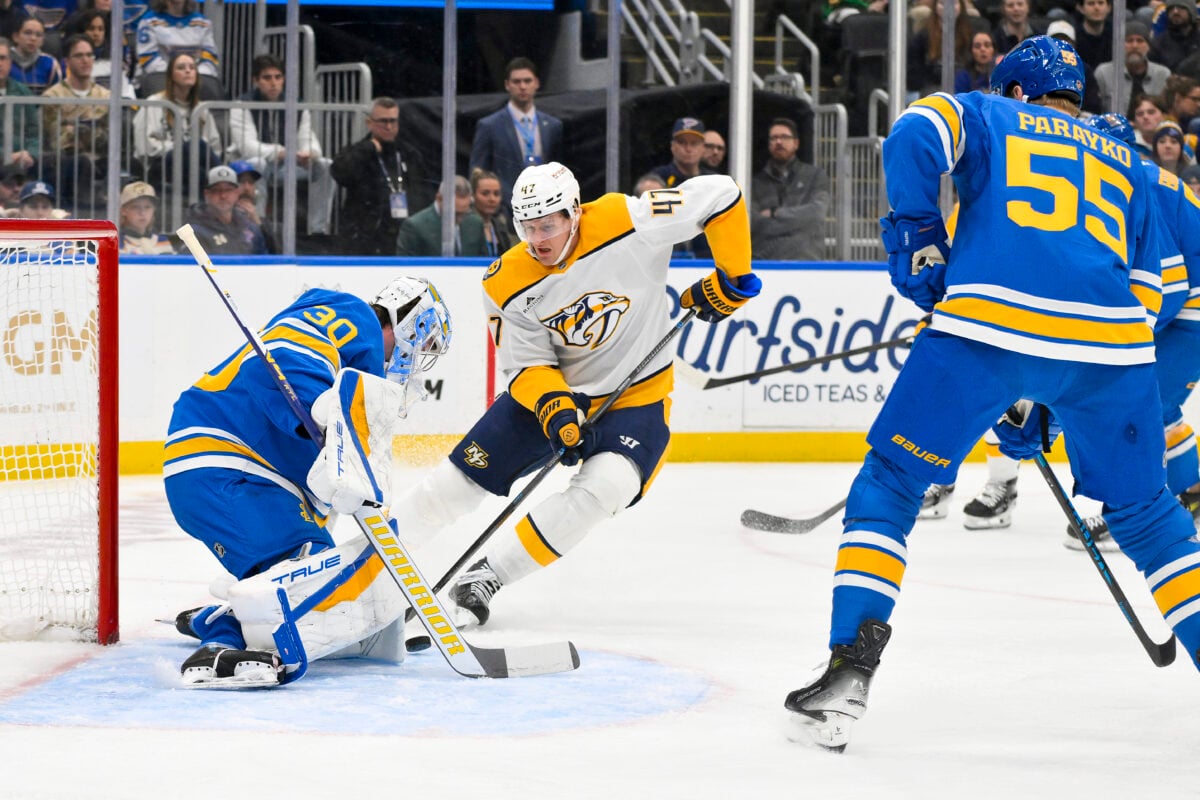
The organization is desperate to graduate high-end prospects like Zachary L’Heureux and Joakim Kemell to the NHL. These kids need ice time to develop, and they can’t get it while stuck behind veterans on a crowded depth chart.
The Bottom Line
It is never easy to tell a winning locker room that you are pulling the plug. It risks alienating players and frustrating a fanbase that just wants to see playoff hockey. But the job of a general manager is to take the long view.
Trotz is looking at a roster that is good enough to break your heart, but not good enough to win it all. By selling at the deadline—selectively and strategically—he isn’t giving up on the franchise; he’s saving it from five years of mediocrity. The wins right now feel good, but the trades coming in March are what will matter in the long run.
AI tools were used to support the creation or distribution of this content, however, it has been carefully edited and fact-checked by a member of The Hockey Writers editorial team. For more information on our use of AI, please visit our Editorial Standards page.
