A purely qualitative analysis on the Toronto Maple Leafs’ offseason to date would not reflect particularly well on the club. From an assets-in / assets-out standpoint, they have parted ways with a reigning 100-point scorer (Mitch Marner) and have little to show for it beyond two forwards (Matias Maccelli and Nicolas Roy) whose combined point total last season didn’t even amount to half of Marner’s. There’s arguably no NHL team that has seen a bigger lineup hole created so far this summer, and Toronto has done little to fill it.
And yet, the Maple Leafs aren’t in as dire a situation as it may seem. Perhaps it stems from the seeming inevitability of Marner’s departure, but the offseason returns to date simply haven’t been greeted with the level of angst and panic that you might expect from a fan base that’s no stranger to those type of reactions. For all that has been lost with Marner being Vegas-bound, Toronto has gained roster balance, salary cap flexibility and a newfound sense of discipline on the part of the front office.
To be clear, things have been far from ideal for the Maple Leafs since the offseason got underway. The club is now down their president and their reigning leading scorer at a time when their division rival and two-time reigning Stanley Cup champion Florida Panthers somehow managed to run it back without going over the cap. Yet, the re-signings of John Tavares and Matthew Knies bring a sense of stability and there is a trust in the existing core.
While there’s no doubt that the loss of Marner is going to sting, there’s a strong argument to be made that general manager (GM) Brad Treliving and the Maple Leafs’ front office should be commended for how they have stuck to their guns and managed the club so far this summer.
Sensible Re-Signings
Prior to the Marner sign-and-trade, Treliving got down to business on the Maple Leafs’ other impact free agents, Tavares and Knies.
The Tavares deal (four years, $17.2 million) has been almost universally viewed as a team-friendly contract and, perhaps more importantly, a negotiating win for a franchise with a recent history of keeping its stars by paying up. Treliving essentially used the Toronto native’s loyalty and desire to win as leverage to keep his annual cap hit down to a manageable $4.38 million, particularly for a player coming off of 38 goals.
The benefits of locking Tavares in at such a reasonable figure are numerous. Most obviously, it affords the organization plenty of cap room when it comes to building the rest of the roster. One player-specific benefit is that the 34-year-old’s cap hit allows for what is likely to be some age-related regression over the life of the contract. If Tavares continues to serve as the second-line centre while delivering 30-plus goals, then the contract is a steal. If his production slows down and he has to transition into a No. 3 centre role, then $4.38 million is still a perfectly suitable cap figure, especially amidst a rising cap.
Knies is on the other end of the age spectrum, so locking him down for the next six years at a $7.75 million annual salary figures to look even better in the coming seasons. The Phoenix, Arizona native is coming off of a breakout 29-goal, 58-point campaign at just 22 years of age. Another season or two like that and this contract could come to rank as one of the league’s best.
Savvy Additions
No, neither of Maccelli or Roy are going to make up for the production lost in Marner’s exit. They could, however, be useful pieces within the Maple Leafs’ new-look forward corps. At the very least, they represent smart, low-risk gambles that fit nicely within the existing group.
Maccelli, who was acquired from the Utah Mammoth in exchange for a conditional 2027 third-round pick, is a dynamic playmaker who looked to be breaking through after a standout 2023-24 campaign, only to struggle through an injury-marred 2024-25 season in which he never got his game on track. Toronto’s trade for the 24-year-old represents a bet that he can rediscover his 2023-24 form and elevate his game alongside the likes of Tavares, Knies, Matthews and Nylander. Barring subsequent trades, he appears poised to get an opportunity to earn a spot in the top-six.
Treliving is hoping that a change of scenery and an opportunity with star-caliber linemates will help Maccelli maximize his playmaking skills. If he does, this could be a home run acquisition. If he doesn’t, the risk is minimal. Yes, it would be sub-optimal to have $3.425 million committed to a version of the player who managed just eight goals and 10 assists in 55 games a year ago. But the Finnish winger carries no long-term commitment and would only cost the club a draft pick in the first two rounds if he were to score 50 points this season.
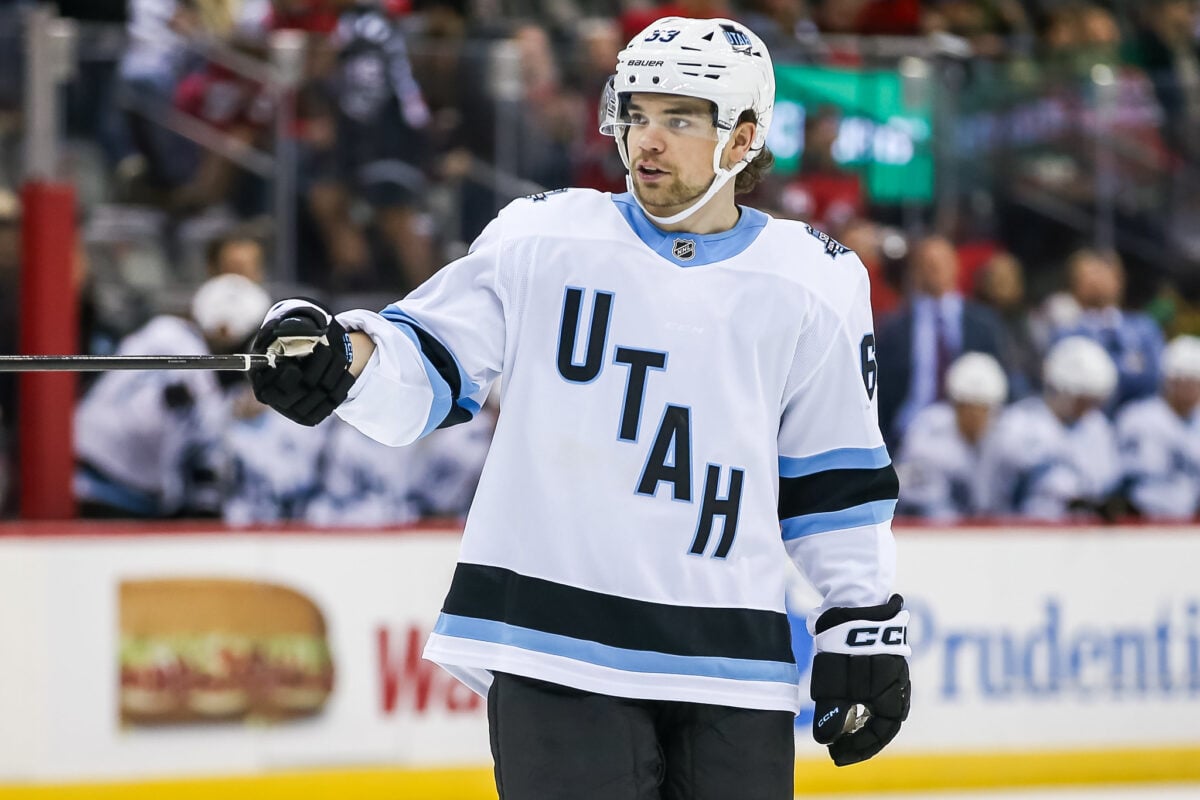
Roy, meanwhile, comes as more of a known and predictable quantity. The 28-year-old has carved out an identity as a responsible, trustworthy third-line centre for a perennially-contending Vegas Golden Knights franchise that won the Stanley Cup in 2023. He puts his 6-foot-4 frame to good use on the offensive and defensive end of the ice and can be counted upon to pour in 30-40 points, as he has in each of the past four seasons. If Maccelli might help shore up the team in the absence of Marner’s playmaking and points, Roy could be counted on to address the Marner void on the penalty kill.
Both Maccelli and Roy fill much-needed gaps in the Maple Leafs’ forward corps and serve to help decentralize what has long been a top-heavy salary structure. Their combined cap hit of $6.425 million this season will be slightly more than half of what Marner will earn on his own in Vegas. They won’t make up for his production, but they both serve as useful players who stand to help establish more of a roster balance, particularly when it comes to the cap.
You Might Also Like
- Maple Leafs Can’t Let History Repeat with First-Round Pick
- Maple Leafs Reportedly Ready to Move Players Out This Summer
- NHL Rumors: Crosby Injury, Leafs Meetings, and the Goalie Market
- Maple Leafs News & Rumours: Matthews, Domi, Rielly & Maccelli
- Insider Suggests Kings Would Be Frontrunner for Matthews if Available
Acquiring Flexibility
With no disrespect to Maccelli, Roy or the number of new faces joining the organization (Michaell Pezzetta, Bo Groulx, Travis Boyd), you could argue that Toronto’s most notable addition this summer has been flexibility. Even with a full 23-man roster under contract (a handful of players, including Nicholas Robertson, Max Pacioretty and Jani Hakanpaa remain un-signed), the club carries roughly $5 million in cap space, some rarely seen wiggle room for the club.
That may or may not last through the rest of the summer. The Maple Leafs continue to be the focus of trade buzz, with names like Jack Roslovic and Erik Karlsson still being tossed around.
Of course, that financial wiggle room remains valuable even if it carries into the season. Competitively, Toronto may be a less talented team at this juncture without Marner in the fold than they were in the spring. However, even a marginally less talented Maple Leafs team should be a playoff squad in the East. Holding onto cap space could allow them to tread water while also being in position to be aggressive leading into the trade deadline, as new names come available while teams make decisions on their future direction. That might be the better scenario than for the club to navigate what seems to be something of a barren offseason wasteland at the moment.
On a broader level, regardless of how they may ultimately weaponize that cap space, Marner’s departure marks an end to the Core Four era and the cap sheet imbalance that came with it. Last season, the Maple Leafs’ four top-earning forwards (the aforementioned Core Four of Matthews, Nylander, Tavares and Marner) accounted for roughly 53% of the $88 million cap. As of right now, the current four top-earning forwards (Matthews, Nylander, Knies and Tavares) comprise 38.6% of the cap.
There is no getting around the fact that the Maple Leafs lost their leading scorer and have little in additions to show for it apart from two middle-six forwards. But that surface-level assessment fails to account for what Treliving and the front office didn’t do. Okay, so they didn’t land a postseason difference maker like Sam Bennett or Brad Marchand, but neither did any non-Cup winner. They also didn’t panic by overpaying to add a player with name recognition. As such, the team is well-positioned for a much-needed reset, with plenty of hope that this is the first step of a reinvention of the Maple Leafs as a Cup contender.
