If you told most hockey fans their team would be deploying 11 forwards and seven defensemen on any given night, they would likely grimace and moan. After all, dressing only 11 forwards (instead of the usual 12) jumbles up the forward line combinations. Icing seven defensemen (instead of the customary six) results in inconsistencies between defensive partners. Besides, nobody ever seems to win with this lineup!
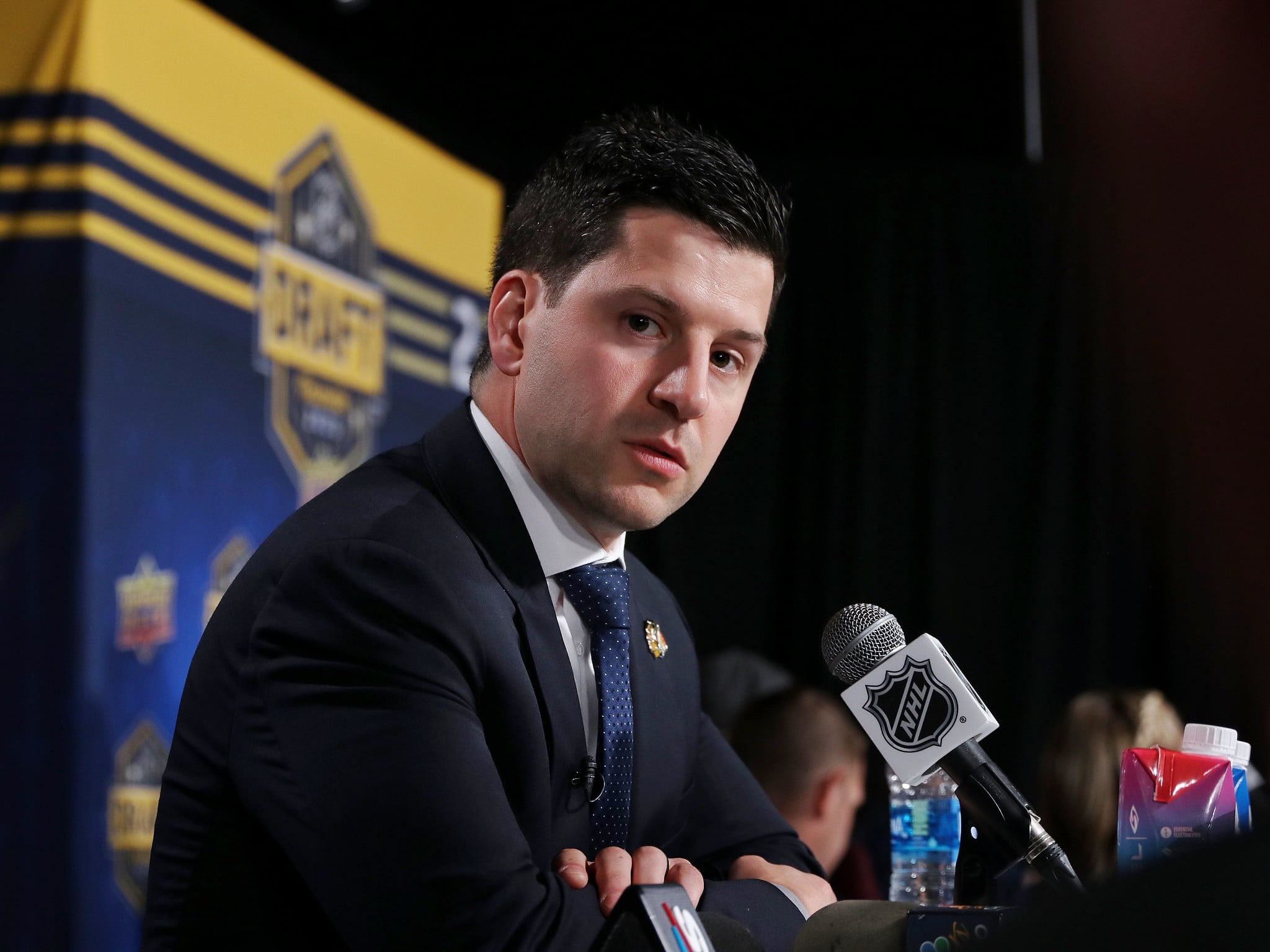
Yet Chicago Blackhawks’ new head coach Jeff Blashill has gone with this untraditional lineup already in three of the Blackhawks’ first five games. When asked about it, he indicated he intends to do this a decent amount moving forward. So what is his thought process behind this, and will it work for the Blackhawks? Let’s discuss.
Balancing Defensive Limitations & Ice Time
Blashill first deployed 11 forwards and seven defensemen in the Blackhawks’ second game of the season, a 4-3 overtime loss to the Boston Bruins on Oct. 9. When he was asked about it after the game, the coach attributed it mostly to wanting to play all his available defensemen.
First off, I want to get guys in the lineup. So (I’m) trying to make a plan to try to get different players in. I don’t want to go multiple games without guys getting into one of these games here. So that’s an easy way to do it.
He also talked about how this could balance out the defensive minutes and responsibilities for the right-shot defensemen.
It kind of evens out the minutes a little bit on that right side. Louis’s (Crevier) killing penalties for us. So it kind of went Murph (Connor Murphy), Louis. So that hopefully helped. I haven’t looked, and I’m sure the minutes racked up a little bit late (in the game). But that helps raise his (Crevier’s) minutes too.
The Blackhawks played the Florida Panthers for their first game of the season, and Blashill is referring to blueliner Sam Rinzel logging a whopping 25:18 minutes of ice time. After all, Rinzel is on the top defensive pairing along with quarterbacking the first power play unit and contributing on the penalty kill. Blashill admitted that was way too much ice time for the young defenseman.
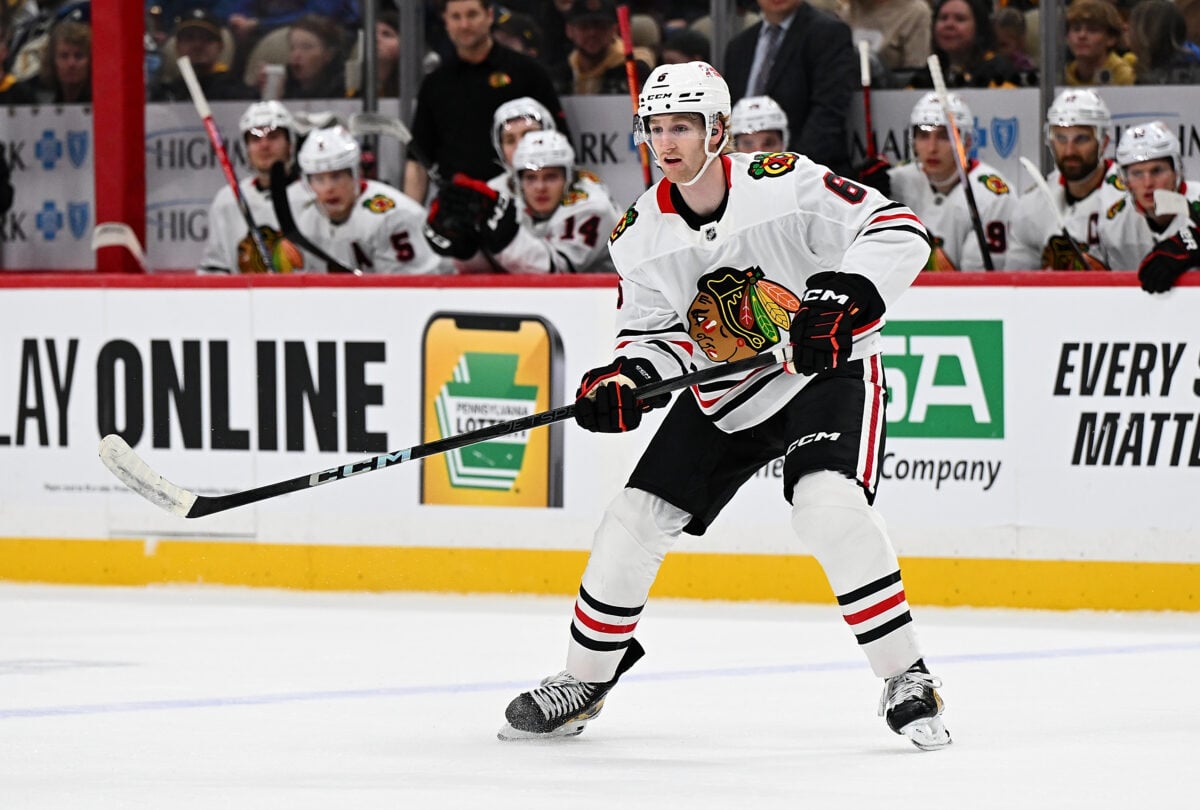
Playing Louis Crevier the next game was obviously a way to offset those heavy minutes. Sure enough, Rinzel’s ice time was a much more manageable 19:03 minutes against the Bruins. Crevier drew into the lineup and logged 8:22 minutes; 1:27 of which were on the penalty kill.
Related – 4 Stats to Judge the Blackhawks by This Season
The second time the Blackhawks went with an 11/7 lineup was versus the Utah Mammoth on Oct. 13. After this contest, Blashill expanded on the balance for the right side of the defense, as well as factoring in the team’s inexperience of the blue line.
The reason for it is we have a lot of really, really young D(efensemen). And I’ll give you kind of two things. One is, when you have really, really young D, you don’t really know what you’re going to get every night (chuckles). So when there’s seven there, it kind of increases the odds that certain guys are on if certain guys are off.
Probably more specifically, it allows us to even the minutes out. I think Louis Crevier is an excellent penalty kill guy. So you have Murph (Connor Murphy) and Crevs who can start those kills. If one of them is not in the box. Rins (Sam Rinzel) and (Artyom) Levshunov have got the power play minutes. So on that right side, it really evens those minutes out, which I think is a positive thing.
Basically, Blashill is utilizing Murphy and Crevier on the penalty kill and Rinzel and Crevier on the power play. Considering all but Murphy are relatively young and inexperienced, this gives the team more options and allows them to utilize the “hot” hand. When given in this context, it makes a lot of sense.
Offensive Advantages: Double-Shifting Bedard
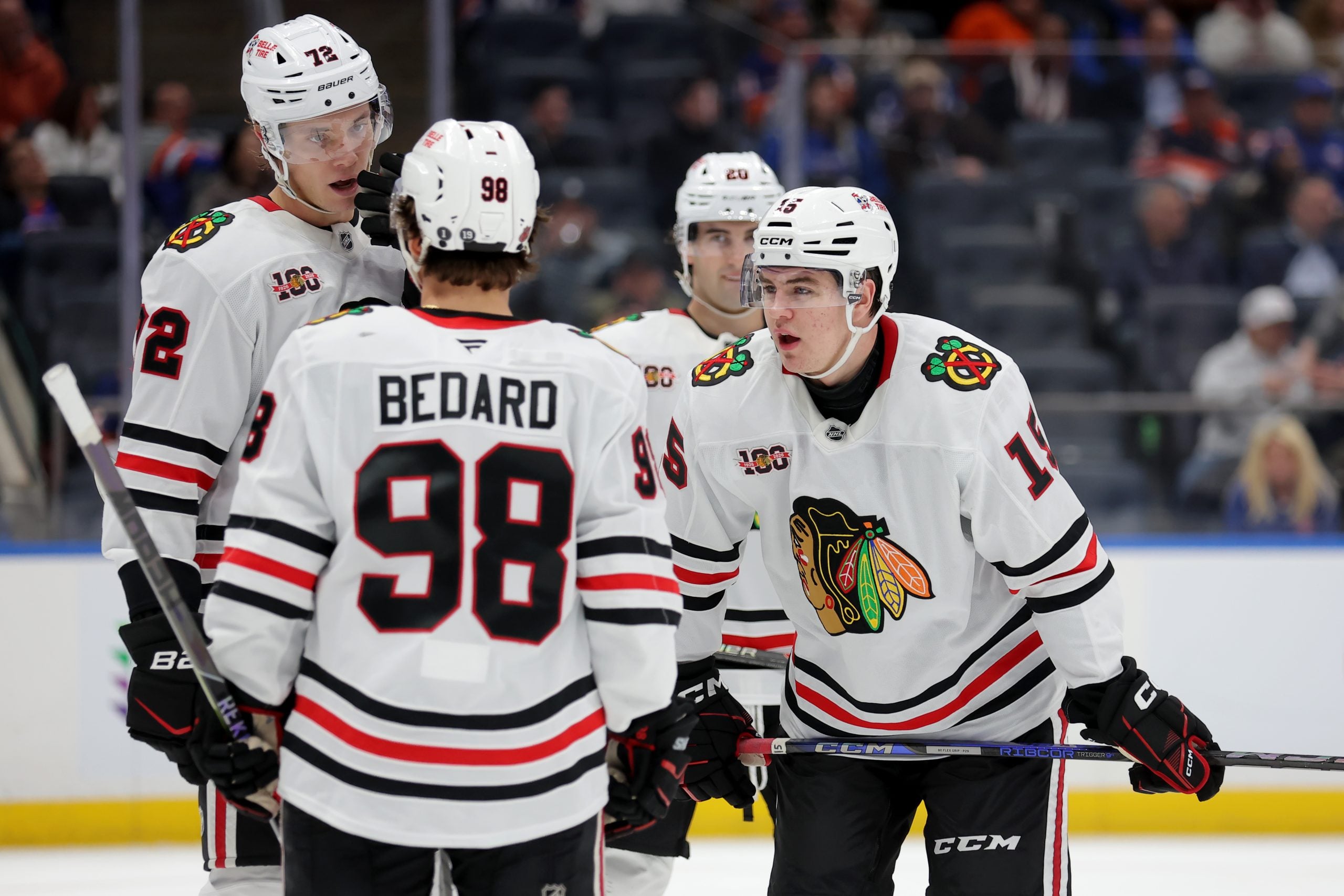
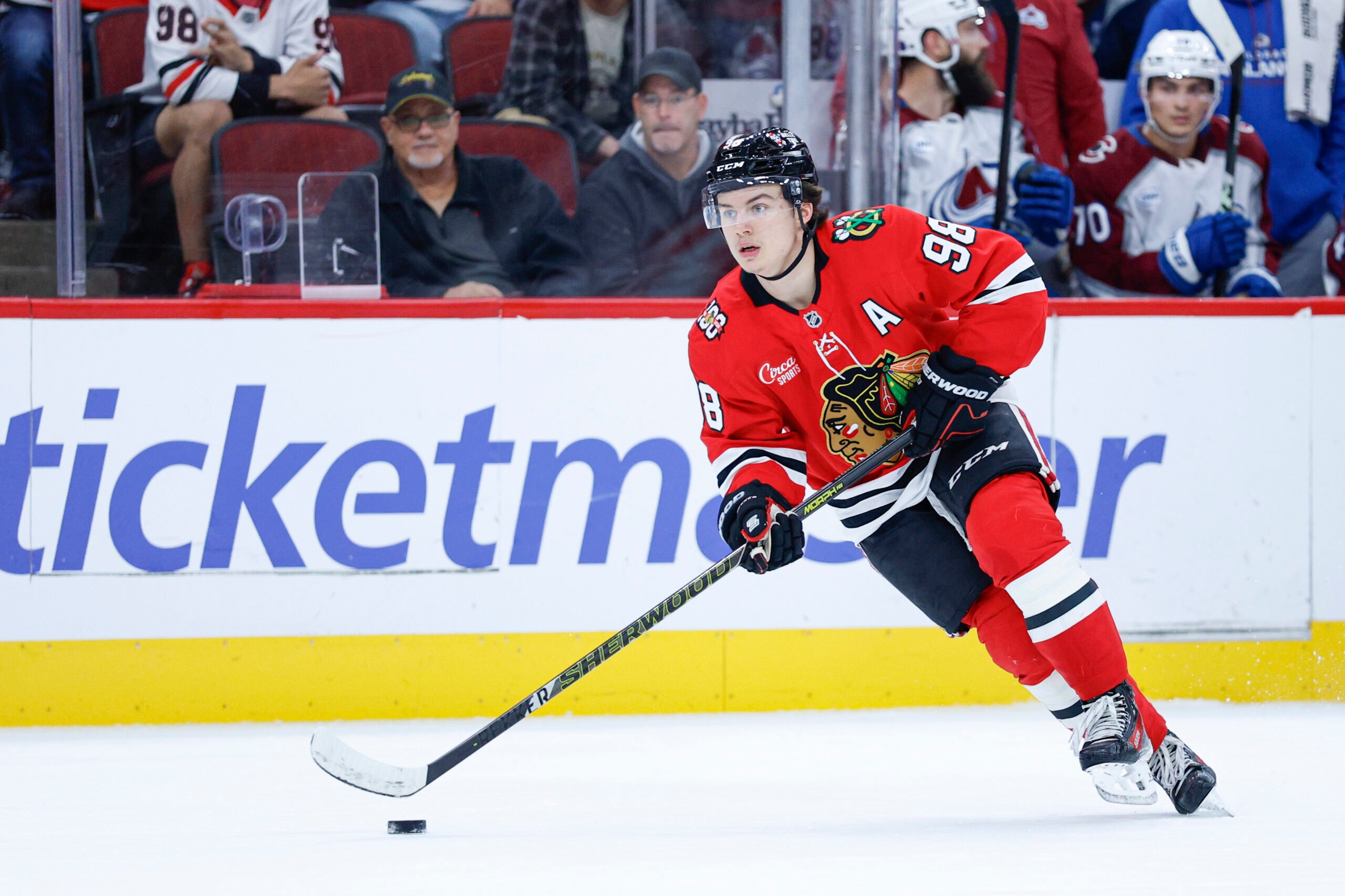
On first thought, one might think this strategy would discombobulate the offense, without four distinct line combinations. But Blashill sees this as a way to better utilize young superstar Connor Bedard, especially during road games when the opponent can better dictate the matchups due to last change. Said Blashill after the road matchup with the Bruins,
It’s way easier to do on the road than at home, or I would say, more of an advantage. Because it’s a harder matchup. What that did for us, (it) allowed us to play Connor (Bedard) with different guys, get them out in different looks. So it’s way harder to match that sometimes from an opponent’s perspective.
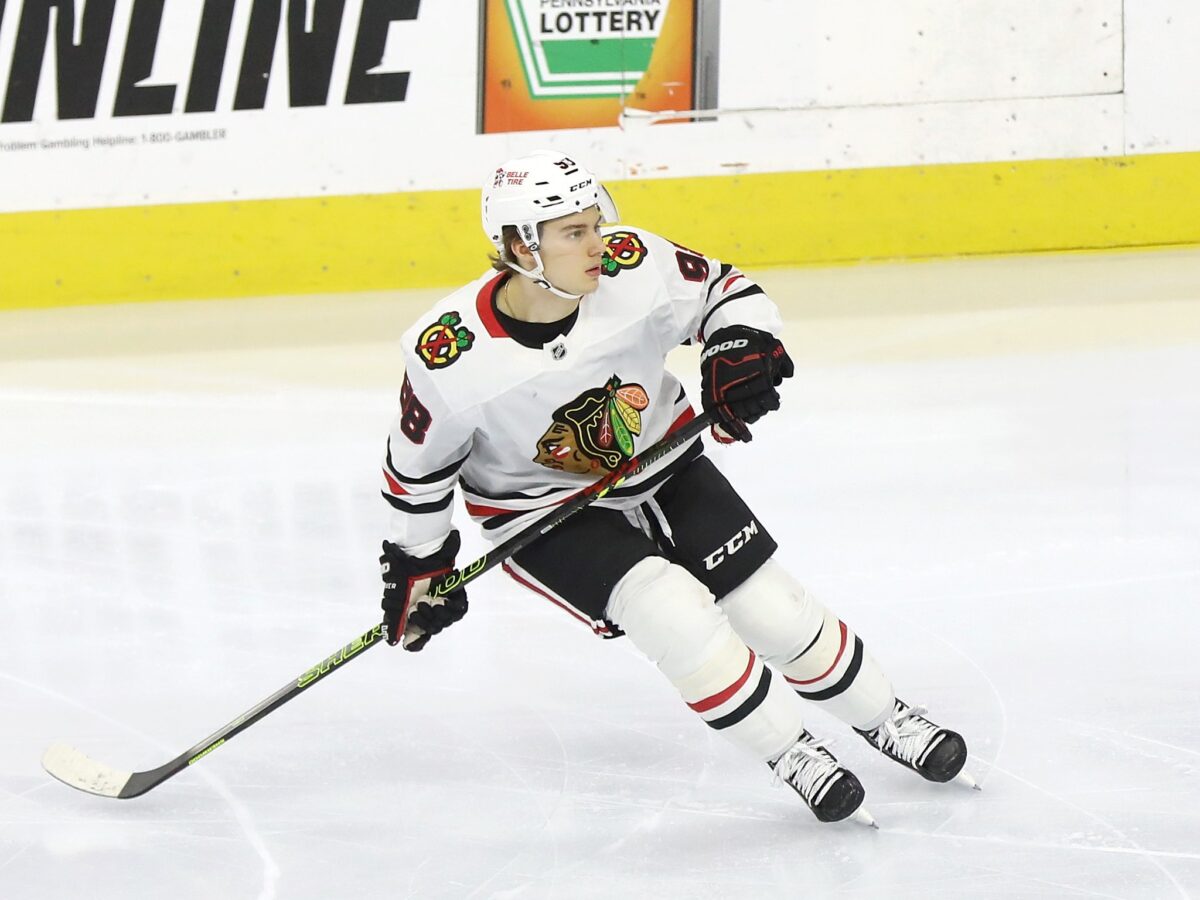
Blashill has some previous experience with an 11/7 lineup, but he did admit before the St. Louis Blues game on Oct. 14 that it only works for certain teams and in certain situations.
I’ve done it before in Detroit a bit too. Did it a decent amount in Tampa. I think some teams it works. Some teams it doesn’t. Coop (Jon Cooper, head coach of the Tampa Bay Lightning) and I coached against each other in junior and so I think in junior hockey we both probably at times went 11/7.
To me, it’s a fit for your team. I think if we look through there are years where we didn’t much, and years where we did. In this particular team, it kind of evens out responsibilities. And at times makes matchups harder for the opponent.
The coach did admit that keeping the forward line combinations cohesive can sometimes be tricky.
The fact I’ve done it and I’ve watched Coop do it, you get a feel for it a little bit. Sometimes it depends what line you’re leaving open, what the players are. Like a guy like Greener (Ryan Greene). I like to see Connor (Bedard) have some ice time with him. Or Frankie (Frank Nazar) have some ice time with him. Because he’s a guy (Greene) who has skill and can make some plays. So it kind of made sense that way. But I think you have to really make sure that you have kind of a plan going in, and you can’t get too stuck on matchups yourself, because it gets a little bit difficult then.
The Blackhawks went with this deployment once again when they faced the St. Louis Blues on Oct. 15. Ryan Greene scored his first NHL goal while playing on a line with Bedard and Lukas Reichel.
Ryan Greene scores his first career NHL goal as the offensive explosion in St. Louis continues for Chicago. #Blackhawks pic.twitter.com/yCRUAEdHQb
— Charlie Roumeliotis (@CRoumeliotis) October 16, 2025
Kudos to Greene for getting this shoutout from Blashill, and then making it come to fruition with a goal. Reichel provided the primary assist and Bedard the secondary on Greene’s goal.
Related – Ryan Greene Making Most of Opportunity With Blackhawks
Reichel benefitted from having Bedard on the ice with him as well; Bedard provided the secondary helper on Reichel’s second goal of the night.
Crevier Carving Out a Role
Obviously this usage of seven defensemen favors D-man Crevier. Blashill has been impressed with him. He was asked how the 24-year-old has earned his trust.
Well, he’s played well to be honest with you. He’s a six-foot-gigantic guy who can skate pretty well (Crevier is 6-foot-8). I think his skating has probably improved. I can’t say that for certain, but we’ve done some drills to put D in tough spots, and his skating has actually been really good. So at that point you’re kind of a really good defender. If you have good body position, good sticks, but he’s done a good job of that. Here’s done a really good job on the kill from Day 1.
Blashill continued,
Louis getting in that fight, I think was great for him too. It kind of shows that he’s got that physicality, and he’s gonna bring a little more of that edge and physicality. If he can bring that to his game, and at that size, boy you can be a really good player.
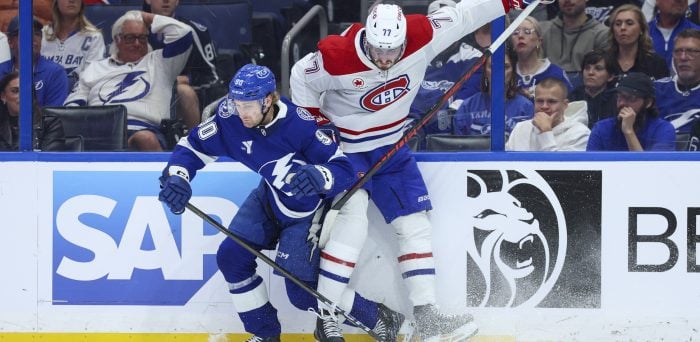
Blashill is referring to the Blackhawks’ feisty home-opening contest against the Montreal Canadiens on Oct. 11, when Crevier engaged Canadiens’ defenseman Kaiden Guhle after he laid a big hit on Frank Nazar. (from ‘Chicago Blackhawks allow goal with 15.7 seconds left and lose to Montreal Canadiens 3-2 in chippy home-opener’, The Chicago Tribune – 10/11/2025)
Crevier has even contributed offensively; he scored a goal in the overtime loss to the Bruins (Oct. 9).

The long and the short of it is that Crevier has shown his value and found a niche that caters to his strengths. Blashill therefore wants to utilize his services.
Does an 11/7 Lineup Work for the Blackhawks?
For the record, the Blackhawks have used this lineup three times in five games. In said games, they’ve earned a point (4-3 OT vs. the Bruins) and collected their first two wins (3-1 vs. the Mammoth and 8-3 over the Blues). In the two games where the Blackhawks went with a traditional lineup of 12 forwards and six defensemen, they lost (3-2 to the Panthers and 3-2 to the Canadiens).
Obviously there’s more that went into these wins and losses than the lineup configuration, and it’s also a very small sample size. But it’s a takeaway nonetheless.

Could there eventually be a disadvantage to deploying this type of lineup? Will there be repercussions for the offense? Rotating line combinations could contribute to less cohesiveness and less scoring in the long run. It certainly doesn’t seem that way according to the scores above, but could it eventually catch up to the Blackhawks? After all, it’s usually the forwards who score goals, and rolling one less of them on any given night could become an issue.
Blashill’s first argument for going with 11 forwards and seven defensemen was that he wanted to make sure he got guys into the lineup. But forward Sam Lafferty has only suited up for two contests so far, as has Reichel. And Reichel might not have even drawn in for the last contest (versus the Blues) if Nick Foligno wasn’t out for family reasons. Also, Landon Slaggert (lower body injury) is due back into the lineup any day now, adding one more forward to the puzzle.
Related – Blackhawks’ Bedard & Blashill Coming Together at Just the Right Time
But every game is situational, and we don’t know just how often Blashill means to go with this type of lineup. At some point it might not make as much sense. But for now, there seems to be some good arguments for utilizing 11 forwards and seven defensemen.
It will certainly be interesting to see how this plays out moving forward.

Free Newsletter
Get Chicago Blackhawks coverage delivered to your inbox
In-depth analysis, breaking news, and insider takes - free.
Subscribe Free →