Through the first few months of the Ontario Hockey League (OHL) season, the Kitchener Rangers have been fairly pedestrian, ranked fifth in the Western Conference and eighth overall, despite high expectations coming off a 100-point season and an appearance in the Western Conference Final.
The season started well for the Rangers, who had a 10-3-2-0 record through September and October. Over this stretch, there were hiccups, but after three losses in four games, the team found much more consistency, going on a run and earning points in 10 of 11 games. However, these early-season hiccups have become legitimate concerns as the East Avenue Blue have lost back-to-back home games and have a 5-6-0-0 record since the beginning of November.
Jussi Ahokas Hits the Nail on the Head
Following the Rangers’ loss to the Erie Otters on Tuesday night, head coach Jussi Ahokas said, “Our puck management was really bad. A lot of turnovers, we didn’t win battles, they outworked us in the first”, and finished off by saying, “If you’re not ready to play 100% in this league, you don’t deserve the win.”
Ahokas may have been speaking specifically about this game, but any time the Rangers have struggled this season, this statement applies.
Related: 3 Takeaways From Kitchener Rangers’ Blowout Loss to the London Knights
There’s no denying they are a good hockey team loaded with talent, and they’ve shown that numerous times this season, which makes it somewhat tricky to criticize, because when they play well, they’re dominant. Still, when they struggle, they look like a noticeably different team.
Where the Rangers Are Struggling
The lost battles are worth mentioning. It’s rare to see the Rangers breakdown structurally, a defenseman get flat-out beat, or one of their goaltenders let in a weak goal. They are a solid defensive team that does an excellent job suppressing scoring chances. However, they have now allowed three or more goals in eight of nine games since a stretch in which they allowed fewer than three in eight of 10 games. The difference comes down to losing battles in critical areas of the ice.
Most of the goals they’re giving up come from a lack of physicality in the slot and in tight to the goalie, and relying too heavily on their stick to win battles rather than their legs. It’s rebounds, it’s tap-ins, and it’s shots with too much traffic in front that’s hurting them.
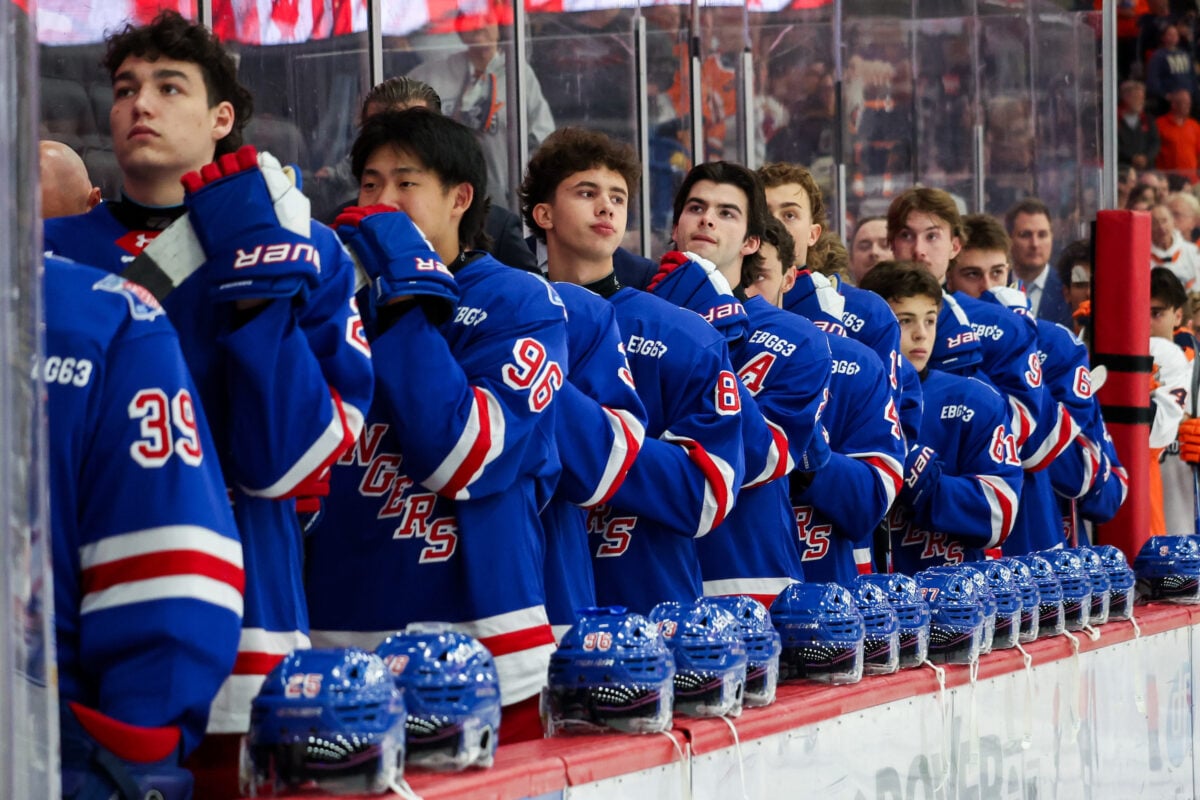
On the one hand, yes, these goals will happen, as they are often high-quality opportunities. But on the other hand, too often the Rangers are in an advantageous defensive position, only to be caught flat-footed, puck-watching, and losing track of their assignment in the highest-danger areas on the ice.
If there is one thing the Rangers need, it’s more physicality to finish defensive plays. That’s not running around and hitting or fighting the opposition. It’s boxing out and moving a player from the front of the net, rather than trying to break up a pass or taking one or two extra strides to get into a shooting lane, instead reaching and swinging with their stick.
They are already so good defensively, allowing the second-fewest goals in the OHL. If they can do a better job of identifying and eliminating threats in the slot, they will look like the best defensive team in the league again.
Rangers’ Offensive ‘Struggles’ Not Overly Concerning
Earlier this season, when the Rangers were winning games but not blowing opponents out, there was some conversation about the offence. Since these inconsistent results have started rolling in and their struggles have become more consistent throughout November, the lack of goals has been the primary concern.
But the regression in defensive play over the last month is the root of the struggles. As mentioned, the Rangers were 10-3-2-0 at the end of October. Until now, they have averaged 3.00 goals per game. Despite the lacklustre results over the last month, they have scored more goals, averaging 3.27 per game over the previous 11.
The offence has actually been improving; they have been getting more contributions from the bottom six and the blue line. But the group hasn’t been firing on all cylinders at the same time for a stretch, which will happen at some point; it is still early.
If anything is holding them back offensively, it is their puck management, as Ahokas mentioned following the loss to the Otters and other times this season. When they struggle, they tend to try too much, making too many high-risk passes rather than funnelling pucks toward the net or making the safe play.
It is encouraging to see them scoring more goals. But if they can find the defensive intensity they played with through the first month and a half, the Rangers won’t need to score four, five, or six goals a night to win. In 19 of 26 games this season, they have scored three or more goals. In those games, they have a 15-2-2-0 record – both regulation losses came in the last two weeks.
Small Details Will Lead to Rangers’ Success
Maybe I shouldn’t be concerned about the defensive play when the Rangers have been one of the best at keeping the puck out of their net, while their goals-for numbers are below the league average. But given their style of play, their offensive numbers aren’t comparable league-wide when so many other teams resemble a track meet.
Nothing about the Rangers’ 2.53 goals against per game through their first 15 games looked unsustainable. They play a professional game, excel at defending the rush, and on the boards. If they can play a stronger game in front of their net, they’ll be near impossible to score on.
But they have been sitting at 2.72 goals against per game over the last 11 contests, and that is up to 3.4 in the last five. Nothing has changed in the game plan. The only difference in their play has been the number of battles they are losing in high-danger areas.
The Rangers have everything they need to compete with any team in the league: great goaltending, a phenomenal blue line, and a talented group of forwards. They need to be a top offensive team on paper in the stats; they need to rediscover the defensive intensity they played with earlier in the season that frustrated so many opponents, because they score more than enough goals to win games when they are at their best defensively.
