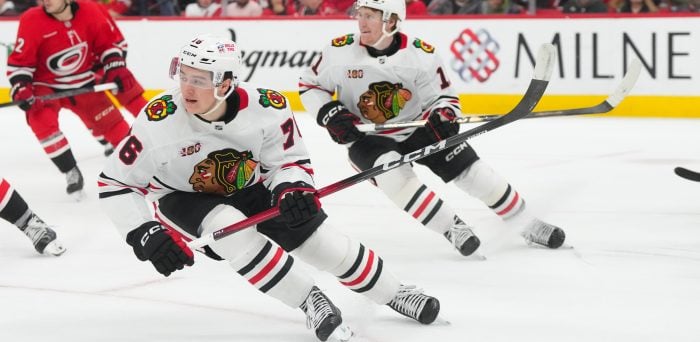
Tonight’s game against the San Jose Sharks arrives at an odd moment in the Vancouver Canucks’ season — one where clarity hasn’t followed change, but resilience has followed loss. Two weeks after trading Quinn Hughes, and with Elias Pettersson still working his way back, Vancouver is no longer pretending it’s business as usual.
Yet, somehow, the team keeps finding ways to stay competitive. Four wins in five games since the trade don’t tell a full story, but they do suggest something stubborn and unfinished still lives in this room.
Related: 2026 World Junior Championship Team USA Final Roster
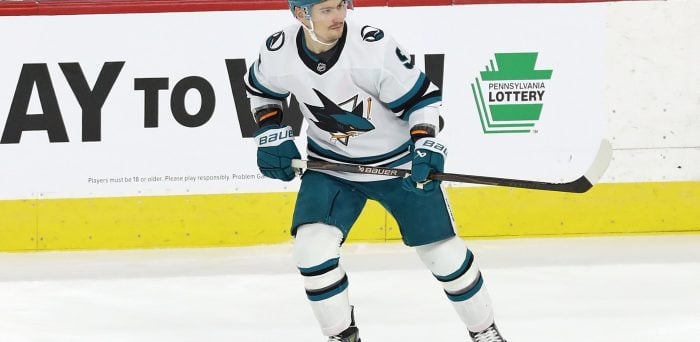
San Jose, meanwhile, comes to town flirting with relevance. The Sharks are improved, younger, and louder than last season. That said, they are still on the outside looking in. This isn’t a Sharks team content to drift, and it’s not a Canucks team with the luxury of drifting either.
With Vancouver’s home ice offering little comfort and the standings refusing to settle, tonight feels less like a checkpoint and more like a test: of habits, of identity, and of whether this post-Hughes version of the Canucks is becoming something — or merely surviving until something else happens.
Item One: What the Canucks Are Learning Without Quinn Hughes
When Quinn Hughes left, the assumption was that the Canucks would unravel. Losing your most dynamic defenceman, your emotional reference point, and your offensive engine usually does that to teams. Instead, Vancouver has tightened. Not sharpened — tightened. Games have become simpler, narrower, and more dependent on collective effort than individual brilliance. It hasn’t always been pretty, but it has been instructive.
This stretch has revealed something important: Hughes wasn’t just carrying the puck — he was carrying responsibility. Without him, players like Kiefer Sherwood, Jake DeBrusk, and Brock Boeser are being asked to define their value more clearly. There’s less room to float and fewer safety nets to fall back on. That doesn’t mean this version of the Canucks is better. But it may be more honest.
Related: NHL Rumours: 2 Teams & Fleury, Failed Kotkaniemi Trade, Canucks “Hybrid Rebuild”
Tonight isn’t really about beating San Jose. It’s about whether these uncomfortable habits stick once Pettersson returns, once the noise grows, and once the easy answers come back. The season may already be drifting toward something smaller than hoped. But nights like tonight still shape what kind of team the Canucks become in the meantime.
Item Two: The “Hybrid Rebuild” Sounds Confusing Because It Is
When Craig Button called the Canucks’ direction a “word buffet” and couldn’t make sense of a “hybrid rebuild,” he was giving voice to a broader frustration. Don Taylor blasted the organization for dancing around the word “rebuild.” Rick Dhaliwal countered that the Canucks don’t actually have the appetite for one. Patrik Allvin landed somewhere in between.
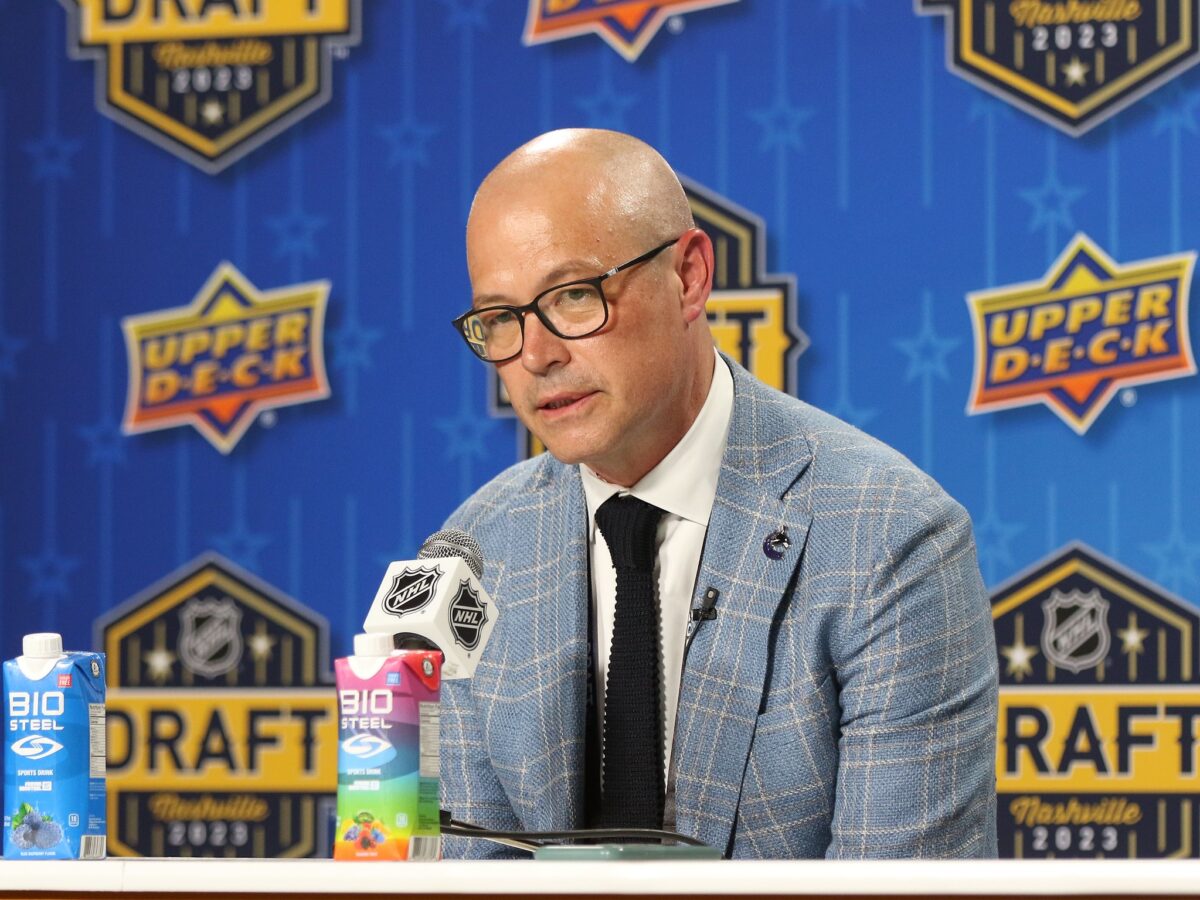
To analysts who like clean categories, the language sounds evasive — a salad of concepts without a clear spine. But the confusion isn’t really about words. It’s about reality. Vancouver’s roster doesn’t fit neatly anywhere. Some young players need real NHL minutes, veterans who can still influence games, and a fan base that won’t tolerate a long, intentional plunge to the bottom.
Related: What the Canucks Risk Losing if They Tank the Season
Allvin’s “hybrid rebuild” isn’t mystery-speak so much as an admission that the organization is trying to manage competing priorities at the same time: develop, evaluate, and remain credible. It’s awkward to explain because it’s awkward to live.
After trading Hughes, the Canucks didn’t collapse the way a clean teardown would suggest. Instead, they won games. That muddied the picture and forced harder questions. In that sense, the phrase isn’t a dodge. It’s a recognition that the path forward isn’t straight, even if everyone wishes it were.
Item Three: Zeev Buium and the Rarity of Winning
The end of December always pulls hockey fans toward the World Juniors, a brief window into what the future might look like. For the Canucks, this year’s tournament comes with extra interest. Braeden Cootes, Wilson Björck, and Basile Sansonnens will all represent their countries in 2026. But one Canuck already stands apart.
Zeev Buium belongs to one of the rarest clubs in junior hockey: defensemen who have won two World Junior gold medals. Only four active NHL defencemen have ever done it — Kris Letang, Olen Zellweger, Ethan Del Mastro, and now Buium. He won gold with Team USA in both 2024 and 2025, recording 11 points in 14 games, including two assists in the most recent gold-medal final against Finland.
Related: Canucks May Get More From Liam Ohgren Than They Expected
Winning seems to follow him. Along with his World Junior success, Buium has also won gold at the U18s and at the 2025 World Championship — Team USA’s first title there since 1933. At just 20, he’s already handling NHL minutes. The Canucks didn’t just acquire a promising defenceman; they acquired a player accustomed to winning, and that tends to matter more than scouting reports once games start to tighten.
What Comes Next for the Canucks?
What’s next for the Canucks isn’t a clean answer — and that may be the point. This season is no longer about chasing an ideal version of what they hoped to be. It’s about learning who holds the line when structure disappears, who grows when responsibility spreads, and who belongs when the room gets quieter.
Tonight against San Jose won’t decide the future. But it will add another data point. Another night of evidence. The Canucks aren’t building toward certainty—they’re building toward understanding. Sometimes, a team must sit uncomfortably with itself before moving forward with conviction.

Free Newsletter
Get Editor's Choice coverage delivered to your inbox
In-depth analysis, breaking news, and insider takes - free.
Subscribe Free →