NHL trade trees are an extraordinary way to view the effect a single trade has had on multiple organizations. Today, we will look at a 1998 deal between the New York Rangers and Pittsburgh Penguins that saw Alexei Kovalev move from The Big Apple to the Steel City. This trade does not get as much respect as it should for how it changed the NHL landscape for all involved. Some of the pieces that came out of this deal altered the rivalry between these two franchises and helped create a dynasty.
Kovalev’s Youth Success
In the old Russian league, before the collapse of the Soviet Union, the Red Machine produced some of the best talents hockey had ever seen. One of them was goal-scoring winger Kovalev. He started as a 17-year-old in the third division of Soviet Hockey at the time and scored ten goals and five assists for 15 points in 17 games in the 1989-90 season. That got the attention of NHL rosters, but he truly cemented himself on the radar the following season.
Playing as an 18-year-old with Dynamo Moscow’s second team, Kovalev tallied 16 goals and nine assists for 25 points in 21 games. Another excellent season for the 18-year-old caught the attention of the Rangers, and the NHL organization opted to draft him with the 15th overall selection of the 1991 NHL Draft. While this seems high today, this was towards the end of the first round because only 22 players were picked in the first round of this draft.
Related: Alexei Kovalev’s New York Rangers’ Tenure
Kovalev returned to Dynamo Moscow for the 1991-92 season, making his breakthrough in the Russian top flight league. He scored 16 goals and eight assists for 24 points in 26 games. For a 6-foot-2 winger who could score goals, wasn’t afraid to lay the body, and could make an impact, the Rangers were excited and managed to lure him out of Russia to sign with the Blueshirts for the future.
Kovalev’s Rangers Tenure
Kovalev had his rookie season in the NHL in 1992-93, scoring 20 goals and 18 assists for 38 points in 65 games. He did have a spell with the Binghamton Rangers of the American Hockey League, but his significant impact in North America came with the Blueshirts. A rookie 20-goal season is impressive, but the Rangers needed him to follow it up in 1993-94, and he did just that.
With 23 goals and 33 assists for 56 points in 76 games, Kovalev was the sixth-best scoring player on the roster and the third-highest-scoring forward. He turned into a machine in the playoffs, with nine goals and 12 assists for 21 points in 23 playoff games. He was among the leading scorers on the roster as the Rangers captured the Stanley Cup for the first time in 50 years.
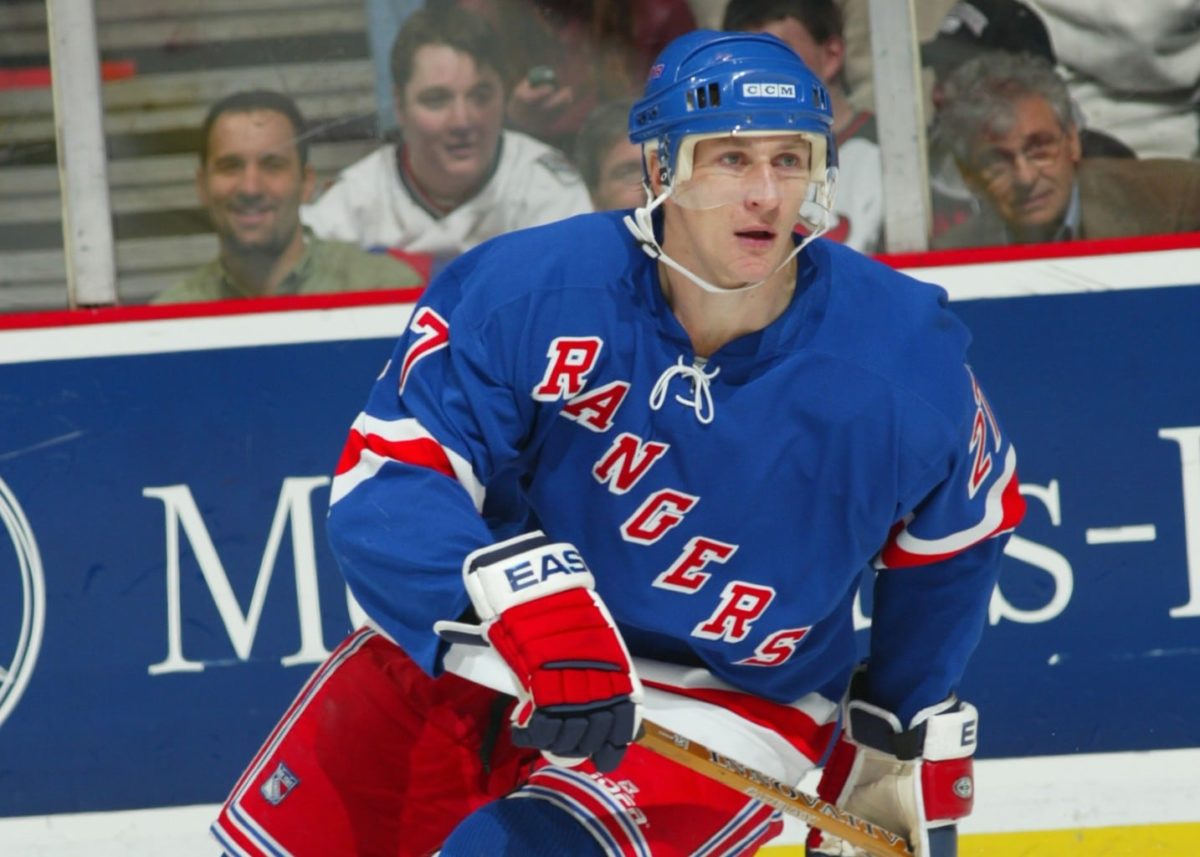
Over his first tenure with the Rangers, Kovalev played in 402 games, scoring 119 goals and 156 assists for 275 points over seven seasons. However, the winds of change blew through the 1998-99 campaign, leading the Rangers to consider trading their beloved goal-scoring winger. On Nov. 25, 1998, that day finally came, and the Rangers traded Kovalev to the Penguins.
Kovalev’s Trade
The Rangers traded Kovalev and Harry York to the Penguins for Petr Nedved, Sean Pronger, and Chris Tamer. If you are new to hockey, you may not understand how underwhelming this trade is with hindsight, but the Rangers were excited about it at the time for what it brought in. Pittsburgh picked up a premier scoring winger to complement their core.
In his first spell in the Steel City, Kovalev ticked on like nothing changed. In the remainder of the 1998-99 season, the Togliatti native scored 20 goals and 26 assists for 46 points in 63 games with the Penguins. He followed that up with another 26-goal season before he broke into the star category in 2000-01. He scored 44 goals and 51 assists for 95 points that season in just 79 games.
Over his first spell, Kovalev played in 345 games with the Penguins, scoring 149 goals and 198 assists for 349 points. To have been above the point-per-game mark through the height of the dead puck era is an outstanding achievement, and he got noticed as a star in Pittsburgh. However, things were changing in Western Pennsylvania.
The Trade Back
By this point, the Penguins were struggling. The team was falling down the standings, and fans were becoming apathetic. The success of the early 1990s was fading. Many famous names from those Penguins teams had departed for greener pastures, and rumors of relocation were swirling. It took Mario Lemieux being a gentleman to keep the Penguins in Pittsburgh, but they started moving players out.
On Feb. 10, 2003, the Penguins sent Kovalev back to the Rangers. The full trade was Kovalev, Dan LaCouture, Janne Laukkanen, and Michael Wilson for Rico Fata, Richard Lintner, Mikael Samuelsson, Joel Bouchard, and cash considerations.
Kovalev’s return to New York only lasted 66 games, during which he scored 13 goals and 29 assists for 42 points before he was traded again, this time to Montreal. New York acquired Josef Balej and a 2004 second-round pick for him. However, that’s not part of the trade tree that first sent him to Pittsburgh, so it isn’t relevant here.
Kovalev kept playing, bouncing around the league before he left the NHL in 2013. He played overseas until his retirement at the end of 2013, but 25 years had passed since he made his NHL debut for the Rangers long ago. The trade to Pittsburgh was almost two decades old, so how did it affect the landscape of the NHL?
Pittsburgh Penguins’ Side
Pittsburgh acquired Kovalev alongside Harry York in the initial deal with the Rangers, but he played just two games with the Penguins. He didn’t record any points and wasn’t traded upon departing from the Penguins, so this branch ends. We only have the fun of the Kovalev branch to clean up.
As mentioned, Kovalev was returned to the Rangers in exchange for Bouchard, Samuelsson, Lintner, and Fata. Bouchard only played in seven games for the Penguins, grabbing an assist. If you recognize the name, it is not because he is related to Oilers defenseman Evan Bouchard but because he is the head coach of the Syracuse Crunch, the Tampa Bay Lightning’s AHL affiliate.
Lintner played in only 19 games with the Penguins after the trade, scoring three goals and two assists for five points. He left the NHL after this tenure and returned to Europe, where he carved out a nice career, playing internationally on multiple occasions representing his native Slovakia.
Fata is another player who wasn’t traded. However, his tenure with Pittsburgh is far better than that of any of the players mentioned, except for Kovalev. Across three seasons with the Penguins, Fata scored 25 goals and 30 assists for 55 points in 120 games. He had the best period of his career with the Penguins but was out of the league a few years after leaving Pennsylvania.
Mikael Samuelsson Branch
Everything on the Penguins’ side had been so clean, but that changes here. Samuelsson played for the Penguins for 22 games, scoring two goals. However, he was involved in a seismic deal ahead of the legendary 2003 NHL Draft. Samuelsson was traded with the third and 55th overall picks in the 2003 Draft to the Florida Panthers for the first and 73rd overall draft picks. Starting with the 73rd pick, the Penguins drafted Daniel Carcillo. Carcillo was traded before reaching the NHL, meaning we have a fresh branch to grab before returning to that first-overall selection.
Carcillo was traded along with a 2008 third-round pick to the Phoenix Coyotes for Georges Laraque. Laraque played in parts of two seasons with the Penguins, getting into 88 games and scoring four goals and 11 assists for 15 points. It marks the only time in Laraque’s 12-year career he was traded, so this branch ends here.
The Franchise Legend
We have one branch left on the Penguins’ side: that 2003 first-overall pick. It was used on a goaltender from Quebec named Marc-Andre Fleury. Flower became a franchise icon in the Steel City, leading the Penguins to three Stanley Cup championships with their new core. He became one of that crop of netminders that you never wanted to face because he could steal games or series on his own.
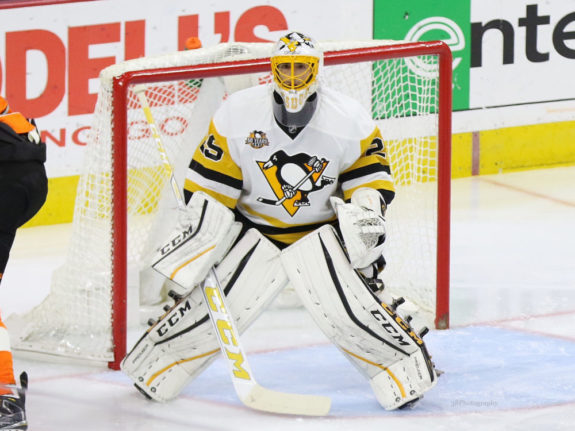
In his 13-year stay in Pittsburgh, Fleury played 691 games, starting 536. He boasted a record of 375-216-68 with a .912 save percentage, a 2.58 goals-against average, and 12 shutouts, becoming one of the most beloved figures in the NHL. Fleury holds the Penguins franchise record in games played by a goalie, wins, saves, and shutouts. He was synonymous with Pittsburgh hockey for a long time.
Related: Marc-Andre Fleury’s Legacy in Pittsburgh
Eventually, the Penguins drafted a new young goaltender they thought could guide them into the future, leaving Fleury exposed to the expansion draft of the Vegas Golden Knights in 2017. A trade from 20 years prior led to the Penguins giving up a player to an expansion team in Nevada.
The New York Rangers’ side
Oh, you thought we were finished? No, we have a long way to go before we reach the end of this trade tree. The Rangers acquired Nedved, Pronger, and Tamer from the Penguins. Tamer only played in 52 games as a Ranger, scoring a goal and grabbing five assists for six points. He wasn’t traded, so that branch ends here.
Sean Pronger is the brother of Hall of Fame defenseman Chris Pronger, but Sean did not enjoy the same success. He only played in 14 games as a Ranger, helping himself to three assists, before he was traded to the Los Angeles Kings for Eric Lacroix. Lacroix played in parts of three seasons with the Rangers, scoring eight goals and 12 assists for 20 points in 146 games. Lacroix was traded to the Ottawa Senators for Colin Forbes in 2001, but he only played in 19 games with the Rangers, scoring one goal and grabbing four assists. He wasn’t traded, ending this branch.
Petr Nedved’s Branch
Nedved is where this gets messy. He was a Ranger before this trade and was part of the deal that sent Sergei Zubov to the Penguins, but that is part of a different trade tree for a different day. In the four seasons following the trade, Nedved was an outstanding Ranger, tallying 124 goals and 173 assists for 297 points in 367 games. However, heading into the trade deadline in 2004, the Rangers opted to move on. He scored 14 goals and 17 assists for 31 points in 65 games before being dealt to Edmonton.
The deal involved Nedved and goaltender Jussi Markkanen being traded to the Edmonton Oilers for Dwight Helminen, Stephen Valiquette, and a 2004 second-round pick. Valiquette wasn’t traded, but he played in five seasons with the Rangers. Overall, he played in 39 games, starting 27, with a record of 14-14-5, a .901 SV%, and a 2.78 GAA to go with his four shutouts as a Ranger. That’s a pretty tidy stat line for the man best known for his presence on the MSG Network covering the Rangers. Helminen also wasn’t traded, leading to another clean branch to explore. He only played 27 games in the NHL, and none of those were with the Rangers, leading us to the final piece of this tree.
That 2004 second-round pick was used on Dane Byers, who played six games for the Rangers and scored once. He was traded to the Columbus Blue Jackets for Chad Kolarik. Kolarik played four games for the Rangers, getting his only NHL point with an assist before being dealt to the Penguins for Benn Ferriero. He also played in four games as a Ranger, scoring an assist before being traded with a 2014 sixth-round pick for Justin Falk. Falk played 21 games as a Ranger, scoring two assists before he left the franchise, which wasn’t via trade, and completed this trade tree.
Overall
Now, this trade tree will not grow more branches. Nothing ties the modern NHL to that trade made in 1998, but the effects of this trade tree changed the hockey landscape. The Penguins landed one of the best goaltenders in the NHL and a potential future Hockey Hall of Fame netminder. New York added assets to their 2014 Stanley Cup Playoff push because of this deal. It’s had a widespread effect on both teams over the years.
It’s hard to say the Rangers got the better of this trade tree when the Penguins got a franchise backstop, but that doesn’t mean it was an utter failure. Nedved was a key player for the Rangers for a few seasons, and he even played with Kovalev after the Penguins traded him back to the Rangers. They didn’t have the same effect on the Blueshirts as Fleury did on the Penguins, but very few do. It depends on your interpretation of whether this was beneficial for the Rangers or not.

/
Free Newsletter
Get Hockey History coverage delivered to your inbox
In-depth analysis, breaking news, and insider takes - free.
Subscribe Free →