The Utah Hockey Club had a phenomenal inaugural season in their first season in Salt Lake City. It was the first time this organization was in playoff contention late in the season since they initiated a full-blown rebuild in 2020. Now that the Stanley Cup Playoff Conference Finals are wrapping up and the offseason activities are closing in, the Utah Mammoth will prepare for the 2025-26 NHL season.
Towards the end of the regular season and this past week, with the signings of Daniil But, Dmitri Simashev and Nick DeSimone, the Mammoth have locked down several players to keep them in Utah going into next season. However, they still have questions to answer and holes to fill before taking the ice next season.
While they have plenty of time to put a plan in place, it is never too early to start looking ahead. Let’s examine the Mammoth’s roster as it stands going into next season to gain a better understanding of what this team needs and what we can expect from them this offseason.
Projected Mammoth Forwards
As it stands, the Mammoth have 11 forwards under contract for the 2025-26 season who played in Utah’s inaugural season (via PuckPedia). While the Mammoth have all 11 under their control, it is unlikely all 11 will suit up next season.
With that said, let’s examine which of these players will definitely stay in Utah and how they will likely be slotted into the Mammoth’s lineup next season.
Clayton Keller – Logan Cooley – Nick Schmaltz
Hole No. 1 – Hole No. 2 – Dylan Guenther
Lawson Crouse – Barrett Hayton – Josh Doan
Alexander Kerfoot – Hole No. 3 – Hole No. 4
Other players under contract: Kevin Stenlund, Matias Maccelli, Liam O’Brien
Prospects potentially challenging for roster spots: Daniil But, Tij Iginla, upcoming fourth-overall draft pick.
Players that could be re-signed: Nick Bjugstad, Jack McBain, Kailer Yamamoto, Michael Carcone
The Mammoth have plenty of options and could fill these holes that I have identified with players inside the organization. The problem is, with the Mammoth looking to take another step forward next season and trying to break through into the Stanley Cup Playoffs, the Mammoth will need to add significant firepower up front to create an offensive unit capable of producing at a playoff level rather than being in the bottom half of the league in goals per game as Utah was in their inaugural season.
Given the holes the Mammoth have throughout their lineup, let’s go through them one by one and discuss what they need in these spots and how they should go about filling them.
Hole No. 1 (Top Six Winger)
For the majority of Utah’s inaugural season, they used Jack McBain on their second line alongside Dylan Guenther, Logan Cooley and/or Barrett Hayton. While McBain was effective in his minutes and gelled well playing on the opposite wing to Guenther, McBain’s skill set is not best suited for a top-six role.
Although the Mammoth have a more skilled option in Matias Maccelli, who could potentially fill this role, he does not feel like the right fit as he only played six games for Utah from the start of February through the end of the regular season, consistently being the odd man out of Utah’s lineup.
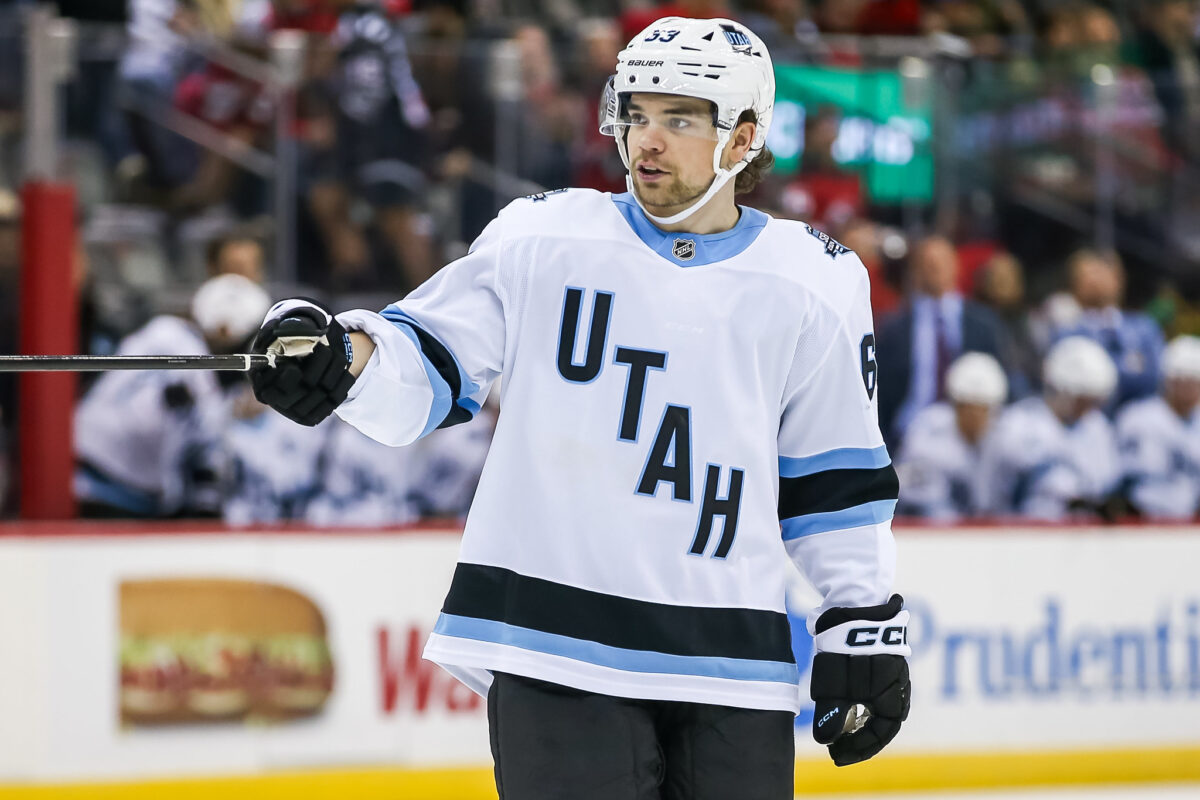
This is one spot in the lineup where the Mammoth need to go searching externally to find a player to fill this role. With the Mammoth having over $20 million in free cap space, I expect them to take a big swing, such as going after Mitch Marner, Nikolaj Ehlers or Brock Boeser.
Outside of free agency, the Mammoth could look to fill this hole through a trade, as they did their number one defense role last offseason, trading for Mikhail Sergachev. The most apparent option for something like this would be 23-year-old Buffalo Sabres forward John-Jason Peterka, who will become a restricted free agent on July 1. Peterka is currently listed at the top of Frank Seravalli of Daily Faceoff’s offseason trade targets list.
Hole No. 2 (Second Line Center)
Throughout Utah’s inaugural season, they used Hayton and Cooley as their centers on their top two lines. Cooley is developing into a phenomenal player and someone that the Mammoth can feel comfortable running on the top line or the second line. The problem in their inaugural season was Hayton’s inconsistent offensive production.
Hayton finished the season leading Utah with 28.72 expected goals (via Natural Stat Trick), which led all Utah forwards. However, his finishing around the net has not improved enough to allow him to convert on scoring chances as often as he should.
Related: Marner, Ehlers, Boeser Should Be on Mammoth 2025 Free Agency Watchlist
With Hayton only being 24 years old and the Mammoth having other developing centers such as But and Iginla, they do not need a long-term fix here, as all of Hayton, But, and Iginla were first-round draft picks and one of these guys will likely grow into the second line center they are looking for.
However, with the Mammoth looking to take another step forward next season, I could see them bringing in someone like Matt Duchene or John Tavares, if either becomes available in free agency, to provide more offensive production and some veteran leadership that is somewhat lacking on this young roster.
Holes No. 3 & 4 (The Fourth Line)
These two spots are something that the Mammoth can fill internally. The interesting part will be what direction they go. They still have Kevin Stenlund under contract, who had the best season of his career playing on Utah’s fourth line in their inaugural season.
The Mammoth could also potentially look to bring back Nick Bjugstad on a cheaper deal after a highly underwhelming season in 2024-25.
Ideally, the Mammoth will be able to use their 2023 first-round pick But in this position. He is a similar player to Stenlund and Bjugstad, possessing a massive body that brings physicality, some offensive skill, and significant upside.
On the wing, Iginla, Utah’s 2024 first-round draft pick, will ideally have improved enough to make this roster. However, this may be unlikely, given that he spent most of the last season injured. With this being the case, the Mammoth should look to bring back Jack McBain, who would fit phenomenally on the Mammoth’s fourth line, given the physicality he brings and some offensive production, as he loves to crash the front of the net.
On this fourth line, the Mammoth should be preparing for a world where both But and Iginla are good enough to play in the NHL. But they also need to prepare for a world where neither is ready. In this case, the Mammoth will be fine or maybe even better off using Stenlund and re-signing McBain.
Projected Mammoth Defense
The Mammoth’s defense core is pretty much set going into next season, having eight players under contract and adding 2023 first-round pick Simashev to the mix, the questions about the blue line will be more about how players are utilized rather than who they can add. Let’s look at the projected pairings.
Mikhail Sergachev – John Marino
Olli Määttä – Sean Durzi
Dmitri Simashev / Ian Cole – Michael Kesselring
Extras: Juuso Valimaki, Nick DeSimone, Maveric Lamoureux
Last offseason, the Mammoth completely retooled their blue line, trading for Sergachev and signing John Marino. Then, after the injury bug struck early in the season, they brought in Määttä to stabilize the blue line and ultimately re-signed him to a three-year extension.
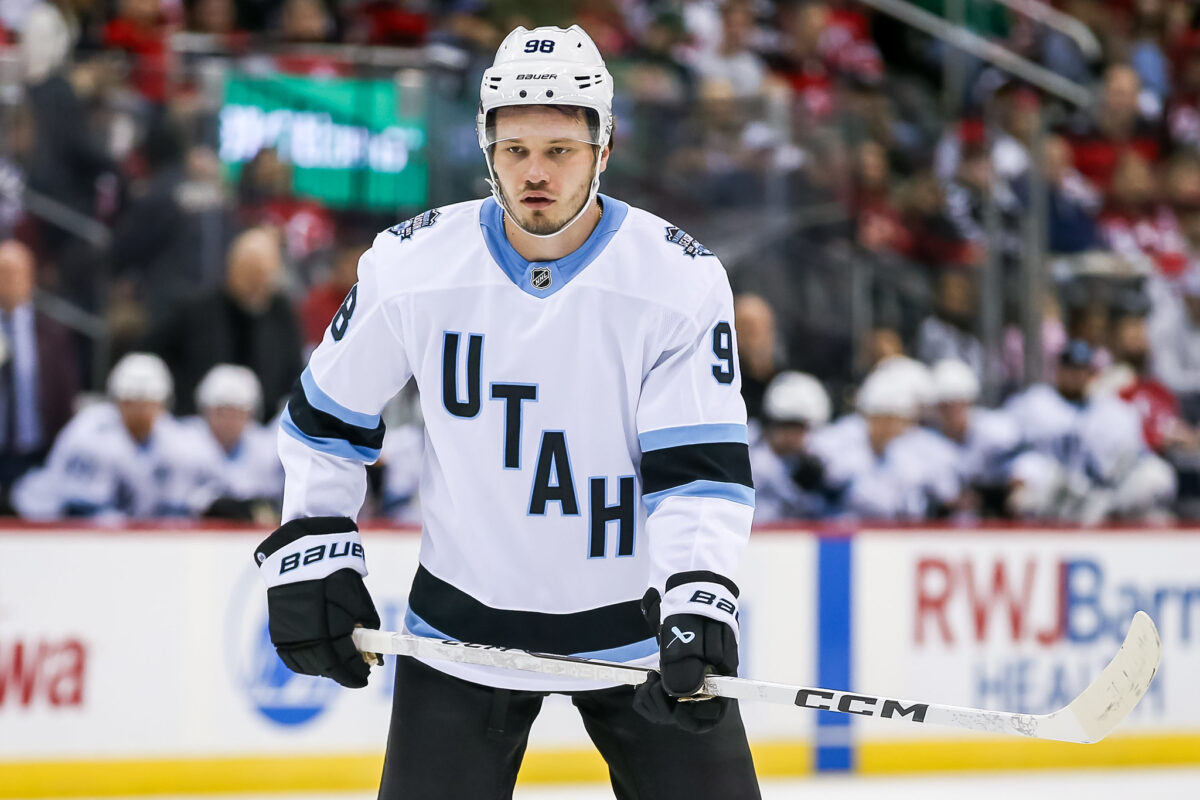
This locked up all of the Mammoth’s top four defensemen for the next two seasons, so the only real question for this group is whether Simashev is good enough to play this season.
Much like But coming over from Russia, Simashev will have a real chance to make this roster and will likely be competing with veteran Ian Cole, who will be tough to beat out. Either way, the Mammoth will have a playoff-caliber blue line and will be in a much better spot when injuries hit, having either Simashev, Maveric Lamoureux, Cole or recently signed DeSimone to step in.
Projected Mammoth Goaltenders
The Mammoth’s goaltending is also set going into next season after re-signing Karel Vejmelka late in the season. The depth chart will look like…
Starter: Karel Vejmelka
Back up: Connor Ingram
Third Goalie: Jaxson Stauber
Vejmelka is coming off a career season, which earned him a four-year contract extension. He will likely start the season as the Mammoth’s starting goalie, and Connor Ingram will likely assume the backup role, assuming he makes his return from the NHL’s player assistance program after dealing with a traumatic death in his family in the middle of last season.
Assuming Ingram returns in a healthier frame of mind next season, the Mammoth are going to have two goalies capable of being starters in the NHL, as Ingram finished tied for the league lead in shutouts in 2023-24.
Then add in Jaxson Stauber, who is 7-2-1 in his first 10 NHL starts and has a .903 save percentage in his 12 career games, the Mammoth will have one of the best goaltending tandems in the NHL if both Vejmelka and Ingram are at their peak, that will also be set up to deal with injuries having Stauber who is off to a great start in his NHL career.
The Mammoth’s Offseason Plan
When asked about the Mammoth’s offseason plans head coach Andre Tourigny said, “A couple years ago, we needed players no matter what… If you’re a good player, we (were) happy to have you. Now, we’re looking for specific areas of our game to be better” and general manager Bill Armstrong said “A lot of teams that you saw that ‘won the summer’ didn’t win the winter… Once the money’s gone, it’s usually locked in for a long term and next year, we’re talking about, ‘How do we get rid of some of that money?’ So, it’s really a tricky one, where you have to very, very cautiously spend your money”.
The Mammoth are not yet in a Stanley Cup window, and with them still building towards that, it makes sense that they do not want to jeopardize the future of this team. However, looking at this roster, it is clear they need more offense, and with numerous top-six offensive weapons seemingly available when free agency opens, the Mammoth should consider taking a swing on either Ehlers, Boeser, or Marner, as all three would fit in with this team long-term. Outside of that, the Mammoth likely need another top-six center, which will likely be someone on a shorter-term deal as this team waits on either Hayton, But or Iginla to develop into this role.
Regardless of how the Mammoth want to approach the offseason, they are in a great spot, having various players like Maccelli or Valimaki who could be used as trade bait. They have plenty of cap space and other assets to pull off a blockbuster trade, as they did last summer with Sergachev. While I don’t expect the Mammoth to make many moves this offseason, I anticipate that the size of the moves will be significant.
