While the Montreal Canadiens players were off during the Olympic break, resting physically and mentally, the Montreal fan base was counting down the days until they returned. One loss later, social media erupted. A game they could have won, maybe should have won, slipped away. The season-long question in net resurfaced immediately. That is the reality of this market. Goaltending in Montreal can shift from solution to problem overnight.
The goaltending debate has once again taken centre stage. Last season, the focus was on the backup situation involving Cayden Primeau and Jakub Dobeš, which is usually not a major concern for most teams. This season, the uncertainty has shifted to the starter, Samuel Montembeault. Inconsistency from your perceived starter is less than ideal, to say the least.
Dobeš doesn’t always inspire maximum confidence, but this season, he has simply been winning more often than not. Montembeault has faced challenges but remains trusted by the organization. Public opinion, however, remains more unpredictable. Jacob Fowler arrived earlier than anticipated, prompting plenty of discussion. The season continues to reveal information without offering a definitive answer.
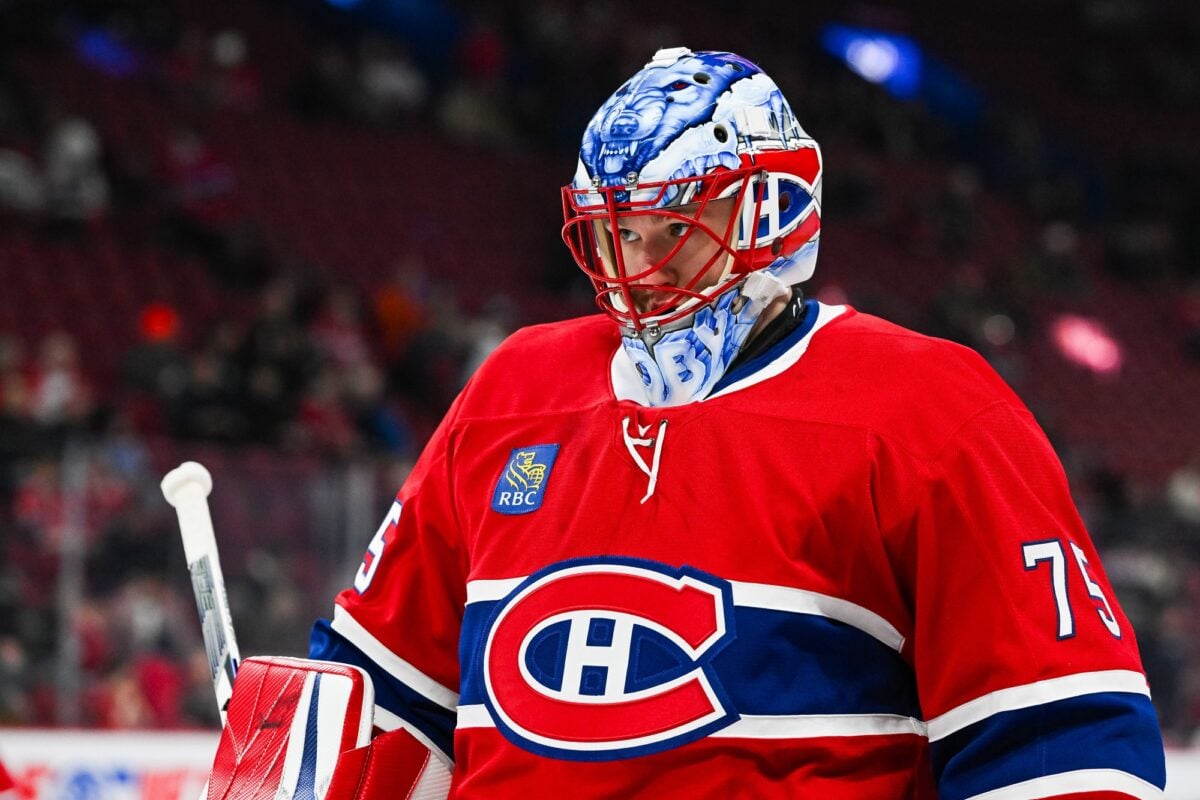
The Canadiens should agree on a clear plan for their goaltenders for the rest of the season. Two goalies in Montreal, one with the American Hockey League (AHL) Laval Rocket. Defined roles. Clear expectations. No artificial competition created by uncertainty.
The rest of 2025–26 should primarily focus on gathering information rather than conducting experiments.
Why Dobeš Deserves the Opportunity
Dobeš has earned a larger share of the workload for the remainder of this season. That doesn’t mean declaring him the long-term solution. It involves giving him meaningful responsibility and watching how he handles it.
Young goaltenders shouldn’t be judged based on occasional starts. They need to be evaluated over time, through back-to-backs and against familiar opponents who adapt to them. Montreal should allow Dobeš to work through his inconsistencies rather than avoiding them. The goal isn’t to shield him from challenges but to understand how he handles them.
Montembeault’s Place in the Picture
Montembeault’s role is just as important, though for different reasons, and his journey to this point shapes what it should likely be moving forward.
Drafted in the third round in 2015, he entered professional hockey as an athletic project. His Quebec Maritimes Junior Hockey League (QMJHL) career showed moments of reflex-driven brilliance, but scouts consistently described him as raw. His positioning fluctuated. His rebound control required improvement. The projection was not that of a future franchise cornerstone. Instead, it was focused on long-term development with the potential to become a dependable NHL contributor.
His early professional seasons confirmed that assessment. In the AHL with the Springfield Thunderbirds, he went 13–23–1 with a 3.25 goals-against average (GAA) and a .896 save percentage (SV%). In his two seasons with the Florida Panthers, 2018–19 and 2019–20, his performance was inconsistent, posting nine wins and eight losses, with a GAA of 3.04 and 3.34, and a SV% of .894 and .890. When Montreal claimed him off waivers in 2021, he arrived as a depth player rather than a solution.
His steady progress culminated last season in what was, at least for now, the best season of his career, earning him a spot on Canada’s 4 Nations roster and helping the Canadiens return to the playoffs for the first time since 2021.
This season has reset expectations. His numbers have fallen below league average, raising legitimate questions about whether he remains a viable 1B or is better suited backing up Dobeš.
The numbers, especially wins and losses, should determine how Montembeault is used going forward. Back-to-backs and more favourable matchups can put him in a better position to succeed. He should not become a weekly target in public debates over who deserves the crease. Framing the role as a comparison only weakens the confidence it needs.
Related: The Importance of Canadiens’ Montembeault Finding His Game Again
Fowler’s presence complicates things mostly because he impressed quickly.
His early NHL appearances were mostly calm and technically sound. He looked composed in moments that can overwhelm many prospects. It is easy to mistake this for immediate readiness. Instead, it is more accurate to see it as proof that the development pathway is working. Fowler’s priority should remain on consistent starts in Laval. If he is to become part of the long-term plan, rushing him benefits no one.
The Bigger Decision Is Coming
The organization should shift its focus from gathering information to clearly defining roles before 2026–27.
Both Montembeault and Dobeš are under contract next season, which gives them some flexibility. If Fowler pushes the way many inside the organization believe he can, the Canadiens may have to choose which of the two incumbents fits best moving forward.
There is no need to rush that decision today. But they should be prepared for the possibility that next season forces it. If Dobeš handles the stretch run and the playoffs with stability and consistency, he should enter next season positioned to carry more starts, not because of potential, but because of evidence. If he is unable to show that he can shoulder the load, it will definitely make for a fascinating end to the season and off-season for Habs management, media, and fans alike.
The Canadiens don’t necessarily need certainty right now, even though it would lessen a lot of tension on the team and in the city. It’s not an easy situation, especially since it’s clear the Canadiens could very well make an impact in the playoffs with even average goaltending.
