New Jersey Devils head coach Sheldon Keefe, who spent time behind the Toronto Maple Leafs bench, recently joined Nick Kypreos and Justin Bourne to talk about Auston Matthews and how his leadership style has evolved over the years.
Keefe opened by noting that he has observed Matthews grow into a leader during his time in Toronto. While Matthews remains the team’s offensive cornerstone, Keefe said that his progression into a player who can guide and influence his teammates has been evident. “He’s grown tremendously,” Keefe said. “It’s a process, taking time to get comfortable in that role, learning how to speak into possibility without forcing it. Auston has done that.”
Related: Fresh-Start Trade Scenario Taking Shape Between Oilers and Maple Leafs
He acknowledged that Matthews doesn’t lead in a flashy, outwardly demonstrative way. Instead, his impact comes quietly, through preparation, on-ice performance, and steadying presence. Keefe compared Matthews’ evolution to what he saw in other leaders, noting that it’s a natural curve. Some players take time to assume full leadership responsibilities, and Matthews is no different.
Keefe Also Spoke About the Perception that Matthews Is Struggling
The conversation also touched on recent games and the perception that Matthews has been struggling. Keefe didn’t see it that way. Watching the Maple Leafs over the last few games, he said, it’s clear that Matthews is finding his rhythm again. He pointed to specific moments, such as a back-to-back stretch in which Matthews’ play was pivotal in keeping the team competitive, and even in games where he narrowly missed big chances, his overall influence remained strong.

(Marc DesRosiers-Imagn Images)
Keefe emphasized Matthews’ ability to balance the pressure of being the Maple Leafs’ top scorer with the less visible elements of leadership—keeping teammates engaged, setting an example in practice, and maintaining focus in critical moments. “He’s not a loud voice, but he’s a consistent one,” Keefe said. “You see it in how he handles adversity, how he communicates on the ice, and how his teammates respond to him.”
Keefe Believes that Matthews Helps Shape the Team’s Culture
While the discussion referenced Matthews’ offence coming together and moments of brilliance, Keefe also acknowledged the occasional hiccups—like a crossbar shot in overtime that could have gone the other way—but framed them as part of a player growing into leadership under the spotlight. “Those moments happen,” he said. “But they don’t define him. What defines him is the overall way he’s developed as a leader and as a player.”
Related: Maple Leafs News & Rumours: Hildeby, Robertson, Tavares & Holinka
The broader point, Keefe concluded, is that Matthews’ progression isn’t just about goals or points. It’s about maturity, the ability to take on responsibility, and the way he influences the team’s culture. Observing him from outside now, as the Devils prepare to face Toronto on Tuesday night, Keefe sees a player who has come into his own—not by force, but through experience and consistent performance.
Fitting that Keefe Weighs in on Matthews’ Growth
Something is fitting about Keefe being the one to frame this moment, now that he’s standing across the ice instead of behind the bench. Coaches and star players rarely get to choose how their chapters end, but this one feels complete in its own way. Keefe saw Matthews at his most explosive, when he put up 69 goals and the nights when the building tilted because one player decided it would.
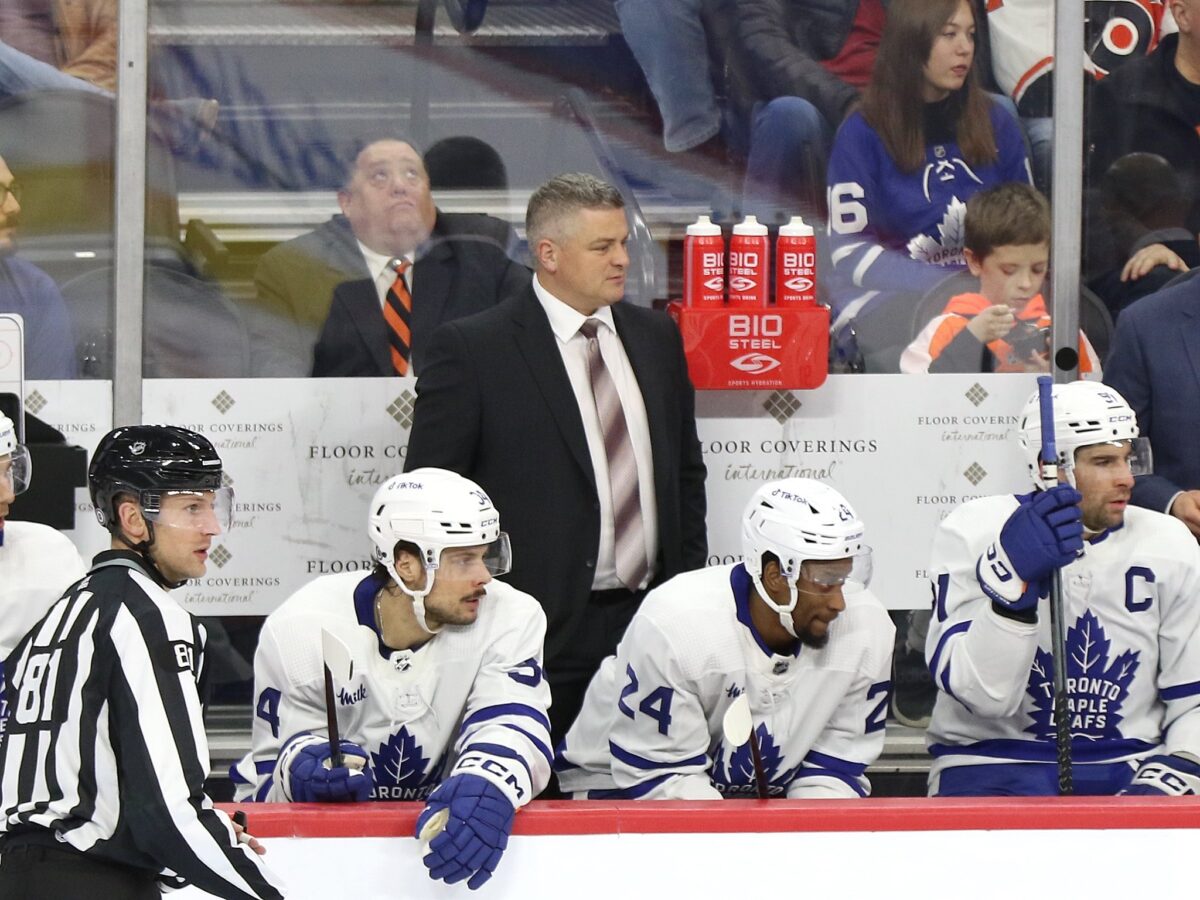
He also saw the quieter evolution: the mornings after postseason exits, the way Matthews learned when to speak and when not to, how to carry a room without ever trying to own it. Those Maple Leafs teams piled up regular-season points, yes—but more importantly, they learned how to function around a singular talent without losing themselves.
Related: What Maple Leafs Fans Are Getting Wrong About Auston Matthews
Matthews, for his part, was shaped by a coach who never asked him to be something he wasn’t. Keefe didn’t demand theatrics or manufactured leadership; he trusted that gravity would do the work. Now they’ve both moved on. Keefe faces a new challenge, and Matthews is further along in his own growth.
What remains is the imprint they left on each other: a coach who learned how to let a superstar breathe, and a superstar who learned that leadership, like scoring, doesn’t need to announce itself to be real.
